Raw for Maximum Nutrition
Made in our own Kitchens
Human grade products
16 March 2026
Raw Feeding for Dogs: The Complete Guide to a Natural, Healthy Diet
Everything you need to know about switching your dog to a species-appropriate raw diet - from feeding charts and schedules to health benefits and expert tips.

16 March 2026
Raw Feeding for Dogs: The Complete Guide to a Natural, Healthy Diet
Everything you need to know about switching your dog to a species-appropriate raw diet - from feeding charts and schedules to health benefits and expert tips.
Table of contents
• What It Actually Means• Raw Feeding Benefits• What to Include in the Bowl• Raw Feeding Amounts by Wt• Raw Feeding Schedule • How to Transition Your Dog • Top Tips for Raw Feeding• Raw Feeding - FAQ's• ConclusionIf you’ve been searching for a healthier, fresher alternative to processed kibble, BARF India’s cooked cat food is the answer. Made from human-grade, preservative-free ingredients, it’s the closest you can get to homemade cat food — without the effort. Our sampler pack is perfect for finicky cats, giving them a chance to explore every recipe and find their favourite.
Raw Feeding: What It Actually Means
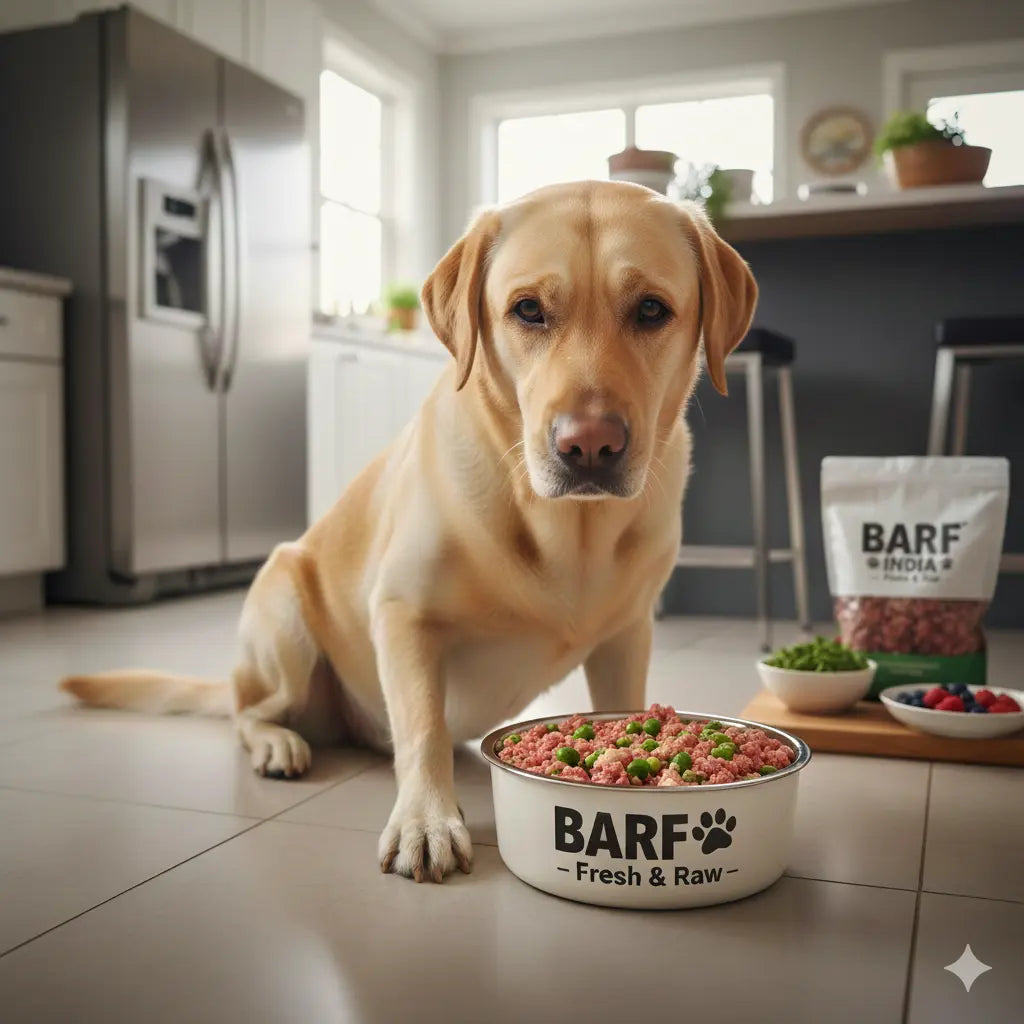
Raw feeding is the practice of giving dogs uncooked, minimally processed foods that mirror
what canines ate for thousands of years before commercial pet food existed.
At its core, raw feeding is about returning to biology. Dogs are facultative carnivores - their
digestive systems, dental anatomy, and metabolic processes are designed to thrive on a diet of raw
meat, edible bone, organ meat, and seasonal plant matter. Kibble, with its high starch content and
synthetic nutrient top-ups, is a modern convenience, not a biological ideal.
The most well-known framework for raw feeding is the BARF diet - which stands for Biologically
Appropriate Raw Food or Bones and Raw Food. Developed by veterinarian Dr. Ian Billinghurst in
the 1990s, the BARF model provides a structured approach to balancing the key components of a
raw meal so dogs receive everything they need to thrive.
Raw feeding is not about throwing a chicken leg in a bowl and hoping for the best. Done correctly, it
is a carefully balanced, nutritionally complete approach that addresses your dog's needs at every
life stage - from puppy to senior.
Did You Know?
The BARF diet isn't just a trend - it's a nutritional philosophy backed by evolutionary biology. A
growing number of veterinary nutritionists and integrative vets worldwide now support species-
appropriate raw diets as part of preventative pet health care. In India, pioneers like BARF India
have been instrumental in educating pet owners about the profound impact of nutrition on long-
term canine health.

Raw Feeding Benefits You'll Actually See
The differences between a raw-fed dog and a kibble-fed dog aren't subtle. Most owners report
visible, tangible changes within the first few weeks of switching.
Shinier Coat & Healthier Skin
The omega-3 and omega-6 fatty acids in raw meat nourish the skin barrier and promote a
noticeably glossy, soft coat. Owners consistently report reduced shedding and an end to chronic
itching and hotspots within weeks of transitioning.
Lean Muscle & Ideal Weight
High bioavailable protein and low refined carbohydrates mean dogs build lean muscle and store
less body fat. Unlike kibble-fed dogs who often carry excess weight due to starch-heavy formulas,
raw-fed dogs naturally maintain a healthy, athletic physique.
Cleaner Teeth & Better Breath
Raw meat and edible bone act as a natural toothbrush. The mechanical abrasion of chewing bone
removes plaque, while the low sugar content of raw food dramatically reduces the bacterial build-up
associated with kibble-fed dog breath.
Improved Digestion & Smaller Stools
Dogs are biologically wired to digest raw protein. The result: they absorb significantly more nutrients
from each meal and produce smaller, firmer, and far less odorous stools. Less waste means more
nutrition was actually used by the body.
Stronger Immune System
Raw meat fibres support a healthy gut lining. Since approximately 70% of the immune system
resides in the gut, a well-nourished gut produces a more resilient, responsive immune system -
resulting in fewer infections, less inflammation, and improved allergy outcomes.
Healthier Joints & Bones
Raw bone is a natural source of calcium and phosphorus in perfectly balanced ratios - unlike
synthetic supplements. This supports bone density, joint health, and is particularly beneficial for
large breeds prone to hip dysplasia and arthritis.
The Science Behind It When food is cooked, heat destroys enzymes and degrades heat-sensitive vitamins and amino acids. Raw food preserves these nutrients in their natural state, so your dog's body receives the full nutritional profile of each ingredient - not a depleted version of it.
Raw Feeding: What to Include in Your Dog's Bowl
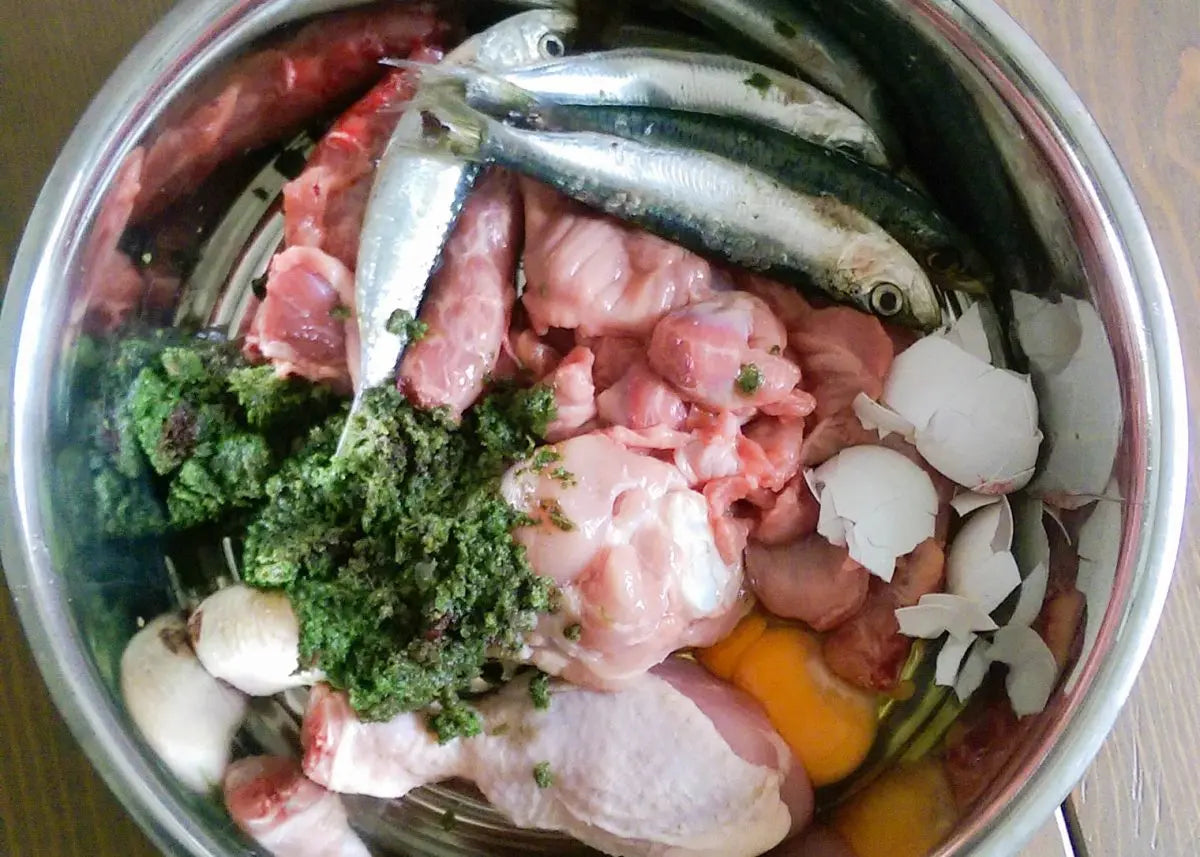
A balanced raw diet is not just raw chicken breast. It requires a variety of food types to hit every
nutritional target your dog needs throughout their life.
The BARF Model Breakdown
The BARF model provides a simple framework for structuring a complete raw meal. A widely
followed guideline is:
Component | Approx. % | Examples | Why It Matters |
|---|---|---|---|
Muscle Meat | 70% | Chicken, lamb, beef, turkey, duck | Primary protein; essential amino acids |
Raw Edible Bone | 10% | Chicken necks, wings, carcass | Calcium, phosphorus, dental cleaning |
Organ Meat (Liver) | 5% | Beef liver, chicken liver | Vitamins A, B12, iron, folate |
Other Organs | 5% | Kidney, spleen, pancreas | Trace minerals, enzymes, co- factors |
Fruit & Vegetables | 7% | Leafy greens, carrots, blueberries | Antioxidants, fibre, phytonutrients |
Seeds, Nuts & Extras | 3% | Flaxseeds, kefir, eggs, kelp | Omega-3s, probiotics, iodine |
Foods to Always Avoid in Raw Feeding
While raw feeding opens up a wide variety of ingredients, the following are dangerous and must
never be included:
• Cooked bones - splinter easily; only raw bones are safe
• Onions, garlic, leeks, chives - toxic; cause haemolytic anaemia
• Grapes and raisins - can cause acute kidney failure even in small quantities
• Xylitol (artificial sweetener) - extremely toxic; found in some nut butters
• Macadamia nuts - cause weakness, hyperthermia, and vomiting
• Avocado - flesh, pit, and skin contain persin, causing vomiting and diarrhoea
The Ideal Raw Dog Food Should Be...
• Complete and balanced - meeting AAFCO or FEDIAF nutritional guidelines
• Made from recognisable ingredients - if you can't identify it, neither can your dog's gut
• High in quality, ethically sourced protein - minimum 70–80% meat, bone, and organ
• Free from synthetic fillers and preservatives - hallmarks of low-quality processed food
• Properly stored - kept frozen or refrigerated to preserve freshness

Raw Feeding Amounts by Weight - Your Complete Feeding Chart
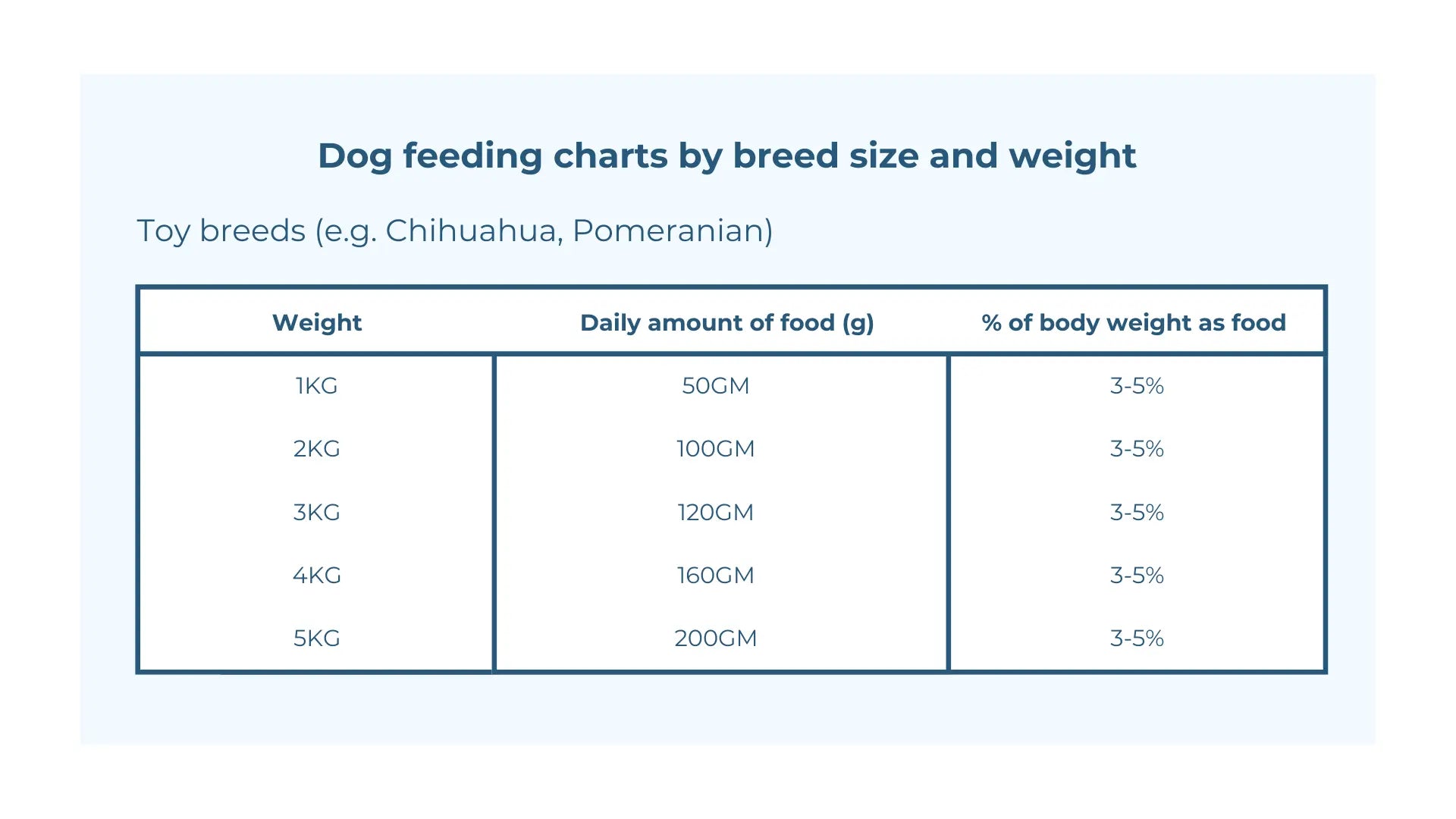
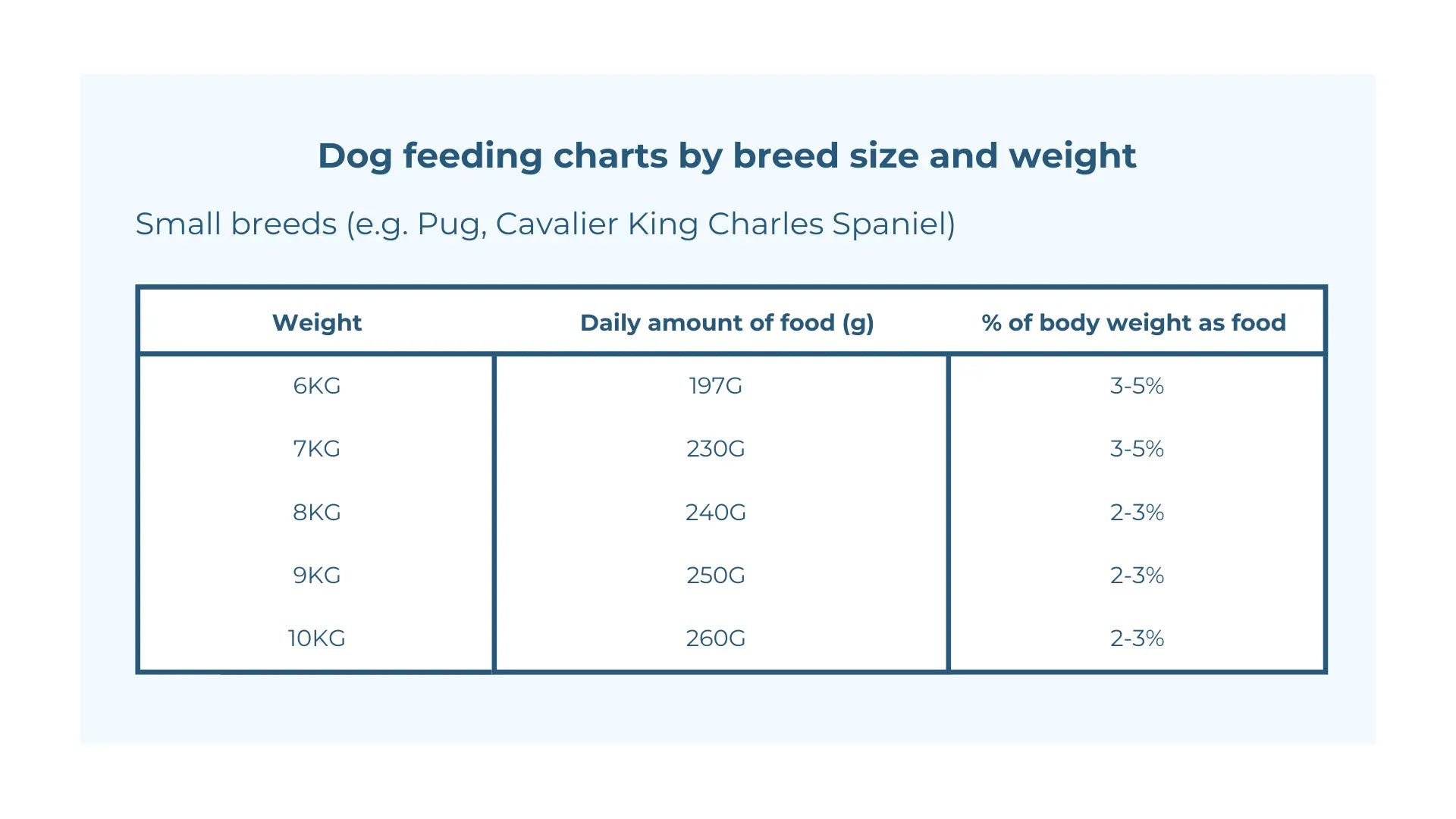
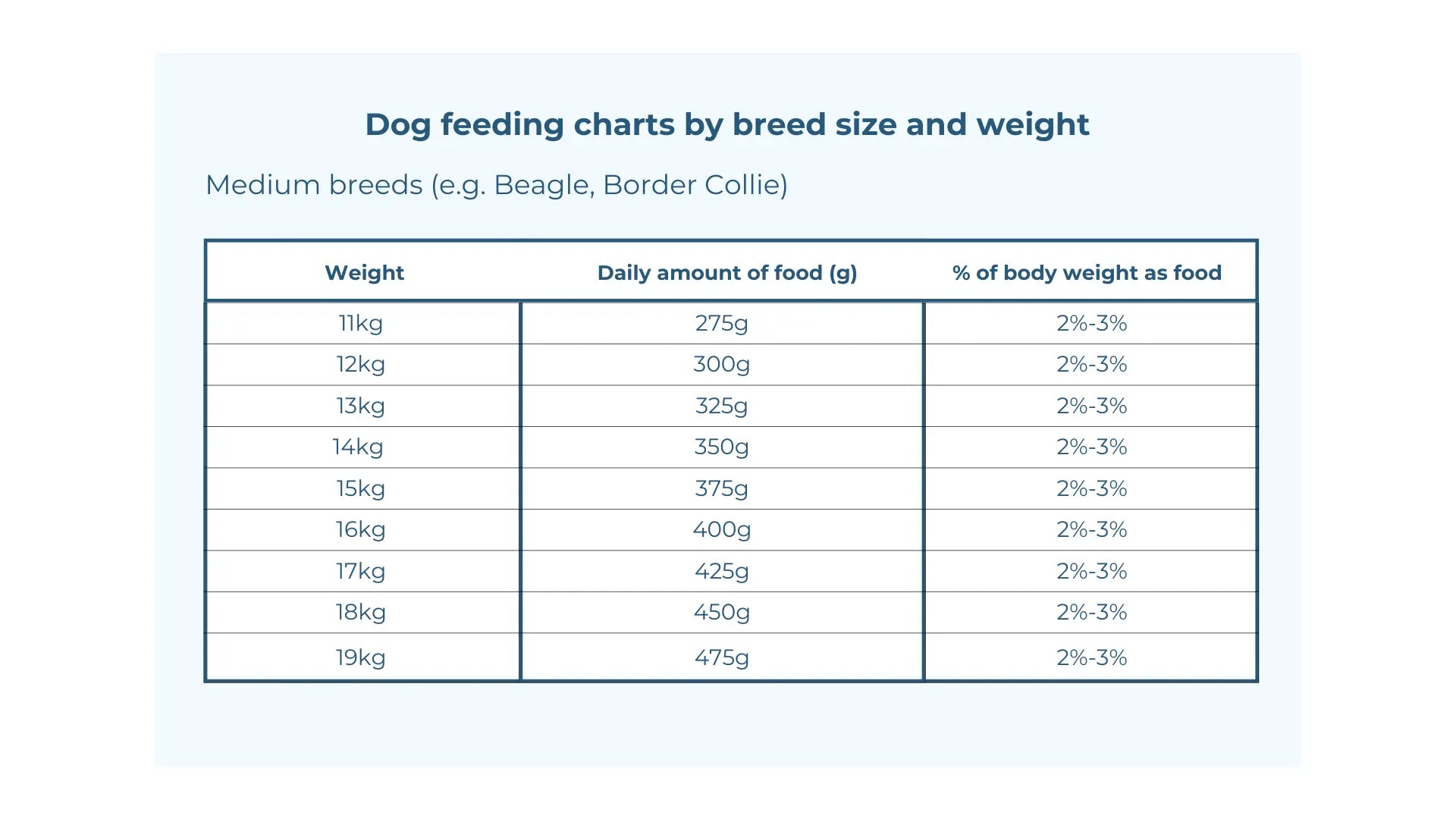
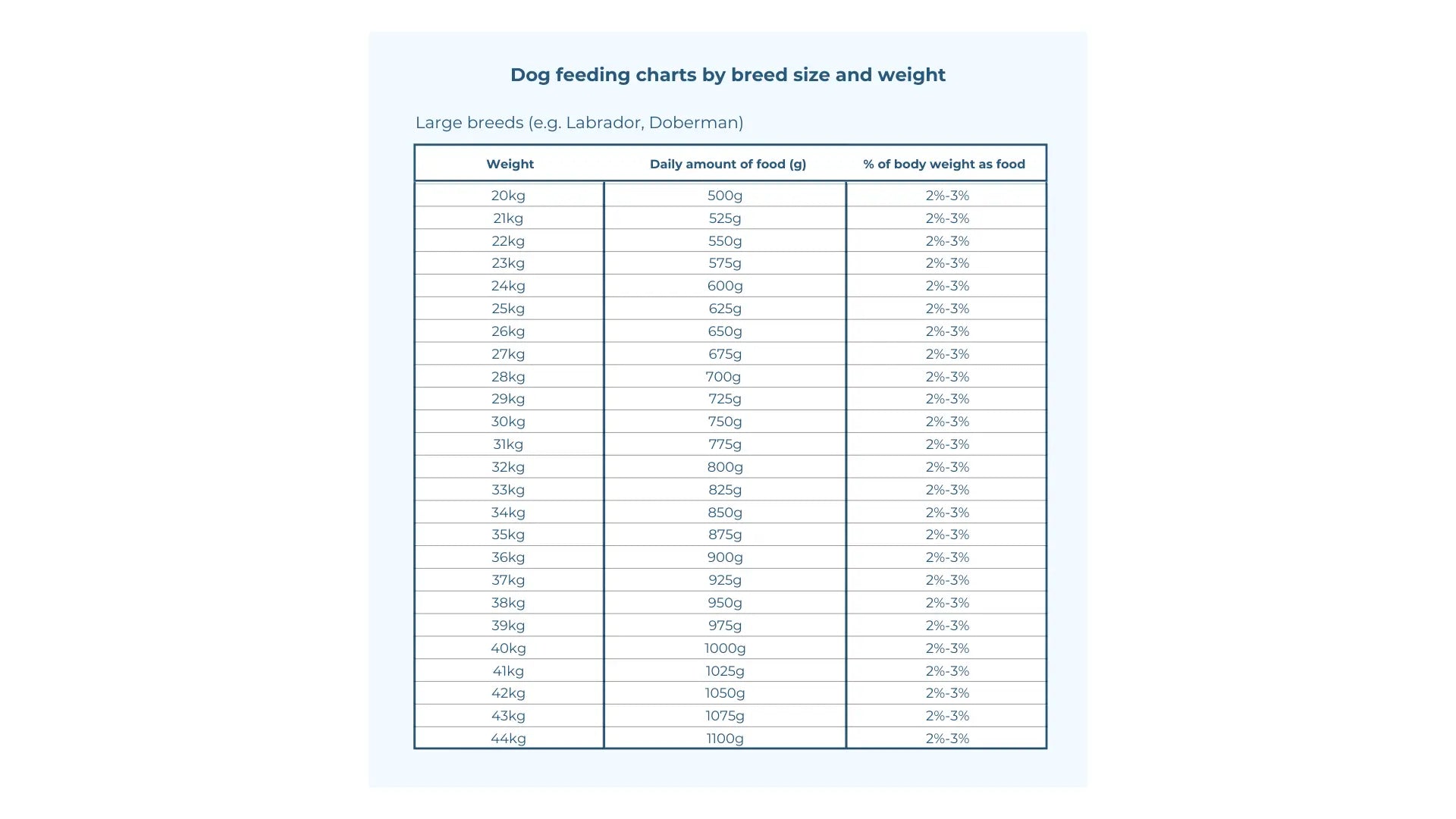
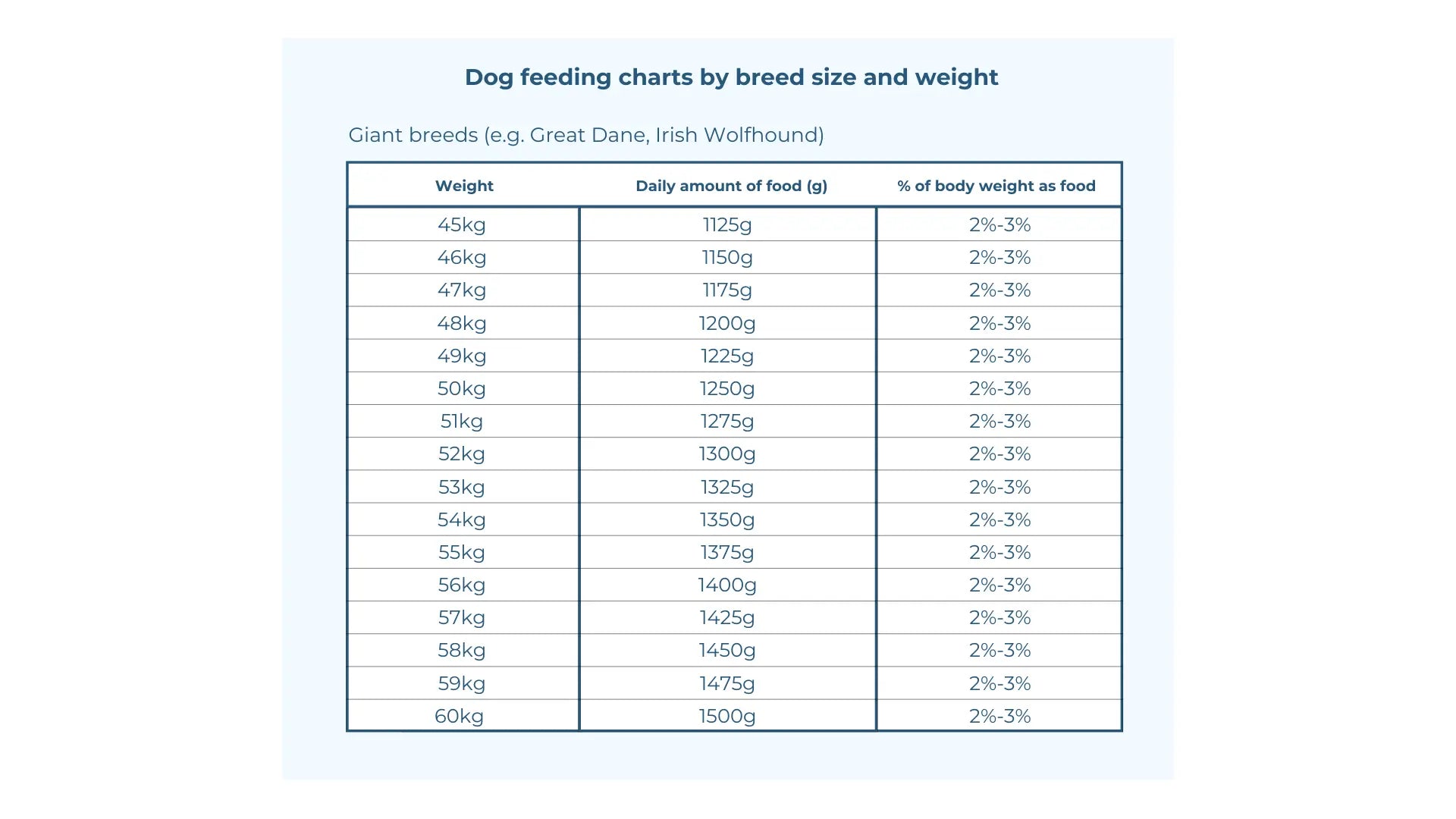
The golden rule of raw feeding: feed between 2% and 3% of your dog's ideal adult body weight
per day. Smaller, more active, or younger dogs may need slightly more; large, senior, or less
active dogs may need slightly less.
Daily Raw Feeding Chart by Breed Size
Breed Size | Dog's Weight | Daily Raw Food Amount | % of Body Weight |
|---|---|---|---|
Toy (Chihuahua, Pomeranian) | 1–5 kg | 50g – 200g | 3%–5% |
Small (Pug, Shih Tzu) | 6–10 kg | 197g – 260g | 2%–3% |
Medium (Beagle, Cocker Spaniel) | 11–19 kg | 275g – 475g | 2%–3% |
Large (Labrador, German Shepherd) | 20–44 kg | 500g – 1,100g | 2%–3% |
Giant (Great Dane, St. Bernard) | 45–60 kg | 1,125g – 1,500g | 2%–3% |
Note: These are baseline figures for healthy adult dogs. Adjust based on activity level, metabolism,
body condition score, and health status. Always consult your vet for dogs with medical conditions.
Adjusting for Overweight Dogs
If your dog is carrying extra weight, reduce their daily raw feeding amount by 10% and monitor for
one week. If no weight loss occurs, reduce by another 10%. Continue gradually until your dog
reaches their ideal body condition score. Never make drastic overnight reductions.
Adjusting for Underweight Dogs
For visibly underweight dogs - where the ribs are clearly visible - increase the daily raw food
amount by 10% each week until a healthy weight is achieved. Pairing this with calorie-dense organ
meats can boost nutritional density without increasing volume excessively.
Raw Feeding for Senior Dogs
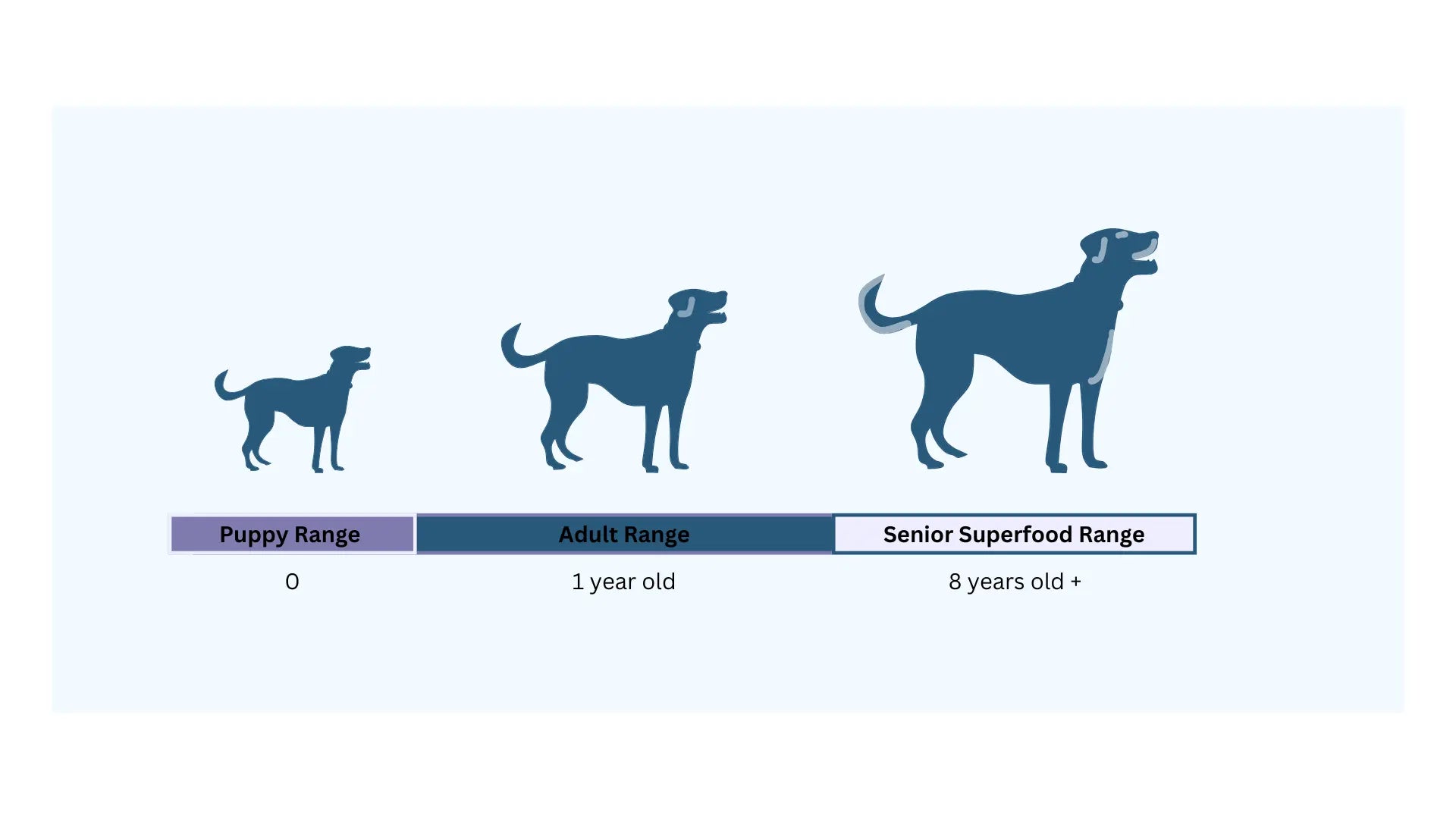
Dogs are generally classified as senior at around 7–8 years of age, though this varies by breed
size. Giant breeds may be senior from 6 years, while small breeds might not reach senior status
until 11 or 12. Senior dogs often benefit from:
• 2 smaller meals daily rather than 1 large meal, to ease digestion
• Slightly more protein to counteract age-related muscle loss (sarcopenia)
• Joint-supporting ingredients like green-lipped mussel or bone broth
• Superfoods such as blueberries, turmeric, and kefir for cognitive support and immunity
- How to Check Your Dog's Body Condition Score
Run your hands gently along your dog's ribcage. You should be able to feel each rib clearly
without pressing hard, but the ribs should not be visually prominent. Viewed from above, your
dog should have a visible waist. From the side, there should be a gentle tuck behind the ribcage.
This is the target for your raw feeding portions.
Raw Feeding Schedule & Timing - When and How Often to Feed
Consistency is one of the most underrated aspects of raw feeding. A structured schedule trains
your dog's digestive system, regulates hunger cues, and makes your life significantly easier.
How Many Meals a Day Does My Dog Need?
• Puppies (up to 12 weeks): 4 meals a day
• Puppies (3–6 months): 3 meals a day
• Puppies (6–12 months): 2–3 meals a day
• Adult dogs (1–7 years): 1–2 meals a day
• Senior dogs (7+ years): 2 smaller meals a day
Ideal Daily Feeding Schedule (2 Meals a Day)
Time | Activity | Notes |
|---|---|---|
6:00 AM | Wake up & toilet break | Let the dog relieve itself before eating |
6:30–7:00 AM | Breakfast (raw meal) | Defrost the previous night; serve at room temp |
7:30–8:30 AM | Rest period | Avoid vigorous exercise immediately after eating |
9:00–10:30 AM | Morning exercise / training | At least 1 hour post-meal before vigorous activity |
12:00–2:00 PM | Brain games / play / rest | Mental stimulation reduces boredom & anxiety |
4:00–5:30 PM | Afternoon walk | Moderate exercise; save treats for training |
6:30–7:00 PM | Evening meal (raw meal) | 12 hours after morning meal; toilet break after |
8:00 PM+ | Wind-down & sleep | Allow digestion; final toilet break |
 NATURE HAS ALREADY GIVEN THE RECIPE. WE HAVE ONLY IMPLEMENTED IT
Should I Feed Before or After Exercise?
Always wait at least 45–60 minutes after vigorous exercise before feeding, and avoid strenuous
activity for at least an hour after a meal. Feeding a dog immediately before or after intense exercise
- especially in large, deep-chested breeds - significantly increases the risk of bloat (gastric
dilatation-volvulus), a potentially life-threatening condition.
How to Transition Your Dog to Raw Feeding
Switching to raw feeding doesn't have to be overwhelming. There are two well-established
approaches, and the right one depends on your dog's age and digestive sensitivity.
Option 1: The Straight Swap
For puppies, young dogs, or adult dogs with robust digestion, a straight swap works well. Simply
finish your dog's current food, and introduce their first raw meal at the next scheduled feeding. The
vast majority of dogs adapt immediately with no digestive upset. Any loose stools in the first few
days are normal as the gut microbiome recalibrates.
Option 2: The Gradual Transition
For dogs with sensitive stomachs, elderly dogs, or those on processed food for years, a gradual
transition over 7–10 days is advisable:
Time | Previous Food | New Raw Food |
|---|---|---|
Day 1–2 | 80% | 20% |
Day 3–4 | 60% | 40% |
Day 5–6 | 40% | 60% |
Day 7–8 | 20% | 80% |
Day 9–10 | 0% | 100% Raw |
Important: Never mix raw meat with dry kibble in the same meal. Raw meat digests in 4–6 hours while kibble takes 10–12 hours. Mixing the two can cause gas, bloating, and digestive discomfort. Feed them in separate meals if transitioning gradually.
✅ Normal vs. Concerning Transition Symptoms Normal: Loose stools for a few days, slightly reduced appetite, increased thirst. Seek vet advice if: vomiting persists beyond 48 hours, blood in stool, complete refusal to eat for 2+ days, or signs of lethargy and weakness.
Top Tips for Raw Feeding Success
Whether you're on day one or month three of raw feeding, these practical tips will help you get
the most out of your dog's natural diet.
1. Always thaw properly. Frozen raw food should be defrosted in the refrigerator for 24 hours
before serving - never at room temperature. Once thawed, raw food keeps safely in the
fridge for up to 3–4 days.
2. Serve at room temperature. Take the meal out of the fridge 15–20 minutes before feeding.
Cold food can slow digestion, especially in puppies and senior dogs.
3. Rotate proteins regularly. Vary between chicken, beef, lamb, duck, fish, and other proteins
to ensure a broader micronutrient profile and reduce the risk of food intolerances.
4. Prioritise food safety and hygiene. Wash hands before and after handling raw meat. Use
dedicated utensils and disinfect surfaces after every feeding.
5. Track body condition, not just weight. Check your dog's body condition score monthly.
Ribs should be easily felt, waist should be visible. Adjust portions accordingly.
6. Supplement thoughtfully. A well-formulated complete raw diet needs minimal
supplementation. For home-prepared meals, consider omega-3 fish oil, kelp, and kefir to fill
common gaps.
7. Create a calm feeding environment. Place the bowl in a quiet area away from children and
other pets. Stress during mealtimes can impair digestion and lead to food guarding
behaviour.
8. Keep a feeding journal. In the first few months, note proteins fed, portion sizes, stool
quality, energy, and coat condition. This helps identify what works best for your individual
dog.
A Note on Raw Feeding in India -
The raw feeding movement in India is growing rapidly, driven by awareness that the nutritional
needs of Indian dogs - including breeds like the Indian Pariah, Rajapalayam, and Mudhol
Hound - are best met by species-appropriate nutrition. Platforms like BARF India have
played an important role in making quality raw feeding education and sourcing accessible to Indian pet owners, helping families across the country give their dogs the best possible start.
Whether you have a local indie dog or a pedigree breed, the principles of raw feeding remain
the same: fresh, balanced, and biologically appropriate.
LEARN MORE ABOUT INDIA'S NO.1 FRESH DOG FOOD
Start Fresh
Raw Feeding - FAQ's
Raw Feeding Is the Gift of Good Health
At the end of the day, raw feeding is about one thing: giving your dog the best possible quality of life
through the most fundamental act of care - what you put in their bowl.
A properly balanced raw diet supports every system in your dog's body, from their immune system
and gut health to their joints, skin, teeth, and mental wellbeing. The results aren't theoretical.
They're visible - in a shinier coat, leaner body, cleaner teeth, and a dog that is genuinely thriving.
The transition can feel daunting at first, but the learning curve is short. Start simple, rotate your
proteins, track body condition, and let your dog's health be your guide. The rewards - for both of
you - are well worth the effort.