Raw for Maximum Nutrition
Made in our own Kitchens
Human grade products
15 March 2026
Bone Broth For Dogs
The Ultimate Guide to Nature's Most Nourishing Superfood for Your Canine Companion

14 March 2026
Bone Broth For Dogs
The Ultimate Guide to Nature's Most Nourishing Superfood for Your Canine Companion
Table of contents
• Understanding the Main Ingredients• 7 Key Health Benefits• Does Bone Broth Help Lose Belly Fat?• Bone Broth : Provides B12 & Essential Vitamins?• Bone Broth : Helps a Leaky Gut?• Bone Broth as a Topper• Side Effects of Bone Broth?• How to Make Bone Broth at Home• FAQ's: Bone Broth for Dogs• ConclusionTable of contents
• Understanding the Main Ingredients• 7 Key Health Benefits• Does Bone Broth Help Lose Belly Fat?• Provides B12 & Essential Vitamins?• Bone Broth : Helps a Leaky Gut?• Bone Broth as a Topper• Side Effects of Bone Broth?• How to Make Bone Broth at Home• FAQ's: Bone Broth for Dogs• ConclusionRich in collagen, amino acids, and essential minerals, Bone broth can be a powerful nutritional boost for dogs. It helps support joint health, improves digestion, and keeps dogs well hydrated-especially during illness or recovery. Adding bone broth to your dog’s meals can also enhance flavor and encourage picky eaters to enjoy their food.
Bone Broth for Dogs
If you are a dog parent who cares deeply about what goes into your furry friend's bowl, you have
probably come across the term bone broth for dogs. Once considered a niche health food, bone
broth has rapidly become one of the most celebrated superfoods in the pet wellness world - and
for very good reason.
Bone broth for dogs is a slow-simmered, nutrient-dense liquid made from animal bones,
connective tissue, and cartilage. When prepared correctly - with a long, gentle cooking process
- it extracts a powerhouse of collagen, gelatin, amino acids, and essential minerals that support
nearly every system in your dog's body. From a shiny coat to a healthy gut and strong joints, this
humble golden liquid does it all.
In this comprehensive guide, we will walk you through everything: what bone broth for dogs is
made of, its incredible health benefits, whether it supports B12 and other vitamins, how it heals
a leaky gut, and most importantly, how to incorporate it as a nourishing topper in a raw or
BARF (Biologically Appropriate Raw Food) diet. We'll also answer the most common questions
dog owners have before getting started.
Let's dive in.
What Is Bone Broth for Dogs? Understanding the Main Ingredients
Bone broth for dogs is not the same as the store-bought broths or stocks you find in
supermarkets for human use. Those products are often loaded with sodium, onion, garlic, and
other additives that can be toxic to dogs. True bone broth for dogs is made from a carefully
selected combination of wholesome, dog-safe ingredients simmered low and slow for an
extended period.
The Core Ingredients of Bone Broth for Dogs
• Animal Bones (the star ingredient): The main ingredient in bone broth is raw or roasted
animal bones - typically from chicken, beef, lamb, or turkey. These bones contain
collagen, calcium, phosphorus, and bone marrow, all of which leach into the broth
during the long cooking process.
• Connective Tissue and Cartilage: Joint-rich cuts like chicken feet, knuckles, and tracheas
are prized for their dense collagen content. When simmered for hours, this collagen
converts into gelatin - a soothing, gut-healing compound.
• Apple Cider Vinegar: A small splash of raw apple cider vinegar is often added to the pot.
Its mild acidity helps draw minerals out of the bones and into the liquid, increasing the
nutritional yield of the broth.
• Filtered Water: Clean water is essential. The quality of the water directly impacts the
purity and safety of the broth.
• Optional Dog-Safe Vegetables and Herbs: Ingredients like turmeric, ginger, and parsley
can be added for their anti-inflammatory and digestive benefits. Always avoid onion,
garlic, leeks, chives, and any other alliums, which are toxic to dogs.
What to avoid in bone broth for dogs: onions, garlic, leeks, excessive salt, artificial preservatives,
and any seasoning blends designed for human consumption.
Bone broth that has been cooked for 12–24 hours or more tends to form a thick jelly-like consistency when chilled. This is a sign of high gelatin content - exactly what you want for a quality bone broth for dogs.

What Does Bone Broth Do for Your Dog's Body? 7 Key Health Benefits
Bone broth for dogs is not just a tasty treat. It is a functional food that supports your dog's
health at a cellular level. Here are the seven main health benefits that make bone broth for dogs
a must-have in every responsible pet owner's pantry.
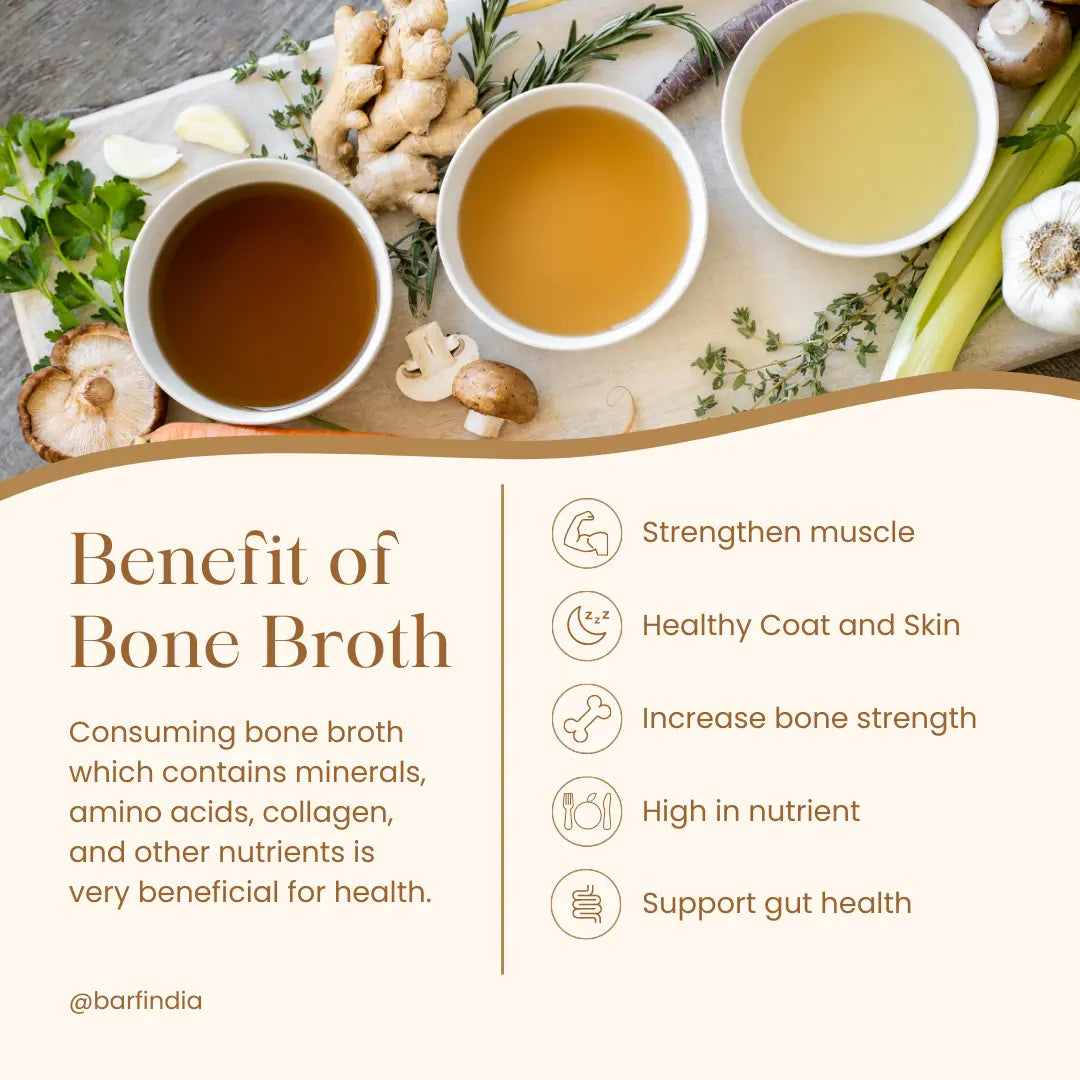
1. Supports Joint Health and Reduces Inflammation
The collagen and gelatin in bone broth help rebuild and protect joint cartilage. Glucosamine and
chondroitin - natural compounds found in bone and cartilage - are released into the broth
during cooking. These compounds are clinically recognized for their ability to reduce joint
inflammation, making bone broth especially valuable for senior dogs or breeds prone to hip
dysplasia and arthritis.
2. Heals and Seals the Gut Lining
Gelatin, one of the primary compounds in a well-made bone broth, is remarkably effective at
supporting the integrity of the gut lining. It helps 'heal and seal' tiny gaps in the intestinal wall -
gaps that can lead to a condition known as leaky gut syndrome (more on this in Section 5). A
healthier gut means better digestion, fewer allergies, and improved nutrient absorption.
3. Boosts Immune Function
A large proportion of the immune system lives in the gut. By improving gut health, bone broth
for dogs indirectly strengthens immune defences. Additionally, the amino acids glycine and
proline in bone broth have natural anti-inflammatory properties that keep the immune response
balanced and effective.
4. Promotes Skin and Coat Health
Collagen is the structural protein responsible for your dog's skin elasticity and coat condition.
Regular consumption of bone broth can visibly improve the shine, texture, and thickness of your
dog's coat while keeping the skin supple and moisturised. Many dog owners notice this benefit
within a few weeks of adding bone broth to their dog's meals.
5. Supports Liver Detoxification
Glycine, a key amino acid in bone broth, plays a direct role in the liver's detoxification process. It
supports phase II liver detoxification - the process by which the liver neutralises and eliminates
harmful substances. For dogs exposed to environmental toxins, medications, or processed foods,
this support is invaluable.
6. Provides Deep Hydration
Many dogs are chronically under-hydrated, especially those on dry kibble diets. Bone broth is an
excellent way to increase fluid intake while simultaneously delivering nutrition. Dogs tend to
find the smell and taste of bone broth irresistible, making it a practical tool for encouraging
drinking in fussy or ill dogs.
7. Aids Post-Illness and Post-Surgery
Recovery
The high bioavailability of nutrients in bone broth - combined with its easily digestible form -
makes it ideal for dogs recovering from illness, surgery, or digestive upset. The broth is gentle
Should you give bone broth for dogs in the morning or at night? Either works well Many pet owners prefer adding it as a warm topper at mealtimes, while others use it as a standalone midday snack. Consistency matters more than timing.
Does Bone Broth Help Dogs Lose Belly Fat?
This is one of the more surprising questions in the world of bone broth for dogs - but it's a valid
one, especially for owners of overweight or obese dogs who are looking for holistic support for
weight management.
The honest answer is that bone broth for dogs is not a weight-loss supplement on its own.
However, it does play a meaningful supporting role in managing a healthy body composition.
Here's why: The protein and amino acids in bone broth help support lean muscle mass.
Preserving muscle tissue is essential during weight loss because muscle burns more calories
than fat, even at rest. When combined with a species-appropriate, protein-rich diet - especially
a raw or BARF diet - bone broth can help dogs maintain muscle while gradually losing excess
body fat.
Additionally, adding bone broth to meals increases satiety (the feeling of fullness) without
adding significant calories. For dogs that always seem hungry or tend to overeat, the warm,
flavourful addition of bone broth to their meal may help reduce the urgency to consume more
food.
For dogs with excess belly fat, the anti-inflammatory compounds in bone broth can also help
reduce the low-grade inflammation that is often associated with obesity.
Bone broth is best used alongside a balanced raw or species-appropriate diet, no as a replacement for a structured nutrition plan. Consult your holistic vet before making significant dietary changes for an overweight dog.

Does Bone Broth for Dogs Provide B12 and Essential Vitamins?
One of the most common questions asked about bone broth for dogs is whether it provides
Vitamin B12 - a critical nutrient for neurological function, red blood cell formation, and overall
energy.
Bone Broth and Vitamin B12
Bone broth does contain trace amounts of Vitamin B12, particularly when made from Lamb or
organ-rich bones. However, it is not a concentrated source of B12. The richest dietary sources of
Vitamin B12 for dogs include: beef liver, eggs, sardines, mackerel, and other organ meats.
If your dog has been diagnosed with B12 deficiency, a diet rich in organ meats - rather than
bone broth alone - would be the primary nutritional intervention. That said, bone broth made
from high-quality, nutrient-dense bones and marrow does contribute to the overall vitamin and
mineral intake, and is a valuable part of a well-rounded raw diet.
Other Vitamins and Minerals Found in Bone Broth for Dogs
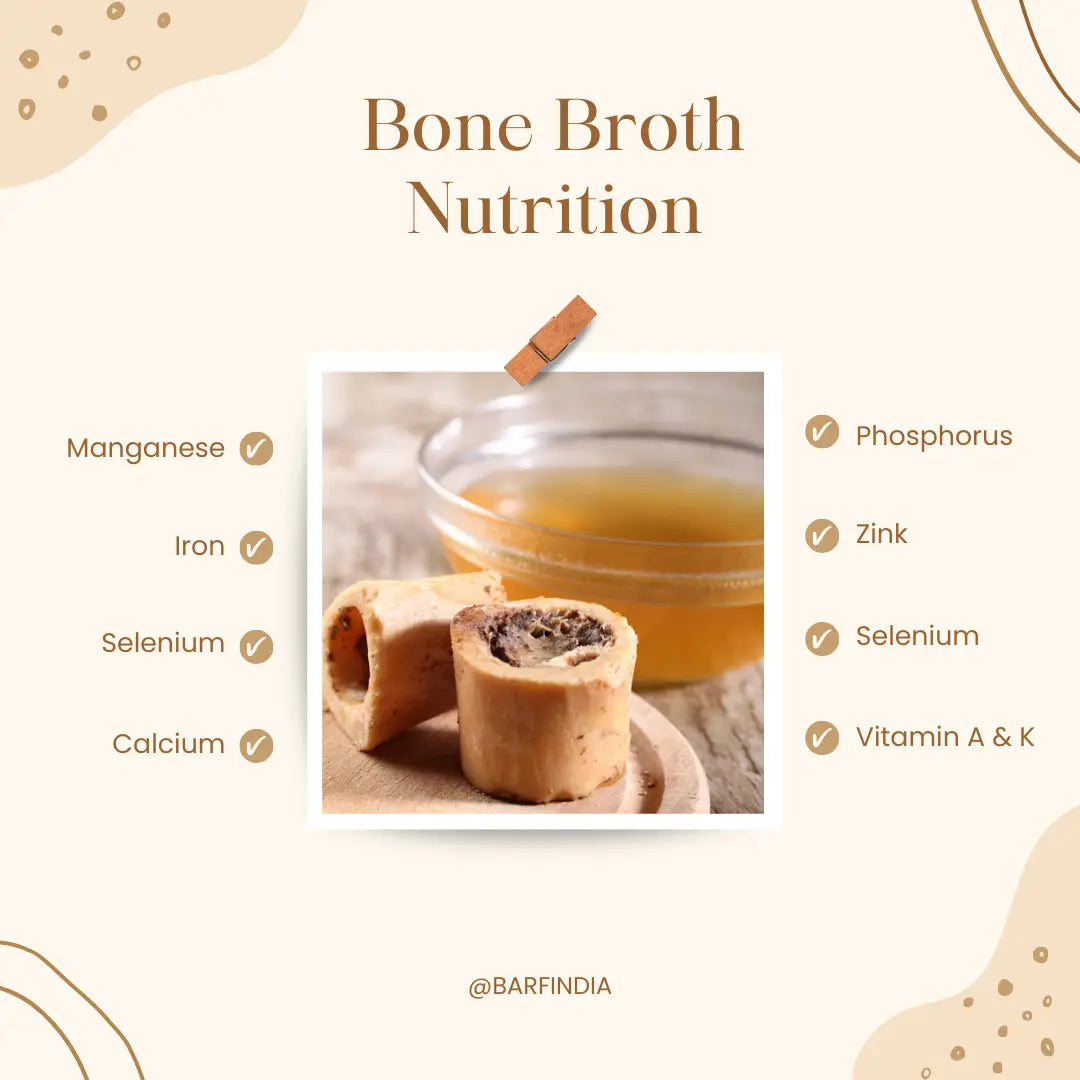
• Calcium and Phosphorus: These bone-derived minerals support strong teeth and skeletal
health.
• Magnesium: Supports muscle function, nerve transmission, and energy production.
• Potassium: An electrolyte that supports heart health and proper hydration.
• Glucosamine and Chondroitin: Support cartilage regeneration and joint fluid production.
• Collagen Peptides: Converted by the body into glycine, proline, and hydroxyproline - all
amino acids critical to structural tissues.
It is worth noting that the exact nutritional profile of bone broth depends significantly on the
quality of the bones used, the duration of cooking, and whether any additional ingredients like
vegetables or herbs have been added. A long-cooked bone broth - simmered for 18 to 24 hours
- will extract far more minerals and amino acids than a quick-boiled stock.
This is precisely why the method of preparation matters so much. Long-cooke bone broth, like that produced by BARF India, delivers a richer, more bioavailable nutrient profile than any quick-boiled alternative.
Can Bone Broth Help a Leaky Gut in Dogs?
Leaky gut syndrome - technically known as intestinal hyperpermeability - is a condition in
which the tight junctions of the intestinal lining become compromised, allowing undigested food
particles, bacteria, and toxins to pass into the bloodstream. In dogs, this can manifest as chronic
digestive issues, food sensitivities, allergies, skin problems, and even behavioural changes.
The good news is that bone broth for dogs is one of the most evidence-supported natural
remedies for leaky gut.
How Bone Broth Heals a Leaky Gut
The primary mechanism is gelatin. When collagen-rich bones are simmered for an extended
period, the collagen converts into gelatin. Gelatin contains glutamine (also called glutamic acid),
an amino acid that has been shown in multiple studies to support the integrity of the intestinal
wall. Glutamine essentially acts as 'mortar' between the cells of the gut lining, helping to close
up the micro-gaps that cause leaky gut.
Additionally, glycine in bone broth has been shown to reduce intestinal inflammation and
support the mucous lining of the gut - a critical first line of defence against pathogens.
What Is the Best Drink for a Leaky Gut in Dogs?
Among natural food-based remedies, bone broth is widely considered the single best dietary
support for a dog with leaky gut. It combines three key therapeutic elements: glutamine for gut
lining repair, anti-inflammatory glycine, and a deeply nourishing, easy-to-digest format that
doesn't stress a compromised digestive system.
How Often Should You Give Bone Broth for a Leaky Gut?
For dogs recovering from digestive issues or known gut inflammation, many integrative
veterinarians recommend daily supplementation with bone broth - typically 50 to 250 ml per
day depending on the dog's size. Start slowly and build up gradually. Monitor stools and energy
levels as you increase the dose.
If your dog is experiencing what happens when you drink bone broth every day in canine terms, that means improved stool consistency, reduced bloating, better coat condition, and more energy - you are on the right track.
NATURE HAS ALREADY GIVEN THE RECIPE. WE HAVE ONLY IMPLEMENTED IT
Bone Broth as a Topper for Raw Feeding and BARF Diets
If you are already feeding your dog a raw diet - or you are considering transitioning - bone
broth for dogs is the perfect companion. It bridges the gap between a nutritionally complete raw
meal and optimal hydration and gut health.
What Is Raw Feeding and BARF?
The Biologically Appropriate Raw Food (BARF) diet is a feeding philosophy based on the
ancestral diet of dogs - one that consists of raw meat, raw meaty bones, organ meats, and a
small portion of dog-safe vegetables and superfoods. The BARF diet is designed to mirror what
dogs evolved to eat, before the advent of highly processed commercial pet food.
Bone broth for dogs fits seamlessly into this framework. In fact, it enhances the BARF diet in
multiple important ways.
How to Use Bone Broth as a Raw Feeding Topper
• Warm it gently: Bring the bone broth to a light, comfortable warmth before serving.
Never boil it - excessive heat destroys some of the beneficial amino acids and gelatin.
Lukewarm is perfect.
• Pour over the raw meal: Ladle 50–150 ml (depending on your dog's size) of bone broth
directly over the prepared raw food. It adds moisture, amplifies the aroma, and
encourages even the fussiest dogs to eat their meal with enthusiasm.
• Use as a transition aid: If you are moving your dog from kibble or processed food to a
raw diet, bone broth can help ease the digestive transition. Its gut-supportive properties
help the digestive microbiome adjust to the new diet more comfortably.
• Freeze into lick mats or ice treats: Pour bone broth into silicone moulds or ice cube trays
and freeze. These make excellent enrichment treats, especially in warmer months, and
provide the same nutritional benefits in a different format.
• Rehydrate freeze-dried or dehydrated raw meals: If you use freeze-dried or dehydrated
raw food, bone broth is an excellent rehydration liquid that adds nutrition while
restoring the meal's natural texture and palatability.
Why BARF India Bone Broth Is the Gold Standard
When it comes to bone broth for dogs in India, not all products are created equal. The most
important factor is the length and quality of the cooking process. A bone broth that has been
simmered for 18 hours or more extracts dramatically more collagen, minerals, and amino acids
than one cooked briefly.
BARF India has earned a well-deserved reputation among India's raw feeding community for
producing one of the finest long-cooked bone broths available in the country. Their commitment
to using quality bones, proper slow-cooking methodology, and an additive-free formulation
means that every batch delivers the kind of thick, gelatin-rich broth that truly makes a difference
to your dog's health. For Indian pet owners who want the very best for their dogs, BARF India's
bone broth is a name that consistently comes up in trusted raw feeding circles.
A quality bone broth should be thick and slightly gelatinous when cold. If it pour out thin and watery from the fridge, it hasn't been cooked long enough to extract meaningful collagen. Always choose long-cooked over quick-boiled.
What Are the Side Effects of Bone Broth for Dogs?
Bone broth for dogs is generally very safe and well-tolerated. However, as with any new food
addition, it is important to be aware of potential side effects and feeding considerations.
Common Side Effects to Watch For
• Loose stools when starting out: Some dogs experience softer stools when bone broth is
first introduced. This is usually a sign of the gut adjusting and typically resolves within a
few days. Start with small quantities and build up gradually.
• Weight gain from high-fat broths: Bone broth made with marrow-heavy bones can have
a higher fat content. For dogs prone to weight gain or pancreatitis, opt for broths made
from leaner bones such as chicken feet or poultry carcasses.
• Histamine sensitivity: In some dogs - particularly those with mast cell disorders or
histamine intolerance - the long fermentation time of bone broth can elevate histamine
levels, which may trigger itching or digestive reactions. If your dog has known histamine
sensitivity, start with very small amounts and monitor closely.
• Phosphorus load: Dogs with kidney disease need to be careful about phosphorus intake.
Since bones are a significant source of phosphorus, consult your veterinarian before
adding bone broth to the diet of a dog with renal compromise.
Overall, the vast majority of dogs tolerate bone broth exceptionally well and benefit greatly from
its regular inclusion in their diet.
LEARN MORE ABOUT INDIA'S No.1 FRESH DOG FOOD
Start Fresh
How to Make Bone Broth for Dogs at Home
If you would like to make bone broth for dogs at home, it is a straightforward process that
requires patience more than skill. The key is in the long, slow simmer that extracts every bit of
nutrition from the bones.
What You Will Need
• 1–1.5 kg of raw or roasted bones (chicken frames, beef knuckles, lamb necks - avoid
cooked bones)
• 2 tablespoons of apple cider vinegar (raw and unfiltered)
• Enough filtered water to fully submerge the bones
• Optional additions: a small piece of fresh turmeric, a few sprigs of parsley, a slice of
ginger
Method
• Place the bones in a large stockpot or slow cooker. Add the apple cider vinegar and let
the bones sit in the water for 30 minutes before applying heat. This pre-soak helps the
vinegar begin drawing minerals out of the bones.
• Bring the water to a gentle boil, then reduce to a very low simmer. The liquid should
barely bubble.
• Simmer for a minimum of 12 hours. For maximum nutritional extraction, aim for 18 to
24 hours. Top up with water if the level drops below the bones.
• Allow the broth to cool, then strain out all bones and solids. Never leave bones accessible
to your dog - cooked bones can splinter and are dangerous.
• Pour the strained broth into glass jars. Refrigerate for up to 5 days or freeze in portions
for up to 3 months.
• Once refrigerated, a well-made bone broth will set into a thick jelly. This is the gelatin -
and it is the most important sign of a nutritionally rich broth.
To serve, scoop out a portion of the jelly and gently warm it until it becomes liquid again. Pour it over your dog's raw meal or serve it as a standalone hydrating treat.

FAQ's: Bone Broth for Dogs
Conclusion: Why Every Dog Deserves Bone Broth
Bone broth for dogs is far more than a trend. It is a return to the wisdom of natural, whole-food
nutrition - a simple, ancestral food that delivers an extraordinary range of benefits for your
canine companion's health and wellbeing.
Whether you are looking to support an ageing dog's joints, heal a sensitive stomach, improve a
dull coat, or simply give your dog the most nourishing meal possible, bone broth for dogs
belongs in your toolkit. Its unique combination of collagen, gelatin, amino acids, and minerals
works synergistically to support the whole body - from the inside out.
For those already committed to raw feeding and the BARF philosophy, bone broth is the
ultimate functional topper - one that enhances every meal, aids digestive transition, and
delivers deep cellular nutrition with every serving.
And for those in India looking for the best ready-made option, BARF India's long-cooked bone
broth stands out as a product made with genuine care, proper technique, and a deep
understanding of what dogs truly need.
Start your dog on bone broth today. The wagging tail at feeding time - and the health
improvements that follow - will tell you everything you need to know.
If you’ve been searching for a healthier, fresher alternative to processed kibble, BARF India’s cooked cat food is the answer. Made from human-grade, preservative-free ingredients, it’s the closest you can get to homemade cat food — without the effort. Our sampler pack is perfect for finicky cats, giving them a chance to explore every recipe and find their favourite.
If you are a dog parent who cares deeply about what goes into your furry friend's bowl, you have
probably come across the term bone broth for dogs. Once considered a niche health food, bone
broth has rapidly become one of the most celebrated superfoods in the pet wellness world - and
for very good reason.
Bone broth for dogs is a slow-simmered, nutrient-dense liquid made from animal bones,
connective tissue, and cartilage. When prepared correctly - with a long, gentle cooking process
- it extracts a powerhouse of collagen, gelatin, amino acids, and essential minerals that support
nearly every system in your dog's body. From a shiny coat to a healthy gut and strong joints, this
humble golden liquid does it all.
In this comprehensive guide, we will walk you through everything: what bone broth for dogs is
made of, its incredible health benefits, whether it supports B12 and other vitamins, how it heals
a leaky gut, and most importantly, how to incorporate it as a nourishing topper in a raw or
BARF (Biologically Appropriate Raw Food) diet. We'll also answer the most common questions
dog owners have before getting started.
Let's dive in.
What Is Bone Broth for Dogs? Understanding the Main Ingredients
Bone broth for dogs is not the same as the store-bought broths or stocks you find in
supermarkets for human use. Those products are often loaded with sodium, onion, garlic, and
other additives that can be toxic to dogs. True bone broth for dogs is made from a carefully
selected combination of wholesome, dog-safe ingredients simmered low and slow for an
extended period.
The Core Ingredients of Bone Broth for Dogs
• Animal Bones (the star ingredient): The main ingredient in bone broth is raw or roasted
animal bones - typically from chicken, beef, lamb, or turkey. These bones contain
collagen, calcium, phosphorus, and bone marrow, all of which leach into the broth
during the long cooking process.
• Connective Tissue and Cartilage: Joint-rich cuts like chicken feet, knuckles, and tracheas
are prized for their dense collagen content. When simmered for hours, this collagen
converts into gelatin - a soothing, gut-healing compound.
• Apple Cider Vinegar: A small splash of raw apple cider vinegar is often added to the pot.
Its mild acidity helps draw minerals out of the bones and into the liquid, increasing the
nutritional yield of the broth.
• Filtered Water: Clean water is essential. The quality of the water directly impacts the
purity and safety of the broth.
• Optional Dog-Safe Vegetables and Herbs: Ingredients like turmeric, ginger, and parsley
can be added for their anti-inflammatory and digestive benefits. Always avoid onion,
garlic, leeks, chives, and any other alliums, which are toxic to dogs.
What to avoid in bone broth for dogs: onions, garlic, leeks, excessive salt, artificial preservatives,
and any seasoning blends designed for human consumption.
- Bone broth that has been cooked for 12–24 hours or more tends to form a thick jelly-like consistency when chilled. This is a sign of high gelatin content - exactly what you want for a quality bone broth for dogs.
What Does Bone Broth Do for Your Dog's Body? 7 Key Health Benefits
Bone broth for dogs is not just a tasty treat. It is a functional food that supports your dog's
health at a cellular level. Here are the seven main health benefits that make bone broth for dogs
a must-have in every responsible pet owner's pantry.
1. Supports Joint Health and Reduces Inflammation
The collagen and gelatin in bone broth help rebuild and protect joint cartilage. Glucosamine and
chondroitin - natural compounds found in bone and cartilage - are released into the broth
during cooking. These compounds are clinically recognized for their ability to reduce joint
inflammation, making bone broth especially valuable for senior dogs or breeds prone to hip
dysplasia and arthritis.
2. Heals and Seals the Gut Lining
Gelatin, one of the primary compounds in a well-made bone broth, is remarkably effective at
supporting the integrity of the gut lining. It helps 'heal and seal' tiny gaps in the intestinal wall -
gaps that can lead to a condition known as leaky gut syndrome (more on this in Section 5). A
healthier gut means better digestion, fewer allergies, and improved nutrient absorption.
3. Boosts Immune Function
A large proportion of the immune system lives in the gut. By improving gut health, bone broth
for dogs indirectly strengthens immune defences. Additionally, the amino acids glycine and
proline in bone broth have natural anti-inflammatory properties that keep the immune response
balanced and effective.
4. Promotes Skin and Coat Health
Collagen is the structural protein responsible for your dog's skin elasticity and coat condition.
Regular consumption of bone broth can visibly improve the shine, texture, and thickness of your
dog's coat while keeping the skin supple and moisturised. Many dog owners notice this benefit
within a few weeks of adding bone broth to their dog's meals.
5. Supports Liver Detoxification
Glycine, a key amino acid in bone broth, plays a direct role in the liver's detoxification process. It
supports phase II liver detoxification - the process by which the liver neutralises and eliminates
harmful substances. For dogs exposed to environmental toxins, medications, or processed foods,
this support is invaluable.
6. Provides Deep Hydration
Many dogs are chronically under-hydrated, especially those on dry kibble diets. Bone broth is an
excellent way to increase fluid intake while simultaneously delivering nutrition. Dogs tend to
find the smell and taste of bone broth irresistible, making it a practical tool for encouraging
drinking in fussy or ill dogs.
7. Aids Post-Illness and Post-Surgery
Recovery
The high bioavailability of nutrients in bone broth - combined with its easily digestible form -
makes it ideal for dogs recovering from illness, surgery, or digestive upset. The broth is gentle
- Should you give bone broth for dogs in the morning or at night? Either works well Many pet owners prefer adding it as a warm topper at mealtimes, while others use it as a standalone midday snack. Consistency matters more than timing.
Does Bone Broth Help Dogs Lose Belly Fat?
This is one of the more surprising questions in the world of bone broth for dogs - but it's a valid
one, especially for owners of overweight or obese dogs who are looking for holistic support for
weight management.
The honest answer is that bone broth for dogs is not a weight-loss supplement on its own.
However, it does play a meaningful supporting role in managing a healthy body composition.
Here's why: The protein and amino acids in bone broth help support lean muscle mass.
Preserving muscle tissue is essential during weight loss because muscle burns more calories
than fat, even at rest. When combined with a species-appropriate, protein-rich diet - especially
a raw or BARF diet - bone broth can help dogs maintain muscle while gradually losing excess
body fat.
Additionally, adding bone broth to meals increases satiety (the feeling of fullness) without
adding significant calories. For dogs that always seem hungry or tend to overeat, the warm,
flavourful addition of bone broth to their meal may help reduce the urgency to consume more
food.
For dogs with excess belly fat, the anti-inflammatory compounds in bone broth can also help
reduce the low-grade inflammation that is often associated with obesity.
- Bone broth is best used alongside a balanced raw or species-appropriate diet, no as a replacement for a structured nutrition plan. Consult your holistic vet before making significant dietary changes for an overweight dog.
Does Bone Broth for Dogs Provide B12 and Essential Vitamins?
One of the most common questions asked about bone broth for dogs is whether it provides
Vitamin B12 - a critical nutrient for neurological function, red blood cell formation, and overall
energy.
Bone Broth and Vitamin B12
Bone broth does contain trace amounts of Vitamin B12, particularly when made from beef or
organ-rich bones. However, it is not a concentrated source of B12. The richest dietary sources of
Vitamin B12 for dogs include: beef liver, eggs, sardines, mackerel, and other organ meats.
If your dog has been diagnosed with B12 deficiency, a diet rich in organ meats - rather than
bone broth alone - would be the primary nutritional intervention. That said, bone broth made
from high-quality, nutrient-dense bones and marrow does contribute to the overall vitamin and
mineral intake, and is a valuable part of a well-rounded raw diet.
Other Vitamins and Minerals Found in Bone Broth for Dogs
• Calcium and Phosphorus: These bone-derived minerals support strong teeth and skeletal
health.
• Magnesium: Supports muscle function, nerve transmission, and energy production.
• Potassium: An electrolyte that supports heart health and proper hydration.
• Glucosamine and Chondroitin: Support cartilage regeneration and joint fluid production.
• Collagen Peptides: Converted by the body into glycine, proline, and hydroxyproline - all
amino acids critical to structural tissues.
It is worth noting that the exact nutritional profile of bone broth depends significantly on the
quality of the bones used, the duration of cooking, and whether any additional ingredients like
vegetables or herbs have been added. A long-cooked bone broth - simmered for 18 to 24 hours
- will extract far more minerals and amino acids than a quick-boiled stock.
- This is precisely why the method of preparation matters so much. Long-cooke bone broth, like that produced by BARF India, delivers a richer, more bioavailable nutrient profile than any quick-boiled alternative.
Can Bone Broth Help a Leaky Gut in Dogs?
Leaky gut syndrome - technically known as intestinal hyperpermeability - is a condition in
which the tight junctions of the intestinal lining become compromised, allowing undigested food
particles, bacteria, and toxins to pass into the bloodstream. In dogs, this can manifest as chronic
digestive issues, food sensitivities, allergies, skin problems, and even behavioural changes.
The good news is that bone broth for dogs is one of the most evidence-supported natural
remedies for leaky gut.
How Bone Broth Heals a Leaky Gut
The primary mechanism is gelatin. When collagen-rich bones are simmered for an extended
period, the collagen converts into gelatin. Gelatin contains glutamine (also called glutamic acid),
an amino acid that has been shown in multiple studies to support the integrity of the intestinal
wall. Glutamine essentially acts as 'mortar' between the cells of the gut lining, helping to close
up the micro-gaps that cause leaky gut.
Additionally, glycine in bone broth has been shown to reduce intestinal inflammation and
support the mucous lining of the gut - a critical first line of defence against pathogens.
What Is the Best Drink for a Leaky Gut in Dogs?
Among natural food-based remedies, bone broth is widely considered the single best dietary
support for a dog with leaky gut. It combines three key therapeutic elements: glutamine for gut
lining repair, anti-inflammatory glycine, and a deeply nourishing, easy-to-digest format that
doesn't stress a compromised digestive system.
How Often Should You Give Bone Broth for a Leaky Gut?
For dogs recovering from digestive issues or known gut inflammation, many integrative
veterinarians recommend daily supplementation with bone broth - typically 50 to 250 ml per
day depending on the dog's size. Start slowly and build up gradually. Monitor stools and energy
levels as you increase the dose.
- If your dog is experiencing what happens when you drink bone broth every day in canine terms, that means improved stool consistency, reduced bloating, better coat condition, and more energy - you are on the right track.
NATURE HAS ALREADY GIVEN THE RECIPE. WE HAVE ONLY IMPLEMENTED ITBone Broth as a Topper for Raw Feeding and BARF Diets
If you are already feeding your dog a raw diet - or you are considering transitioning - bone
broth for dogs is the perfect companion. It bridges the gap between a nutritionally complete raw
meal and optimal hydration and gut health.
What Is Raw Feeding and BARF?
The Biologically Appropriate Raw Food (BARF) diet is a feeding philosophy based on the
ancestral diet of dogs - one that consists of raw meat, raw meaty bones, organ meats, and a
small portion of dog-safe vegetables and superfoods. The BARF diet is designed to mirror what
dogs evolved to eat, before the advent of highly processed commercial pet food.
Bone broth for dogs fits seamlessly into this framework. In fact, it enhances the BARF diet in
multiple important ways.
How to Use Bone Broth as a Raw Feeding Topper
• Warm it gently: Bring the bone broth to a light, comfortable warmth before serving.
Never boil it - excessive heat destroys some of the beneficial amino acids and gelatin.
Lukewarm is perfect.
• Pour over the raw meal: Ladle 50–150 ml (depending on your dog's size) of bone broth
directly over the prepared raw food. It adds moisture, amplifies the aroma, and
encourages even the fussiest dogs to eat their meal with enthusiasm.
• Use as a transition aid: If you are moving your dog from kibble or processed food to a
raw diet, bone broth can help ease the digestive transition. Its gut-supportive properties
help the digestive microbiome adjust to the new diet more comfortably.
• Freeze into lick mats or ice treats: Pour bone broth into silicone moulds or ice cube trays
and freeze. These make excellent enrichment treats, especially in warmer months, and
provide the same nutritional benefits in a different format.
• Rehydrate freeze-dried or dehydrated raw meals: If you use freeze-dried or dehydrated
raw food, bone broth is an excellent rehydration liquid that adds nutrition while
restoring the meal's natural texture and palatability.
Why BARF India Bone Broth Is the Gold Standard
When it comes to bone broth for dogs in India, not all products are created equal. The most
important factor is the length and quality of the cooking process. A bone broth that has been
simmered for 18 hours or more extracts dramatically more collagen, minerals, and amino acids
than one cooked briefly.
BARF India has earned a well-deserved reputation among India's raw feeding community for
producing one of the finest long-cooked bone broths available in the country. Their commitment
to using quality bones, proper slow-cooking methodology, and an additive-free formulation
means that every batch delivers the kind of thick, gelatin-rich broth that truly makes a difference
to your dog's health. For Indian pet owners who want the very best for their dogs, BARF India's
bone broth is a name that consistently comes up in trusted raw feeding circles.
- A quality bone broth should be thick and slightly gelatinous when cold. If it pour out thin and watery from the fridge, it hasn't been cooked long enough to extract meaningful collagen. Always choose long-cooked over quick-boiled.
What Are the Side Effects of Bone Broth for Dogs?
Bone broth for dogs is generally very safe and well-tolerated. However, as with any new food
addition, it is important to be aware of potential side effects and feeding considerations.
Common Side Effects to Watch For
• Loose stools when starting out: Some dogs experience softer stools when bone broth is
first introduced. This is usually a sign of the gut adjusting and typically resolves within a
few days. Start with small quantities and build up gradually.
• Weight gain from high-fat broths: Bone broth made with marrow-heavy bones can have
a higher fat content. For dogs prone to weight gain or pancreatitis, opt for broths made
from leaner bones such as chicken feet or poultry carcasses.
• Histamine sensitivity: In some dogs - particularly those with mast cell disorders or
histamine intolerance - the long fermentation time of bone broth can elevate histamine
levels, which may trigger itching or digestive reactions. If your dog has known histamine
sensitivity, start with very small amounts and monitor closely.
• Phosphorus load: Dogs with kidney disease need to be careful about phosphorus intake.
Since bones are a significant source of phosphorus, consult your veterinarian before
adding bone broth to the diet of a dog with renal compromise.
Overall, the vast majority of dogs tolerate bone broth exceptionally well and benefit greatly from
its regular inclusion in their diet.
LEARN MORE ABOUT INDIA'S NO.1 FRESH DOG FOOD
Start FreshHow to Make Bone Broth for Dogs at Home
If you would like to make bone broth for dogs at home, it is a straightforward process that
requires patience more than skill. The key is in the long, slow simmer that extracts every bit of
nutrition from the bones.
What You Will Need
• 1–1.5 kg of raw or roasted bones (chicken frames, beef knuckles, lamb necks - avoid
cooked bones)
• 2 tablespoons of apple cider vinegar (raw and unfiltered)
• Enough filtered water to fully submerge the bones
• Optional additions: a small piece of fresh turmeric, a few sprigs of parsley, a slice of
ginger
Method
• Place the bones in a large stockpot or slow cooker. Add the apple cider vinegar and let
the bones sit in the water for 30 minutes before applying heat. This pre-soak helps the
vinegar begin drawing minerals out of the bones.
• Bring the water to a gentle boil, then reduce to a very low simmer. The liquid should
barely bubble.
• Simmer for a minimum of 12 hours. For maximum nutritional extraction, aim for 18 to
24 hours. Top up with water if the level drops below the bones.
• Allow the broth to cool, then strain out all bones and solids. Never leave bones accessible
to your dog - cooked bones can splinter and are dangerous.
• Pour the strained broth into glass jars. Refrigerate for up to 5 days or freeze in portions
for up to 3 months.
• Once refrigerated, a well-made bone broth will set into a thick jelly. This is the gelatin -
and it is the most important sign of a nutritionally rich broth.
- To serve, scoop out a portion of the jelly and gently warm it until it becomes liquid again. Pour it over your dog's raw meal or serve it as a standalone hydrating treat.
FAQ's: Bone Broth for Dogs
Conclusion: Why Every Dog Deserves Bone Broth
Bone broth for dogs is far more than a trend. It is a return to the wisdom of natural, whole-food
nutrition - a simple, ancestral food that delivers an extraordinary range of benefits for your
canine companion's health and wellbeing.
Whether you are looking to support an ageing dog's joints, heal a sensitive stomach, improve a
dull coat, or simply give your dog the most nourishing meal possible, bone broth for dogs
belongs in your toolkit. Its unique combination of collagen, gelatin, amino acids, and minerals
works synergistically to support the whole body - from the inside out.
For those already committed to raw feeding and the BARF philosophy, bone broth is the
ultimate functional topper - one that enhances every meal, aids digestive transition, and
delivers deep cellular nutrition with every serving.
And for those in India looking for the best ready-made option, BARF India's long-cooked bone
broth stands out as a product made with genuine care, proper technique, and a deep
understanding of what dogs truly need.
Start your dog on bone broth today. The wagging tail at feeding time - and the health
improvements that follow - will tell you everything you need to know.