Raw for Maximum Nutrition

Made in our own Kitchens

Human grade products

Raw for Maximum Nutrition

Made in our own kitchens

Human grade products

9 June 2026

The Problem With Synthetic Additives in Conventional Cat Food

Discover how synthetic additives in conventional cat food harm your cat's health. Learn which chemicals to avoid and what safer alternatives actually exist.

The Problem With Synthetic Additives in Conventional Cat Food

9 June 2026

The Problem With Synthetic Additives in Conventional Cat Food

Discover how synthetic additives in conventional cat food harm your cat's health. Learn which chemicals to avoid and what safer alternatives actually exist.

The Problem With Synthetic Additives in Conventional Cat Food

Introduction: What's Really in Your Cat's Bowl?

Synthetic additives in conventional cat food are hiding in plain sight - on every label, in every colorful bag, in every tin promising "complete nutrition." Most cat owners assume a product on store shelves is safe. That assumption is costing cats their health.

Cat food manufacturers use synthetic additives to extend shelf life, enhance color, improve palatability, and reduce production costs. These goals serve the manufacturer - not your cat.

Furthermore, cats are obligate carnivores with a unique physiology. Their liver lacks certain detoxifying enzymes that dogs and humans possess. As a result, synthetic chemicals accumulate in feline tissue far more readily. This blog exposes the real risk of synthetic additives in conventional cat food, names the worst offenders, and tells you exactly what to look for on labels.

The Problem With Synthetic Additives in Conventional Cat Food

What Are Synthetic Additives in Conventional Cat Food?

Synthetic additives in conventional cat food fall into four main categories: preservatives, colorants, flavor enhancers, and texture agents. None of these categories exist to benefit your cat biologically.

Synthetic Preservatives: The Shelf-Life Myth

Synthetic preservatives like BHA (butylated hydroxyanisole), BHT (butylated hydroxytoluene), and ethoxyquin were originally designed for industrial use - rubber production and pesticide stabilization. They ended up in pet food because they are cheap and highly effective at preventing fat oxidation.

Ethoxyquin is banned in human food in the European Union and Australia. It remains legal in U.S. pet food at concentrations up to 75 parts per million. The FDA has received thousands of consumer complaints linking ethoxyquin to liver damage, immune disorders, and reproductive failure in pets.

Artificial Colorants: Zero Nutritional Value

Cats cannot perceive color the same way humans do. They are dichromats with limited color discrimination. Therefore, artificial colorants like Red 40, Yellow 5, and Yellow 6 exist purely to make the product look appealing to the human buyer. Your cat gets nothing from them - except potential harm.

Moreover, Red 40 (Allura Red AC) has been linked to hypersensitivity reactions and is derived from petroleum. Yellow 5 and Yellow 6 are associated with behavioral abnormalities in sensitive animals.

Flavor Enhancers and Palatability Agents

Many conventional brands spray synthetic flavor enhancers - often listed as "animal digest" - onto kibble after processing. Animal digest is chemically hydrolyzed animal material of unspecified origin. It makes nutritionally dead kibble smell irresistible to cats.

Monosodium glutamate (MSG) also appears in some formulations. Chronic MSG exposure in animal studies has been associated with neurological changes and obesity. Synthetic additives in conventional cat food routinely combine multiple flavor agents, amplifying potential risk.

Purple label for Cooked Cat Food - Grain Free Chicken & Tuna Recipe (1.75kg | 7x250g) by www.barfindia.com. Features cat graphic, feeding guidelines, ingredients, safety info, and maker details. All-natural, preservative-free, family-owned brand.
An orange label for Cooked Cat Food – Grain-Free Buffalo & Chicken Recipe (1.75kg | 7x250g) from www.barfindia.com lists ingredients, feeding instructions, and safety info. A gray-striped cartoon cat stretches at the bottom left. Made in India.
Blue label for Cooked Cat Food - Grain-free Mackerel & Pork Recipe (1.75 kg, 7x250g) by www.barfindia.com. High protein, with ingredients and feeding instructions. Gray striped cat illustration; yellow safety info box on right.
Cooked Cat Food - Grain free Rabbit & Quail Recipe (1.75kg, 7x250g) label features ingredients, feeding and storage instructions, allergy warnings, manufacturer info (www.barfindia.com), and a gray tabby cat illustration on a pink background.
Yellow label for Sampler Pack - Gently Cooked Cat Food by www.barfindia.com, highlighting all-natural, preservative-free boneless chicken. Includes a cartoon cat, feeding guide, ingredients, storage tips, manufacturer info, and 250g net weight.
An infographic for www.barfindia.com’s Sampler Pack - Gently Cooked Cat Food shows five steps—Protein, Prep Produce, Cold Combine, Pack & Freeze, Test/Ship/Enjoy—with brief descriptions and illustrated icons for each.
Purple label for Cooked Cat Food - Grain Free Chicken & Tuna Recipe (1.75kg | 7x250g) by www.barfindia.com. Features cat graphic, feeding guidelines, ingredients, safety info, and maker details. All-natural, preservative-free, family-owned brand.
An orange label for Cooked Cat Food – Grain-Free Buffalo & Chicken Recipe (1.75kg | 7x250g) from www.barfindia.com lists ingredients, feeding instructions, and safety info. A gray-striped cartoon cat stretches at the bottom left. Made in India.
Blue label for Cooked Cat Food - Grain-free Mackerel & Pork Recipe (1.75 kg, 7x250g) by www.barfindia.com. High protein, with ingredients and feeding instructions. Gray striped cat illustration; yellow safety info box on right.
Cooked Cat Food - Grain free Rabbit & Quail Recipe (1.75kg, 7x250g) label features ingredients, feeding and storage instructions, allergy warnings, manufacturer info (www.barfindia.com), and a gray tabby cat illustration on a pink background.
Yellow label for Sampler Pack - Gently Cooked Cat Food by www.barfindia.com, highlighting all-natural, preservative-free boneless chicken. Includes a cartoon cat, feeding guide, ingredients, storage tips, manufacturer info, and 250g net weight.
An infographic for www.barfindia.com’s Sampler Pack - Gently Cooked Cat Food shows five steps—Protein, Prep Produce, Cold Combine, Pack & Freeze, Test/Ship/Enjoy—with brief descriptions and illustrated icons for each.

Cooked Cat Food - The Tasting Box.

Rs. 320.00
An orange label for Cooked Cat Food – Grain-Free Buffalo & Chicken Recipe (1.75kg | 7x250g) from www.barfindia.com lists ingredients, feeding instructions, and safety info. A gray-striped cartoon cat stretches at the bottom left. Made in India.
An infographic shows 5 safe steps for prepping Cooked Cat Food – Grain-Free Buffalo & Chicken Recipe (1.75kg | 7x250g) by www.barfindia.com: steam/thaw protein, wash/steam produce, cold combine, pack/freeze, test/ship/enjoy!.
Infographic displays daily portions for adult cats (2.7–7.2 kg) in grams/day for Cooked Cat Food – Grain-Free Buffalo & Chicken Recipe (1.75kg | 7x250g) by www.barfindia.com, with a cartoon cat and tips to adjust food for activity and treats.
Infographic for Cooked Cat Food – Grain-Free Buffalo & Chicken Recipe (1.75kg) from www.barfindia.com: Holistic vet-crafted, high-protein, 87% chicken, liver, eggs, mussels & oysters with veggies and healthy fats. Small batch made.
An orange label for Cooked Cat Food – Grain-Free Buffalo & Chicken Recipe (1.75kg | 7x250g) from www.barfindia.com lists ingredients, feeding instructions, and safety info. A gray-striped cartoon cat stretches at the bottom left. Made in India.
An infographic shows 5 safe steps for prepping Cooked Cat Food – Grain-Free Buffalo & Chicken Recipe (1.75kg | 7x250g) by www.barfindia.com: steam/thaw protein, wash/steam produce, cold combine, pack/freeze, test/ship/enjoy!.
Infographic displays daily portions for adult cats (2.7–7.2 kg) in grams/day for Cooked Cat Food – Grain-Free Buffalo & Chicken Recipe (1.75kg | 7x250g) by www.barfindia.com, with a cartoon cat and tips to adjust food for activity and treats.
Infographic for Cooked Cat Food – Grain-Free Buffalo & Chicken Recipe (1.75kg) from www.barfindia.com: Holistic vet-crafted, high-protein, 87% chicken, liver, eggs, mussels & oysters with veggies and healthy fats. Small batch made.

Premium Buffalo & Chicken Cat Food

Rs. 630.00
Purple label for Cooked Cat Food - Grain Free Chicken & Tuna Recipe (1.75kg | 7x250g) by www.barfindia.com. Features cat graphic, feeding guidelines, ingredients, safety info, and maker details. All-natural, preservative-free, family-owned brand.
Infographic for Cooked Cat Food - Grain Free Chicken & Tuna Recipe (1.75kg, 7x250g) by www.barfindia.com: Pie chart—87% meat & seafood, 9% fats/seeds/root veggies, 4% dark green veggies. Small batch, gently cooked, human-grade ingredients.
Purple label for Cooked Cat Food - Grain Free Chicken & Tuna Recipe (1.75kg | 7x250g) by www.barfindia.com. Features cat graphic, feeding guidelines, ingredients, safety info, and maker details. All-natural, preservative-free, family-owned brand.
Infographic for Cooked Cat Food - Grain Free Chicken & Tuna Recipe (1.75kg, 7x250g) by www.barfindia.com: Pie chart—87% meat & seafood, 9% fats/seeds/root veggies, 4% dark green veggies. Small batch, gently cooked, human-grade ingredients.

Cooked Cat Food: Premium Chicken & Tuna Cat Food

Rs. 590.00
A bright yellow
Infographic for Cooked Cat Food - Grain Free Chicken Recipe (1.75kg) by www.barfindia.com: 87% chicken, liver, eggs, mussels & oysters; 9% healthy fats, seeds & root veggies; 4% dark green veggies. Circular chart on yellow background.
Chart shows daily food portions (grams) for adult cats (2.7–7.2kg) for Cooked Cat Food - Grain Free Chicken Recipe by www.barfindia.com. Includes guidance, cartoon cat, and note to adjust for activity and treats. Pack: 1.75kg (7x250g).
Discover how www.barfindia.com's Cooked Cat Food - Grain Free Chicken Recipe (1.75kg, 7x250g) is made in five steps: select protein, prep produce, combine cold, pack & freeze, test & ship! Includes grain-free tips and vivid illustrations for each stage.
A plate with chicken breast, hearts, liver, mussels, shrimp, kidney, oysters, organic egg, and a creamy mix—each labeled as www.barfindia.com Cooked Cat Food - Grain Free Chicken Recipe ingredients.
A bright yellow
Infographic for Cooked Cat Food - Grain Free Chicken Recipe (1.75kg) by www.barfindia.com: 87% chicken, liver, eggs, mussels & oysters; 9% healthy fats, seeds & root veggies; 4% dark green veggies. Circular chart on yellow background.
Chart shows daily food portions (grams) for adult cats (2.7–7.2kg) for Cooked Cat Food - Grain Free Chicken Recipe by www.barfindia.com. Includes guidance, cartoon cat, and note to adjust for activity and treats. Pack: 1.75kg (7x250g).
Discover how www.barfindia.com's Cooked Cat Food - Grain Free Chicken Recipe (1.75kg, 7x250g) is made in five steps: select protein, prep produce, combine cold, pack & freeze, test & ship! Includes grain-free tips and vivid illustrations for each stage.
A plate with chicken breast, hearts, liver, mussels, shrimp, kidney, oysters, organic egg, and a creamy mix—each labeled as www.barfindia.com Cooked Cat Food - Grain Free Chicken Recipe ingredients.

Premium Chicken Cat Food

Rs. 475.00
Premium Mackerel & Pork Cat Food www.barfindia.com
Cooked Cat Food
Premium Mackerel & Pork Cat Food www.barfindia.com
Cooked Cat Food
Premium Mackerel & Pork Cat Food www.barfindia.com

Premium Mackerel & Pork Cat Food

Rs. 515.00
Cooked Cat Food - Grain free Rabbit & Quail Recipe (1.75kg, 7x250g) label features ingredients, feeding and storage instructions, allergy warnings, manufacturer info (www.barfindia.com), and a gray tabby cat illustration on a pink background.
Discover our Cooked Cat Food - Grain free Rabbit & Quail Recipe (1.75kg) by www.barfindia.com: 87% rabbit, quail, liver, eggs, mussels & oysters; small batch cooked for complete cat nutrition.
An infographic titled “Recommended Daily Portions: Adult Cat” displays daily amounts of Cooked Cat Food - Grain Free Rabbit & Quail Recipe (1.75kg, 7x250g) for cats from 2.7kg to 7.2kg, with tips on activity and supplement adjustments from www.barfindia.com.
A colorful infographic from www.barfindia.com shows the 5-step process of making Cooked Cat Food - Grain free Rabbit & Quail Recipe (1.75kg): protein cooking, prepping produce, cold combining, packing/freezing, then testing and delivery.
Premium Rabbit & Quail. www.barfindia.com
Cooked Cat Food - Grain free Rabbit & Quail Recipe (1.75kg, 7x250g) label features ingredients, feeding and storage instructions, allergy warnings, manufacturer info (www.barfindia.com), and a gray tabby cat illustration on a pink background.
Discover our Cooked Cat Food - Grain free Rabbit & Quail Recipe (1.75kg) by www.barfindia.com: 87% rabbit, quail, liver, eggs, mussels & oysters; small batch cooked for complete cat nutrition.
An infographic titled “Recommended Daily Portions: Adult Cat” displays daily amounts of Cooked Cat Food - Grain Free Rabbit & Quail Recipe (1.75kg, 7x250g) for cats from 2.7kg to 7.2kg, with tips on activity and supplement adjustments from www.barfindia.com.
A colorful infographic from www.barfindia.com shows the 5-step process of making Cooked Cat Food - Grain free Rabbit & Quail Recipe (1.75kg): protein cooking, prepping produce, cold combining, packing/freezing, then testing and delivery.
Premium Rabbit & Quail. www.barfindia.com

Premium Rabbit & Quail Cat Food

Rs. 680.00

The Most Dangerous Synthetic Additives in Conventional Cat Food

Not all synthetic additives carry the same level of risk. The following are the most evidence- linked offenders found in mainstream cat food products sold today.

The Most Dangerous Synthetic Additives in Conventional Cat Food

Propylene Glycol: The Antifreeze Cousin

Propylene glycol is a close chemical relative of ethylene glycol - the compound found in automobile antifreeze. It was used as a humectant in semi-moist cat food to prevent drying. The FDA banned its use in cat food after it was found to cause Heinz body anemia - a condition where red blood cells are destroyed from the inside.

Despite the ban in cat food, propylene glycol continues to appear in dog treats and some specialty products. Vigilance remains necessary when reading labels across all pet food categories.

LEARN MORE ABOUT INDIA'S NO.1 FRESH CAT FOOD

Start Fresh
The Problem With Synthetic Additives in Conventional Cat Food

How Synthetic Additives in Conventional Cat Food Damage Cat Health

The damage from synthetic additives in conventional cat food is rarely sudden. It is cumulative, low-grade, and systemically destructive over months and years. Most owners never connect the dots between what is in the bowl and what is happening inside their cat's body.

Liver and Kidney Overload

Cats possess a compromised glucuronidation pathway - the primary liver detox route for many synthetic chemicals. This means compounds like BHA, BHT, and ethoxyquin are not efficiently neutralized. They accumulate. Over time, hepatic inflammation, elevated liver enzymes, and chronic kidney strain become measurable outcomes.

Veterinary data increasingly documents early-stage chronic kidney disease (CKD) in cats consuming conventional diets for extended periods. Synthetic additives are not the sole cause, but they are a confirmed contributing stressor on feline renal tissue.

Gut Dysbiosis and Chronic Inflammation

Carrageenan, widely used as a thickener in wet cat food, has been demonstrated in peer- reviewed research to trigger intestinal inflammation. It degrades into poligeenan under acidic stomach conditions - a compound so reliably inflammatory it is used deliberately in laboratory settings to induce inflammation in test animals.

Consequently, cats consuming carrageenan-containing wet food may develop chronic loose stools, vomiting, and inflammatory bowel disease (IBD) - conditions routinely misdiagnosed as idiopathic or stress-related.

Immune System Dysregulation

Chronic low-dose exposure to synthetic preservatives and colorants creates a persistent low- grade immune load. The immune system spends resources responding to chemical stressors rather than pathogens. Over time, this manifests as increased susceptibility to infections, slower wound healing, and elevated rates of autoimmune conditions in older cats.

Synthetic additives in conventional cat food essentially force a cat's immune system to fight a daily chemical skirmish it was never designed to fight.

The Problem With Synthetic Additives in Conventional Cat FoodNATURE HAS ALREADY GIVEN THE RECIPE. WE HAVE ONLY IMPLEMENTED IT

Synthetic Additives in Conventional Cat Food and Cancer Risk

The International Agency for Research on Cancer (IARC) classifies BHA as a possible human carcinogen (Group 2B). BHT is under ongoing review. These classifications are based on animal studies - which means cats, already more chemically sensitive than humans, face a plausible and serious risk that is systematically understudied.

Feline injection-site sarcomas - aggressive cancers - have been studied extensively. Less studied is the contribution of dietary chemical load to the broader feline cancer burden. Yet veterinary oncologists increasingly recommend eliminating synthetic preservatives from feline diets as a precautionary measure.

The Dose-Response Problem

Industry defenders argue that synthetic additives appear in concentrations too low to cause harm. This argument collapses under two realities. First, cats eat the same food, containing the same additives, every single day for years. The cumulative dose is far beyond any single- serving safety calculation. Second, cats weigh between 3.5 and 6 kg. Concentration thresholds derived from larger animals do not translate safely.

The Regulatory Gap: Why Synthetic Additives in Conventional Cat Food Are Still Legal

The FDA's Center for Veterinary Medicine (CVM) oversees pet food safety. However, AAFCO (Association of American Feed Control Officials) sets the actual ingredient standards - and AAFCO is not a regulatory body. It is an advisory organization with no enforcement authority.

Synthetic additives in conventional cat food are grandfathered in under GRAS (Generally Recognized as Safe) status - a designation often self-affirmed by the manufacturers themselves. The fox is quite literally designing the safety standards for the henhouse.

In the European Union, pet food regulations are considerably stricter. Several preservatives permitted in U.S. cat food are banned or heavily restricted across the EU, the UK, and Australia. American cats, statistically, are eating a less regulated diet than their European counterparts.

The Problem With Synthetic Additives in Conventional Cat Food

Synthetic Additives in Conventional Cat Food vs. Natural Alternatives

The argument that natural preservation is impractical or unstable is outdated. Mixed tocopherols (natural Vitamin E), rosemary extract, and ascorbic acid (Vitamin C) effectively preserve fat oxidation in properly formulated pet food. They achieve similar shelf-life results without documented toxicity profiles.

Synthetic Additives in Conventional Cat Food vs. Natural Alternatives

Natural alternatives exist for every single synthetic additive currently used in conventional cat food. The reason they are not universally adopted is cost and shelf-life convenience - not scientific necessity.

How to Read Cat Food Labels Like an Expert

Synthetic additives in conventional cat food are listed on labels - but they hide behind technical names most owners don't recognize. Here is a practical decoding guide.

Red-Flag Ingredients to Reject Immediately

• BHA (Butylated Hydroxyanisole) - synthetic antioxidant/preservative • BHT (Butylated Hydroxytoluene) - same class as BHA
• Ethoxyquin - banned in EU human food, still in US pet food
• TBHQ (Tertiary Butylhydroquinone) - synthetic preservative
• Propylene Glycol - FDA-banned in cat food (watch in dog products too)
• Red 40, Yellow 5, Yellow 6, Blue 2 - petroleum-derived colorants
• Carrageenan - inflammatory thickener in wet food
• Animal Digest (unlisted source) - unspecified hydrolyzed material
• "Artificial flavors" - catch-all for unlisted synthetic palatants

Reassuring Label Signals

• "Preserved with mixed tocopherols" - natural Vitamin E preservation
• "No artificial colors or flavors" - applies to synthetic colorants
• Named, whole protein sources first (e.g. "Chicken", "Salmon")
• Short, recognizable ingredient lists
• AAFCO statement specifying feeding trial, not just formulation

The Problem With Synthetic Additives in Conventional Cat Food
An infographic for Dog Treats Natural Omega 3 - Dehydrated Anchovies (100g) by www.barfindia.com, highlighting omega-3 benefits, zero preservatives, Indian sourcing, storage tips, contact info, plus fish and plant illustrations.
A wooden spoon filled with Dog Treats Natural Omega 3 - Dehydrated Anchovies (100 gms) by www.barfindia.com rests on a pile of similar treats.
Dog Treats Natural Omega 3 - Dehydrated Anchovies (100 gms) from www.barfindia.com: small silvery fish with visible eyes, closely arranged—ideal as natural omega-3 dog snacks.
A close-up of Dog Treats Natural Omega 3 - Dehydrated Anchovies (100 gms) by www.barfindia.com shows whole anchovies with eyes and fins, tightly packed—ideal natural, flavorful snacks for your dog.
An infographic for Dog Treats Natural Omega 3 - Dehydrated Anchovies (100g) by www.barfindia.com, highlighting omega-3 benefits, zero preservatives, Indian sourcing, storage tips, contact info, plus fish and plant illustrations.
A wooden spoon filled with Dog Treats Natural Omega 3 - Dehydrated Anchovies (100 gms) by www.barfindia.com rests on a pile of similar treats.
Dog Treats Natural Omega 3 - Dehydrated Anchovies (100 gms) from www.barfindia.com: small silvery fish with visible eyes, closely arranged—ideal as natural omega-3 dog snacks.
A close-up of Dog Treats Natural Omega 3 - Dehydrated Anchovies (100 gms) by www.barfindia.com shows whole anchovies with eyes and fins, tightly packed—ideal natural, flavorful snacks for your dog.

Dog Treats Natural Omega 3 - Dehydrated Anchovies - 100 gms.

Rs. 260.00
Dog Treats - Dehydrated Pork Hearts (60 gms) from www.barfindia.com are single-ingredient, all-natural pork heart treats with no additives or preservatives, packed in a white and pink resealable bag—perfect for your pet.
A white resealable bag with a pink label for www.barfindia.com Dog Treats - Dehydrated Pork Hearts (60 gms), displaying feeding guidelines, product benefits, convenience, and usage instructions.
Two pieces of dehydrated pork hearts from www.barfindia.com, dark brown and irregularly shaped, are displayed on a white background—ideal as single-ingredient dog treats. Product: Dog Treats - Dehydrated Pork Hearts - 60 gms.
Dog Treats - Dehydrated Pork Hearts (60 gms) from www.barfindia.com are single-ingredient, all-natural pork heart treats with no additives or preservatives, packed in a white and pink resealable bag—perfect for your pet.
A white resealable bag with a pink label for www.barfindia.com Dog Treats - Dehydrated Pork Hearts (60 gms), displaying feeding guidelines, product benefits, convenience, and usage instructions.
Two pieces of dehydrated pork hearts from www.barfindia.com, dark brown and irregularly shaped, are displayed on a white background—ideal as single-ingredient dog treats. Product: Dog Treats - Dehydrated Pork Hearts - 60 gms.

Dog Treats - Dehydrated Pork Hearts - 60 gms

Rs. 300.00
A white resealable pouch with a red label shows
A white resealable pouch from www.barfindia.com, with a red label showing feeding guidelines, product info, and serving instructions. Contains 60g dehydrated chicken hearts for dogs & cats, rich in taurine, made in India—best kept refrigerated.
A black bowl of Dehydrated Chicken Hearts - 60gms from www.barfindia.com is garnished with parsley and sits on a dark textured surface, surrounded by scattered herbs and spices.
A pile of small, dark, slightly yellowish Dehydrated Chicken Hearts - 60gms is spread on a white surface.
A white resealable pouch with a red label shows
A white resealable pouch from www.barfindia.com, with a red label showing feeding guidelines, product info, and serving instructions. Contains 60g dehydrated chicken hearts for dogs & cats, rich in taurine, made in India—best kept refrigerated.
A black bowl of Dehydrated Chicken Hearts - 60gms from www.barfindia.com is garnished with parsley and sits on a dark textured surface, surrounded by scattered herbs and spices.
A pile of small, dark, slightly yellowish Dehydrated Chicken Hearts - 60gms is spread on a white surface.

Dehydrated Chicken Hearts - 60gms

Rs. 250.00
A resealable pouch labeled
Dog Treats Buffalo Heart - 60gms by www.barfindia.com comes in a white resealable pouch with a red label showing feeding guidelines, product details, and care instructions. These natural Indian pet treats are healthy and convenient.
A hand holds a piece of Dog Treats Buffalo Heart - 60 gms by www.barfindia.com, with more natural buffalo heart treats in the background—ideal for your furry friend.
A hand holds a piece of Dog Treats Buffalo Heart - 60 gms by www.barfindia.com over a pile of similar air-dried treats—wholesome, natural snacks perfect for rewarding your dog.
Three pieces of Dog Treats Buffalo Heart - 60 gms from www.barfindia.com are arranged on a white background. Their rough, uneven texture and curled edges make them ideal natural treats for your dog.
A resealable pouch labeled
Dog Treats Buffalo Heart - 60gms by www.barfindia.com comes in a white resealable pouch with a red label showing feeding guidelines, product details, and care instructions. These natural Indian pet treats are healthy and convenient.
A hand holds a piece of Dog Treats Buffalo Heart - 60 gms by www.barfindia.com, with more natural buffalo heart treats in the background—ideal for your furry friend.
A hand holds a piece of Dog Treats Buffalo Heart - 60 gms by www.barfindia.com over a pile of similar air-dried treats—wholesome, natural snacks perfect for rewarding your dog.
Three pieces of Dog Treats Buffalo Heart - 60 gms from www.barfindia.com are arranged on a white background. Their rough, uneven texture and curled edges make them ideal natural treats for your dog.

Dog Treats Buffalo Heart - 60 gms

Rs. 250.00
The www.barfindia.com Dog Treats - Dehydrated Sardines 100 gms pack label shows sardines and leafy designs, lists health benefits, safe handling tips, contact info, and quality certifications.
A round wicker basket holds many dehydrated sardines (Dog Treats - Dehydrated Sardines - 100 gms pack) atop a dark surface.
The www.barfindia.com Dog Treats - Dehydrated Sardines 100 gms pack label shows sardines and leafy designs, lists health benefits, safe handling tips, contact info, and quality certifications.
A round wicker basket holds many dehydrated sardines (Dog Treats - Dehydrated Sardines - 100 gms pack) atop a dark surface.

Dog Treats - Dehydrated Sardines - 100 gms pack

Rs. 270.00
A pile of Dog Treats - Dehydrated Squids (pieces) - 60gms from www.barfindia.com on a white background, with a small colorful www.barfindia.com logo in the top right corner.

Dog Treats - Dehydrated Squids (pieces) - 60gms

Rs. 649.00

Frequently Asked Questions

Are synthetic additives in conventional cat food banned anywhere in the world?

Yes. The European Union, UK, and Australia have significantly stricter controls. Ethoxyquin, for instance, is banned in EU human food and heavily restricted in EU pet food. BHA and BHT face tighter limits. U.S. regulations are comparatively permissive, often relying on GRAS designations that manufacturers themselves declare.

How quickly do synthetic additives in conventional cat food cause damage?

There is no single timeline. Cumulative exposure over months and years is the primary risk model. Some cats show sensitivity reactions (vomiting, skin issues) within weeks. Liver and kidney effects from synthetic preservatives typically emerge in long-term blood panel data after 2–5 years of consistent conventional diet consumption.

Is "natural" cat food automatically free of synthetic additives?

No. "Natural" is a marketing term with no legally enforced definition in U.S. pet food labeling. A product labeled natural can still contain synthetic vitamins, synthetic minerals, and - in some interpretations - synthetic processing aids. Always read the full ingredient list rather than relying on front-of-pack claims.

What synthetic additives in conventional cat food are most harmful to kittens?

Kittens are at elevated risk because their liver and immune systems are still developing. Ethoxyquin, BHA, and artificial colorants are the highest-priority avoidances for kittens. A clean, whole-food diet during the first year of life significantly reduces lifetime toxic load and supports healthy immune system development.

Can switching away from conventional cat food reverse existing damage?

Partially, in most cases. The liver has significant regenerative capacity. Switching to an additive- free diet often results in improved coat condition, reduced digestive issues, and better energy levels within 8–12 weeks. Advanced kidney disease or established organ damage may not be fully reversible but can be slowed.

Do synthetic additives in conventional cat food affect behavior?

Evidence is emerging rather than definitive. Artificial colorants like Red 40 and Yellow 5 have been associated with behavioral abnormalities in sensitive animals in some studies. Cats with underlying neurological sensitivity may show increased agitation, disrupted sleep patterns, or compulsive grooming on high-additive diets.

Are grain-free cat foods free of synthetic additives?

Not automatically. Grain-free refers to the carbohydrate source, not the preservation or additive profile. A grain-free cat food can still contain BHA, carrageenan, and artificial flavors. Grain-free and additive-free are separate categories. You need to evaluate both dimensions independently when choosing a food.

What is the safest type of cat food for avoiding synthetic additives in conventional cat food?

Freeze-dried raw, air-dried raw, and properly formulated raw/fresh diets tend to have the cleanest additive profiles. High-quality wet foods preserved with mixed tocopherols are the next safest tier. Kibble, by its processing nature, requires more preservation and carries the highest additive density. For any category, reading the full ingredient list remains non-negotiable.

Conclusion

Synthetic additives in conventional cat food are not harmless fillers. They are industrially derived compounds with documented toxicity pathways in feline physiology - a physiology that is uniquely poorly equipped to handle them.

The regulatory system governing pet food in the United States relies heavily on manufacturer self-reporting. The burden of protection, therefore, falls on you. Reading labels, choosing natural alternatives, and demanding transparency from brands are not optional extras - they are fundamental acts of feline health stewardship.

 Every meal is either a load on your cat's system or a contribution to its resilience. Synthetic additives in conventional cat food ensure the former. Natural, whole-ingredient alternatives ensure the latter. The choice, now that you know it exists, is yours.
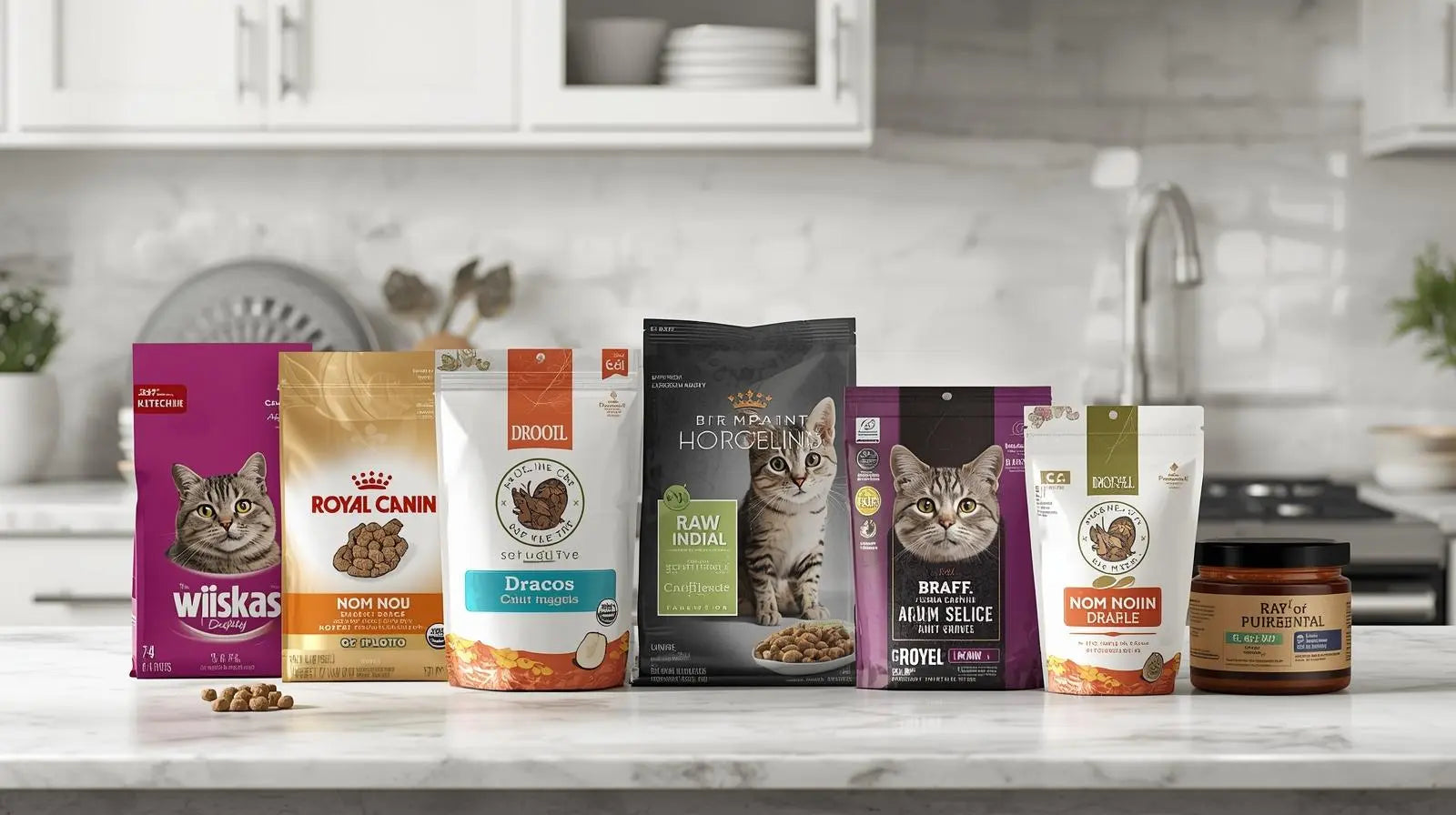
Introduction: What's Synthetic Additives in Conventional Cat Food?

Synthetic additives in conventional cat food are hiding in plain sight - on every label, in every colorful bag, in every tin promising "complete nutrition." Most cat owners assume a product on store shelves is safe. That assumption is costing cats their health.

Cat food manufacturers use synthetic additives to extend shelf life, enhance color, improve palatability, and reduce production costs. These goals serve the manufacturer - not your cat.

Furthermore, cats are obligate carnivores with a unique physiology. Their liver lacks certain detoxifying enzymes that dogs and humans possess. As a result, synthetic chemicals accumulate in feline tissue far more readily. This blog exposes the real risk of synthetic additives in conventional cat food, names the worst offenders, and tells you exactly what to look for on labels.

The Problem With Synthetic Additives in Conventional Cat Food

What Are Synthetic Additives in Conventional Cat Food?

Synthetic additives in conventional cat food fall into four main categories: preservatives, colorants, flavor enhancers, and texture agents. None of these categories exist to benefit your cat biologically.

Synthetic Preservatives: The Shelf-Life Myth

Synthetic preservatives like BHA (butylated hydroxyanisole), BHT (butylated hydroxytoluene), and ethoxyquin were originally designed for industrial use - rubber production and pesticide stabilization. They ended up in pet food because they are cheap and highly effective at preventing fat oxidation.

Ethoxyquin is banned in human food in the European Union and Australia. It remains legal in U.S. pet food at concentrations up to 75 parts per million. The FDA has received thousands of consumer complaints linking ethoxyquin to liver damage, immune disorders, and reproductive failure in pets.

Artificial Colorants: Zero Nutritional Value

Cats cannot perceive color the same way humans do. They are dichromats with limited color discrimination. Therefore, artificial colorants like Red 40, Yellow 5, and Yellow 6 exist purely to make the product look appealing to the human buyer. Your cat gets nothing from them - except potential harm.

Moreover, Red 40 (Allura Red AC) has been linked to hypersensitivity reactions and is derived from petroleum. Yellow 5 and Yellow 6 are associated with behavioral abnormalities in sensitive animals.

Flavor Enhancers and Palatability Agents

Many conventional brands spray synthetic flavor enhancers - often listed as "animal digest" - onto kibble after processing. Animal digest is chemically hydrolyzed animal material of unspecified origin. It makes nutritionally dead kibble smell irresistible to cats.

Monosodium glutamate (MSG) also appears in some formulations. Chronic MSG exposure in animal studies has been associated with neurological changes and obesity. Synthetic additives in conventional cat food routinely combine multiple flavor agents, amplifying potential risk.

Purple label for Cooked Cat Food - Grain Free Chicken & Tuna Recipe (1.75kg | 7x250g) by www.barfindia.com. Features cat graphic, feeding guidelines, ingredients, safety info, and maker details. All-natural, preservative-free, family-owned brand.
An orange label for Cooked Cat Food – Grain-Free Buffalo & Chicken Recipe (1.75kg | 7x250g) from www.barfindia.com lists ingredients, feeding instructions, and safety info. A gray-striped cartoon cat stretches at the bottom left. Made in India.
Blue label for Cooked Cat Food - Grain-free Mackerel & Pork Recipe (1.75 kg, 7x250g) by www.barfindia.com. High protein, with ingredients and feeding instructions. Gray striped cat illustration; yellow safety info box on right.
Cooked Cat Food - Grain free Rabbit & Quail Recipe (1.75kg, 7x250g) label features ingredients, feeding and storage instructions, allergy warnings, manufacturer info (www.barfindia.com), and a gray tabby cat illustration on a pink background.
Yellow label for Sampler Pack - Gently Cooked Cat Food by www.barfindia.com, highlighting all-natural, preservative-free boneless chicken. Includes a cartoon cat, feeding guide, ingredients, storage tips, manufacturer info, and 250g net weight.
An infographic for www.barfindia.com’s Sampler Pack - Gently Cooked Cat Food shows five steps—Protein, Prep Produce, Cold Combine, Pack & Freeze, Test/Ship/Enjoy—with brief descriptions and illustrated icons for each.
Purple label for Cooked Cat Food - Grain Free Chicken & Tuna Recipe (1.75kg | 7x250g) by www.barfindia.com. Features cat graphic, feeding guidelines, ingredients, safety info, and maker details. All-natural, preservative-free, family-owned brand.
An orange label for Cooked Cat Food – Grain-Free Buffalo & Chicken Recipe (1.75kg | 7x250g) from www.barfindia.com lists ingredients, feeding instructions, and safety info. A gray-striped cartoon cat stretches at the bottom left. Made in India.
Blue label for Cooked Cat Food - Grain-free Mackerel & Pork Recipe (1.75 kg, 7x250g) by www.barfindia.com. High protein, with ingredients and feeding instructions. Gray striped cat illustration; yellow safety info box on right.
Cooked Cat Food - Grain free Rabbit & Quail Recipe (1.75kg, 7x250g) label features ingredients, feeding and storage instructions, allergy warnings, manufacturer info (www.barfindia.com), and a gray tabby cat illustration on a pink background.
Yellow label for Sampler Pack - Gently Cooked Cat Food by www.barfindia.com, highlighting all-natural, preservative-free boneless chicken. Includes a cartoon cat, feeding guide, ingredients, storage tips, manufacturer info, and 250g net weight.
An infographic for www.barfindia.com’s Sampler Pack - Gently Cooked Cat Food shows five steps—Protein, Prep Produce, Cold Combine, Pack & Freeze, Test/Ship/Enjoy—with brief descriptions and illustrated icons for each.

Cooked Cat Food - The Tasting Box.

Rs. 320.00
An orange label for Cooked Cat Food – Grain-Free Buffalo & Chicken Recipe (1.75kg | 7x250g) from www.barfindia.com lists ingredients, feeding instructions, and safety info. A gray-striped cartoon cat stretches at the bottom left. Made in India.
An infographic shows 5 safe steps for prepping Cooked Cat Food – Grain-Free Buffalo & Chicken Recipe (1.75kg | 7x250g) by www.barfindia.com: steam/thaw protein, wash/steam produce, cold combine, pack/freeze, test/ship/enjoy!.
Infographic displays daily portions for adult cats (2.7–7.2 kg) in grams/day for Cooked Cat Food – Grain-Free Buffalo & Chicken Recipe (1.75kg | 7x250g) by www.barfindia.com, with a cartoon cat and tips to adjust food for activity and treats.
Infographic for Cooked Cat Food – Grain-Free Buffalo & Chicken Recipe (1.75kg) from www.barfindia.com: Holistic vet-crafted, high-protein, 87% chicken, liver, eggs, mussels & oysters with veggies and healthy fats. Small batch made.
An orange label for Cooked Cat Food – Grain-Free Buffalo & Chicken Recipe (1.75kg | 7x250g) from www.barfindia.com lists ingredients, feeding instructions, and safety info. A gray-striped cartoon cat stretches at the bottom left. Made in India.
An infographic shows 5 safe steps for prepping Cooked Cat Food – Grain-Free Buffalo & Chicken Recipe (1.75kg | 7x250g) by www.barfindia.com: steam/thaw protein, wash/steam produce, cold combine, pack/freeze, test/ship/enjoy!.
Infographic displays daily portions for adult cats (2.7–7.2 kg) in grams/day for Cooked Cat Food – Grain-Free Buffalo & Chicken Recipe (1.75kg | 7x250g) by www.barfindia.com, with a cartoon cat and tips to adjust food for activity and treats.
Infographic for Cooked Cat Food – Grain-Free Buffalo & Chicken Recipe (1.75kg) from www.barfindia.com: Holistic vet-crafted, high-protein, 87% chicken, liver, eggs, mussels & oysters with veggies and healthy fats. Small batch made.

Premium Buffalo & Chicken Cat Food

Rs. 630.00
Purple label for Cooked Cat Food - Grain Free Chicken & Tuna Recipe (1.75kg | 7x250g) by www.barfindia.com. Features cat graphic, feeding guidelines, ingredients, safety info, and maker details. All-natural, preservative-free, family-owned brand.
Infographic for Cooked Cat Food - Grain Free Chicken & Tuna Recipe (1.75kg, 7x250g) by www.barfindia.com: Pie chart—87% meat & seafood, 9% fats/seeds/root veggies, 4% dark green veggies. Small batch, gently cooked, human-grade ingredients.
Purple label for Cooked Cat Food - Grain Free Chicken & Tuna Recipe (1.75kg | 7x250g) by www.barfindia.com. Features cat graphic, feeding guidelines, ingredients, safety info, and maker details. All-natural, preservative-free, family-owned brand.
Infographic for Cooked Cat Food - Grain Free Chicken & Tuna Recipe (1.75kg, 7x250g) by www.barfindia.com: Pie chart—87% meat & seafood, 9% fats/seeds/root veggies, 4% dark green veggies. Small batch, gently cooked, human-grade ingredients.

Cooked Cat Food: Premium Chicken & Tuna Cat Food

Rs. 590.00
A bright yellow
Infographic for Cooked Cat Food - Grain Free Chicken Recipe (1.75kg) by www.barfindia.com: 87% chicken, liver, eggs, mussels & oysters; 9% healthy fats, seeds & root veggies; 4% dark green veggies. Circular chart on yellow background.
Chart shows daily food portions (grams) for adult cats (2.7–7.2kg) for Cooked Cat Food - Grain Free Chicken Recipe by www.barfindia.com. Includes guidance, cartoon cat, and note to adjust for activity and treats. Pack: 1.75kg (7x250g).
Discover how www.barfindia.com's Cooked Cat Food - Grain Free Chicken Recipe (1.75kg, 7x250g) is made in five steps: select protein, prep produce, combine cold, pack & freeze, test & ship! Includes grain-free tips and vivid illustrations for each stage.
A plate with chicken breast, hearts, liver, mussels, shrimp, kidney, oysters, organic egg, and a creamy mix—each labeled as www.barfindia.com Cooked Cat Food - Grain Free Chicken Recipe ingredients.
A bright yellow
Infographic for Cooked Cat Food - Grain Free Chicken Recipe (1.75kg) by www.barfindia.com: 87% chicken, liver, eggs, mussels & oysters; 9% healthy fats, seeds & root veggies; 4% dark green veggies. Circular chart on yellow background.
Chart shows daily food portions (grams) for adult cats (2.7–7.2kg) for Cooked Cat Food - Grain Free Chicken Recipe by www.barfindia.com. Includes guidance, cartoon cat, and note to adjust for activity and treats. Pack: 1.75kg (7x250g).
Discover how www.barfindia.com's Cooked Cat Food - Grain Free Chicken Recipe (1.75kg, 7x250g) is made in five steps: select protein, prep produce, combine cold, pack & freeze, test & ship! Includes grain-free tips and vivid illustrations for each stage.
A plate with chicken breast, hearts, liver, mussels, shrimp, kidney, oysters, organic egg, and a creamy mix—each labeled as www.barfindia.com Cooked Cat Food - Grain Free Chicken Recipe ingredients.

Premium Chicken Cat Food

Rs. 475.00
Premium Mackerel & Pork Cat Food www.barfindia.com
Cooked Cat Food
Premium Mackerel & Pork Cat Food www.barfindia.com
Cooked Cat Food
Premium Mackerel & Pork Cat Food www.barfindia.com

Premium Mackerel & Pork Cat Food

Rs. 515.00
Cooked Cat Food - Grain free Rabbit & Quail Recipe (1.75kg, 7x250g) label features ingredients, feeding and storage instructions, allergy warnings, manufacturer info (www.barfindia.com), and a gray tabby cat illustration on a pink background.
Discover our Cooked Cat Food - Grain free Rabbit & Quail Recipe (1.75kg) by www.barfindia.com: 87% rabbit, quail, liver, eggs, mussels & oysters; small batch cooked for complete cat nutrition.
An infographic titled “Recommended Daily Portions: Adult Cat” displays daily amounts of Cooked Cat Food - Grain Free Rabbit & Quail Recipe (1.75kg, 7x250g) for cats from 2.7kg to 7.2kg, with tips on activity and supplement adjustments from www.barfindia.com.
A colorful infographic from www.barfindia.com shows the 5-step process of making Cooked Cat Food - Grain free Rabbit & Quail Recipe (1.75kg): protein cooking, prepping produce, cold combining, packing/freezing, then testing and delivery.
Premium Rabbit & Quail. www.barfindia.com
Cooked Cat Food - Grain free Rabbit & Quail Recipe (1.75kg, 7x250g) label features ingredients, feeding and storage instructions, allergy warnings, manufacturer info (www.barfindia.com), and a gray tabby cat illustration on a pink background.
Discover our Cooked Cat Food - Grain free Rabbit & Quail Recipe (1.75kg) by www.barfindia.com: 87% rabbit, quail, liver, eggs, mussels & oysters; small batch cooked for complete cat nutrition.
An infographic titled “Recommended Daily Portions: Adult Cat” displays daily amounts of Cooked Cat Food - Grain Free Rabbit & Quail Recipe (1.75kg, 7x250g) for cats from 2.7kg to 7.2kg, with tips on activity and supplement adjustments from www.barfindia.com.
A colorful infographic from www.barfindia.com shows the 5-step process of making Cooked Cat Food - Grain free Rabbit & Quail Recipe (1.75kg): protein cooking, prepping produce, cold combining, packing/freezing, then testing and delivery.
Premium Rabbit & Quail. www.barfindia.com

Premium Rabbit & Quail Cat Food

Rs. 680.00

The Most Dangerous Synthetic Additives in Conventional Cat Food

Not all synthetic additives carry the same level of risk. The following are the most evidence- linked offenders found in mainstream cat food products sold today.

The Most Dangerous Synthetic Additives in Conventional Cat Food

Propylene Glycol: The Antifreeze Cousin

Propylene glycol is a close chemical relative of ethylene glycol - the compound found in automobile antifreeze. It was used as a humectant in semi-moist cat food to prevent drying. The FDA banned its use in cat food after it was found to cause Heinz body anemia - a condition where red blood cells are destroyed from the inside.

Despite the ban in cat food, propylene glycol continues to appear in dog treats and some specialty products. Vigilance remains necessary when reading labels across all pet food categories.

LEARN MORE ABOUT INDIA'S NO.1 FRESH CAT FOOD

Start Fresh
The Problem With Synthetic Additives in Conventional Cat Food

How Synthetic Additives in Conventional Cat Food Damage Cat Health

The damage from synthetic additives in conventional cat food is rarely sudden. It is cumulative, low-grade, and systemically destructive over months and years. Most owners never connect the dots between what is in the bowl and what is happening inside their cat's body.

Liver and Kidney Overload

Cats possess a compromised glucuronidation pathway - the primary liver detox route for many synthetic chemicals. This means compounds like BHA, BHT, and ethoxyquin are not efficiently neutralized. They accumulate. Over time, hepatic inflammation, elevated liver enzymes, and chronic kidney strain become measurable outcomes.

Veterinary data increasingly documents early-stage chronic kidney disease (CKD) in cats consuming conventional diets for extended periods. Synthetic additives are not the sole cause, but they are a confirmed contributing stressor on feline renal tissue.

Gut Dysbiosis and Chronic Inflammation

Carrageenan, widely used as a thickener in wet cat food, has been demonstrated in peer- reviewed research to trigger intestinal inflammation. It degrades into poligeenan under acidic stomach conditions - a compound so reliably inflammatory it is used deliberately in laboratory settings to induce inflammation in test animals.

Consequently, cats consuming carrageenan-containing wet food may develop chronic loose stools, vomiting, and inflammatory bowel disease (IBD) - conditions routinely misdiagnosed as idiopathic or stress-related.

Immune System Dysregulation

Chronic low-dose exposure to synthetic preservatives and colorants creates a persistent low- grade immune load. The immune system spends resources responding to chemical stressors rather than pathogens. Over time, this manifests as increased susceptibility to infections, slower wound healing, and elevated rates of autoimmune conditions in older cats.

Synthetic additives in conventional cat food essentially force a cat's immune system to fight a daily chemical skirmish it was never designed to fight.

The Problem With Synthetic Additives in Conventional Cat FoodNATURE HAS ALREADY GIVEN THE RECIPE. WE HAVE ONLY IMPLEMENTED IT

Synthetic Additives in Conventional Cat Food and Cancer Risk

The International Agency for Research on Cancer (IARC) classifies BHA as a possible human carcinogen (Group 2B). BHT is under ongoing review. These classifications are based on animal studies - which means cats, already more chemically sensitive than humans, face a plausible and serious risk that is systematically understudied.

Feline injection-site sarcomas - aggressive cancers - have been studied extensively. Less studied is the contribution of dietary chemical load to the broader feline cancer burden. Yet veterinary oncologists increasingly recommend eliminating synthetic preservatives from feline diets as a precautionary measure.

The Dose-Response Problem

Industry defenders argue that synthetic additives appear in concentrations too low to cause harm. This argument collapses under two realities. First, cats eat the same food, containing the same additives, every single day for years. The cumulative dose is far beyond any single- serving safety calculation. Second, cats weigh between 3.5 and 6 kg. Concentration thresholds derived from larger animals do not translate safely.

The Regulatory Gap: Why Synthetic Additives in Conventional Cat Food Are Still Legal

The FDA's Center for Veterinary Medicine (CVM) oversees pet food safety. However, AAFCO (Association of American Feed Control Officials) sets the actual ingredient standards - and AAFCO is not a regulatory body. It is an advisory organization with no enforcement authority.

Synthetic additives in conventional cat food are grandfathered in under GRAS (Generally Recognized as Safe) status - a designation often self-affirmed by the manufacturers themselves. The fox is quite literally designing the safety standards for the henhouse.

In the European Union, pet food regulations are considerably stricter. Several preservatives permitted in U.S. cat food are banned or heavily restricted across the EU, the UK, and Australia. American cats, statistically, are eating a less regulated diet than their European counterparts.

The Problem With Synthetic Additives in Conventional Cat Food

Synthetic Additives in Conventional Cat Food vs. Natural Alternatives

The argument that natural preservation is impractical or unstable is outdated. Mixed tocopherols (natural Vitamin E), rosemary extract, and ascorbic acid (Vitamin C) effectively preserve fat oxidation in properly formulated pet food. They achieve similar shelf-life results without documented toxicity profiles.

Synthetic Additives in Conventional Cat Food vs. Natural Alternatives

Natural alternatives exist for every single synthetic additive currently used in conventional cat food. The reason they are not universally adopted is cost and shelf-life convenience - not scientific necessity.

How to Read Cat Food Labels Like an Expert

Synthetic additives in conventional cat food are listed on labels - but they hide behind technical names most owners don't recognize. Here is a practical decoding guide.

Red-Flag Ingredients to Reject Immediately

• BHA (Butylated Hydroxyanisole) - synthetic antioxidant/preservative • BHT (Butylated Hydroxytoluene) - same class as BHA
• Ethoxyquin - banned in EU human food, still in US pet food
• TBHQ (Tertiary Butylhydroquinone) - synthetic preservative
• Propylene Glycol - FDA-banned in cat food (watch in dog products too)
• Red 40, Yellow 5, Yellow 6, Blue 2 - petroleum-derived colorants
• Carrageenan - inflammatory thickener in wet food
• Animal Digest (unlisted source) - unspecified hydrolyzed material
• "Artificial flavors" - catch-all for unlisted synthetic palatants

Reassuring Label Signals

• "Preserved with mixed tocopherols" - natural Vitamin E preservation
• "No artificial colors or flavors" - applies to synthetic colorants
• Named, whole protein sources first (e.g. "Chicken", "Salmon")
• Short, recognizable ingredient lists
• AAFCO statement specifying feeding trial, not just formulation

The Problem With Synthetic Additives in Conventional Cat Food
An infographic for Dog Treats Natural Omega 3 - Dehydrated Anchovies (100g) by www.barfindia.com, highlighting omega-3 benefits, zero preservatives, Indian sourcing, storage tips, contact info, plus fish and plant illustrations.
A wooden spoon filled with Dog Treats Natural Omega 3 - Dehydrated Anchovies (100 gms) by www.barfindia.com rests on a pile of similar treats.
Dog Treats Natural Omega 3 - Dehydrated Anchovies (100 gms) from www.barfindia.com: small silvery fish with visible eyes, closely arranged—ideal as natural omega-3 dog snacks.
A close-up of Dog Treats Natural Omega 3 - Dehydrated Anchovies (100 gms) by www.barfindia.com shows whole anchovies with eyes and fins, tightly packed—ideal natural, flavorful snacks for your dog.
An infographic for Dog Treats Natural Omega 3 - Dehydrated Anchovies (100g) by www.barfindia.com, highlighting omega-3 benefits, zero preservatives, Indian sourcing, storage tips, contact info, plus fish and plant illustrations.
A wooden spoon filled with Dog Treats Natural Omega 3 - Dehydrated Anchovies (100 gms) by www.barfindia.com rests on a pile of similar treats.
Dog Treats Natural Omega 3 - Dehydrated Anchovies (100 gms) from www.barfindia.com: small silvery fish with visible eyes, closely arranged—ideal as natural omega-3 dog snacks.
A close-up of Dog Treats Natural Omega 3 - Dehydrated Anchovies (100 gms) by www.barfindia.com shows whole anchovies with eyes and fins, tightly packed—ideal natural, flavorful snacks for your dog.

Dog Treats Natural Omega 3 - Dehydrated Anchovies - 100 gms.

Rs. 260.00
Dog Treats - Dehydrated Pork Hearts (60 gms) from www.barfindia.com are single-ingredient, all-natural pork heart treats with no additives or preservatives, packed in a white and pink resealable bag—perfect for your pet.
A white resealable bag with a pink label for www.barfindia.com Dog Treats - Dehydrated Pork Hearts (60 gms), displaying feeding guidelines, product benefits, convenience, and usage instructions.
Two pieces of dehydrated pork hearts from www.barfindia.com, dark brown and irregularly shaped, are displayed on a white background—ideal as single-ingredient dog treats. Product: Dog Treats - Dehydrated Pork Hearts - 60 gms.
Dog Treats - Dehydrated Pork Hearts (60 gms) from www.barfindia.com are single-ingredient, all-natural pork heart treats with no additives or preservatives, packed in a white and pink resealable bag—perfect for your pet.
A white resealable bag with a pink label for www.barfindia.com Dog Treats - Dehydrated Pork Hearts (60 gms), displaying feeding guidelines, product benefits, convenience, and usage instructions.
Two pieces of dehydrated pork hearts from www.barfindia.com, dark brown and irregularly shaped, are displayed on a white background—ideal as single-ingredient dog treats. Product: Dog Treats - Dehydrated Pork Hearts - 60 gms.

Dog Treats - Dehydrated Pork Hearts - 60 gms

Rs. 300.00
A white resealable pouch with a red label shows
A white resealable pouch from www.barfindia.com, with a red label showing feeding guidelines, product info, and serving instructions. Contains 60g dehydrated chicken hearts for dogs & cats, rich in taurine, made in India—best kept refrigerated.
A black bowl of Dehydrated Chicken Hearts - 60gms from www.barfindia.com is garnished with parsley and sits on a dark textured surface, surrounded by scattered herbs and spices.
A pile of small, dark, slightly yellowish Dehydrated Chicken Hearts - 60gms is spread on a white surface.
A white resealable pouch with a red label shows
A white resealable pouch from www.barfindia.com, with a red label showing feeding guidelines, product info, and serving instructions. Contains 60g dehydrated chicken hearts for dogs & cats, rich in taurine, made in India—best kept refrigerated.
A black bowl of Dehydrated Chicken Hearts - 60gms from www.barfindia.com is garnished with parsley and sits on a dark textured surface, surrounded by scattered herbs and spices.
A pile of small, dark, slightly yellowish Dehydrated Chicken Hearts - 60gms is spread on a white surface.

Dehydrated Chicken Hearts - 60gms

Rs. 250.00
A resealable pouch labeled
Dog Treats Buffalo Heart - 60gms by www.barfindia.com comes in a white resealable pouch with a red label showing feeding guidelines, product details, and care instructions. These natural Indian pet treats are healthy and convenient.
A hand holds a piece of Dog Treats Buffalo Heart - 60 gms by www.barfindia.com, with more natural buffalo heart treats in the background—ideal for your furry friend.
A hand holds a piece of Dog Treats Buffalo Heart - 60 gms by www.barfindia.com over a pile of similar air-dried treats—wholesome, natural snacks perfect for rewarding your dog.
Three pieces of Dog Treats Buffalo Heart - 60 gms from www.barfindia.com are arranged on a white background. Their rough, uneven texture and curled edges make them ideal natural treats for your dog.
A resealable pouch labeled
Dog Treats Buffalo Heart - 60gms by www.barfindia.com comes in a white resealable pouch with a red label showing feeding guidelines, product details, and care instructions. These natural Indian pet treats are healthy and convenient.
A hand holds a piece of Dog Treats Buffalo Heart - 60 gms by www.barfindia.com, with more natural buffalo heart treats in the background—ideal for your furry friend.
A hand holds a piece of Dog Treats Buffalo Heart - 60 gms by www.barfindia.com over a pile of similar air-dried treats—wholesome, natural snacks perfect for rewarding your dog.
Three pieces of Dog Treats Buffalo Heart - 60 gms from www.barfindia.com are arranged on a white background. Their rough, uneven texture and curled edges make them ideal natural treats for your dog.

Dog Treats Buffalo Heart - 60 gms

Rs. 250.00
The www.barfindia.com Dog Treats - Dehydrated Sardines 100 gms pack label shows sardines and leafy designs, lists health benefits, safe handling tips, contact info, and quality certifications.
A round wicker basket holds many dehydrated sardines (Dog Treats - Dehydrated Sardines - 100 gms pack) atop a dark surface.
The www.barfindia.com Dog Treats - Dehydrated Sardines 100 gms pack label shows sardines and leafy designs, lists health benefits, safe handling tips, contact info, and quality certifications.
A round wicker basket holds many dehydrated sardines (Dog Treats - Dehydrated Sardines - 100 gms pack) atop a dark surface.

Dog Treats - Dehydrated Sardines - 100 gms pack

Rs. 270.00
A pile of Dog Treats - Dehydrated Squids (pieces) - 60gms from www.barfindia.com on a white background, with a small colorful www.barfindia.com logo in the top right corner.

Dog Treats - Dehydrated Squids (pieces) - 60gms

Rs. 649.00

Frequently Asked Questions

Are synthetic additives in conventional cat food banned anywhere in the world?

Yes. The European Union, UK, and Australia have significantly stricter controls. Ethoxyquin, for instance, is banned in EU human food and heavily restricted in EU pet food. BHA and BHT face tighter limits. U.S. regulations are comparatively permissive, often relying on GRAS designations that manufacturers themselves declare.

How quickly do synthetic additives in conventional cat food cause damage?

There is no single timeline. Cumulative exposure over months and years is the primary risk model. Some cats show sensitivity reactions (vomiting, skin issues) within weeks. Liver and kidney effects from synthetic preservatives typically emerge in long-term blood panel data after 2–5 years of consistent conventional diet consumption.

Is "natural" cat food automatically free of synthetic additives?

No. "Natural" is a marketing term with no legally enforced definition in U.S. pet food labeling. A product labeled natural can still contain synthetic vitamins, synthetic minerals, and - in some interpretations - synthetic processing aids. Always read the full ingredient list rather than relying on front-of-pack claims.

What synthetic additives in conventional cat food are most harmful to kittens?

Kittens are at elevated risk because their liver and immune systems are still developing. Ethoxyquin, BHA, and artificial colorants are the highest-priority avoidances for kittens. A clean, whole-food diet during the first year of life significantly reduces lifetime toxic load and supports healthy immune system development.

Can switching away from conventional cat food reverse existing damage?

Partially, in most cases. The liver has significant regenerative capacity. Switching to an additive- free diet often results in improved coat condition, reduced digestive issues, and better energy levels within 8–12 weeks. Advanced kidney disease or established organ damage may not be fully reversible but can be slowed.

Do synthetic additives in conventional cat food affect behavior?

Evidence is emerging rather than definitive. Artificial colorants like Red 40 and Yellow 5 have been associated with behavioral abnormalities in sensitive animals in some studies. Cats with underlying neurological sensitivity may show increased agitation, disrupted sleep patterns, or compulsive grooming on high-additive diets.

Are grain-free cat foods free of synthetic additives?

Not automatically. Grain-free refers to the carbohydrate source, not the preservation or additive profile. A grain-free cat food can still contain BHA, carrageenan, and artificial flavors. Grain-free and additive-free are separate categories. You need to evaluate both dimensions independently when choosing a food.

What is the safest type of cat food for avoiding synthetic additives in conventional cat food?

Freeze-dried raw, air-dried raw, and properly formulated raw/fresh diets tend to have the cleanest additive profiles. High-quality wet foods preserved with mixed tocopherols are the next safest tier. Kibble, by its processing nature, requires more preservation and carries the highest additive density. For any category, reading the full ingredient list remains non-negotiable.

Conclusion

Synthetic additives in conventional cat food are not harmless fillers. They are industrially derived compounds with documented toxicity pathways in feline physiology - a physiology that is uniquely poorly equipped to handle them.

The regulatory system governing pet food in the United States relies heavily on manufacturer self-reporting. The burden of protection, therefore, falls on you. Reading labels, choosing natural alternatives, and demanding transparency from brands are not optional extras - they are fundamental acts of feline health stewardship.

 Every meal is either a load on your cat's system or a contribution to its resilience. Synthetic additives in conventional cat food ensure the former. Natural, whole-ingredient alternatives ensure the latter. The choice, now that you know it exists, is yours.