Raw for Maximum Nutrition
Made in our own Kitchens
Human grade products
6 June 2026
Ill-Effects of Meat-Based Cat Food: Myths Debunked - Why Cats Thrive on Meat
Discover why cats are obligate carnivores and how meat-based diets support their health. We also debunk myths about the ill-effects of meat-based cat food with science-backed insights.

6 June 2026
Ill-Effects of Meat-Based Cat Food: Myths Debunked - Why Cats Thrive on Meat
Discover why cats are obligate carnivores and how meat-based diets support their health. We also debunk myths about the ill-effects of meat-based cat food with science-backed insights.
Table of contents
• Introduction: The Obligate Carnivore Explained• What is 'Obligate Carnivore'• Protein : Non-Negotiable for Cats• Taurine, Arachidonic Acid & Other Cat-Critical Nutrients• Debunking the Ill-Effects of Meat-Based Cat Food• Grain-Based Cat Food: What the Science Says• Hydration, Kidneys & the Moisture Advantage of Meat• How to Choose the Right Meat-Based Cat Food• FAQ's• Conclusion: Let Biology LeadTable of contents
• The Obligate Carnivore • What is 'Obligate Carnivore'• Meat Protein : Non-Negotiable for Cats• Taurine, Arachidonic Acid & Other Cat-Critical Nutrients• Debunking the Ill-Effects of Meat-Based Cat Food• Grain-Based Cat Food: What the Science Says• Hydration, Kidneys & the Moisture Advantage of Meat• How to Choose the Right Meat-Based Cat Food• FAQ's• Conclusion: Let Biology LeadIntroduction: The Obligate Carnivore Explained
The ill-effects of Meat-Based Cat Food is a popular myth that misleads cat owners every day.
Before that myth causes harm to your pet, let's correct the record. Cats are biologically
hardwired to eat meat. Unlike dogs or humans, cats cannot thrive - or even survive long-term
- on plant-based or grain-heavy diets.
Understanding feline biology is the foundation of smart feeding decisions. The ill-effects of
Meat-Based Cat Food narrative often ignores one crucial fact: cats' metabolisms are
fundamentally different from ours. Grain-based foods, regardless of how they are marketed,
cannot replicate what animal protein delivers at the cellular level.

Understanding What 'Obligate Carnivore' Really Means
Biology Doesn't Negotiate
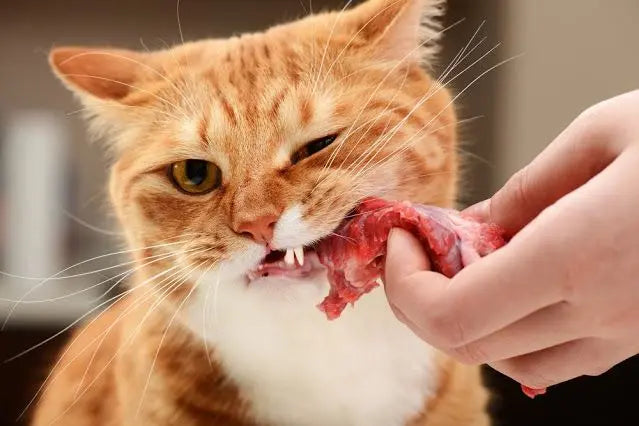
An obligate carnivore must consume animal tissue to meet its nutritional needs. The ill-effects
of Meat-Based Cat Food debate rarely starts here - but it should. Cats lack several metabolic
pathways that omnivores use to synthesize nutrients from plants. This is not preference; it is
biology.
Cats cannot convert beta-carotene to Vitamin A. They cannot synthesize taurine from
methionine at adequate rates. Their liver enzymes are permanently set to process high protein
loads. Consequently, feeding a cat a grain-dominant diet is nutritionally incompatible with their
physiology.
Evolution Built the Proof
Wild cats in nature consume small prey - birds, rodents, lizards. These prey animals are almost entirely protein and fat, with minimal carbohydrate. The ill-effects of Meat-Based Cat Food argument collapses entirely when we consider that cats have thrived on this dietary pattern for millions of years. Domestication did not rewire feline metabolism. The cat sitting on your couch has the same digestive enzymes and metabolic profile as a wildcat hunting in the savanna. That biological inheritance demands meat, not grain.
Why Protein Is a Non-Negotiable for Cats
Cats Use Protein for Energy - Always
Most mammals shift to burning fat or carbohydrates when dietary protein drops. Cats do not.
Their livers continuously catabolize protein for energy, regardless of how much is available. The
ill-effects of Meat-Based Cat Food debate ignores this critical metabolic difference entirely.
When a cat eats a low-protein, grain-heavy diet, their body begins breaking down muscle tissue
to compensate. This leads to muscle wasting, immune suppression, and organ stress -
outcomes that are never attributed to grain-based diets in mainstream pet food marketing.
The Protein Quality Gap
Not all protein is created equal. Animal protein contains a complete amino acid profile that plant protein lacks. The ill-effects of Meat-Based Cat Food argument rarely compares bioavailability - because plant proteins score significantly lower on digestibility for cats. A cat absorbing 85% of the protein from chicken will always outperform a cat absorbing 55% from corn gluten meal, even if the label shows the same crude protein percentage. Ingredient quality matters far more than the numbers on the bag.

LEARN MORE ABOUT INDIA'S NO.1 FRESH CAT FOOD
Start FreshTaurine, Arachidonic Acid & Other Cat-Critical Nutrients
Taurine: The Non-Negotiable Amino Acid
Taurine is essential for feline heart function, vision, and reproduction. Cats cannot synthesize it
adequately on their own - they must consume it from animal tissue. The ill-effects of Meat-
Based Cat Food narrative conveniently omits that taurine is absent in plant foods. Grain-based
diets historically caused feline dilated cardiomyopathy (DCM) before the industry began adding
synthetic taurine supplements.
Meat-based diets provide taurine naturally. No supplementation required. The food itself
delivers what the body needs - a design that grain-based formulas must artificially replicate at
additional cost and uncertain bioavailability.
Arachidonic Acid & Vitamin A
Cats cannot synthesize arachidonic acid from linoleic acid - a conversion omnivores manage easily. They need it preformed from animal fat. Similarly, preformed Vitamin A from liver is the only form cats can use. The ill-effects of Meat-Based Cat Food don't compare to deficiencies caused by grain-heavy diets lacking these animal-sourced essentials.
Niacin Requirements
Cats have exceptionally high niacin needs - roughly four times higher than dogs. They cannot synthesize niacin from tryptophan the way other mammals do. Animal tissue is rich in preformed niacin. Grain-based diets often fall short unless heavily fortified, creating another hidden nutritional gap.
 NATURE HAS ALREADY GIVEN THE RECIPE. WE HAVE ONLY IMPLEMENTED IT
Debunking the Ill-Effects of Meat-Based Cat Food
Claim: 'Too Much Protein Damages Cat Kidneys'
This is the most persistent misconception. The ill-effects of Meat-Based Cat Food myth often centres on kidney damage from high protein. In reality, research shows that high-protein diets do not cause kidney disease in healthy cats. Protein restriction is relevant only after a cat already has significant kidney dysfunction. The original studies linking protein to kidney damage were conducted on rats - not cats. Applying rat physiology to feline nutrition is scientifically flawed. A meat-based diet is not a threat to healthy feline kidneys. It is their natural fuel.
Claim: 'Meat-Based Diets Are Nutritionally Incomplete'
The ill-effects of Meat-Based Cat Food argument sometimes points to nutrient gaps in home- cooked raw diets. That criticism is valid for poorly formulated recipes - not for commercial meat-based foods that meet AAFCO nutritional standards. The distinction matters enormously and is frequently ignored. A complete and balanced meat-based cat food from a reputable manufacturer provides all nutrients cats need. The risk of nutrient gaps applies equally - often more severely - to grain- heavy, ultra-processed kibble with synthetic vitamin additions.
Claim: 'Raw Meat Diets Are Dangerous'
Bacterial contamination is a legitimate safety consideration for raw meat diets. However, this risk applies to handling, not to meat-based cat food broadly. Commercial raw and cooked meat- based foods undergo safety testing. The ill-effects of Meat-Based Cat Food framing unfairly groups all meat-based options together.

Grain-Based Cat Food: What the Science Says
Carbohydrates Cats Were Never Designed to Process
Cats have low salivary amylase activity and minimal pancreatic amylase compared to
omnivores. Their capacity to digest carbohydrates is genuinely limited. The ill-effects of Meat-
Based Cat Food story deflects from a more inconvenient truth: cats are metabolically ill-suited
for grain-heavy diets. High carbohydrate loads contribute to feline obesity and type-2 diabetes.
Feline obesity rates have climbed steadily alongside the rise of grain-based dry kibble as the
primary diet. Correlation is not causation - but the biological mechanism is clear: excess
carbohydrates spike blood glucose in an animal whose physiology never evolved insulin
responses for such loads.
Urinary Tract Health
Grain-based dry kibble is notoriously low in moisture. Cats evolved from desert animals and have a low thirst drive - relying on food moisture to meet hydration needs. Consistently low moisture intake concentrates urine, raising the risk of crystal formation and feline lower urinary tract disease (FLUTD). The ill-effects of Meat-Based Cat Food are frequently cited without acknowledging that FLUTD is one of the most common conditions in domestic cats - and is strongly correlated with dry, grain-based diets.
Hydration, Kidneys & the Moisture Advantage of Meat
Wet Meat-Based Food as a Hydration Tool
Wet meat-based cat food typically contains 70–80% moisture - closely mirroring the water
content of prey animals. The ill-effects of Meat-Based Cat Food narrative overlooks that wet
meat-based food is one of the most effective ways to support feline kidney health through
natural hydration.
Cats fed wet food consistently show better kidney function markers in long-term studies
compared to cats on dry-only diets. Adequate hydration dilutes urine, reduces crystal formation
risk, and supports kidney filtration efficiency.
The Dry Kibble Dehydration Problem
Dry grain-based kibble contains as little as 8–10% moisture. A cat eating only dry food is in a state of chronic, low-grade dehydration - even if a water bowl is provided. The feline thirst mechanism simply does not compensate adequately. This is a structural health risk that the ill- effects of Meat-Based Cat Food discussion never addresses.

How to Choose the Right Meat-Based Cat Food
What to Look for on the Label
Understanding food labels cuts through marketing noise. The ill-effects of Meat-Based Cat
Food fear keeps many owners from making the switch - but a clear label framework removes
the guesswork. Look for a named animal protein (chicken, salmon, turkey) as the first
ingredient. Avoid unnamed 'meat meals' or 'animal by-products' as lead ingredients.
• First ingredient: named animal protein (chicken, beef, salmon, turkey)
• AAFCO statement: 'complete and balanced' for your cat's life stage
• Moisture: 70%+ for wet food; look for low-carb options in dry food
• No artificial colours, flavours, or preservatives
• Taurine listed - either from whole meat or as a supplement
Life-Stage Considerations
Kittens, adults, and senior cats have different protein and calorie requirements. The ill-effects
of Meat-Based Cat Food claims are sometimes based on formulas mismatched to life stage -
not on the diet type itself. A kitten needs higher protein and fat; a senior cat may need moderate
protein with high digestibility.
Always choose a formulation labelled for your cat's specific life stage. 'All life stages' formulas
must meet the highest standard - kitten requirements - so they are generally safe but may
exceed the needs of sedentary adult cats.
Transitioning from Grain-Based to Meat-Based
Abrupt dietary changes cause digestive upset in cats. Transition gradually over 10–14 days. Start with 25% new food mixed into 75% old food, then shift to 50/50, then 75/25, then full transition. This minimises gastrointestinal disruption and helps picky eaters accept the new diet.

Frequently Asked Questions
Conclusion: Let Biology Lead
The ill-effects of Meat-Based Cat Food is a narrative built on misapplied science, conflated
categories, and outdated studies. When you follow feline biology rather than food marketing, the
answer is clear. Cats are obligate carnivores. Meat is not one dietary option among many - it is
the biological baseline their entire physiology was built around.
Grain-based diets carry real, documented risks: chronic dehydration, inadequate taurine,
carbohydrate excess, and protein quality gaps. Meat-based diets, when properly formulated,
deliver what evolution spent millions of years optimising. The ill-effects of Meat-Based Cat
Food debate ends when biology leads the conversation.
Choose meat-based food with a complete nutritional profile, matched to your cat's life stage,
from a manufacturer who meets AAFCO standards. Your cat's coat, energy, digestion, and long-
term health will reflect that decision.
Introduction: The Obligate Carnivore Explained
The ill-effects of Meat-Based Cat Food is a popular myth that misleads cat owners every day.
Before that myth causes harm to your pet, let's correct the record. Cats are biologically
hardwired to eat meat. Unlike dogs or humans, cats cannot thrive - or even survive long-term
- on plant-based or grain-heavy diets.
Understanding feline biology is the foundation of smart feeding decisions. The ill-effects of
Meat-Based Cat Food narrative often ignores one crucial fact: cats' metabolisms are
fundamentally different from ours. Grain-based foods, regardless of how they are marketed,
cannot replicate what animal protein delivers at the cellular level.
Understanding What 'Obligate Carnivore' Really Means
Biology Doesn't Negotiate
An obligate carnivore must consume animal tissue to meet its nutritional needs. The ill-effects
of Meat-Based Cat Food debate rarely starts here - but it should. Cats lack several metabolic
pathways that omnivores use to synthesize nutrients from plants. This is not preference; it is
biology.
Cats cannot convert beta-carotene to Vitamin A. They cannot synthesize taurine from
methionine at adequate rates. Their liver enzymes are permanently set to process high protein
loads. Consequently, feeding a cat a grain-dominant diet is nutritionally incompatible with their
physiology.
Evolution Built the Proof
Wild cats in nature consume small prey - birds, rodents, lizards. These prey animals are almost entirely protein and fat, with minimal carbohydrate. The ill-effects of Meat-Based Cat Food argument collapses entirely when we consider that cats have thrived on this dietary pattern for millions of years. Domestication did not rewire feline metabolism. The cat sitting on your couch has the same digestive enzymes and metabolic profile as a wildcat hunting in the savanna. That biological inheritance demands meat, not grain.
Why Protein Is a Non-Negotiable for Cats
Cats Use Protein for Energy - Always
Most mammals shift to burning fat or carbohydrates when dietary protein drops. Cats do not.
Their livers continuously catabolize protein for energy, regardless of how much is available. The
ill-effects of Meat-Based Cat Food debate ignores this critical metabolic difference entirely.
When a cat eats a low-protein, grain-heavy diet, their body begins breaking down muscle tissue
to compensate. This leads to muscle wasting, immune suppression, and organ stress -
outcomes that are never attributed to grain-based diets in mainstream pet food marketing.
The Protein Quality Gap
Not all protein is created equal. Animal protein contains a complete amino acid profile that plant protein lacks. The ill-effects of Meat-Based Cat Food argument rarely compares bioavailability - because plant proteins score significantly lower on digestibility for cats. A cat absorbing 85% of the protein from chicken will always outperform a cat absorbing 55% from corn gluten meal, even if the label shows the same crude protein percentage. Ingredient quality matters far more than the numbers on the bag.
LEARN MORE ABOUT INDIA'S NO.1 FRESH CAT FOOD
Start FreshTaurine, Arachidonic Acid & Other Cat-Critical Nutrients
Taurine: The Non-Negotiable Amino Acid
Taurine is essential for feline heart function, vision, and reproduction. Cats cannot synthesize it
adequately on their own - they must consume it from animal tissue. The ill-effects of Meat-
Based Cat Food narrative conveniently omits that taurine is absent in plant foods. Grain-based
diets historically caused feline dilated cardiomyopathy (DCM) before the industry began adding
synthetic taurine supplements.
Meat-based diets provide taurine naturally. No supplementation required. The food itself
delivers what the body needs - a design that grain-based formulas must artificially replicate at
additional cost and uncertain bioavailability.
Arachidonic Acid & Vitamin A
Cats cannot synthesize arachidonic acid from linoleic acid - a conversion omnivores manage easily. They need it preformed from animal fat. Similarly, preformed Vitamin A from liver is the only form cats can use. The ill-effects of Meat-Based Cat Food don't compare to deficiencies caused by grain-heavy diets lacking these animal-sourced essentials.
Niacin Requirements
Cats have exceptionally high niacin needs - roughly four times higher than dogs. They cannot synthesize niacin from tryptophan the way other mammals do. Animal tissue is rich in preformed niacin. Grain-based diets often fall short unless heavily fortified, creating another hidden nutritional gap.
NATURE HAS ALREADY GIVEN THE RECIPE. WE HAVE ONLY IMPLEMENTED ITDebunking the Ill-Effects of Meat-Based Cat Food
Claim: 'Too Much Protein Damages Cat Kidneys'
This is the most persistent misconception. The ill-effects of Meat-Based Cat Food myth often centres on kidney damage from high protein. In reality, research shows that high-protein diets do not cause kidney disease in healthy cats. Protein restriction is relevant only after a cat already has significant kidney dysfunction. The original studies linking protein to kidney damage were conducted on rats - not cats. Applying rat physiology to feline nutrition is scientifically flawed. A meat-based diet is not a threat to healthy feline kidneys. It is their natural fuel.
Claim: 'Meat-Based Diets Are Nutritionally Incomplete'
The ill-effects of Meat-Based Cat Food argument sometimes points to nutrient gaps in home- cooked raw diets. That criticism is valid for poorly formulated recipes - not for commercial meat-based foods that meet AAFCO nutritional standards. The distinction matters enormously and is frequently ignored. A complete and balanced meat-based cat food from a reputable manufacturer provides all nutrients cats need. The risk of nutrient gaps applies equally - often more severely - to grain- heavy, ultra-processed kibble with synthetic vitamin additions.
Claim: 'Raw Meat Diets Are Dangerous'
Bacterial contamination is a legitimate safety consideration for raw meat diets. However, this risk applies to handling, not to meat-based cat food broadly. Commercial raw and cooked meat- based foods undergo safety testing. The ill-effects of Meat-Based Cat Food framing unfairly groups all meat-based options together.
Grain-Based Cat Food: What the Science Says
Carbohydrates Cats Were Never Designed to Process
Cats have low salivary amylase activity and minimal pancreatic amylase compared to
omnivores. Their capacity to digest carbohydrates is genuinely limited. The ill-effects of Meat-
Based Cat Food story deflects from a more inconvenient truth: cats are metabolically ill-suited
for grain-heavy diets. High carbohydrate loads contribute to feline obesity and type-2 diabetes.
Feline obesity rates have climbed steadily alongside the rise of grain-based dry kibble as the
primary diet. Correlation is not causation - but the biological mechanism is clear: excess
carbohydrates spike blood glucose in an animal whose physiology never evolved insulin
responses for such loads.
Urinary Tract Health
Grain-based dry kibble is notoriously low in moisture. Cats evolved from desert animals and have a low thirst drive - relying on food moisture to meet hydration needs. Consistently low moisture intake concentrates urine, raising the risk of crystal formation and feline lower urinary tract disease (FLUTD). The ill-effects of Meat-Based Cat Food are frequently cited without acknowledging that FLUTD is one of the most common conditions in domestic cats - and is strongly correlated with dry, grain-based diets.
Hydration, Kidneys & the Moisture Advantage of Meat
Wet Meat-Based Food as a Hydration Tool
Wet meat-based cat food typically contains 70–80% moisture - closely mirroring the water
content of prey animals. The ill-effects of Meat-Based Cat Food narrative overlooks that wet
meat-based food is one of the most effective ways to support feline kidney health through
natural hydration.
Cats fed wet food consistently show better kidney function markers in long-term studies
compared to cats on dry-only diets. Adequate hydration dilutes urine, reduces crystal formation
risk, and supports kidney filtration efficiency.
The Dry Kibble Dehydration Problem
Dry grain-based kibble contains as little as 8–10% moisture. A cat eating only dry food is in a state of chronic, low-grade dehydration - even if a water bowl is provided. The feline thirst mechanism simply does not compensate adequately. This is a structural health risk that the ill- effects of Meat-Based Cat Food discussion never addresses.
How to Choose the Right Meat-Based Cat Food
What to Look for on the Label
Understanding food labels cuts through marketing noise. The ill-effects of Meat-Based Cat
Food fear keeps many owners from making the switch - but a clear label framework removes
the guesswork. Look for a named animal protein (chicken, salmon, turkey) as the first
ingredient. Avoid unnamed 'meat meals' or 'animal by-products' as lead ingredients.
• First ingredient: named animal protein (chicken, beef, salmon, turkey)
• AAFCO statement: 'complete and balanced' for your cat's life stage
• Moisture: 70%+ for wet food; look for low-carb options in dry food
• No artificial colours, flavours, or preservatives
• Taurine listed - either from whole meat or as a supplement
Life-Stage Considerations
Kittens, adults, and senior cats have different protein and calorie requirements. The ill-effects
of Meat-Based Cat Food claims are sometimes based on formulas mismatched to life stage -
not on the diet type itself. A kitten needs higher protein and fat; a senior cat may need moderate
protein with high digestibility.
Always choose a formulation labelled for your cat's specific life stage. 'All life stages' formulas
must meet the highest standard - kitten requirements - so they are generally safe but may
exceed the needs of sedentary adult cats.
Transitioning from Grain-Based to Meat-Based
Abrupt dietary changes cause digestive upset in cats. Transition gradually over 10–14 days. Start with 25% new food mixed into 75% old food, then shift to 50/50, then 75/25, then full transition. This minimises gastrointestinal disruption and helps picky eaters accept the new diet.
Frequently Asked Questions
Conclusion: Let Biology Lead
The ill-effects of Meat-Based Cat Food is a narrative built on misapplied science, conflated
categories, and outdated studies. When you follow feline biology rather than food marketing, the
answer is clear. Cats are obligate carnivores. Meat is not one dietary option among many - it is
the biological baseline their entire physiology was built around.
Grain-based diets carry real, documented risks: chronic dehydration, inadequate taurine,
carbohydrate excess, and protein quality gaps. Meat-based diets, when properly formulated,
deliver what evolution spent millions of years optimising. The ill-effects of Meat-Based Cat
Food debate ends when biology leads the conversation.
Choose meat-based food with a complete nutritional profile, matched to your cat's life stage,
from a manufacturer who meets AAFCO standards. Your cat's coat, energy, digestion, and long-
term health will reflect that decision.