Raw for Maximum Nutrition
Made in our own Kitchens
Human grade products
6 June 2026
Fresh Cat Food and Kibble: The Real Difference Your Cat Deserves to Know
Understanding what goes into each option - and what gets left out - is the single most important step you can take for your cat's long-term wellbeing.

6 June 2026
Fresh Cat Food and Kibble: The Real Difference Your Cat Deserves to Know
Understanding what goes into each option - and what gets left out - is the single most important step you can take for your cat's long-term wellbeing.

Table of contents
• What Is Fresh Cat Food - And What Makes Kibble Different?• Nutritional Science - Where Fresh Cat Food Wins Clearly• Digestive Health - How Fresh Cat Food Changes the Gut• Weight Management - Why Kibble-Fed Cats Gain Weight Faster• BARF India's Approach - What Goes Into Every Meal• The Cost Reality - Is Fresh Cat Food Actually More Expensive?• How to Transition Your Cat from Kibble to Fresh Cat Food• Common Myths About Fresh Cat Food - Debunked• FAQ's: Fresh Cat Food and Kibble• ConclusionTable of contents
• What Is Fresh Cat Food - And What Makes Kibble Different?• Nutritional Science - Where Fresh Cat Food Wins Clearly• Digestive Health - How Fresh Cat Food Changes the Gut• Weight Management - Why Kibble-Fed Cats Gain Weight• BARF India's Approach - What Goes Into Every Meal• The Cost Reality - Is Fresh Cat Food Actually More Expensive?• How to Transition Your Cat from Kibble to Fresh Cat Food• Common Myths About Fresh Cat Food - Debunked• FAQ's: Fresh Cat Food and Kibble• ConclusionFresh cat food and kibble represent two completely opposite philosophies about how cats should eat - and the gap between them affects your cat's weight, coat, kidney health, and lifespan. India's pet parents are waking up to this difference, and BARF India's cooked cat meals are at the centre of that conversation.
What Is Fresh Cat Food - And What Makes Kibble Different?
Fresh Cat Food and Kibble: Defining the Two Diets
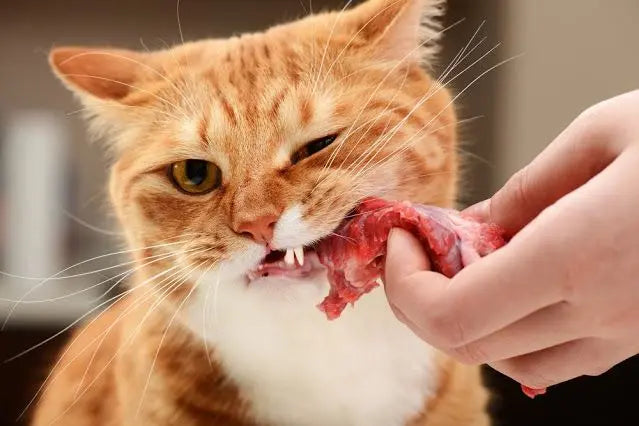
Fresh cat food refers to meals made from whole, minimally processed ingredients - real meat,
organs, and vegetables - cooked or prepared without the extreme heat and chemical binders
used in kibble production. BARF India's cooked meals fall squarely in this category.
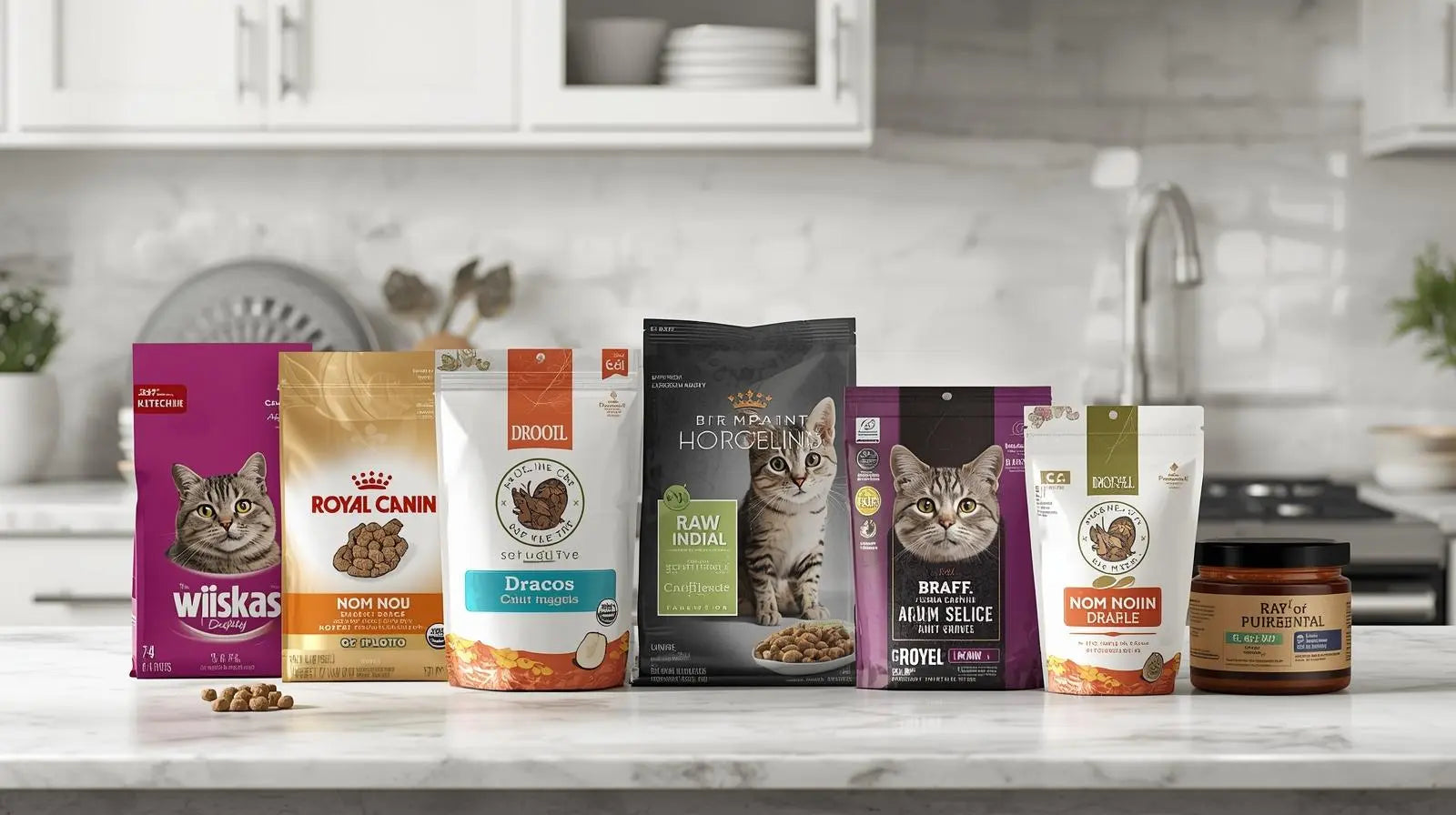
Kibble, by contrast, is an ultra-processed product. It is made by cooking ingredients at
temperatures above 200°C in a process called extrusion - which destroys heat-sensitive amino
acids, enzymes, and vitamins. Synthetic versions are added back in after the fact.

Fresh Cat Food and Kibble: The Moisture Problem That Quietly Damages Kidneys
Cats evolved as desert animals who get most of their hydration from prey. A mouse is roughly
70% water. Fresh cat food mirrors this naturally, typically containing 60–75% moisture. Kibble
contains just 8–12%.
Transitioning to fresh cat food meaningfully increases your cat's daily water intake without
forcing them to drink more from a bowl. This alone has measurable impact on urinary and
kidney health.
A cat eating only kibble is in a permanent state of mild dehydration. Over years, this quietly damages the kidneys - the organ most responsible for feline mortality.
Fresh Cat Food vs Kibble: Ingredient Quality at a Glance

Nutritional Science - Where Fresh Cat Food Wins Clearly
Fresh Cat Food and Kibble: The Protein Bioavailability Gap
Cats are obligate carnivores. They have no physiological need for carbohydrates and limited
ability to process them. Fresh cat food built around real meat delivers protein in its most
bioavailable form - meaning your cat's body actually uses it, rather than excreting it as waste.
Kibble's extrusion process denatures protein structures, creating Maillard reaction compounds
that reduce digestibility. The protein percentage on a kibble label can be misleading; what
matters is how much the cat can absorb and utilise.
Fresh Cat Food and Kibble: Taurine, Arachidonic Acid, and What Cats Cannot Make
Taurine is an amino acid cats cannot synthesise themselves. They must get it entirely from
food. Fresh animal protein - particularly heart muscle - is rich in taurine. Kibble's high-heat
processing degrades taurine, which is why manufacturers must add synthetic taurine after
production.
Similarly, arachidonic acid and Vitamin A in their active form (retinol) are found naturally in fresh
cat food. Plant-derived beta-carotene in kibble is useless to cats - they lack the enzyme to
convert it.
Bottom line: when you feed fresh cat food, nutrients arrive in their natural, bioavailable matrix. When you feed kibble, you're largely relying on synthetic supplements to compensate for what processing destroyed.

Fresh Cat Food and Kibble: Carbohydrates - The Hidden Damage in Dry Food
Most kibble contains 30–50% carbohydrates - not because cats need them, but because starch is required for the extrusion process to hold the pellet shape. Cats lack the salivary amylase enzyme that begins carbohydrate digestion in humans and dogs. Chronically elevated blood glucose from high-carb diets is a primary driver of feline diabetes and obesity. Fresh cat food, particularly BARF India's formulations, keeps carbohydrate content under 10%, aligning with what cats actually evolved to process.
Digestive Health - How Fresh Cat Food Changes the Gut
Switching from kibble to fresh cat food often produces visible results within two to three weeks. Stool volume decreases significantly - a direct indicator that more of the food is being absorbed rather than expelled. High starch and fibre content in kibble feeds bacteria that produce excessive gas and loose stools. Fresh cat food, being closer to a cat's natural diet, supports a healthier gut microbiome with lower fermentation and better nutrient uptake.
Fresh Cat Food and Kibble: What Vets Are Seeing in Clinical Practice
Integrative and holistic veterinarians in India increasingly recommend fresh or raw-adjacent diets for cats with chronic conditions: IBD, pancreatitis, urinary crystals, and obesity. The common thread is that reducing ultra-processed ingredients reduces systemic inflammation. This does not mean all vets endorse every brand of fresh cat food - formulation quality matters enormously. BARF India's meals are veterinarian-reviewed and nutritionally balanced to AAFCO-equivalent standards for the Indian context.
LEARN MORE ABOUT INDIA'S NO.1 FRESH CAT FOOD
Start FreshWeight Management - Why Kibble-Fed Cats Gain Weight Faster
Feline obesity in India has roughly tripled over the past decade, tracking the rise in ultra-
processed pet food adoption. The mechanism is straightforward: kibble's high carbohydrate load
drives insulin spikes, promoting fat storage. Cats cannot self-regulate kibble consumption the
way they regulate prey-style food.
Fresh cat food, being high in protein and moisture and low in carbs, produces satiety more
efficiently. Cats feel full on smaller caloric amounts because the food is digested slowly and
protein signals fullness hormones more powerfully than starch.
 NATURE HAS ALREADY GIVEN THE RECIPE. WE HAVE ONLY IMPLEMENTED IT
BARF India's Approach - What Goes Into Every Meal
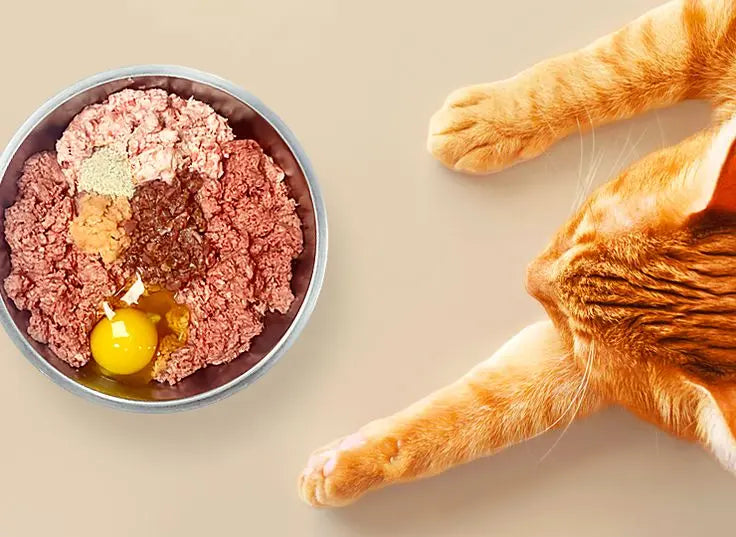
BARF India's cooked cat meals are built on a simple principle: feed cats the way nature intended, with safety and convenience for Indian households. Every batch starts with named, traceable meat - chicken, mutton, fish - combined with organ meats like liver and kidney that provide concentrated micronutrients. Unlike many commercial fresh brands, BARF India avoids unnecessary fillers, artificial flavour enhancers, and synthetic colour agents. The result is a fresh cat food that cats find instinctively palatable - because it smells and tastes like real food, not a chemical simulation of it.
Fresh Cat Food and Kibble: BARF India's Formulation Standards
• Minimum 65% named animal protein (chicken, fish, or mutton)
• Organ meats at 15–20% for taurine and fat-soluble vitamins
• Moisture content 65–72% - equivalent to whole prey
• Carbohydrates kept below 10% of dry matter
• No artificial preservatives, colours, or flavour enhancers
• Veterinarian-reviewed formulations for life stage appropriateness
Explore BARF India's full range of cooked cat food meals to see current flavours and life-stage
options.
The Cost Reality - Is Fresh Cat Food Actually More Expensive?
The upfront price-per-kg of fresh cat food is higher than kibble. That much is true. But the cost comparison requires looking at the full picture - including vet bills.
Fresh Cat Food and Kibble: True Cost Per Feeding (Monthly Estimate)

Note: the common belief that kibble cleans teeth is not supported by veterinary dental evidence. Most cats do not chew kibble in a way that produces any abrasive cleaning effect.
How to Transition Your Cat from Kibble to Fresh Cat Food
Cats are famously neophobic - resistant to new foods, especially when they have been conditioned on the hyper-palatable artificial flavours in kibble. Transition must be gradual to succeed.

Fresh Cat Food and Kibble A 3-Week Transition Plan

Fresh Cat Food and Kibble: Handling Transition Resistance
• Warm the fresh food slightly (body temperature) to enhance aroma
• Try fasting for 12 hours before offering fresh food for the first time
• Sprinkle a tiny amount of nutritional yeast on top to increase palatability
• Never starve a cat for more than 24 hours - hepatic lipidosis risk is real
For detailed guidance, read our complete guide on transitioning cats from kibble to fresh food
Common Myths About Fresh Cat Food - Debunked
Fresh Cat Food and Kibble: Separating Science from Marketing

Fresh Cat Food and Kibble: The Palatability Myth
Kibble manufacturers invest heavily in palatability enhancers - sprayed-on animal digest
coatings that make cats crave the product. This is not the same as nutritional preference. A cat
preferring kibble is similar to a child preferring crisps over vegetables. Preference does not
equal benefit.
Once cats clear the transition period, most strongly prefer fresh cat food - because it is closer
to what their biology is actually built to eat.
FAQ's: Fresh Cat Food and Kibble
Conclusion: Fresh Cat Food and Kibble - The Verdict
The evidence is not balanced - fresh cat food and kibble are not interchangeable options
between which reasonable people can equally choose. One is an ultra-processed, low-moisture,
high-carb product that cats are physiologically ill-equipped to thrive on.
The other mirrors what
cats evolved to eat.
That does not mean every fresh food brand is equal, or that the transition is without friction. It
means the direction of evidence is clear, and the long-term outcomes for cats on high-quality
fresh food are meaningfully better across almost every health metric that matters.
Fresh cat food and kibble represent two completely opposite philosophies about how cats should eat - and the gap between them affects your cat's weight, coat, kidney health, and lifespan. India's pet parents are waking up to this difference, and BARF India's cooked cat meals are at the centre of that conversation.
What Is Fresh Cat Food - And What Makes Kibble Different?
Fresh Cat Food and Kibble: Defining the Two Diets
Fresh cat food refers to meals made from whole, minimally processed ingredients - real meat,
organs, and vegetables - cooked or prepared without the extreme heat and chemical binders
used in kibble production. BARF India's cooked meals fall squarely in this category.
Kibble, by contrast, is an ultra-processed product. It is made by cooking ingredients at
temperatures above 200°C in a process called extrusion - which destroys heat-sensitive amino
acids, enzymes, and vitamins. Synthetic versions are added back in after the fact.
Fresh Cat Food and Kibble: The Moisture Problem That Quietly Damages Kidneys
Cats evolved as desert animals who get most of their hydration from prey. A mouse is roughly
70% water. Fresh cat food mirrors this naturally, typically containing 60–75% moisture. Kibble
contains just 8–12%.
Transitioning to fresh cat food meaningfully increases your cat's daily water intake without
forcing them to drink more from a bowl. This alone has measurable impact on urinary and
kidney health.
A cat eating only kibble is in a permanent state of mild dehydration. Over years, this quietly damages the kidneys - the organ most responsible for feline mortality.
Fresh Cat Food vs Kibble: Ingredient Quality at a Glance
Nutritional Science - Where Fresh Cat Food Wins Clearly
Fresh Cat Food and Kibble: The Protein Bioavailability Gap
Cats are obligate carnivores. They have no physiological need for carbohydrates and limited
ability to process them. Fresh cat food built around real meat delivers protein in its most
bioavailable form - meaning your cat's body actually uses it, rather than excreting it as waste.
Kibble's extrusion process denatures protein structures, creating Maillard reaction compounds
that reduce digestibility. The protein percentage on a kibble label can be misleading; what
matters is how much the cat can absorb and utilise.
Fresh Cat Food and Kibble: Taurine, Arachidonic Acid, and What Cats Cannot Make
Taurine is an amino acid cats cannot synthesise themselves. They must get it entirely from
food. Fresh animal protein - particularly heart muscle - is rich in taurine. Kibble's high-heat
processing degrades taurine, which is why manufacturers must add synthetic taurine after
production.
Similarly, arachidonic acid and Vitamin A in their active form (retinol) are found naturally in fresh
cat food. Plant-derived beta-carotene in kibble is useless to cats - they lack the enzyme to
convert it.
Bottom line: when you feed fresh cat food, nutrients arrive in their natural, bioavailable matrix. When you feed kibble, you're largely relying on synthetic supplements to compensate for what processing destroyed.
Fresh Cat Food and Kibble: Carbohydrates - The Hidden Damage in Dry Food
Most kibble contains 30–50% carbohydrates - not because cats need them, but because starch is required for the extrusion process to hold the pellet shape. Cats lack the salivary amylase enzyme that begins carbohydrate digestion in humans and dogs. Chronically elevated blood glucose from high-carb diets is a primary driver of feline diabetes and obesity. Fresh cat food, particularly BARF India's formulations, keeps carbohydrate content under 10%, aligning with what cats actually evolved to process.
Digestive Health - How Fresh Cat Food Changes the Gut
Switching from kibble to fresh cat food often produces visible results within two to three weeks. Stool volume decreases significantly - a direct indicator that more of the food is being absorbed rather than expelled. High starch and fibre content in kibble feeds bacteria that produce excessive gas and loose stools. Fresh cat food, being closer to a cat's natural diet, supports a healthier gut microbiome with lower fermentation and better nutrient uptake.
Fresh Cat Food and Kibble: What Vets Are Seeing in Clinical Practice
Integrative and holistic veterinarians in India increasingly recommend fresh or raw-adjacent diets for cats with chronic conditions: IBD, pancreatitis, urinary crystals, and obesity. The common thread is that reducing ultra-processed ingredients reduces systemic inflammation. This does not mean all vets endorse every brand of fresh cat food - formulation quality matters enormously. BARF India's meals are veterinarian-reviewed and nutritionally balanced to AAFCO-equivalent standards for the Indian context.
LEARN MORE ABOUT INDIA'S NO.1 FRESH CAT FOOD
Start FreshWeight Management - Why Kibble-Fed Cats Gain Weight Faster
Feline obesity in India has roughly tripled over the past decade, tracking the rise in ultra-
processed pet food adoption. The mechanism is straightforward: kibble's high carbohydrate load
drives insulin spikes, promoting fat storage. Cats cannot self-regulate kibble consumption the
way they regulate prey-style food.
Fresh cat food, being high in protein and moisture and low in carbs, produces satiety more
efficiently. Cats feel full on smaller caloric amounts because the food is digested slowly and
protein signals fullness hormones more powerfully than starch.
NATURE HAS ALREADY GIVEN THE RECIPE. WE HAVE ONLY IMPLEMENTED ITBARF India's Approach - What Goes Into Every Meal
BARF India's cooked cat meals are built on a simple principle: feed cats the way nature intended, with safety and convenience for Indian households. Every batch starts with named, traceable meat - chicken, mutton, fish - combined with organ meats like liver and kidney that provide concentrated micronutrients. Unlike many commercial fresh brands, BARF India avoids unnecessary fillers, artificial flavour enhancers, and synthetic colour agents. The result is a fresh cat food that cats find instinctively palatable - because it smells and tastes like real food, not a chemical simulation of it.
Fresh Cat Food and Kibble: BARF India's Formulation Standards
• Minimum 65% named animal protein (chicken, fish, or mutton)
• Organ meats at 15–20% for taurine and fat-soluble vitamins
• Moisture content 65–72% - equivalent to whole prey
• Carbohydrates kept below 10% of dry matter
• No artificial preservatives, colours, or flavour enhancers
• Veterinarian-reviewed formulations for life stage appropriateness
Explore BARF India's full range of cooked cat food meals to see current flavours and life-stage
options.
The Cost Reality - Is Fresh Cat Food Actually More Expensive?
The upfront price-per-kg of fresh cat food is higher than kibble. That much is true. But the cost comparison requires looking at the full picture - including vet bills.
Fresh Cat Food and Kibble: True Cost Per Feeding (Monthly Estimate)
Note: the common belief that kibble cleans teeth is not supported by veterinary dental evidence. Most cats do not chew kibble in a way that produces any abrasive cleaning effect.
How to Transition Your Cat from Kibble to Fresh Cat Food
Cats are famously neophobic - resistant to new foods, especially when they have been conditioned on the hyper-palatable artificial flavours in kibble. Transition must be gradual to succeed.
Fresh Cat Food and Kibble A 3-Week Transition Plan
Fresh Cat Food and Kibble: Handling Transition Resistance
• Warm the fresh food slightly (body temperature) to enhance aroma
• Try fasting for 12 hours before offering fresh food for the first time
• Sprinkle a tiny amount of nutritional yeast on top to increase palatability
• Never starve a cat for more than 24 hours - hepatic lipidosis risk is real
For detailed guidance, read our complete guide on transitioning cats from kibble to fresh food
Common Myths About Fresh Cat Food - Debunked
Fresh Cat Food and Kibble: Separating Science from Marketing
Fresh Cat Food and Kibble: The Palatability Myth
Kibble manufacturers invest heavily in palatability enhancers - sprayed-on animal digest
coatings that make cats crave the product. This is not the same as nutritional preference. A cat
preferring kibble is similar to a child preferring crisps over vegetables. Preference does not
equal benefit.
Once cats clear the transition period, most strongly prefer fresh cat food - because it is closer
to what their biology is actually built to eat.
FAQ's: Fresh Cat Food and Kibble
Conclusion: Fresh Cat Food and Kibble - The Verdict
The evidence is not balanced - fresh cat food and kibble are not interchangeable options
between which reasonable people can equally choose. One is an ultra-processed, low-moisture,
high-carb product that cats are physiologically ill-equipped to thrive on.
The other mirrors what
cats evolved to eat.
That does not mean every fresh food brand is equal, or that the transition is without friction. It
means the direction of evidence is clear, and the long-term outcomes for cats on high-quality
fresh food are meaningfully better across almost every health metric that matters.