Raw for Maximum Nutrition

Made in our own Kitchens

Human grade products

Raw for Maximum Nutrition

Made in our own kitchens

Human grade products

5 June 2026

Cat Foods and Starch: The Truth Your Vet Wants You to Know

Discover why carb-heavy kibble harms feline health, what the science says, and how to switch to better alternatives.

A black cat with yellow eyes sits behind a white bowl filled with dry cat food, looking directly at the camera. The background shows a softly lit kitchen.

5 June 2026

Cat Foods Contain Too Much Starch: The Truth Your Vet Wants You to Know

Discover why carb-heavy kibble harms feline health, what the science says, and how to switch to better alternatives.

A black cat with yellow eyes sits behind a white bowl filled with dry cat food, looking directly at the camera. The background shows a softly lit kitchen.

Cat Foods and Starch: The Hidden Problem in Every Bag of Kibble

Cat Foods Contain Too Much Starch - and Most Owners Have No Idea

Cat foods contain too much starch, and your cat may already be showing the consequences. Most popular dry kibble brands carry between 25% and 40% carbohydrate content on a dry- matter basis - yet a cat's natural prey diet contains just 2% carbohydrates. That is a gap of twenty times the evolutionary norm. Starch is not a naturally occurring nutrient in a feline diet. It is an industrial solution to a manufacturing problem, not a nutritional choice made for your cat's benefit.

Key Stat
The average dry kibble contains approximately 25% starch on a dry-matter basis. A cat's ancestral diet contains roughly 2% carbohydrates. That is a 12x–20x excess in a single meal.

Why Is Starch Added in the First Place?

Starch is the binding agent that makes kibble physically possible. During the extrusion process - the industrial cooking method used to form dry cat food - starches gelatinise when heated and act as the glue that holds each piece together. Without starch, the kibble crumbles. It is a structural requirement of the manufacturing format, not a nutritional one. Corn, wheat, rice, tapioca, and peas all serve this role in modern recipes.

A fluffy cat sits on a kitchen counter among chopped vegetables, including tomatoes, peppers, and greens, while a person gently holds the cat from behind.

What Cats Actually Eat in the Wild

Cat Foods Contain Too Much Starch Compared to Nature's Blueprint

Studies of feral cat diets show their macronutrient intake breaks down as: 52% protein, 46% fat, and just 2% carbohydrates from metabolisable energy. The cat's entire physiology evolved around this ratio over millions of years. Wild prey - mice, birds, small lizards - contains almost no digestible starch. The minimal plant matter consumed comes from stomach contents of prey, not from direct plant intake.

The Species-Appropriate Macronutrient Map

Transitioning to a species-appropriate lens means asking a simple question: does this ingredient appear in a mouse? Animal protein does. Fat does. Starch, corn meal, potato flour, and tapioca do not. Understanding what cats actually need clarifies why cat foods contain too much starch by design. The commercial pet food format was never built around feline biology - it was built around manufacturing economics and shelf stability.

Purple label for Cooked Cat Food - Grain Free Chicken & Tuna Recipe (1.75kg | 7x250g) by www.barfindia.com. Features cat graphic, feeding guidelines, ingredients, safety info, and maker details. All-natural, preservative-free, family-owned brand.
An orange label for Cooked Cat Food – Grain-Free Buffalo & Chicken Recipe (1.75kg | 7x250g) from www.barfindia.com lists ingredients, feeding instructions, and safety info. A gray-striped cartoon cat stretches at the bottom left. Made in India.
Blue label for Cooked Cat Food - Grain-free Mackerel & Pork Recipe (1.75 kg, 7x250g) by www.barfindia.com. High protein, with ingredients and feeding instructions. Gray striped cat illustration; yellow safety info box on right.
Cooked Cat Food - Grain free Rabbit & Quail Recipe (1.75kg, 7x250g) label features ingredients, feeding and storage instructions, allergy warnings, manufacturer info (www.barfindia.com), and a gray tabby cat illustration on a pink background.
Yellow label for Sampler Pack - Gently Cooked Cat Food by www.barfindia.com, highlighting all-natural, preservative-free boneless chicken. Includes a cartoon cat, feeding guide, ingredients, storage tips, manufacturer info, and 250g net weight.
An infographic for www.barfindia.com’s Sampler Pack - Gently Cooked Cat Food shows five steps—Protein, Prep Produce, Cold Combine, Pack & Freeze, Test/Ship/Enjoy—with brief descriptions and illustrated icons for each.
Purple label for Cooked Cat Food - Grain Free Chicken & Tuna Recipe (1.75kg | 7x250g) by www.barfindia.com. Features cat graphic, feeding guidelines, ingredients, safety info, and maker details. All-natural, preservative-free, family-owned brand.
An orange label for Cooked Cat Food – Grain-Free Buffalo & Chicken Recipe (1.75kg | 7x250g) from www.barfindia.com lists ingredients, feeding instructions, and safety info. A gray-striped cartoon cat stretches at the bottom left. Made in India.
Blue label for Cooked Cat Food - Grain-free Mackerel & Pork Recipe (1.75 kg, 7x250g) by www.barfindia.com. High protein, with ingredients and feeding instructions. Gray striped cat illustration; yellow safety info box on right.
Cooked Cat Food - Grain free Rabbit & Quail Recipe (1.75kg, 7x250g) label features ingredients, feeding and storage instructions, allergy warnings, manufacturer info (www.barfindia.com), and a gray tabby cat illustration on a pink background.
Yellow label for Sampler Pack - Gently Cooked Cat Food by www.barfindia.com, highlighting all-natural, preservative-free boneless chicken. Includes a cartoon cat, feeding guide, ingredients, storage tips, manufacturer info, and 250g net weight.
An infographic for www.barfindia.com’s Sampler Pack - Gently Cooked Cat Food shows five steps—Protein, Prep Produce, Cold Combine, Pack & Freeze, Test/Ship/Enjoy—with brief descriptions and illustrated icons for each.

Cooked Cat Food - The Tasting Box.

Rs. 320.00
An orange label for Cooked Cat Food – Grain-Free Buffalo & Chicken Recipe (1.75kg | 7x250g) from www.barfindia.com lists ingredients, feeding instructions, and safety info. A gray-striped cartoon cat stretches at the bottom left. Made in India.
An infographic shows 5 safe steps for prepping Cooked Cat Food – Grain-Free Buffalo & Chicken Recipe (1.75kg | 7x250g) by www.barfindia.com: steam/thaw protein, wash/steam produce, cold combine, pack/freeze, test/ship/enjoy!.
Infographic displays daily portions for adult cats (2.7–7.2 kg) in grams/day for Cooked Cat Food – Grain-Free Buffalo & Chicken Recipe (1.75kg | 7x250g) by www.barfindia.com, with a cartoon cat and tips to adjust food for activity and treats.
Infographic for Cooked Cat Food – Grain-Free Buffalo & Chicken Recipe (1.75kg) from www.barfindia.com: Holistic vet-crafted, high-protein, 87% chicken, liver, eggs, mussels & oysters with veggies and healthy fats. Small batch made.
An orange label for Cooked Cat Food – Grain-Free Buffalo & Chicken Recipe (1.75kg | 7x250g) from www.barfindia.com lists ingredients, feeding instructions, and safety info. A gray-striped cartoon cat stretches at the bottom left. Made in India.
An infographic shows 5 safe steps for prepping Cooked Cat Food – Grain-Free Buffalo & Chicken Recipe (1.75kg | 7x250g) by www.barfindia.com: steam/thaw protein, wash/steam produce, cold combine, pack/freeze, test/ship/enjoy!.
Infographic displays daily portions for adult cats (2.7–7.2 kg) in grams/day for Cooked Cat Food – Grain-Free Buffalo & Chicken Recipe (1.75kg | 7x250g) by www.barfindia.com, with a cartoon cat and tips to adjust food for activity and treats.
Infographic for Cooked Cat Food – Grain-Free Buffalo & Chicken Recipe (1.75kg) from www.barfindia.com: Holistic vet-crafted, high-protein, 87% chicken, liver, eggs, mussels & oysters with veggies and healthy fats. Small batch made.

Premium Buffalo & Chicken Cat Food

Rs. 630.00
Purple label for Cooked Cat Food - Grain Free Chicken & Tuna Recipe (1.75kg | 7x250g) by www.barfindia.com. Features cat graphic, feeding guidelines, ingredients, safety info, and maker details. All-natural, preservative-free, family-owned brand.
Infographic for Cooked Cat Food - Grain Free Chicken & Tuna Recipe (1.75kg, 7x250g) by www.barfindia.com: Pie chart—87% meat & seafood, 9% fats/seeds/root veggies, 4% dark green veggies. Small batch, gently cooked, human-grade ingredients.
Purple label for Cooked Cat Food - Grain Free Chicken & Tuna Recipe (1.75kg | 7x250g) by www.barfindia.com. Features cat graphic, feeding guidelines, ingredients, safety info, and maker details. All-natural, preservative-free, family-owned brand.
Infographic for Cooked Cat Food - Grain Free Chicken & Tuna Recipe (1.75kg, 7x250g) by www.barfindia.com: Pie chart—87% meat & seafood, 9% fats/seeds/root veggies, 4% dark green veggies. Small batch, gently cooked, human-grade ingredients.

Cooked Cat Food: Premium Chicken & Tuna Cat Food

Rs. 590.00
A bright yellow
Infographic for Cooked Cat Food - Grain Free Chicken Recipe (1.75kg) by www.barfindia.com: 87% chicken, liver, eggs, mussels & oysters; 9% healthy fats, seeds & root veggies; 4% dark green veggies. Circular chart on yellow background.
Chart shows daily food portions (grams) for adult cats (2.7–7.2kg) for Cooked Cat Food - Grain Free Chicken Recipe by www.barfindia.com. Includes guidance, cartoon cat, and note to adjust for activity and treats. Pack: 1.75kg (7x250g).
Discover how www.barfindia.com's Cooked Cat Food - Grain Free Chicken Recipe (1.75kg, 7x250g) is made in five steps: select protein, prep produce, combine cold, pack & freeze, test & ship! Includes grain-free tips and vivid illustrations for each stage.
A plate with chicken breast, hearts, liver, mussels, shrimp, kidney, oysters, organic egg, and a creamy mix—each labeled as www.barfindia.com Cooked Cat Food - Grain Free Chicken Recipe ingredients.
A bright yellow
Infographic for Cooked Cat Food - Grain Free Chicken Recipe (1.75kg) by www.barfindia.com: 87% chicken, liver, eggs, mussels & oysters; 9% healthy fats, seeds & root veggies; 4% dark green veggies. Circular chart on yellow background.
Chart shows daily food portions (grams) for adult cats (2.7–7.2kg) for Cooked Cat Food - Grain Free Chicken Recipe by www.barfindia.com. Includes guidance, cartoon cat, and note to adjust for activity and treats. Pack: 1.75kg (7x250g).
Discover how www.barfindia.com's Cooked Cat Food - Grain Free Chicken Recipe (1.75kg, 7x250g) is made in five steps: select protein, prep produce, combine cold, pack & freeze, test & ship! Includes grain-free tips and vivid illustrations for each stage.
A plate with chicken breast, hearts, liver, mussels, shrimp, kidney, oysters, organic egg, and a creamy mix—each labeled as www.barfindia.com Cooked Cat Food - Grain Free Chicken Recipe ingredients.

Premium Chicken Cat Food

Rs. 475.00
Premium Mackerel & Pork Cat Food www.barfindia.com
Cooked Cat Food
Premium Mackerel & Pork Cat Food www.barfindia.com
Cooked Cat Food
Premium Mackerel & Pork Cat Food www.barfindia.com

Premium Mackerel & Pork Cat Food

Rs. 515.00
Cooked Cat Food - Grain free Rabbit & Quail Recipe (1.75kg, 7x250g) label features ingredients, feeding and storage instructions, allergy warnings, manufacturer info (www.barfindia.com), and a gray tabby cat illustration on a pink background.
Discover our Cooked Cat Food - Grain free Rabbit & Quail Recipe (1.75kg) by www.barfindia.com: 87% rabbit, quail, liver, eggs, mussels & oysters; small batch cooked for complete cat nutrition.
An infographic titled “Recommended Daily Portions: Adult Cat” displays daily amounts of Cooked Cat Food - Grain Free Rabbit & Quail Recipe (1.75kg, 7x250g) for cats from 2.7kg to 7.2kg, with tips on activity and supplement adjustments from www.barfindia.com.
A colorful infographic from www.barfindia.com shows the 5-step process of making Cooked Cat Food - Grain free Rabbit & Quail Recipe (1.75kg): protein cooking, prepping produce, cold combining, packing/freezing, then testing and delivery.
Premium Rabbit & Quail. www.barfindia.com
Cooked Cat Food - Grain free Rabbit & Quail Recipe (1.75kg, 7x250g) label features ingredients, feeding and storage instructions, allergy warnings, manufacturer info (www.barfindia.com), and a gray tabby cat illustration on a pink background.
Discover our Cooked Cat Food - Grain free Rabbit & Quail Recipe (1.75kg) by www.barfindia.com: 87% rabbit, quail, liver, eggs, mussels & oysters; small batch cooked for complete cat nutrition.
An infographic titled “Recommended Daily Portions: Adult Cat” displays daily amounts of Cooked Cat Food - Grain Free Rabbit & Quail Recipe (1.75kg, 7x250g) for cats from 2.7kg to 7.2kg, with tips on activity and supplement adjustments from www.barfindia.com.
A colorful infographic from www.barfindia.com shows the 5-step process of making Cooked Cat Food - Grain free Rabbit & Quail Recipe (1.75kg): protein cooking, prepping produce, cold combining, packing/freezing, then testing and delivery.
Premium Rabbit & Quail. www.barfindia.com

Premium Rabbit & Quail Cat Food

Rs. 680.00

Why Starch Is in Kibble at All

Cat Foods Contain Too Much Starch Because of Manufacturing, Not Nutrition

There are two core reasons cat foods contain too much starch. First, starch is structurally required for extrusion. Second, it is cheap. Starch delivers calories at a fraction of the cost of animal protein. For large-volume manufacturers, replacing 30% of protein with corn or rice significantly reduces production costs.

The Cost Economics of Carbohydrate Fillers

Corn meal costs roughly one-fifth the price of chicken meal per unit of caloric energy. From a profit-margin perspective, increasing starch content while reducing animal protein is a straightforward business decision. The regulatory minimum from AAFCO for adult cat maintenance sets protein floors, not starch ceilings. A food can technically meet AAFCO standards while containing 40% starch - with no flag on the label.

What This Means for You
AAFCO labels confirm minimum protein requirements are met. They do not tell you whether carbohydrate content is appropriate for your cat's biology. Always calculate the starch estimate yourself using the formula in Section 6.

Shelf Life and the Starch Connection

Higher starch content also contributes to longer shelf life. Dry kibble must survive 12–18 months on shelves. Lower moisture and higher starch density reduces microbial activity, delaying spoilage. This is a convenience benefit for retailers and manufacturers. It is not a health benefit for your cat. Cat foods contain too much starch partly because the format that delivers the longest shelf life also happens to be the worst match for feline metabolism.

LEARN MORE ABOUT INDIA'S NO.1 FRESH CAT FOOD

Start Fresh

How a Cat's Body Handles (or Fails to Handle) Starch

Cat Foods Contain Too Much Starch for Feline Digestive Enzymes to Cope

The physiological evidence is stark. Cats lack salivary amylase - the enzyme that begins starch breakdown in most omnivores and humans. Pancreatic amylase in cats operates at only 5% of the level found in dogs. The intestinal sugar transporter in cats does not adapt to increased carbohydrate intake. Feed a dog more starch and its digestive enzymes upregulate. Feed a cat more starch and nothing changes - the enzyme capacity stays at carnivore baseline.

The Liver Problem: Missing Glucokinase

Most animals have two enzyme systems for converting glucose: hexokinase (for small loads) and glucokinase (for large carbohydrate loads). Cats have negligible glucokinase activity. When a starch-heavy meal floods the portal vein with glucose, the cat's liver cannot clear it efficiently. The result is prolonged hyperglycaemia after meals - a state that, repeated daily across years, places enormous stress on the pancreas and predisposes cats to insulin resistance and type 2 diabetes.

Short Intestinal Length Limits Fermentation Recovery

Cats have an intestine-to-body-length ratio of 4:1, compared to 6:1 in dogs and 14:1 in pigs. This shorter gut limits the opportunity for microbial fermentation of starches that escape digestion in the small intestine. Poorly digested starches reach the colon and ferment, lowering fecal pH, increasing organic acid production, and reducing the digestibility of dietary protein - the exact nutrient cats most need.

A fluffy gray cat is lying on its back with its paws up, relaxed on a brown couch next to a white knitted blanket.NATURE HAS ALREADY GIVEN THE RECIPE. WE HAVE ONLY IMPLEMENTED IT

Cat Foods and Starch: The Health Consequence

Cat Foods Contain Too Much Starch - and the Health Toll Is Real

Excess starch converts to glucose in the bloodstream. Repeated glucose spikes, with an enzyme system ill-equipped to manage them, set the stage for a range of chronic conditions that are now alarmingly common in domestic cats.

Feline Diabetes and the Starch Link

Type 2 diabetes in cats correlates strongly with prolonged consumption of high-carbohydrate diets. Research shows that switching diabetic cats to a high-protein, low-starch diet resulted in a 50% or greater reduction in required insulin in nearly 89% of study participants. That is not a supplement or a drug - it is a food change. The clinical implication is that diet is the primary driver of this disease in the majority of cases. Cat foods contain too much starch, and diabetes is one of the most visible consequences.

Obesity, Weight Gain, and Metabolic Syndrome

Starch delivers energy cats cannot regulate effectively. Unlike fat - which triggers satiety signals cats are tuned to recognise - excess carbohydrate calories are less likely to downregulate hunger in obligate carnivores. Obese cats face cascading risks: fatty liver disease (hepatic lipidosis), arthritis, reduced immune function, and a measurably shorter lifespan. The obesity epidemic in domestic cats mirrors the rise of carb-heavy kibble as the primary feeding format.

Health Risk Summary
Chronic excess starch intake in cats is linked to: type 2 diabetes · obesity · inflammatory bowel disease · urinary crystal formation (calcium oxalate) · fatty liver disease · poor gut microbiome balance.

Urinary Health and Calcium Oxalate Risk

High starch diets increase glucose availability, which is a precursor to oxalate through the glyoxylate pathway. This elevates endogenous oxalate synthesis in feline hepatocytes, increasing urinary oxalate concentration. Studies comparing high-starch vs. high-protein dry diets found lower urine volume, higher oxalate concentration, and greater calcium oxalate supersaturation in cats on the high-starch diet - a direct pathway to crystal formation and painful urinary blockages.

Gut Microbiome Disruption

Undigested starches that reach the large intestine feed opportunistic bacteria and yeast. This imbalance is linked to chronic ear infections, skin irritation, and recurrent digestive upset. The cat's short colon offers limited recovery capacity once dysbiosis sets in.

How to Read a Cat Food Label for Starch

Cat Foods Contain Too Much Starch - Here Is How to Find It

Starch is never listed as 'starch' on a cat food label. It hides in plain sight as: corn, corn meal, ground yellow corn, wheat, rice, oats, barley, potato, sweet potato, tapioca, peas, lentils, chickpeas, and pea starch. These are all starch sources.

The Carbohydrate Calculation Formula

Labels list protein, fat, crude fibre, ash, and moisture. The remaining percentage is carbohydrate - mostly starch. Calculate it yourself:

Estimated Starch % = 100 − Protein % − Fat % − Crude Fibre % − Ash % − Moisture %

For dry-matter comparison, remove moisture from all values. Any result above 12% dry-matter carbohydrate should raise a flag, especially for cats with weight issues, diabetes risk, or urinary problems.

Red-Flag Ingredients List

• Corn, ground yellow corn, corn meal - first or second ingredient = very high starch
• Pea protein / pea starch / lentils - used in 'grain-free' formulas but still high-starch
• Tapioca - a high-glycaemic starch with zero nutritional value for cats
• Brown rice / white rice - marketed as 'healthy grains' but still drive glucose load
• Potato / sweet potato - significant starch sources often missed on grain-free labels

Green-Flag Label Signals

• Named animal protein (chicken, salmon, turkey) as the first three ingredients
• No grains, legumes, or tubers in the first five ingredients
• Calculated carbohydrate below 10% on a dry-matter basis
• Moisture above 70% - wet food naturally limits starch need

A healthy house cat eating fresh cat food

Better Alternatives to Carb-Heavy Kibble

Cat Foods Contain Too Much Starch - So What Should You Feed Instead?

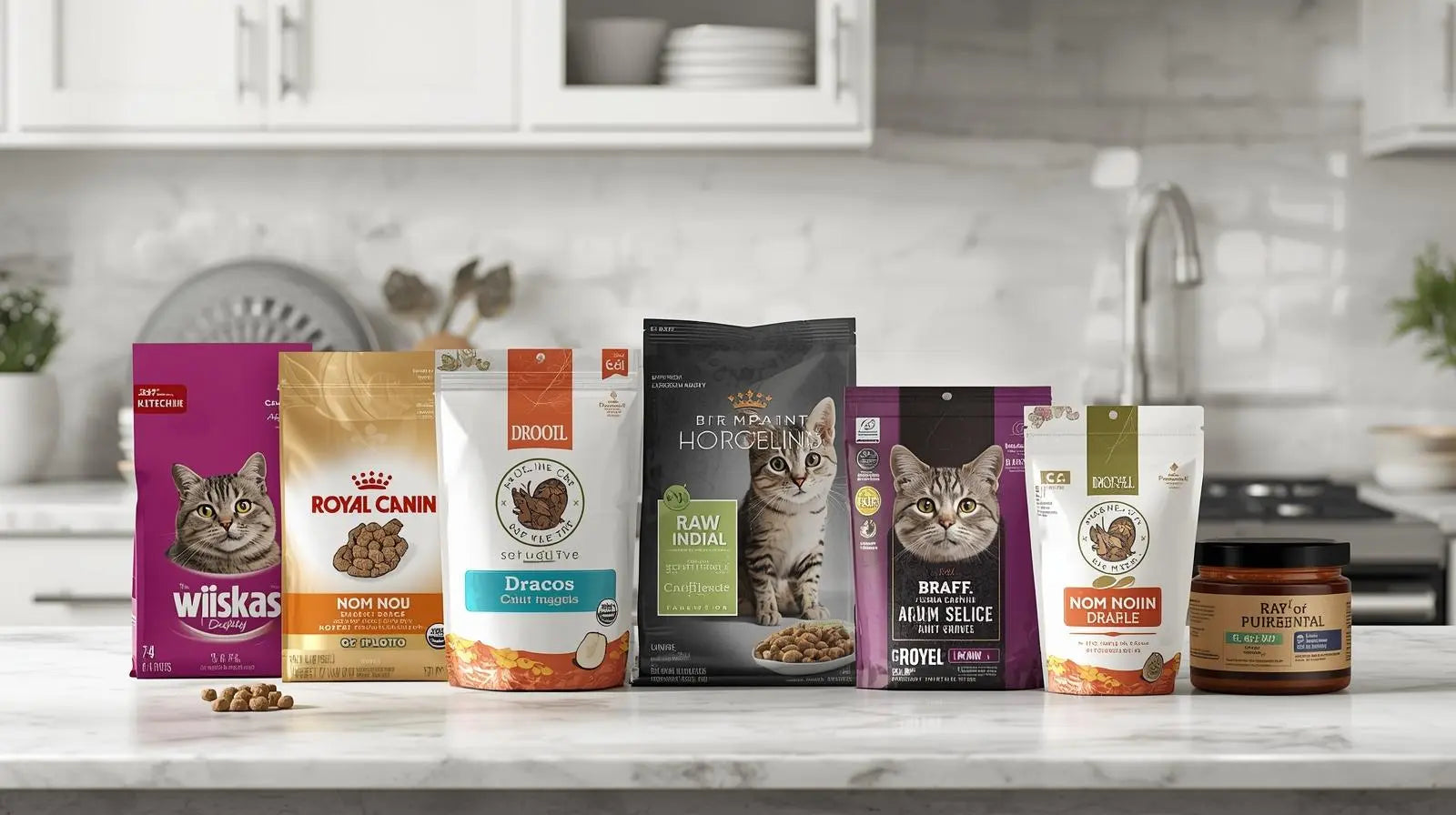
The goal is not perfection. The goal is a meaningful reduction in daily starch load while maintaining complete and balanced nutrition. Here is the comparison at a glance:

Better Alternatives to Carb-Heavy Kibble

Wet / Canned Food: The Most Accessible Upgrade

High-quality canned cat food typically contains 3–8% carbohydrates on a dry-matter basis. It also provides the hydration that a cat's kidneys depend on - cats evolved to meet most of their water needs through prey moisture, not from a bowl. Choose pâté-style over gravy-style. Gravy formulas often use starch-based thickeners. Pâté contains no added binders and delivers a cleaner macronutrient profile.

Freeze-Dried and Air-Dried: High-Quality Dry Alternatives

Freeze-dried and air-dried foods use dehydration rather than extrusion. This means they do not require starch as a binder. Many formulas achieve 1–5% starch levels while remaining palatable and shelf-stable. Brands like Ziwi Peak, Stella & Chewy's freeze-dried, and Orijen air-dried consistently rank as among the lowest-carbohydrate dry formats commercially available.

Raw and Minimally Processed Diets

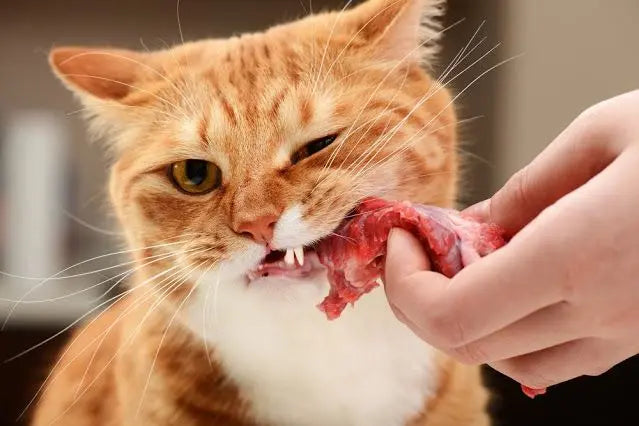
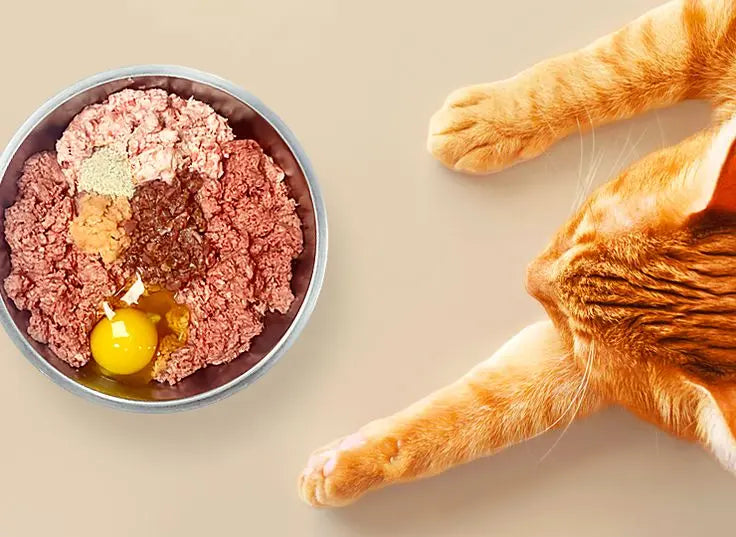
A balanced raw diet most closely mirrors the macronutrient ratios of prey. Carbohydrate content is typically below 2% - matching the evolutionary baseline. Veterinary guidance is strongly recommended before switching, particularly for kittens, seniors, or immunocompromised cats.

Making the Transition - Practical Steps

Cat Foods Contain Too Much Starch: Your 4-Week Transition Plan

Cats are creatures of habit. A cold-switch from kibble to wet or raw food often fails - not because the new food is wrong, but because the transition is too fast.

Week-by-Week Schedule

1. Week 1: Introduce 10% new food mixed into current kibble. Add freeze-dried toppers for palatability.
2. Week 2: Increase to 25% new food. Watch stool consistency - mild softening is normal.
 3. Week 3: Move to 50/50. Begin reducing total kibble portion if new food is calorie- equivalent.
4. Week 4: 75% new food. Most cats adapt fully within days 21–28.

Managing a Picky Cat During the Transition

Warm the new food slightly to enhance aroma. Use freeze-dried meat crumbles as a topper on wet food to bridge familiar scent cues. Avoid forcing the switch - a cat that refuses to eat for more than 48 hours risks hepatic lipidosis, particularly if overweight.

When to Involve Your Veterinarian

Any cat with existing diabetes, kidney disease, urinary issues, or inflammatory bowel disease should make this dietary transition under veterinary supervision. Diabetic cats in particular may need insulin dose adjustments as blood glucose levels normalise on a lower-starch diet - and that is a good problem to have.

Fresh Cat Food
An infographic for Dog Treats Natural Omega 3 - Dehydrated Anchovies (100g) by www.barfindia.com, highlighting omega-3 benefits, zero preservatives, Indian sourcing, storage tips, contact info, plus fish and plant illustrations.
A wooden spoon filled with Dog Treats Natural Omega 3 - Dehydrated Anchovies (100 gms) by www.barfindia.com rests on a pile of similar treats.
Dog Treats Natural Omega 3 - Dehydrated Anchovies (100 gms) from www.barfindia.com: small silvery fish with visible eyes, closely arranged—ideal as natural omega-3 dog snacks.
A close-up of Dog Treats Natural Omega 3 - Dehydrated Anchovies (100 gms) by www.barfindia.com shows whole anchovies with eyes and fins, tightly packed—ideal natural, flavorful snacks for your dog.
An infographic for Dog Treats Natural Omega 3 - Dehydrated Anchovies (100g) by www.barfindia.com, highlighting omega-3 benefits, zero preservatives, Indian sourcing, storage tips, contact info, plus fish and plant illustrations.
A wooden spoon filled with Dog Treats Natural Omega 3 - Dehydrated Anchovies (100 gms) by www.barfindia.com rests on a pile of similar treats.
Dog Treats Natural Omega 3 - Dehydrated Anchovies (100 gms) from www.barfindia.com: small silvery fish with visible eyes, closely arranged—ideal as natural omega-3 dog snacks.
A close-up of Dog Treats Natural Omega 3 - Dehydrated Anchovies (100 gms) by www.barfindia.com shows whole anchovies with eyes and fins, tightly packed—ideal natural, flavorful snacks for your dog.

Dog Treats Natural Omega 3 - Dehydrated Anchovies - 100 gms.

Rs. 260.00
Dog Treats - Dehydrated Pork Hearts (60 gms) from www.barfindia.com are single-ingredient, all-natural pork heart treats with no additives or preservatives, packed in a white and pink resealable bag—perfect for your pet.
A white resealable bag with a pink label for www.barfindia.com Dog Treats - Dehydrated Pork Hearts (60 gms), displaying feeding guidelines, product benefits, convenience, and usage instructions.
Two pieces of dehydrated pork hearts from www.barfindia.com, dark brown and irregularly shaped, are displayed on a white background—ideal as single-ingredient dog treats. Product: Dog Treats - Dehydrated Pork Hearts - 60 gms.
Dog Treats - Dehydrated Pork Hearts (60 gms) from www.barfindia.com are single-ingredient, all-natural pork heart treats with no additives or preservatives, packed in a white and pink resealable bag—perfect for your pet.
A white resealable bag with a pink label for www.barfindia.com Dog Treats - Dehydrated Pork Hearts (60 gms), displaying feeding guidelines, product benefits, convenience, and usage instructions.
Two pieces of dehydrated pork hearts from www.barfindia.com, dark brown and irregularly shaped, are displayed on a white background—ideal as single-ingredient dog treats. Product: Dog Treats - Dehydrated Pork Hearts - 60 gms.

Dog Treats - Dehydrated Pork Hearts - 60 gms

Rs. 300.00
A white resealable pouch with a red label shows
A white resealable pouch from www.barfindia.com, with a red label showing feeding guidelines, product info, and serving instructions. Contains 60g dehydrated chicken hearts for dogs & cats, rich in taurine, made in India—best kept refrigerated.
A black bowl of Dehydrated Chicken Hearts - 60gms from www.barfindia.com is garnished with parsley and sits on a dark textured surface, surrounded by scattered herbs and spices.
A pile of small, dark, slightly yellowish Dehydrated Chicken Hearts - 60gms is spread on a white surface.
A white resealable pouch with a red label shows
A white resealable pouch from www.barfindia.com, with a red label showing feeding guidelines, product info, and serving instructions. Contains 60g dehydrated chicken hearts for dogs & cats, rich in taurine, made in India—best kept refrigerated.
A black bowl of Dehydrated Chicken Hearts - 60gms from www.barfindia.com is garnished with parsley and sits on a dark textured surface, surrounded by scattered herbs and spices.
A pile of small, dark, slightly yellowish Dehydrated Chicken Hearts - 60gms is spread on a white surface.

Dehydrated Chicken Hearts - 60gms

Rs. 250.00
A resealable pouch labeled
Dog Treats Buffalo Heart - 60gms by www.barfindia.com comes in a white resealable pouch with a red label showing feeding guidelines, product details, and care instructions. These natural Indian pet treats are healthy and convenient.
A hand holds a piece of Dog Treats Buffalo Heart - 60 gms by www.barfindia.com, with more natural buffalo heart treats in the background—ideal for your furry friend.
A hand holds a piece of Dog Treats Buffalo Heart - 60 gms by www.barfindia.com over a pile of similar air-dried treats—wholesome, natural snacks perfect for rewarding your dog.
Three pieces of Dog Treats Buffalo Heart - 60 gms from www.barfindia.com are arranged on a white background. Their rough, uneven texture and curled edges make them ideal natural treats for your dog.
A resealable pouch labeled
Dog Treats Buffalo Heart - 60gms by www.barfindia.com comes in a white resealable pouch with a red label showing feeding guidelines, product details, and care instructions. These natural Indian pet treats are healthy and convenient.
A hand holds a piece of Dog Treats Buffalo Heart - 60 gms by www.barfindia.com, with more natural buffalo heart treats in the background—ideal for your furry friend.
A hand holds a piece of Dog Treats Buffalo Heart - 60 gms by www.barfindia.com over a pile of similar air-dried treats—wholesome, natural snacks perfect for rewarding your dog.
Three pieces of Dog Treats Buffalo Heart - 60 gms from www.barfindia.com are arranged on a white background. Their rough, uneven texture and curled edges make them ideal natural treats for your dog.

Dog Treats Buffalo Heart - 60 gms

Rs. 250.00
The www.barfindia.com Dog Treats - Dehydrated Sardines 100 gms pack label shows sardines and leafy designs, lists health benefits, safe handling tips, contact info, and quality certifications.
A round wicker basket holds many dehydrated sardines (Dog Treats - Dehydrated Sardines - 100 gms pack) atop a dark surface.
The www.barfindia.com Dog Treats - Dehydrated Sardines 100 gms pack label shows sardines and leafy designs, lists health benefits, safe handling tips, contact info, and quality certifications.
A round wicker basket holds many dehydrated sardines (Dog Treats - Dehydrated Sardines - 100 gms pack) atop a dark surface.

Dog Treats - Dehydrated Sardines - 100 gms pack

Rs. 270.00
A pile of Dog Treats - Dehydrated Squids (pieces) - 60gms from www.barfindia.com on a white background, with a small colorful www.barfindia.com logo in the top right corner.

Dog Treats - Dehydrated Squids (pieces) - 60gms

Rs. 649.00

FAQ's - Cat Foods and Starch

How much starch is too much for a cat?

Cats require zero dietary carbohydrates - they can synthesise glucose from amino acids through gluconeogenesis. For practical purposes, most feline nutritionists recommend keeping starch below 10–12% on a dry-matter basis. Most standard dry kibble sits at 25–40% - two to four times above this threshold.

Can cat foods contain too much starch even if the label says 'grain-free'

Yes - this is one of the most common misconceptions. Grain-free formulas typically replace grains with peas, lentils, chickpeas, potatoes, or tapioca. These are all high-starch ingredients. A grain-free label does not mean low-carbohydrate. Always calculate the estimated carbohydrate percentage yourself using the formula in Section 6.

My cat has eaten kibble for years with no obvious problems - should I still be concerned?

Chronic conditions like feline diabetes, kidney disease, and inflammatory bowel disease typically develop silently over years, not days. By the time symptoms appear, significant organ stress has often accumulated. The absence of visible illness is not evidence that the current diet is optimal.

Is wet food always lower in starch than dry food?

Almost always, yes. Wet food does not require starch as a binder, so most quality canned pâté formulas contain 3–8% carbohydrates on a dry-matter basis. Gravy-style wet foods can be slightly higher due to starch-based thickeners. Always choose pâté over gravy when starch reduction is the goal.

Can a cat become diabetic from eating high-starch kibble?

Research strongly supports this link. Cats fed chronically high-starch diets are at elevated risk of developing type 2 diabetes due to repeated glucose spikes, inadequate hepatic glucokinase activity, and progressive pancreatic stress. Studies have shown that switching diabetic cats to low-starch diets reduced insulin requirements in nearly 89% of cases.

What is the fastest way to reduce my cat's starch intake?

Replace at least one daily kibble meal with high-quality wet food (pâté-style) immediately. This alone can halve your cat's daily starch intake with minimal disruption. Over four weeks, progressively increase the proportion of wet, freeze-dried, or raw food until kibble is eliminated or becomes a minor supplement.

Are some kibble brands genuinely low in starch?

Yes, though they are in the minority. Brands like Dr. Elsey's cleanprotein, Orijen, and Ziwi Peak air- dried consistently produce formulations with lower carbohydrate content (under 15% dry-matter) than mainstream brands. These use more animal-based binding agents and reduce or eliminate grain and legume-based starches.

Should I consult a vet before switching my cat away from kibble?

For healthy adult cats, a gradual four-week transition carries minimal clinical risk. For cats with any existing diagnosis - diabetes, kidney disease, urinary disease, IBD, or obesity - a vet consultation before switching is strongly recommended. Diabetic cats especially may need insulin dose changes as their glycaemic response improves on a lower-starch diet.

Conclusion - Cat Foods and Starch: The Bottom Line

Cat foods contain too much starch because the dominant commercial format - extruded dry kibble - requires starch to hold together. This is a manufacturing reality, not a nutritional recommendation. Your cat's body has no salivary amylase, negligible pancreatic amylase, no liver glucokinase, and a short intestinal tract - a biological blueprint that screams 'do not feed this animal a grain- heavy diet.' The chronic health consequences of doing so include diabetes, obesity, urinary crystals, and a gut microbiome under constant stress.

The solution is not to panic or switch overnight. It is to know what you are looking at on a label, calculate the starch load, and progressively shift toward foods that match what your cat is actually built to process - high animal protein, moderate fat, and minimal starch. Cat foods contain too much starch - but your next purchase does not have to.