Raw for Maximum Nutrition
Made in our own Kitchens
Human grade products
Cooked Cat Food for Overweight Cats
WRITTEN BY NIVEDITA FERNANDES
09/9/2025
5 MIN READ
TABLE OF CONTENTS
- Cat Food for Overweight Cats:
- Why Cooked Food Changed Our Story
- Cooked vs Kibble: The Satiety Advantage
- My Weight Loss Meal Plan.
- Transitioning to Cooked
- Multi-Cat Homes
- F.A.Qs
- Conclusion
If you’ve been searching for a healthier, fresher alternative to processed kibble, BARF India’s cooked cat food is the answer. Made from human-grade, preservative-free ingredients, it’s the closest you can get to homemade cat food — without the effort. Our sampler pack is perfect for finicky cats, giving them a chance to explore every recipe and find their favourite.
Cat Food for Overweight Cats: Why I Switched to Cooked
There’s a special kind of heartbreak in watching a cat you adore move less, jump lower, clean less, and nap more—not because they’re peacefully content, but because they’re carrying extra weight. I’ve been there. The “aww, chunky!” jokes stop being funny when your best friend pants after a staircase or hesitates before a leap they used to nail.
This post is my love letter to leaner, happier felines—and a straight-talking case for cat food for overweight cats that’s gently cooked, portioned with care, and actually satisfies. I’m talking about BARF India’s Cooked Chicken and Cooked Fish, paired with simple portion control for overweight cats. It’s not a crash diet. It’s a calm, delicious reset.
The Hidden Costs of “A Little Extra”
It sneaks up on us: the always-full bowl, the extra treats, the sedentary indoor life. The bill, unfortunately, comes due in ways we can’t ignore:
- Less play, less joy. That spark in their eyes dulls when moving hurts or tires them out.
- Sore joints and stiff mornings. Jumping, grooming, even using the litter box can feel like a chore.
- Greasy coats & tricky grooming. Overweight cats struggle to reach, and mats happen.
- Mood dips. Frustration from hunger-boredom cycles and aches shows up in behavior.
- Scary health risks. Your vet has already said it: weight puts pressure on everything.
Shaving down the number on the scale isn’t vanity. It’s a ticket back to the cat they’re meant to be—curious, agile, bright-eyed.
Why Cooked Food Changed Our Story
I tried the usual: “light” kibble, scoops that were supposed to be measured (but… were they?), and promises to play more “later.” Nothing stuck. Then I made two decisions:
- Serve real, gently cooked food: protein-first, moisture-rich, and satisfying.
- Portion every meal like it matters: because it does.
That’s when everything clicked. A bowl of best cooked cat food for overweight cats isn’t just softer on digestion; it’s fuller per calorie, so your cat isn’t prowling the kitchen an hour later. I reached for BARF India Cooked Chicken and BARF India Cooked Fish because they’re easy to thaw and weigh, the labels are simple to understand, and my cat licked the bowl clean—without needing “bonus” treats to make dinner exciting.
Cooked vs Kibble: The Satiety Advantage
Let’s keep it simple. When you’re choosing cat food for overweight cats, you want:
- High protein, low fat (hello high protein low fat cat food for weight loss)
- Lower carbs (yes to low carb cat food for overweight cats)
- Moisture (wet/cooked beats dry in fullness and hydration)
- Clean ingredient decks (many prefer grain free cooked cat food for overweight cats)
Kibble can be calorie-dense and easy to overpour. Cooked meals are naturally more voluminous, which helps your cat feel content on fewer calories. That’s the magic of wet vs dry cat food for weight loss—cooked sits comfortably on the “wet” side of that win.
Meet My Kitchen Wingmen: BARF India Cooked Chicken & Fish
BARF India's Cooked Chicken recipe became our everyday anchor: lean, tasty, and straightforward—exactly what I needed for cooked chicken cat food for weight loss. On rotation days, BARF India Cooked Fish brings variety plus natural omega-3s—my pick for cooked fish cat food for weight control. Together, they’re the kind of low calorie cooked cat food for cats that makes portioning feel effortless.
And yes—portion control for overweight cats is the whole point. I thaw, weigh in grams, serve, and walk away. No anxiety about “Did I overdo it?”...... because the scale says I didn’t.
How Much to Feed?
Talk to your vet about your cat’s ideal weight, then aim your portions at that goal, and not their current weight. As a friendly anchor when you’re new to this, think in terms of how much to feed an overweight cat per day and divide it into 2–3 meals. A rhythm forms. Begging fades. Peace returns to the kitchen.
If you love structure, set up a cat weight loss food schedule on your phone: breakfast and dinner at the same times, and a third smaller meal if your cat’s a “midday negotiator.”
My Weight Loss Meal Plan (Cooked Food, Zero Drama)
This is the cadence that kept us sane—and working:
- Weekday routine: BARF India Cooked Chicken for breakfast and dinner.
- Weekend variety: Swap one or two meals for Cooked Fish to add texture and omega-3s
.
- Treats: The best treats for overweight cats on a diet are not extra—they’re tiny bits taken from that day’s cooked ration. Your cat feels spoiled; your plan stays intact.
If you’re a checklist person, call it your weight loss meal plan for cats (cooked food). If you’re a “vibe” person, just keep the rhythm and the portions consistent.
LEARN MORE ABOUT INDIA'S No.1 FRESH CAT FOOD
FRESH CAT FOODTransitioning to Cooked: Cozy, Not Chaotic
Transitioning to Cooked: Cozy, Not Chaotic
Cats love routine. Switch gently so mealtime stays joyful:
- Days 1–3: 25% cooked / 75% current food
- Days 4–6: 50/50
- Days 7–10: 75/25
- Day 11+: 100% cooked
This is how to transition a cat to cooked food without the food strike. Warm the cooked portion slightly (never hot) to make the kitchen smell like victory.
The Power of a Kitchen Scale (A Love Note to Precision)
Portion control is not punishment; it’s clarity. Weighing meals takes 20 seconds and saves months of second-guessing. It also gives you a calm answer when progress slows—because your portions are honest.
If the scale hasn’t budged in a couple of weeks, it’s time for gentle cat weight loss plateau fixes: trim portions a touch, add a few minutes of play, stick with your rotation. Which brings me to…
Play Is the Spice of Weight Loss
Two short play sessions can change the whole mood of your home. Feather wands, chase toys, safe laser games—whatever sparks that hunter’s glint. You don’t need a home gym. You need five good minutes, twice a day. Your cat will thank you with brighter eyes and deeper sleep.
And yes—movement helps you stay within the safe weight loss rate for cats per week. That slow-and-steady glide downward isn’t just healthy; it’s sustainable.
Multi-Cat Homes: Keep the Diet on Track
If you live with a furry food thief, you already know. A feeding guide for obese cats in multi-cat homes starts with boundaries:
- Feed your dieter in a separate room.
- Remove bowls after 15–20 minutes.
- Consider microchip feeders if there’s a master burglar in the house.
- Place the non-dieter’s bowl somewhere only they can reach.
You’re not being mean. You’re being strategic.
For Senior Sweethearts
Older cats can absolutely thrive on a senior cat weight loss diet—with your vet in the loop. Keep protein quality high, transitions gentle, and check-ins regular. Cooked food shines here: soft on digestion, easy on tired mouths, comforting to eat.
The Reframe That Saved Me
I stopped thinking of weight loss as “less” and started seeing it as more: more play, more comfort, more grooming, more sleep-in-a-sunbeam perfection. Serving cat food for overweight cats that’s high protein, low fat, low carb, and moisture-rich—like BARF India Cooked Chicken and Cooked Fish—wasn’t a diet. It was an invitation back to joy.
When your cat is satisfied, you can finally stop negotiating at the bowl and start celebrating everywhere else.
.
F.A.Q's
- Best cooked cat food for overweight cats?
Meat-first, moisture-rich, and portionable. I lean on BARF India Cooked Chicken daily and Cooked Fish for variety. - How much to feed an overweight cat per day?
Aim portions at your cat’s ideal weight, not current. Split into 2–3 weighed meals. Keep a tidy cat weight loss progress checklist each Sunday - Grain free cooked cat food for overweight cats—worth it?
Grain-free isn’t magic, but many grain-free cooked recipes are lower in carbs, which helps satiety. - Wet vs dry cat food for weight loss?
Moisture helps curb hunger. Cooked sits in the “wet” camp—big satiety win. - Vet recommended weight loss diet for cats?
Most vets love high-protein, moderate-fat, lower-carb, moisture-rich meals, precisely portioned. That’s where cooked shines.
Conclusion
You don’t need perfection; you need consistency. Warm, low calorie cooked cat food for cats that’s rich in protein and easy to weigh. A simple routine with BARF India Cooked Chicken as your anchor, Cooked Fish for rotation, treats that come from the day’s ration, and two tiny play dates that feel more like fun than work. That’s the plan that melts worry—and inches—away.
👉 Ready to see the difference? Try our Cooked Cat Food Sampler Pack today and discover your cat’s new favorite meal.
Hopefully, this guide has answered any questions you might have had about why cooked cat food from BARF India is a great choice for your cat if they are overweight. If you have any further questions or need personalised advice on transitioning your cat to fresh, homemade-style meals, feel free to email us at admin@barfindia.com. We’re always happy to help and ensure your cat enjoys the healthiest, tastiest diet possible!
YOU MAY ALSO LIKE
Why Raw Cat Food is the Best Choice for Cats in India: A Complete Guide to Feline Nutrition
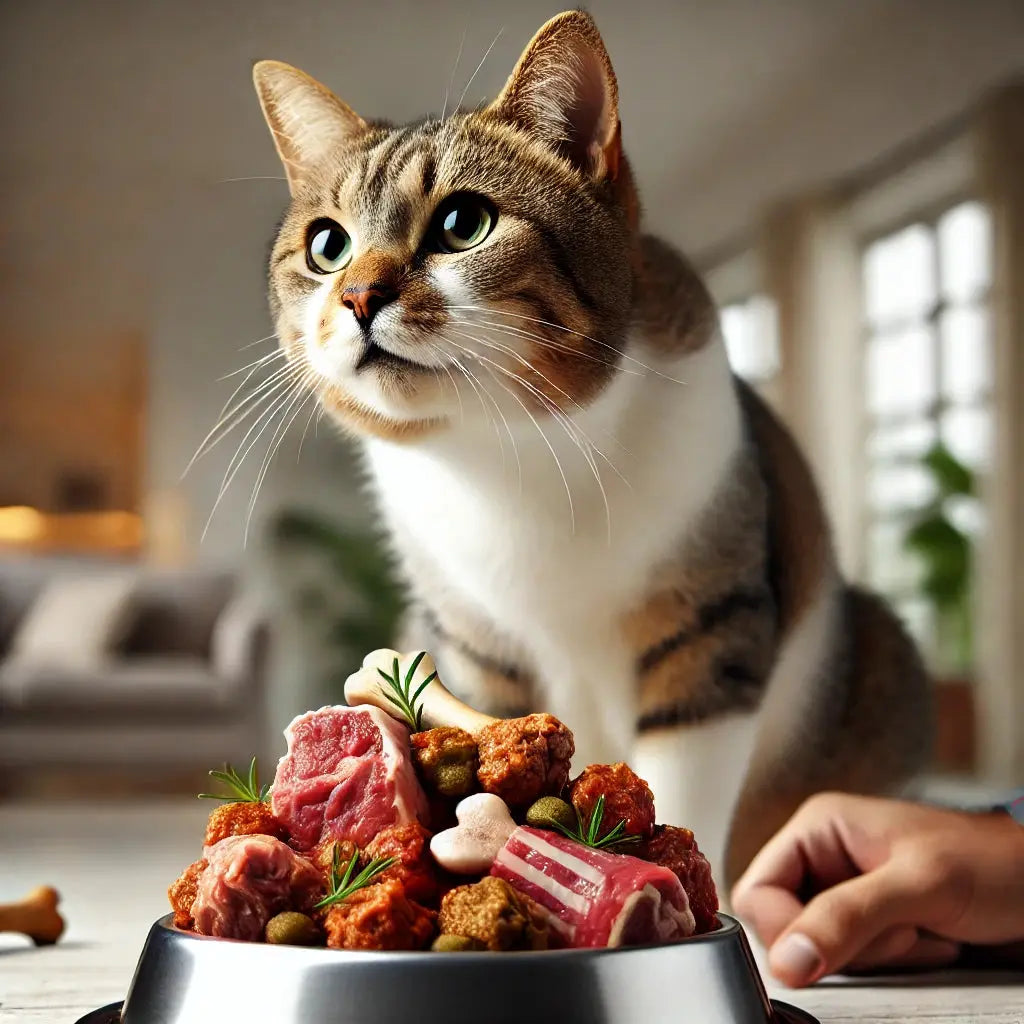
Raw cat food is rapidly gaining popularity among Indian pet parents—and for good reason. Unlike commercial options, raw food offers a natural, nutrient-rich diet that aligns with a cat's carnivorous nature. From better digestion and shinier coats to increased energy levels and improved hydration, the benefits of raw feeding are significant. In this guide, we explore why raw cat food is the healthiest choice for your feline friend in India and how you can make the transition seamlessly. Discover why your cat deserves raw nutrition and how BARF India's Raw Cat Food can make all the difference