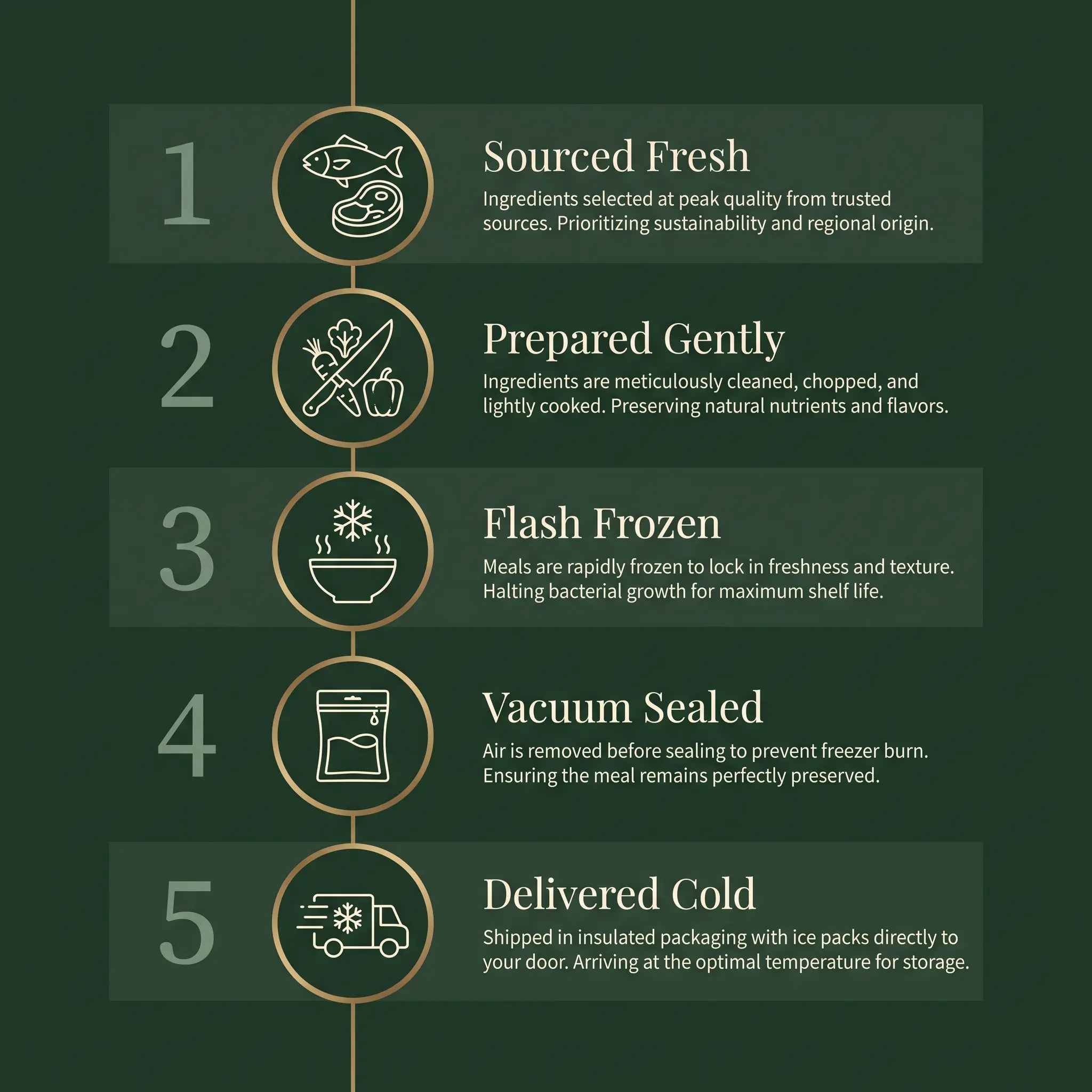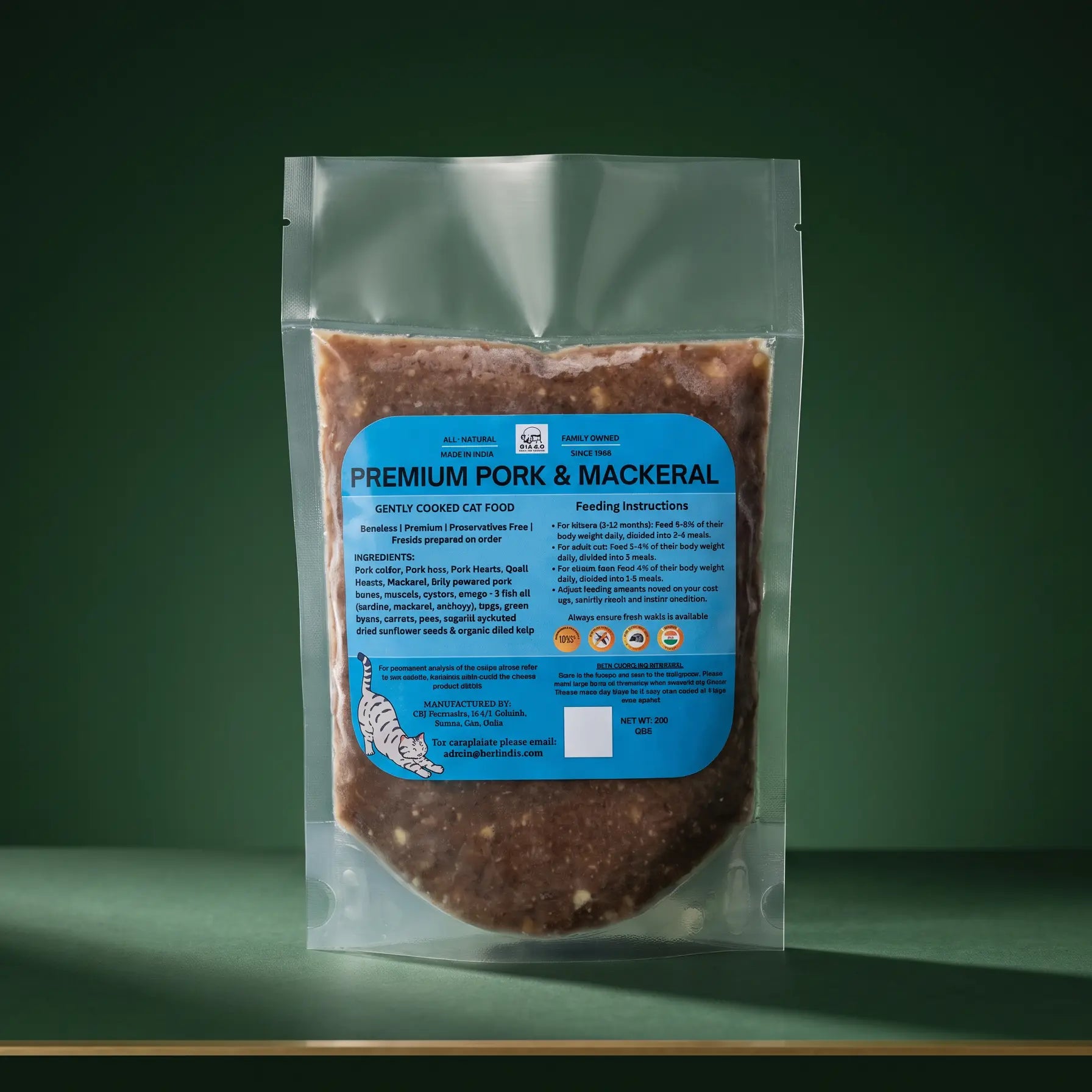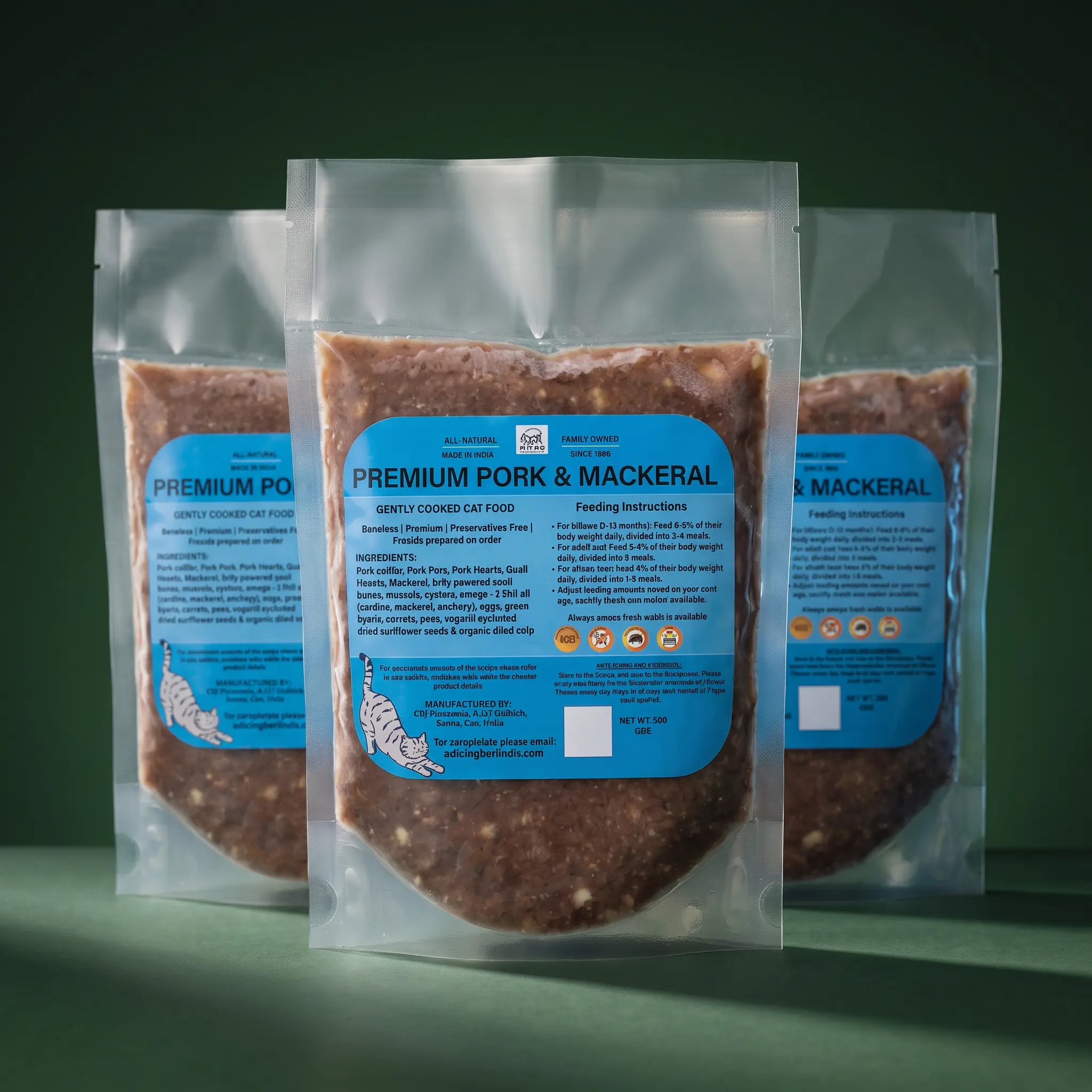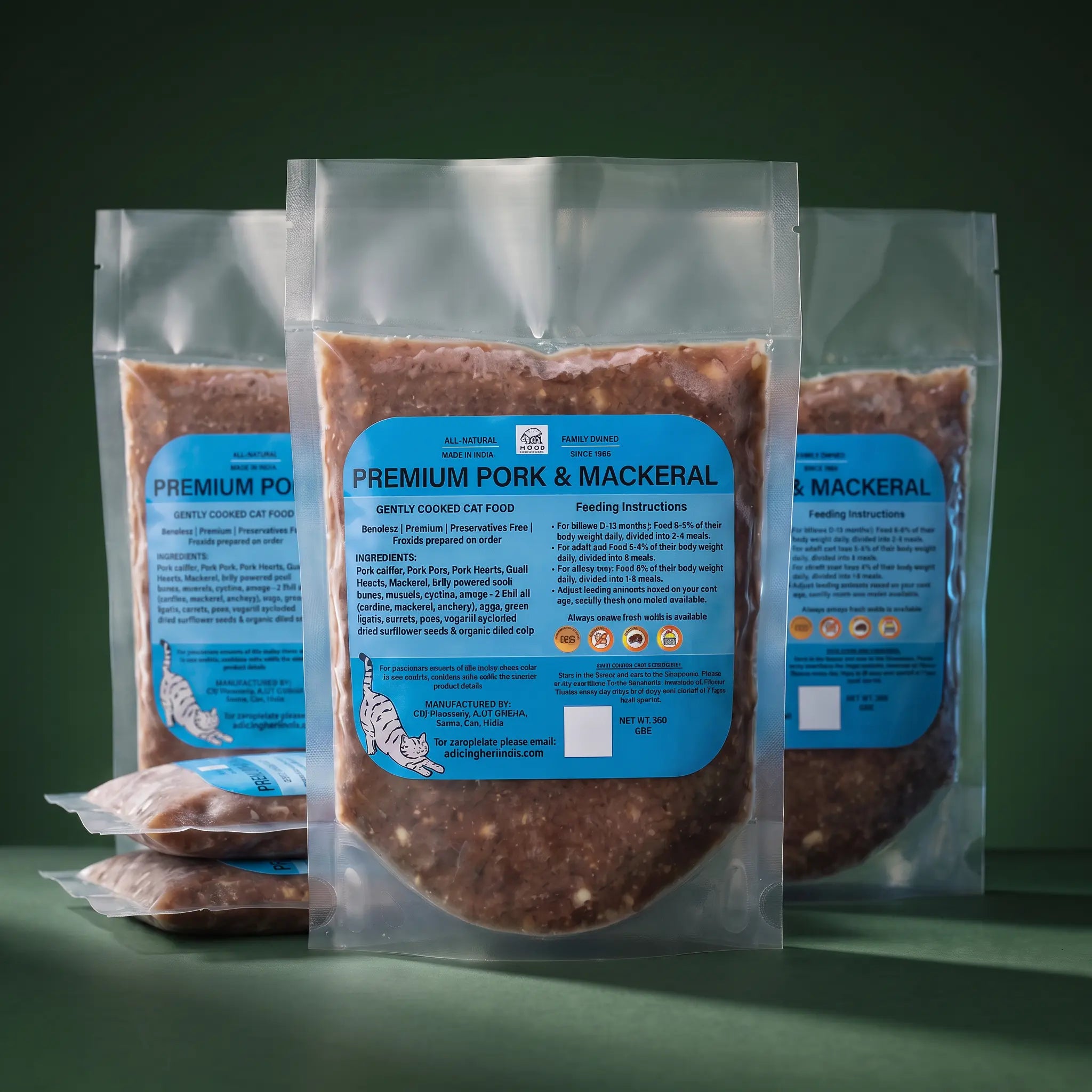
Raw for Maximum Nutrition
Made in our own Kitchens
Human grade products
8 May 2026
Feeding a Maine Coon Cat in India: A Vet-Backed Diet Guide (2026 Edition)
Feeding a Maine Coon cat in India? Get a vet-reviewed guide with daily grams by age, ₹/month cost comparisons, foods to avoid, and a 5-week transition plan. Updated 2026.

8 May 2026
Feeding a Maine Coon Cat in India: The Complete Vet - Backed Diet Guide (2026 Edition)
Feeding a Maine Coon cat in India? Get a vet-reviewed guide with daily grams by age, ₹/month cost comparisons, foods to avoid, and a 5-week transition plan. Updated 2026.
Table of contents
• How Feeding a Maine Coon Differs from Every Other Breed• Charts, Costs & Best Food Choices• Health Protocols, Transitions• FAQs - feeding a Maine Coon• ConclusionThis complete guide covers a vet-reviewed feeding chart in grams and rupees, a slow-growth kitten protocol, a 5-week transition calendar, and an honest Royal Coon vs fresh-food comparison - built for India, for 2026.
feeding a Maine Coon cat in India is fundamentally different from feeding any other domestic
cat. The Maine Coon is the world's largest domestic cat breed - adult males commonly reach
6–8 kg - and they keep growing until age 3–5. That single biological fact rewrites their entire
feeding plan.
Add the breed's three major health risks - hypertrophic cardiomyopathy (HCM), hip dysplasia,
and gingivostomatitis - and a generic "any cat food" approach genuinely shortens their
lifespan. Maine Coons can live 12–15 years; on the right diet, they often reach 16–18.
How Feeding a Maine Coon Cat in India Differs from Every Other Breed
Cats are obligate carnivores. The Maine Coon is an obligate carnivore at scale - bigger frame, bigger heart, bigger joints, bigger hairball load. Four breed-specific traits directly shape the feeding rules.
The Largest Domestic Cat - Why feeding a Maine Coon cat in India Requires Bigger Portions
Adult Maine Coon males commonly weigh 6–8 kg; females 4.5–6 kg. Show-line males can clear 9–11 kg. That makes them the only domestic cat where small-dog measurements are completely normal. Consequently, they eat 30–60% more food per day than a typical 4 kg Indie or Siamese. Moreover, they need higher absolute amounts of joint and heart nutrients - taurine, omega-3, glucosamine, manganese - not just diluted across a small bowl.

Slow Growth Phase - A Crucial Factor When feeding a Maine Coon cat in India
Maine Coons keep growing for 3–5 years, far longer than other cats which finish growing by
12–18 months. This is a genetic feature, not a feeding deficiency. Force-feeding a Maine Coon
kitten to accelerate growth damages developing joints and ligaments.
Therefore, the kitten phase requires higher absolute calories, but the goal is a slow, steady
growth curve - not maximum daily weight gain. Standard kitten kibble plans sized for Indie
kittens are unsuitable for Maine Coons.
HCM Heart Predisposition and Its Impact on feeding a Maine Coon cat in India
Hypertrophic cardiomyopathy is the most-studied heritable feline heart disease. Maine Coons
carry the documented MYBPC3 A31P mutation, which significantly elevates HCM risk above the
general feline population.
Diet cannot prevent HCM in genetically affected cats.
However, two dietary levers materially
affect its trajectory: adequate bioavailable taurine - far more effective from raw and gently
cooked meat than from synthetically supplemented kibble - and anti-inflammatory omega-3
fatty acids (EPA + DHA) which support cardiac function. Annual echocardiograms from age 2
are the gold standard regardless of diet.
Joint and Dental Loads - Long-Term Goals for feeding a Maine Coon cat in India
Hip dysplasia is rare in cats overall but disproportionately reported in Maine Coons because of
their larger frame. Gingivostomatitis - severe gum and oral mucosal inflammation- is also
over-represented in the breed.
Fortunately, the dietary lever for both conditions is the same: high-quality animal protein with
bioavailable collagen, glucosamine and chondroitin, found most abundantly in joints, cartilage,
green tripe, and connective tissue - plus texture variety to support oral health through raw
meaty necks and wings.

VETERINARY NOTE: A 7 kg Maine Coon's daily taurine, omega-3 and joint-nutrient requirement is roughly 75% higher than a 4 kg Siamese's. Most kibble formulas are designed around "average" cat weights and silently under-supply these nutrients at giant Maine Coon scale.
Feeding a Maine Coon Cat in India: Daily Charts, Costs and Best Food Choices
The most searched question among Indian Maine Coon owners is how much to feed and what it costs. Because Maine Coons are the largest domestic breed, their daily food volume and monthly food budget are significantly higher than other cat-feeding guides suggest.
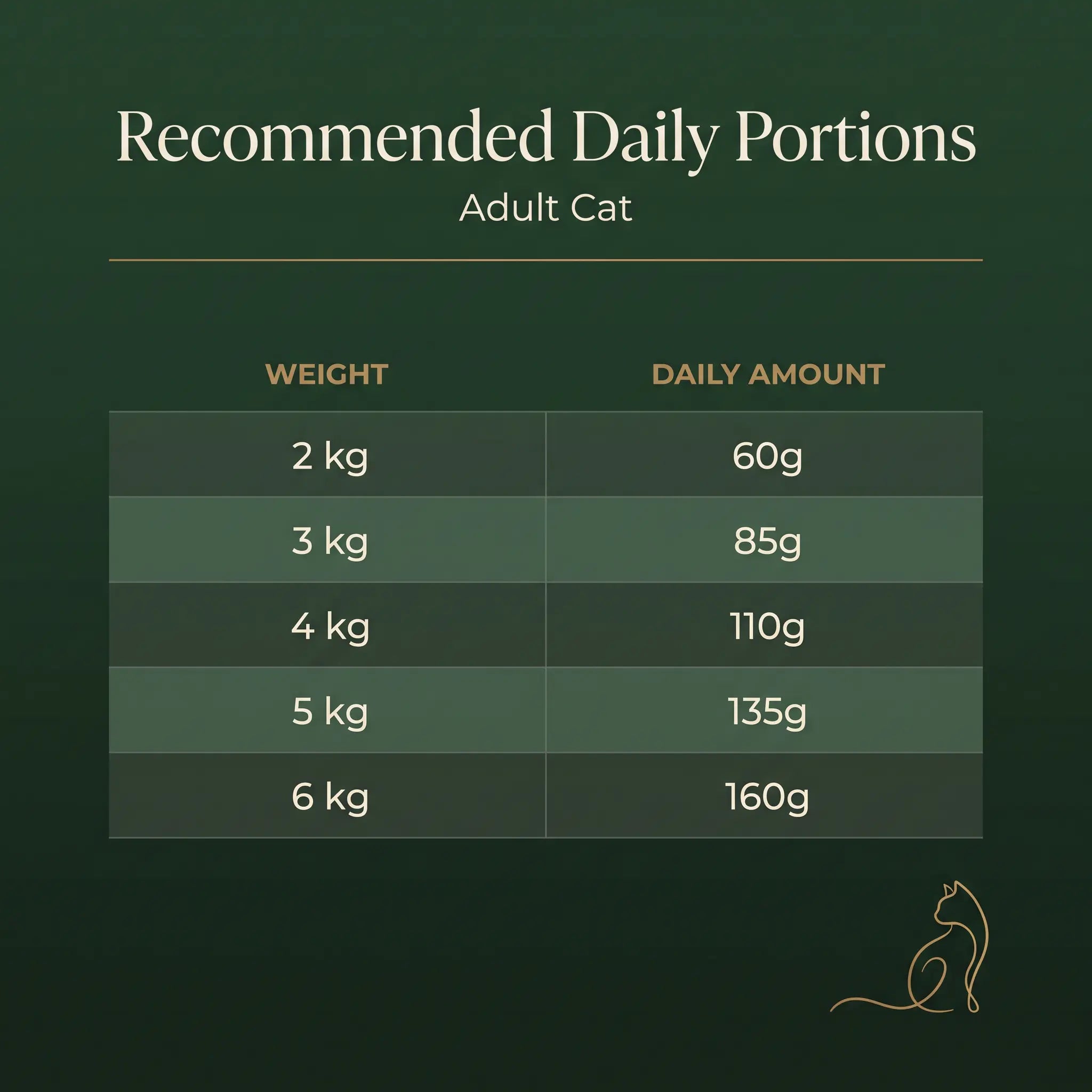
Daily Feeding Chart - How Much Food When feeding a Maine Coon cat in India
Below is the vet-reviewed feeding framework BARF India uses for fresh, raw, and gently cooked diets. Always adjust by feel-of-ribs and body-condition scoring, not by visual size alone - Maine Coon coats hide significant body fat.

Cost of feeding a Maine Coon cat in India Per Day and Per Month
Maine Coons cost more to feed than any other cat breed simply because they are bigger. A 7 kg
adult Maine Coon on Royal Canin Maine Coon Adult kibble at 90–110 g/day runs roughly
₹260–₹340/day on kibble alone, before any joint or coat supplements.
By contrast, a vet-formulated fresh diet from BARF India sits at ₹100–₹170/day for a typical
adult - about half the kibble cost, while delivering 60–75% moisture, higher bioavailability of
joint and heart nutrients, and full AAFCO alignment.

Switching from Royal Canin Maine Coon to BARF India typically saves ₹4,500–₹7,000 per month - while moving your cat onto a moisture-rich, heart- and joint-supportive diet that actively protects the breed's known health load.

Best Diet When feeding a Maine Coon cat in India: Raw vs Cooked vs Wet vs Kibble
Every Indian Maine Coon owner faces this choice. The honest answer, for this breed
specifically, is heavily weighted toward raw or gently cooked. The heart, joint, coat and dental
loads all benefit from intact animal-source nutrition.
Raw (BARF/Prey-Model) is best for Maine Coons of any age - especially those with a known
HCM family line, joint stiffness, dull coat, or recurring hairballs. It requires reliable cold-chain
delivery and adequate freezer space; BARF India ships frozen across Indian metros.
Gently cooked is ideal for owners new to fresh feeding, multi-pet households, or pets recovering
from surgery. It retains 60–70% moisture and the vast majority of nutritional benefit. Premium
wet food (pouches/cans) provides adequate moisture but becomes very expensive at Maine
Coon volumes - often ₹10,000+ per month at premium brands.
Royal Canin Maine Coon is best used as a travel or emergency back-up - its breed-shaped
kibble is genuinely easier for Maine Coons to grasp. However, at 8–10% moisture and 30–40%
carbs, it should not be the sole long-term diet.
Foods to Never Give When feeding a Maine Coon cat in India (Indian Kitchen Edition)
Indian households share food with pets more freely than most Western homes. For Maine Coons specifically - given the heart, joint and dental load - certain very common Indian kitchen items are doubly dangerous.

Coat and Omega-3 Math for feeding a Maine Coon cat in India
Maine Coons carry one of the densest, most water-resistant double coats in the cat world - a
thick undercoat, long guard hair, a chest ruff, and ear tufts. That coat is biochemically expensive
to maintain.
Long-chain omega-3 fatty acids (EPA + DHA) from oily fish such as mackerel, sardine and
salmon are the single best dietary investment for the coat. Raw and gently cooked diets retain
these in their native bioavailable form; heat-extruded kibble degrades them significantly.
Additionally, arachidonic acid, zinc, biotin and copper - found only in animal tissue - supply
the remaining coat-building nutrients. Owners switching their Maine Coons to BARF India fresh
food typically report a softer, more reflective coat within 4–6 weeks and a fuller chest ruff within
8–12 weeks.

Feeding a Maine Coon Cat in India: Health Protocols, Transitions & FAQ
The third pillar of a successful Maine Coon diet covers the breed's specific health conditions, how to safely transition from kibble, and the most frequently asked questions by Indian Maine Coon parents.
Heart and Joint Health When feeding a Maine Coon cat in India
If you remember just two medical conditions a Maine Coon is genetically loaded for, remember
hypertrophic cardiomyopathy (HCM) and joint-related issues. Diet does not remove the genetic
load, but it materially shapes the trajectory.
Two dietary interventions are well-supported in clinical practice for HCM: adequate bioavailable
taurine - best supplied by raw or gently cooked muscle and heart meat - and anti-
inflammatory omega-3 fatty acids from oily fish. Neither replaces cardiology screening; annual
echocardiogram from age 2 is the diagnostic gold standard.
For joint health, bioavailable glucosamine, chondroitin, manganese and collagen are most
abundant in joints, cartilage, green tripe, chicken feet, fish heads and connective tissue. Kibble-
only diets do not supply these in native form at Maine Coon scale.
CLINICAL FRAMING: A Maine Coon on a moisture-rich, joint-supporting fresh diet from kittenhood typically reaches senior years (12+) with materially better mobility and fewer cardiology interventions than a kibble-only Maine Coon. This is the highest-leverage diet decision in their care.
Hairballs, Stomatitis and Vomiting - Diet Causes When feeding a Maine Coon cat in India
Indian Maine Coon owners are often told that weekly hairballs and vomiting are normal for the
breed due to its long coat. They are not normal - they are largely diet-driven.
Maine Coons ingest more fur during grooming than any other cat breed. The key question is
whether fur passes through the GI tract or accumulates and is regurgitated. Maine Coons on
raw or gently cooked diets show consistently higher gut motility, with fur passing through in stool
rather than building into hairballs.
Gingivostomatitis - severe gum inflammation - is over-represented in Maine Coons. The
dietary lever: avoid sticky carbohydrate residues that promote plaque (found in most kibble);
offer texture variety through raw meaty necks and wings to mechanically clean teeth; reduce
systemic inflammation with a low-carb, omega-3-rich diet.
Similarly, if your Maine Coon vomits more than once a week, the diet is the first variable to
investigate. Kibble expands in the stomach and common ingredients like corn, soy and gluten
cause low-grade GI inflammation in many cats.

Feeding Maine Coon Kittens in India: The Slow-Growth Protocol
feeding a Maine Coon cat in India begins in kittenhood. Maine Coon kittens grow for 3–5 years,
and the first 12–18 months are the most metabolically formative. Unlike Indie or Siamese
kittens, Maine Coons must not be raced to peak adult weight.
During weaning (4–8 weeks), transition smoothly from queen's milk to finely ground raw or
gently cooked muscle meat with high-moisture bone broth. Include heart muscle for taurine and
liver for vitamin A and copper from the start. Avoid carb-loaded starter pellets, which disrupt gut
microbiome development.
In the juvenile phase (8 weeks – 12 months), offer 4–5 small meals per day at 8–12 weeks,
reducing to 3 meals by 6 months, and 2 meals by 12 months. Rotate proteins weekly and aim
for roughly 0.4–0.7 kg of weight gain per month. Faster than that - slow the calories.
During adolescence (12–36 months), caloric needs remain high but the growth curve flattens.
Continue 2–3 meals per day, maintain protein rotation, and add joint-supporting collagen
sources such as chicken feet and green tripe once weekly.
5-Week Transition Protocol for feeding a Maine Coon cat in India
Maine Coons typically need a slightly longer transition than smaller breeds - partly because their larger body adapts the gut microbiome more gradually, and partly because Maine Coons are food-curious in a slow, deliberate way.

TRANSITION SAFETY RULES:
(1) Never withhold food to force acceptance - Maine Coons
are at risk of hepatic lipidosis if they fast over 24–48 hours.
(2) For Maine Coons over 6 years
old, transition over 6–7 weeks.
(3) For HCM-diagnosed Maine Coons, transition under direct
cardiology supervision.
(4) Always keep fresh water available - fresh-food cats often drink less
from the bowl because they get hydration from food.
Royal Canin Maine Coon vs BARF India - Honest Comparison for feeding a Maine Coon cat in India
Royal Canin Maine Coon Adult is the best mass-market breed-specific kibble available in India. Its breed-shaped kibble is genuinely easier for Maine Coons to grasp. However, 'best kibble' is a low ceiling at Maine Coon scale.

OUR RECOMMENDATION:
Use Royal Canin Maine Coon as a 10–20% rotation component or
travel back-up. Use BARF India fresh as the daily staple. This combination gives your Maine
Coon breed-shaped kibble when it matters and the biological benefits of fresh food daily - at
less than half the monthly cost.
Addressing Vet Concerns About Raw Diets When feeding a Maine Coon cat in India
Some Indian veterinarians remain cautious about raw diets, typically citing bacterial
contamination and nutritional imbalance. Both concerns are legitimate. Both are manageable
with the right approach.
Commercially prepared raw diets from reputable suppliers carry very low pathogen risk when
handled with standard food-safety hygiene. Cats have shorter, more acidic GI tracts than
humans, and clinical surveillance studies have not shown raw-fed households to have higher
disease incidence than kibble-fed households - provided basic handling protocols are followed.
A nutritionally complete commercial raw diet that meets AAFCO or FEDIAF standards is, by
definition, complete for any cat including a Maine Coon. The key wrinkle for this breed is that
absolute amounts of taurine, omega-3 and joint nutrients must scale with body mass - an area
where BARF India's weight-scaled portions excel.
For bones, raw meaty bones - chicken necks, quail, soft cartilage - are safe and beneficial for
dental health. Cooked bones splinter dangerously and Maine Coons fragment them quickly
because of their jaw force. Rule: raw soft bones yes, cooked bones never.
LEARN MORE ABOUT INDIA'S NO.1 FRESH CAT FOOD
Start Fresh
FAQs - feeding a Maine Coon cat in India
Ready to Start Feeding a Maine Coon Cat in India the Right Way?
Your Maine Coon's diet is the single highest-leverage decision you'll make as a parent. Get it right and you protect a 14–18 year lifespan against HCM progression, joint degeneration, dental disease and the obesity their large frame can mask. BARF India';s Maine Coon-suitable range - gently cooked, raw, joint-supportive cuts, vet- formulated, cold-chain delivered - is the lowest-risk way to start. Sampler Pack ₹320, 7-day satisfaction guarantee, free transition support on WhatsApp.
This complete guide covers a vet-reviewed feeding chart in grams and rupees, a slow-growth kitten protocol, a 5-week transition calendar, and an honest Royal Coon vs fresh-food comparison - built for India, for 2026.
How Feeding a Maine Coon Cat in India Differs from Every Other Breed
Cats are obligate carnivores. The Maine Coon is an obligate carnivore at scale - bigger frame,
bigger heart, bigger joints, bigger hairball load. Four breed-specific traits directly shape the
feeding rules.
Feeding a Maine Coon cat in India is fundamentally different from feeding any other domestic cat. The Maine Coon is the world's largest domestic cat breed - adult males commonly reach 6–8 kg - and they keep growing until age 3–5. That single biological fact rewrites their entire feeding plan.
Add the breed's three major health risks - hypertrophic cardiomyopathy (HCM), hip dysplasia, and gingivostomatitis - and a generic "any cat food" approach genuinely shortens their lifespan. Maine Coons can live 12–15 years; on the right diet, they often reach 16–18.
The Largest Domestic Cat - Why feeding a Maine Coon cat in India Requires Bigger Portions
Adult Maine Coon males commonly weigh 6–8 kg; females 4.5–6 kg. Show-line males can clear 9–11 kg. That makes them the only domestic cat where small-dog measurements are completely normal. Consequently, they eat 30–60% more food per day than a typical 4 kg Indie or Siamese. Moreover, they need higher absolute amounts of joint and heart nutrients - taurine, omega-3, glucosamine, manganese - not just diluted across a small bowl.
Slow Growth Phase - A Crucial Factor When feeding a Maine Coon cat in India
Maine Coons keep growing for 3–5 years, far longer than other cats which finish growing by
12–18 months. This is a genetic feature, not a feeding deficiency. Force-feeding a Maine Coon
kitten to accelerate growth damages developing joints and ligaments.
Therefore, the kitten phase requires higher absolute calories, but the goal is a slow, steady
growth curve - not maximum daily weight gain. Standard kitten kibble plans sized for Indie
kittens are unsuitable for Maine Coons.
HCM Heart Predisposition and Its Impact on feeding a Maine Coon cat in India
Hypertrophic cardiomyopathy is the most-studied heritable feline heart disease. Maine Coons
carry the documented MYBPC3 A31P mutation, which significantly elevates HCM risk above the
general feline population.
Diet cannot prevent HCM in genetically affected cats.
However, two dietary levers materially
affect its trajectory: adequate bioavailable taurine - far more effective from raw and gently
cooked meat than from synthetically supplemented kibble - and anti-inflammatory omega-3
fatty acids (EPA + DHA) which support cardiac function. Annual echocardiograms from age 2
are the gold standard regardless of diet.
Joint and Dental Loads - Long-Term Goals for feeding a Maine Coon cat in India
Hip dysplasia is rare in cats overall but disproportionately reported in Maine Coons because of
their larger frame. Gingivostomatitis - severe gum and oral mucosal inflammation- is also
over-represented in the breed.
Fortunately, the dietary lever for both conditions is the same: high-quality animal protein with
bioavailable collagen, glucosamine and chondroitin, found most abundantly in joints, cartilage,
green tripe, and connective tissue - plus texture variety to support oral health through raw
meaty necks and wings.
VETERINARY NOTE: A 7 kg Maine Coon's daily taurine, omega-3 and joint-nutrient requirement is roughly 75% higher than a 4 kg Siamese's. Most kibble formulas are designed around "average" cat weights and silently under-supply these nutrients at giant Maine Coon scale.
Feeding a Maine Coon Cat in India: Daily Charts, Costs and Best Food Choices
The most searched question among Indian Maine Coon owners is how much to feed and what it costs. Because Maine Coons are the largest domestic breed, their daily food volume and monthly food budget are significantly higher than other cat-feeding guides suggest.
Daily Feeding Chart - How Much Food When feeding a Maine Coon cat in India
Below is the vet-reviewed feeding framework BARF India uses for fresh, raw, and gently cooked diets. Always adjust by feel-of-ribs and body-condition scoring, not by visual size alone - Maine Coon coats hide significant body fat.
Cost of feeding a Maine Coon cat in India Per Day and Per Month
Maine Coons cost more to feed than any other cat breed simply because they are bigger. A 7 kg
adult Maine Coon on Royal Canin Maine Coon Adult kibble at 90–110 g/day runs roughly
₹260–₹340/day on kibble alone, before any joint or coat supplements.
By contrast, a vet-formulated fresh diet from BARF India sits at ₹100–₹170/day for a typical
adult - about half the kibble cost, while delivering 60–75% moisture, higher bioavailability of
joint and heart nutrients, and full AAFCO alignment.
Switching from Royal Canin Maine Coon to BARF India typically saves ₹4,500–₹7,000 per month - while moving your cat onto a moisture-rich, heart- and joint-supportive diet that actively protects the breed's known health load.
Best Diet When feeding a Maine Coon cat in India: Raw vs Cooked vs Wet vs Kibble
Every Indian Maine Coon owner faces this choice. The honest answer, for this breed
specifically, is heavily weighted toward raw or gently cooked. The heart, joint, coat and dental
loads all benefit from intact animal-source nutrition.
Raw (BARF/Prey-Model) is best for Maine Coons of any age - especially those with a known
HCM family line, joint stiffness, dull coat, or recurring hairballs. It requires reliable cold-chain
delivery and adequate freezer space; BARF India ships frozen across Indian metros.
Gently cooked is ideal for owners new to fresh feeding, multi-pet households, or pets recovering
from surgery. It retains 60–70% moisture and the vast majority of nutritional benefit. Premium
wet food (pouches/cans) provides adequate moisture but becomes very expensive at Maine
Coon volumes - often ₹10,000+ per month at premium brands.
Royal Canin Maine Coon is best used as a travel or emergency back-up - its breed-shaped
kibble is genuinely easier for Maine Coons to grasp. However, at 8–10% moisture and 30–40%
carbs, it should not be the sole long-term diet.
Foods to Never Give When feeding a Maine Coon cat in India (Indian Kitchen Edition)
Indian households share food with pets more freely than most Western homes. For Maine Coons specifically - given the heart, joint and dental load - certain very common Indian kitchen items are doubly dangerous.
Coat and Omega-3 Math for feeding a Maine Coon cat in India
Maine Coons carry one of the densest, most water-resistant double coats in the cat world - a
thick undercoat, long guard hair, a chest ruff, and ear tufts. That coat is biochemically expensive
to maintain.
Long-chain omega-3 fatty acids (EPA + DHA) from oily fish such as mackerel, sardine and
salmon are the single best dietary investment for the coat. Raw and gently cooked diets retain
these in their native bioavailable form; heat-extruded kibble degrades them significantly.
Additionally, arachidonic acid, zinc, biotin and copper - found only in animal tissue - supply
the remaining coat-building nutrients. Owners switching their Maine Coons to BARF India fresh
food typically report a softer, more reflective coat within 4–6 weeks and a fuller chest ruff within
8–12 weeks.
Feeding a Maine Coon Cat in India: Health Protocols, Transitions & FAQ
The third pillar of a successful Maine Coon diet covers the breed's specific health conditions, how to safely transition from kibble, and the most frequently asked questions by Indian Maine Coon parents.
Heart and Joint Health When feeding a Maine Coon cat in India
If you remember just two medical conditions a Maine Coon is genetically loaded for, remember
hypertrophic cardiomyopathy (HCM) and joint-related issues. Diet does not remove the genetic
load, but it materially shapes the trajectory.
Two dietary interventions are well-supported in clinical practice for HCM: adequate bioavailable
taurine - best supplied by raw or gently cooked muscle and heart meat - and anti-
inflammatory omega-3 fatty acids from oily fish. Neither replaces cardiology screening; annual
echocardiogram from age 2 is the diagnostic gold standard.
For joint health, bioavailable glucosamine, chondroitin, manganese and collagen are most
abundant in joints, cartilage, green tripe, chicken feet, fish heads and connective tissue. Kibble-
only diets do not supply these in native form at Maine Coon scale.
CLINICAL FRAMING: A Maine Coon on a moisture-rich, joint-supporting fresh diet from kittenhood typically reaches senior years (12+) with materially better mobility and fewer cardiology interventions than a kibble-only Maine Coon. This is the highest-leverage diet decision in their care.
Hairballs, Stomatitis and Vomiting - Diet Causes When feeding a Maine Coon cat in India
Indian Maine Coon owners are often told that weekly hairballs and vomiting are normal for the
breed due to its long coat. They are not normal - they are largely diet-driven.
Maine Coons ingest more fur during grooming than any other cat breed. The key question is
whether fur passes through the GI tract or accumulates and is regurgitated. Maine Coons on
raw or gently cooked diets show consistently higher gut motility, with fur passing through in stool
rather than building into hairballs.
Gingivostomatitis - severe gum inflammation - is over-represented in Maine Coons. The
dietary lever: avoid sticky carbohydrate residues that promote plaque (found in most kibble);
offer texture variety through raw meaty necks and wings to mechanically clean teeth; reduce
systemic inflammation with a low-carb, omega-3-rich diet.
Similarly, if your Maine Coon vomits more than once a week, the diet is the first variable to
investigate. Kibble expands in the stomach and common ingredients like corn, soy and gluten
cause low-grade GI inflammation in many cats.
Feeding Maine Coon Kittens in India: The Slow-Growth Protocol
feeding a Maine Coon cat in India begins in kittenhood. Maine Coon kittens grow for 3–5 years,
and the first 12–18 months are the most metabolically formative. Unlike Indie or Siamese
kittens, Maine Coons must not be raced to peak adult weight.
During weaning (4–8 weeks), transition smoothly from queen's milk to finely ground raw or
gently cooked muscle meat with high-moisture bone broth. Include heart muscle for taurine and
liver for vitamin A and copper from the start. Avoid carb-loaded starter pellets, which disrupt gut
microbiome development.
In the juvenile phase (8 weeks – 12 months), offer 4–5 small meals per day at 8–12 weeks,
reducing to 3 meals by 6 months, and 2 meals by 12 months. Rotate proteins weekly and aim
for roughly 0.4–0.7 kg of weight gain per month. Faster than that - slow the calories.
During adolescence (12–36 months), caloric needs remain high but the growth curve flattens.
Continue 2–3 meals per day, maintain protein rotation, and add joint-supporting collagen
sources such as chicken feet and green tripe once weekly.
5-Week Transition Protocol for feeding a Maine Coon cat in India
Maine Coons typically need a slightly longer transition than smaller breeds - partly because their larger body adapts the gut microbiome more gradually, and partly because Maine Coons are food-curious in a slow, deliberate way.
TRANSITION SAFETY RULES:
(1) Never withhold food to force acceptance - Maine Coons
are at risk of hepatic lipidosis if they fast over 24–48 hours.
(2) For Maine Coons over 6 years
old, transition over 6–7 weeks.
(3) For HCM-diagnosed Maine Coons, transition under direct
cardiology supervision.
(4) Always keep fresh water available - fresh-food cats often drink less
from the bowl because they get hydration from food.
Royal Canin Maine Coon vs BARF India - Honest Comparison for feeding a Maine Coon cat in India
Royal Canin Maine Coon Adult is the best mass-market breed-specific kibble available in India. Its breed-shaped kibble is genuinely easier for Maine Coons to grasp. However, 'best kibble' is a low ceiling at Maine Coon scale.
OUR RECOMMENDATION:
Use Royal Canin Maine Coon as a 10–20% rotation component or
travel back-up. Use BARF India fresh as the daily staple. This combination gives your Maine
Coon breed-shaped kibble when it matters and the biological benefits of fresh food daily - at
less than half the monthly cost.
Addressing Vet Concerns About Raw Diets When feeding a Maine Coon cat in India
Some Indian veterinarians remain cautious about raw diets, typically citing bacterial
contamination and nutritional imbalance. Both concerns are legitimate. Both are manageable
with the right approach.
Commercially prepared raw diets from reputable suppliers carry very low pathogen risk when
handled with standard food-safety hygiene. Cats have shorter, more acidic GI tracts than
humans, and clinical surveillance studies have not shown raw-fed households to have higher
disease incidence than kibble-fed households - provided basic handling protocols are followed.
A nutritionally complete commercial raw diet that meets AAFCO or FEDIAF standards is, by
definition, complete for any cat including a Maine Coon. The key wrinkle for this breed is that
absolute amounts of taurine, omega-3 and joint nutrients must scale with body mass - an area
where BARF India's weight-scaled portions excel.
For bones, raw meaty bones - chicken necks, quail, soft cartilage - are safe and beneficial for
dental health. Cooked bones splinter dangerously and Maine Coons fragment them quickly
because of their jaw force. Rule: raw soft bones yes, cooked bones never.
LEARN MORE ABOUT INDIA'S NO.1 FRESH CAT FOOD
Start FreshFAQs - feeding a Maine Coon cat in India
Ready to Start Feeding a Maine Coon Cat in India the Right Way?
Your Maine Coon's diet is the single highest-leverage decision you'll make as a parent. Get it right and you protect a 14–18 year lifespan against HCM progression, joint degeneration, dental disease and the obesity their large frame can mask. BARF India';s Maine Coon-suitable range - gently cooked, raw, joint-supportive cuts, vet- formulated, cold-chain delivered - is the lowest-risk way to start. Sampler Pack ₹320, 7-day satisfaction guarantee, free transition support on WhatsApp.