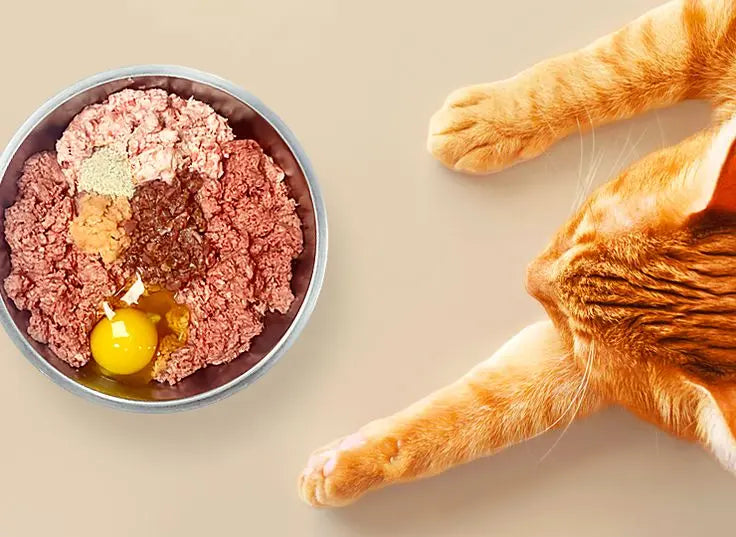
Raw for Maximum Nutrition

Made in our own Kitchens

Human grade products

Raw for Maximum Nutrition

Made in our own kitchens

Human grade products

9 May 2026

Feeding a Bengal Cat in India: The Complete Vet-Backed Diet Guide (2026 Edition)

Exactly how much to feed a Bengal cat in India by age & life stage. Vet- backed grams/day chart, ₹/month cost, kibble vs fresh comparison, IBD & allergy guide, and 4-week transition protocol. Updated 2026.

Bengal Cat

9 May 2026

Feeding a Bengal Cat in India: The Complete Vet-Backed Diet Guide (2026 Edition)

Exactly how much to feed a Bengal cat in India by age & life stage. Vet- backed grams/day chart, ₹/month cost, kibble vs fresh comparison, IBD & allergy guide, and 4-week transition protocol.

Bengal Cat

This guide gives Indian Bengal parents exactly what they need: a vet-reviewed feeding chart in grams and rupees, a novel-protein rotation plan, a 4-week transition protocol, and an honest comparison of every diet type. Built for the breed's hybrid biology, for India, for 2026, by the team at BARF India.

Introduction: Why Feeding a Bengal Cat in India Demands a Different Approach

Feeding a Bengal cat in India is a uniquely demanding challenge. The Bengal is a hybrid breed - its lineage traces back to a cross between the Asian Leopard Cat and a domestic shorthair. By F4–F5 generations, Bengals are fully domestic. However, the wild ancestry shows up in the gut, the metabolism, and the prey drive.

Bengals carry a higher incidence of food allergies, inflammatory bowel disease (IBD), and cardiomyopathy than most breeds. The standard "any premium kibble works" approach genuinely fails this breed. Indian Bengal owners also contend with apartment living, high humidity, and limited access to novel proteins in local pet shops.

Feeding a Bengal Cat in India

How Bengal Biology Shapes What Your Cat Should Eat

Cats are obligate carnivores. The Bengal is an obligate carnivore with wild-cat genetics two generations back - protein needs are higher, prey-drive is hardwired, and the gut is shorter and more sensitive than average. Understanding this biology is essential when feeding a Bengal cat in India.

The Hybrid Origin: Why Wild Ancestry Changes Everything

The Bengal's wild ancestor ate small, whole, fresh prey - that is the diet template Bengal biology is closest to. Consequently, Bengals show higher protein demand, lower carbohydrate tolerance, and a strong taste preference for novel proteins like rabbit, quail, duck, and fish over everyday chicken.

Furthermore, Bengals are among the most active domestic cats. Adult metabolic rate runs 25–40% higher than a sedentary cat. Importantly, owners often misread vocal demands as hunger and overfeed. Re-weigh your Bengal monthly and adjust portions accordingly.

Feeding a Bengal Cat in India

The Sensitive Gut and Why Kibble Falls Short for Bengals

Bengals are over-represented in clinical reports of IBD, food intolerances, and chronic loose stool. The breed';s GI tract is shorter and less tolerant of grain fillers and heat- denatured proteins. Consequently, many Indian owners spend years cycling through kibble brands looking for one their cat can tolerate.

 The structural answer is usually fresh, named, single- or limited-protein meals - not another kibble formulation. Transitioning to BARF India's raw cat food is the most impactful change Indian Bengal parents can make for gut health.

Food Allergies, HCM and the Genetic Pre-Loads

Chicken, soy, corn, and gluten are the most common feline food allergens, and Bengals develop sensitivities to them at higher rates than most breeds. Clinical signs include chronic itching, ear infections, vomiting, and intermittent diarrhoea. The intervention is a novel-protein elimination diet - starting with rabbit, quail, or duck - for 6–8 weeks.

Beyond the gut, Bengals carry elevated rates of hypertrophic cardiomyopathy (HCM) and Bengal Progressive Retinal Atrophy (PRA-b). Diet does not prevent these conditions, but bioavailable taurine and anti-inflammatory omega-3 from fresh food actively support cardiac and retinal health across the lifespan.

VETERINARY NOTE: Bengals need taurine, arachidonic acid and pre-formed vitamin A from animal sources. Protein rotation across novel sources prevents sensitisation - this is feline immunology, not opinion.

Purple label for Cooked Cat Food - Grain Free Chicken & Tuna Recipe (1.75kg | 7x250g) by www.barfindia.com. Features cat graphic, feeding guidelines, ingredients, safety info, and maker details. All-natural, preservative-free, family-owned brand.
An orange label for Cooked Cat Food – Grain-Free Buffalo & Chicken Recipe (1.75kg | 7x250g) from www.barfindia.com lists ingredients, feeding instructions, and safety info. A gray-striped cartoon cat stretches at the bottom left. Made in India.
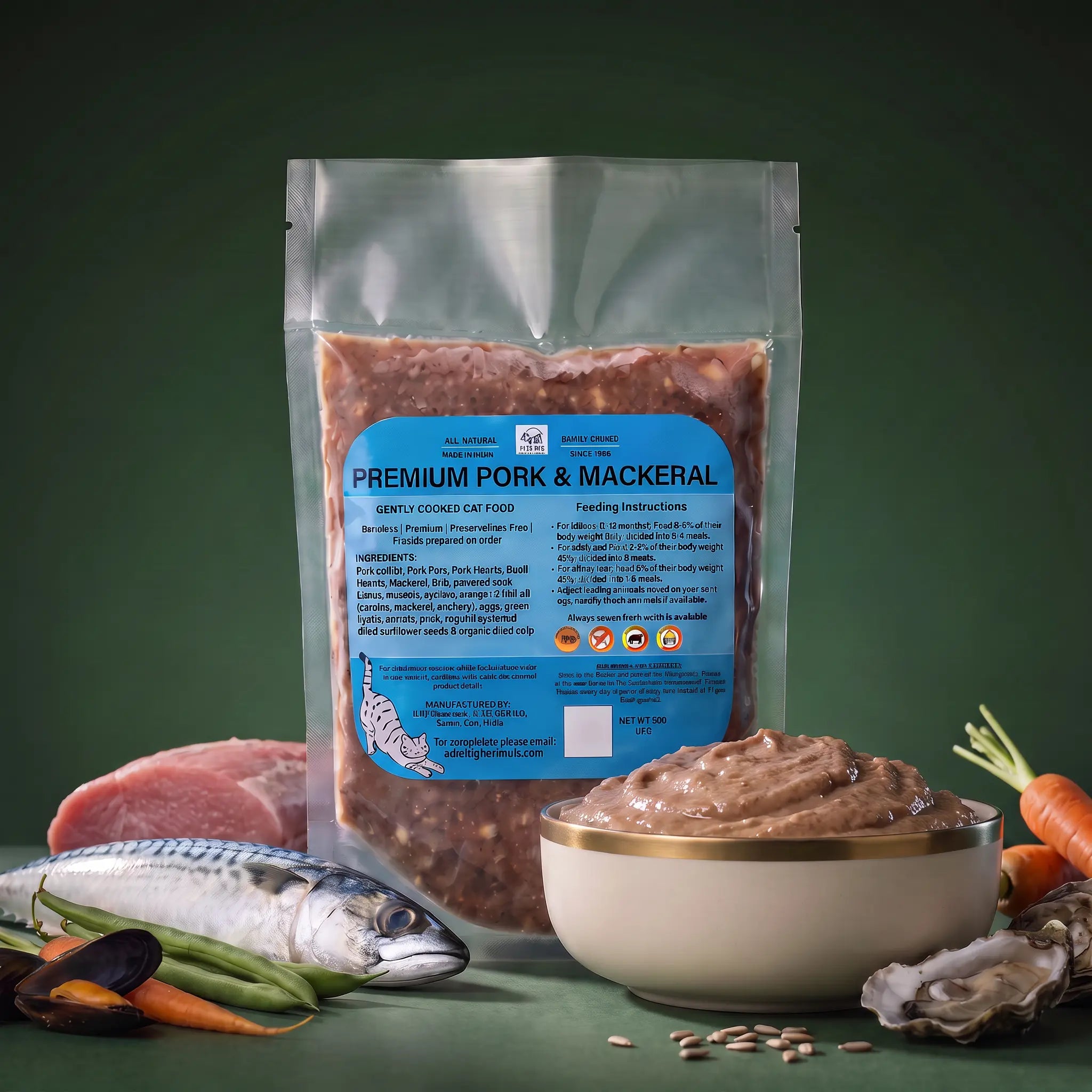
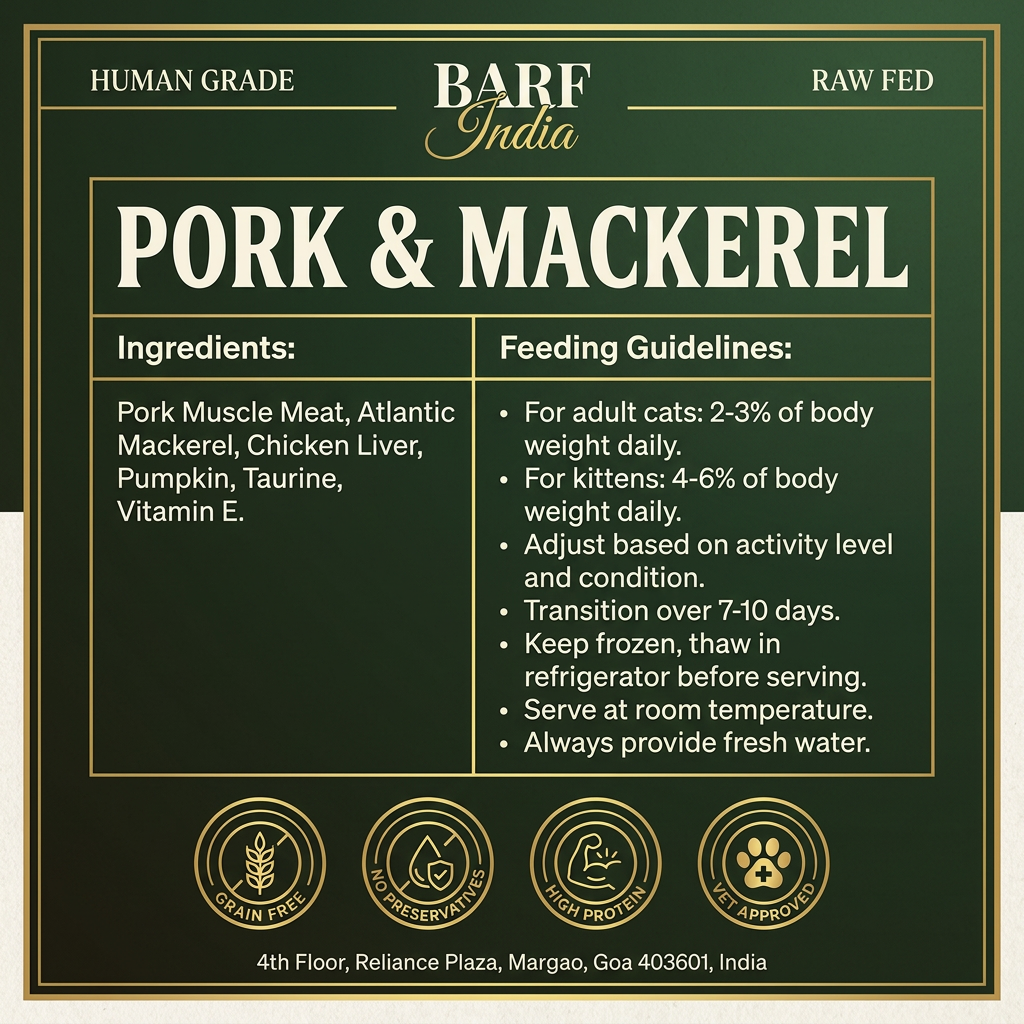
Blue label for Cooked Cat Food - Grain-free Mackerel & Pork Recipe (1.75 kg, 7x250g) by www.barfindia.com. High protein, with ingredients and feeding instructions. Gray striped cat illustration; yellow safety info box on right.
Cooked Cat Food - Grain free Rabbit & Quail Recipe (1.75kg, 7x250g) label features ingredients, feeding and storage instructions, allergy warnings, manufacturer info (www.barfindia.com), and a gray tabby cat illustration on a pink background.
Yellow label for Sampler Pack - Gently Cooked Cat Food by www.barfindia.com, highlighting all-natural, preservative-free boneless chicken. Includes a cartoon cat, feeding guide, ingredients, storage tips, manufacturer info, and 250g net weight.
An infographic for www.barfindia.com’s Sampler Pack - Gently Cooked Cat Food shows five steps—Protein, Prep Produce, Cold Combine, Pack & Freeze, Test/Ship/Enjoy—with brief descriptions and illustrated icons for each.
Purple label for Cooked Cat Food - Grain Free Chicken & Tuna Recipe (1.75kg | 7x250g) by www.barfindia.com. Features cat graphic, feeding guidelines, ingredients, safety info, and maker details. All-natural, preservative-free, family-owned brand.
An orange label for Cooked Cat Food – Grain-Free Buffalo & Chicken Recipe (1.75kg | 7x250g) from www.barfindia.com lists ingredients, feeding instructions, and safety info. A gray-striped cartoon cat stretches at the bottom left. Made in India.
Blue label for Cooked Cat Food - Grain-free Mackerel & Pork Recipe (1.75 kg, 7x250g) by www.barfindia.com. High protein, with ingredients and feeding instructions. Gray striped cat illustration; yellow safety info box on right.
Cooked Cat Food - Grain free Rabbit & Quail Recipe (1.75kg, 7x250g) label features ingredients, feeding and storage instructions, allergy warnings, manufacturer info (www.barfindia.com), and a gray tabby cat illustration on a pink background.
Yellow label for Sampler Pack - Gently Cooked Cat Food by www.barfindia.com, highlighting all-natural, preservative-free boneless chicken. Includes a cartoon cat, feeding guide, ingredients, storage tips, manufacturer info, and 250g net weight.
An infographic for www.barfindia.com’s Sampler Pack - Gently Cooked Cat Food shows five steps—Protein, Prep Produce, Cold Combine, Pack & Freeze, Test/Ship/Enjoy—with brief descriptions and illustrated icons for each.

Cooked Cat Food - The Tasting Box.

Rs. 320.00
An orange label for Cooked Cat Food – Grain-Free Buffalo & Chicken Recipe (1.75kg | 7x250g) from www.barfindia.com lists ingredients, feeding instructions, and safety info. A gray-striped cartoon cat stretches at the bottom left. Made in India.
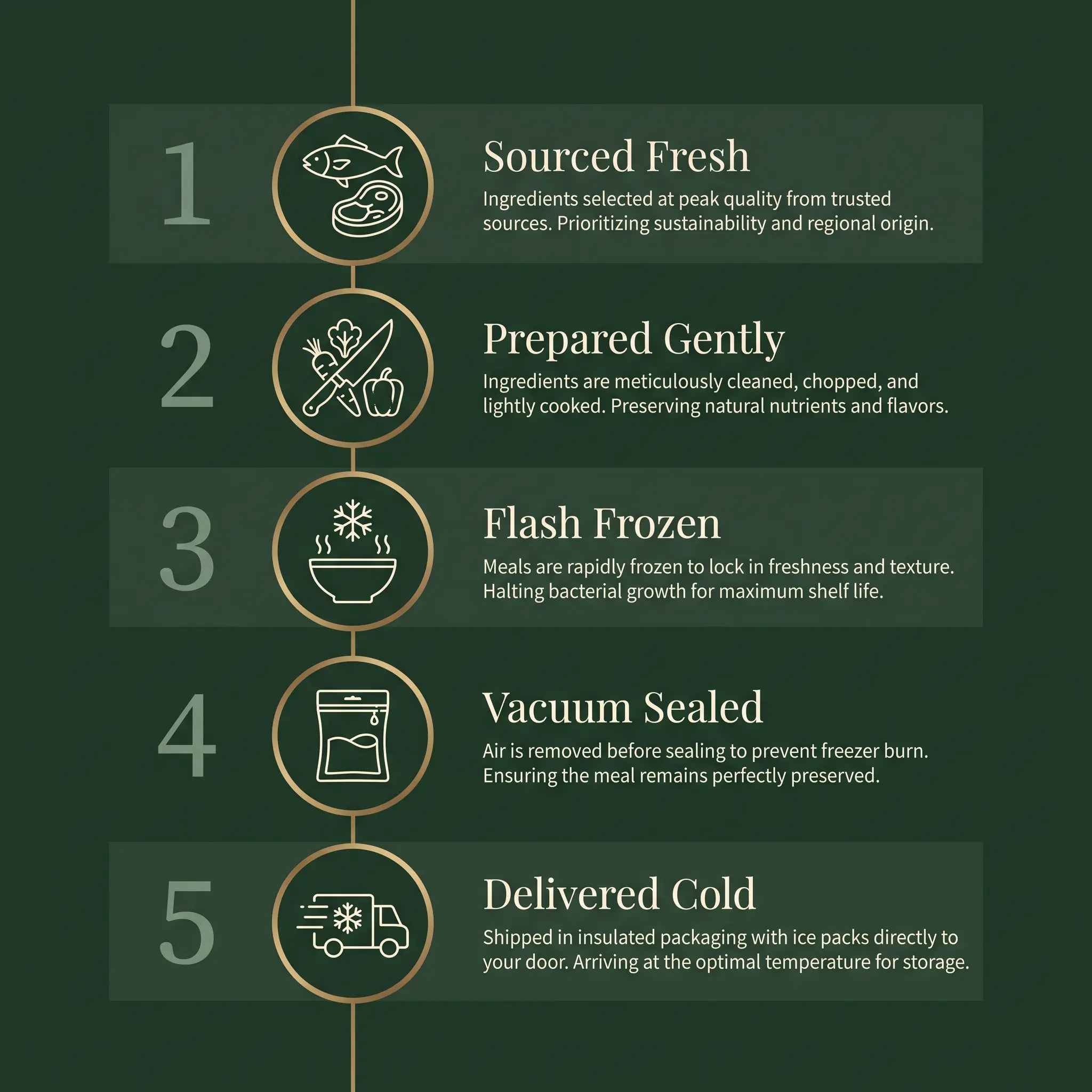
An infographic shows 5 safe steps for prepping Cooked Cat Food – Grain-Free Buffalo & Chicken Recipe (1.75kg | 7x250g) by www.barfindia.com: steam/thaw protein, wash/steam produce, cold combine, pack/freeze, test/ship/enjoy!.
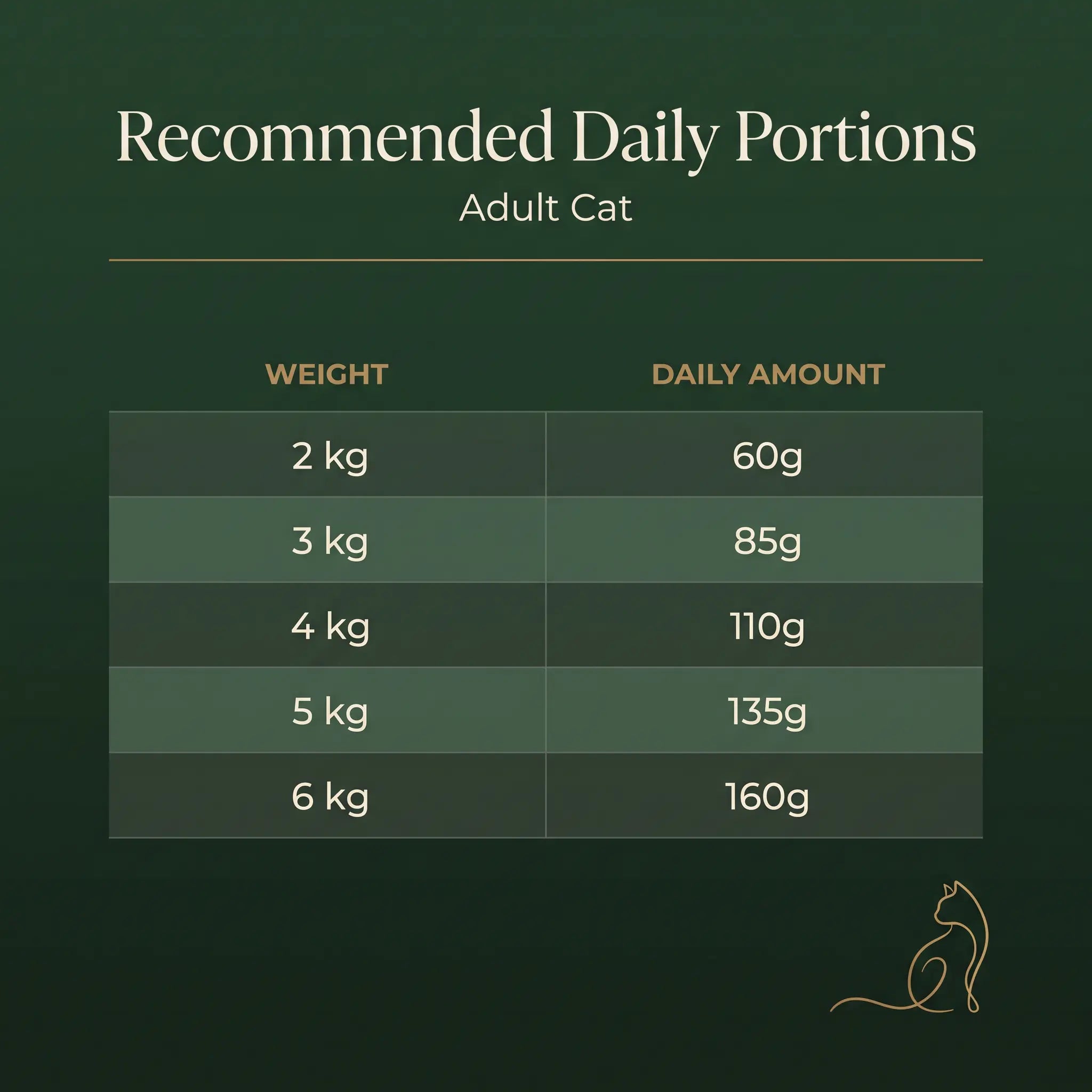
Infographic displays daily portions for adult cats (2.7–7.2 kg) in grams/day for Cooked Cat Food – Grain-Free Buffalo & Chicken Recipe (1.75kg | 7x250g) by www.barfindia.com, with a cartoon cat and tips to adjust food for activity and treats.
Infographic for Cooked Cat Food – Grain-Free Buffalo & Chicken Recipe (1.75kg) from www.barfindia.com: Holistic vet-crafted, high-protein, 87% chicken, liver, eggs, mussels & oysters with veggies and healthy fats. Small batch made.
An orange label for Cooked Cat Food – Grain-Free Buffalo & Chicken Recipe (1.75kg | 7x250g) from www.barfindia.com lists ingredients, feeding instructions, and safety info. A gray-striped cartoon cat stretches at the bottom left. Made in India.
An infographic shows 5 safe steps for prepping Cooked Cat Food – Grain-Free Buffalo & Chicken Recipe (1.75kg | 7x250g) by www.barfindia.com: steam/thaw protein, wash/steam produce, cold combine, pack/freeze, test/ship/enjoy!.
Infographic displays daily portions for adult cats (2.7–7.2 kg) in grams/day for Cooked Cat Food – Grain-Free Buffalo & Chicken Recipe (1.75kg | 7x250g) by www.barfindia.com, with a cartoon cat and tips to adjust food for activity and treats.
Infographic for Cooked Cat Food – Grain-Free Buffalo & Chicken Recipe (1.75kg) from www.barfindia.com: Holistic vet-crafted, high-protein, 87% chicken, liver, eggs, mussels & oysters with veggies and healthy fats. Small batch made.

Premium Buffalo & Chicken Cat Food

Rs. 630.00
Purple label for Cooked Cat Food - Grain Free Chicken & Tuna Recipe (1.75kg | 7x250g) by www.barfindia.com. Features cat graphic, feeding guidelines, ingredients, safety info, and maker details. All-natural, preservative-free, family-owned brand.
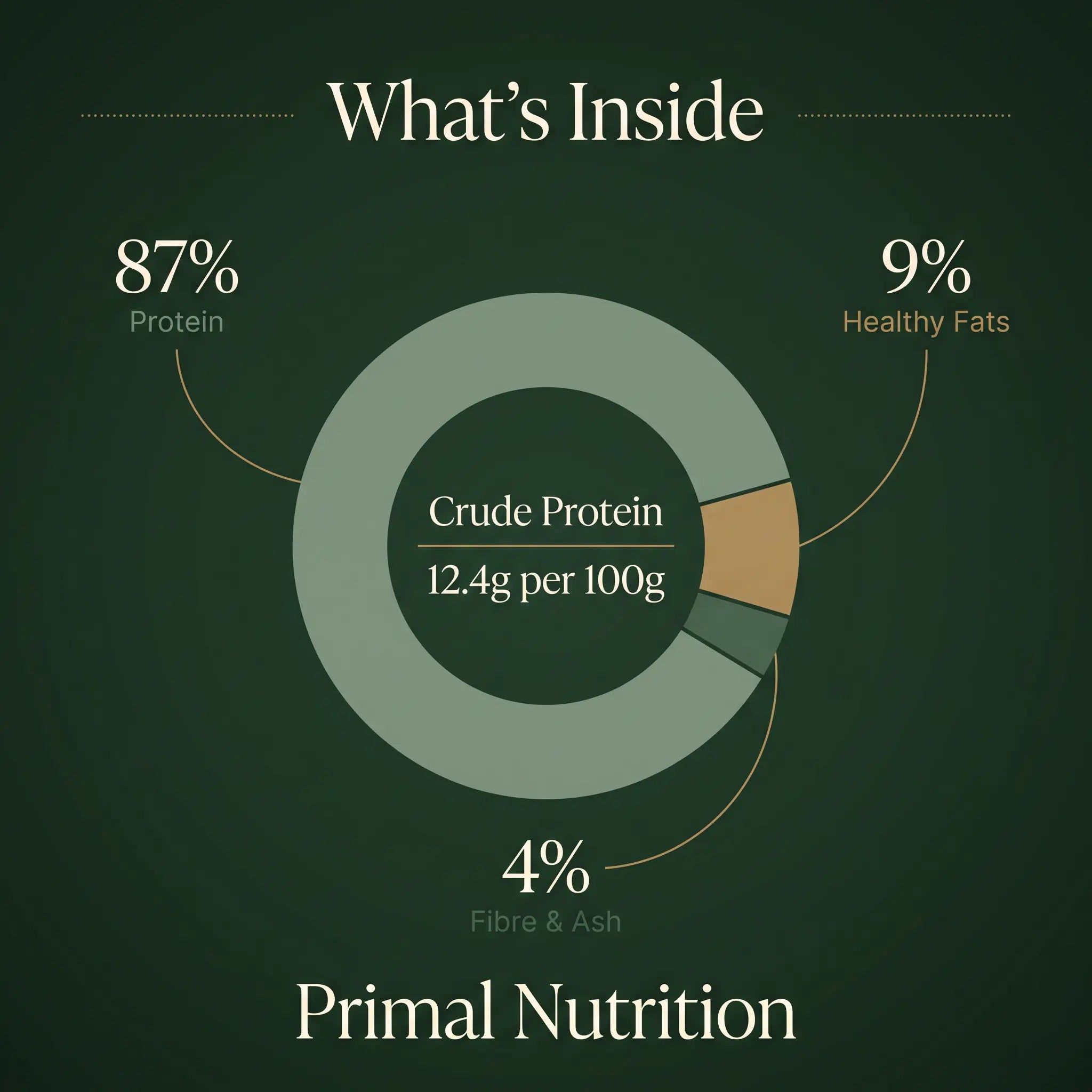
Infographic for Cooked Cat Food - Grain Free Chicken & Tuna Recipe (1.75kg, 7x250g) by www.barfindia.com: Pie chart—87% meat & seafood, 9% fats/seeds/root veggies, 4% dark green veggies. Small batch, gently cooked, human-grade ingredients.
Purple label for Cooked Cat Food - Grain Free Chicken & Tuna Recipe (1.75kg | 7x250g) by www.barfindia.com. Features cat graphic, feeding guidelines, ingredients, safety info, and maker details. All-natural, preservative-free, family-owned brand.
Infographic for Cooked Cat Food - Grain Free Chicken & Tuna Recipe (1.75kg, 7x250g) by www.barfindia.com: Pie chart—87% meat & seafood, 9% fats/seeds/root veggies, 4% dark green veggies. Small batch, gently cooked, human-grade ingredients.

Cooked Cat Food: Premium Chicken & Tuna Cat Food

Rs. 590.00
A bright yellow
Infographic for Cooked Cat Food - Grain Free Chicken Recipe (1.75kg) by www.barfindia.com: 87% chicken, liver, eggs, mussels & oysters; 9% healthy fats, seeds & root veggies; 4% dark green veggies. Circular chart on yellow background.
Chart shows daily food portions (grams) for adult cats (2.7–7.2kg) for Cooked Cat Food - Grain Free Chicken Recipe by www.barfindia.com. Includes guidance, cartoon cat, and note to adjust for activity and treats. Pack: 1.75kg (7x250g).
Discover how www.barfindia.com's Cooked Cat Food - Grain Free Chicken Recipe (1.75kg, 7x250g) is made in five steps: select protein, prep produce, combine cold, pack & freeze, test & ship! Includes grain-free tips and vivid illustrations for each stage.
A plate with chicken breast, hearts, liver, mussels, shrimp, kidney, oysters, organic egg, and a creamy mix—each labeled as www.barfindia.com Cooked Cat Food - Grain Free Chicken Recipe ingredients.
A bright yellow
Infographic for Cooked Cat Food - Grain Free Chicken Recipe (1.75kg) by www.barfindia.com: 87% chicken, liver, eggs, mussels & oysters; 9% healthy fats, seeds & root veggies; 4% dark green veggies. Circular chart on yellow background.
Chart shows daily food portions (grams) for adult cats (2.7–7.2kg) for Cooked Cat Food - Grain Free Chicken Recipe by www.barfindia.com. Includes guidance, cartoon cat, and note to adjust for activity and treats. Pack: 1.75kg (7x250g).
Discover how www.barfindia.com's Cooked Cat Food - Grain Free Chicken Recipe (1.75kg, 7x250g) is made in five steps: select protein, prep produce, combine cold, pack & freeze, test & ship! Includes grain-free tips and vivid illustrations for each stage.
A plate with chicken breast, hearts, liver, mussels, shrimp, kidney, oysters, organic egg, and a creamy mix—each labeled as www.barfindia.com Cooked Cat Food - Grain Free Chicken Recipe ingredients.

Premium Chicken Cat Food

Rs. 475.00
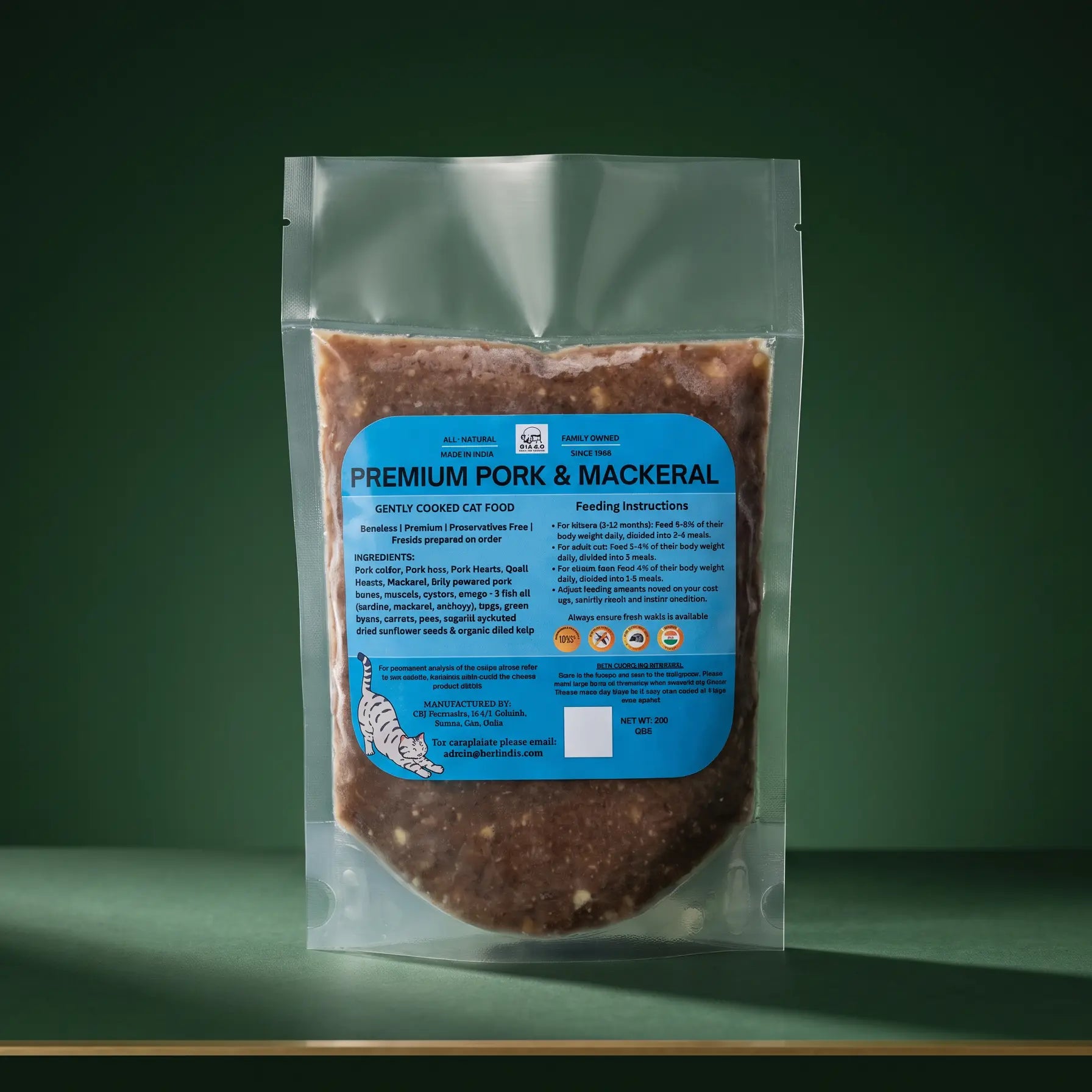
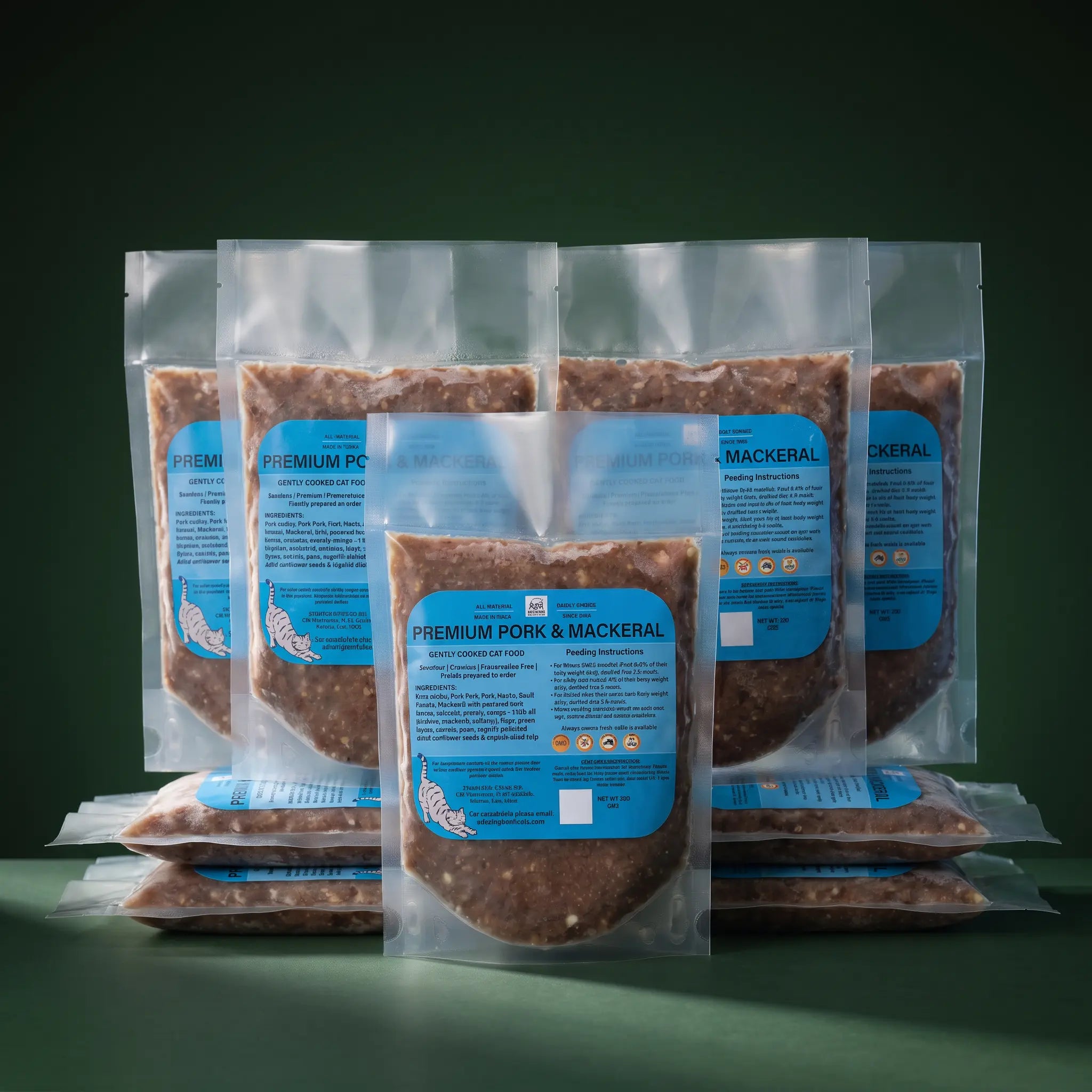
Premium Mackerel & Pork Cat Food www.barfindia.com
Premium Mackerel & Pork Cat Food
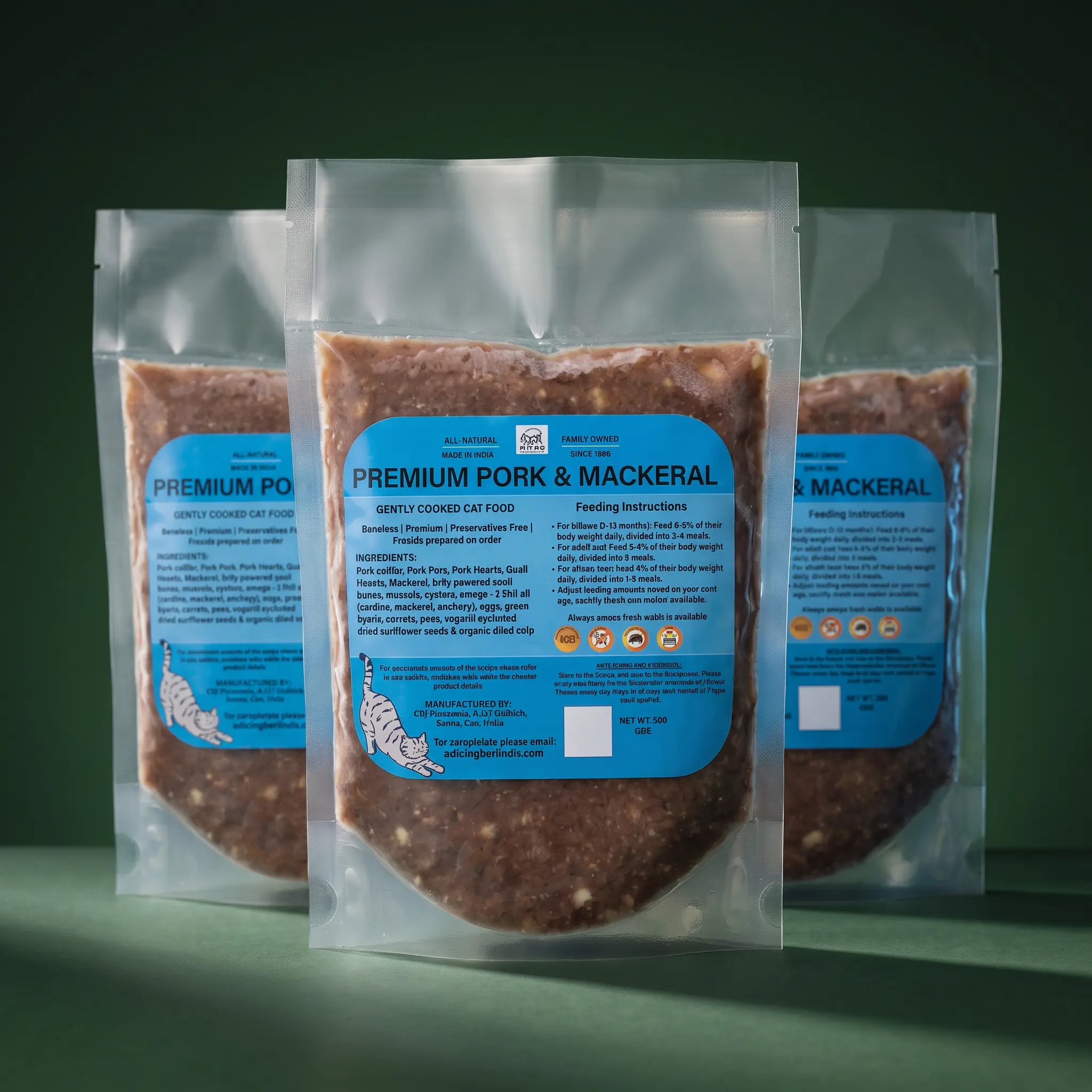
Premium Mackerel & Pork Cat Food www.barfindia.com
Premium Mackerel & Pork Cat Food
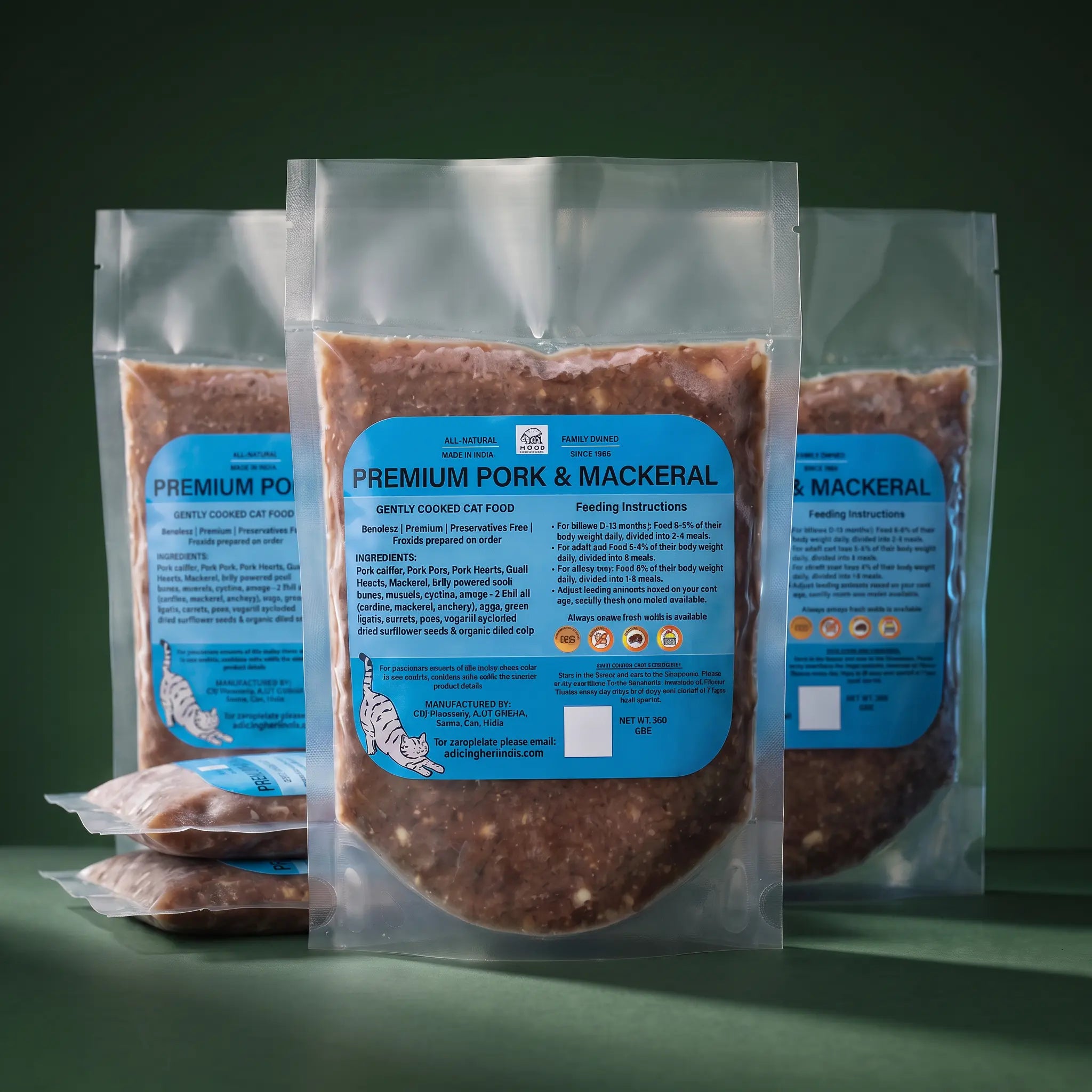
Premium Mackerel & Pork Cat Food www.barfindia.com

Premium Mackerel & Pork Cat Food

Rs. 515.00
Cooked Cat Food - Grain free Rabbit & Quail Recipe (1.75kg, 7x250g) label features ingredients, feeding and storage instructions, allergy warnings, manufacturer info (www.barfindia.com), and a gray tabby cat illustration on a pink background.
Discover our Cooked Cat Food - Grain free Rabbit & Quail Recipe (1.75kg) by www.barfindia.com: 87% rabbit, quail, liver, eggs, mussels & oysters; small batch cooked for complete cat nutrition.
An infographic titled “Recommended Daily Portions: Adult Cat” displays daily amounts of Cooked Cat Food - Grain Free Rabbit & Quail Recipe (1.75kg, 7x250g) for cats from 2.7kg to 7.2kg, with tips on activity and supplement adjustments from www.barfindia.com.
A colorful infographic from www.barfindia.com shows the 5-step process of making Cooked Cat Food - Grain free Rabbit & Quail Recipe (1.75kg): protein cooking, prepping produce, cold combining, packing/freezing, then testing and delivery.
Premium Rabbit & Quail. www.barfindia.com
Cooked Cat Food - Grain free Rabbit & Quail Recipe (1.75kg, 7x250g) label features ingredients, feeding and storage instructions, allergy warnings, manufacturer info (www.barfindia.com), and a gray tabby cat illustration on a pink background.
Discover our Cooked Cat Food - Grain free Rabbit & Quail Recipe (1.75kg) by www.barfindia.com: 87% rabbit, quail, liver, eggs, mussels & oysters; small batch cooked for complete cat nutrition.
An infographic titled “Recommended Daily Portions: Adult Cat” displays daily amounts of Cooked Cat Food - Grain Free Rabbit & Quail Recipe (1.75kg, 7x250g) for cats from 2.7kg to 7.2kg, with tips on activity and supplement adjustments from www.barfindia.com.
A colorful infographic from www.barfindia.com shows the 5-step process of making Cooked Cat Food - Grain free Rabbit & Quail Recipe (1.75kg): protein cooking, prepping produce, cold combining, packing/freezing, then testing and delivery.
Premium Rabbit & Quail. www.barfindia.com

Premium Rabbit & Quail Cat Food

Rs. 680.00

Daily Feeding Chart: Feeding a Bengal Cat in India by Life Stage

Because feeding a Bengal cat in India involves a breed that burns 25–40% more calories per kg than a sedentary cat, standard portion guides underestimate daily needs. Use this vet-reviewed chart as your starting baseline, then adjust ±10% based on body-condition scoring.

Daily Feeding Chart: Feeding a Bengal Cat in India by Life Stage

To apply this chart, find your Bengal's life stage and take the mid-range grams value. Split across the recommended number of meals - three meals often suits Bengals better than two, as they eat fast and are calmer with smaller, frequent servings. Re- weigh monthly and adjust.

Bengal Cat Food Cost in India: ₹/Day and ₹/Month Comparison

The cost of feeding a Bengal cat in India varies widely by diet type. A typical 5 kg adult Bengal on premium kibble costs ₹160–₹260/day. On BARF India's vet-formulated fresh diet with novel-protein rotation, the same cat costs ₹70–₹130/day - roughly half the price, with superior nutritional outcomes.

Bengal Cat Food Cost in India

Furthermore, Bengals on commodity kibble develop IBD and food allergies at high rates. Chronic-allergy management can run ₹2,000–₹6,000/month in vet visits and prescription diets. Over a 14-year lifespan, switching to BARF India fresh cat food can save ₹6–₹10 lakh in combined food and vet costs.

Feeding a Bengal Cat in India

Best Food for Bengals in India: Raw vs Cooked vs Wet vs Kibble

Every Indian Bengal owner asks the same question: what should I actually feed? The honest answer, when feeding a Bengal cat in India, is heavily weighted toward raw or gently cooked. The gut, skin, and immune systems all respond best to intact, novel- protein fresh nutrition closest to the wild ancestor's diet.

Raw and Gently Cooked: The Highest-Impact Choice for Bengals

Raw feeding - BARF or prey-model - is the strongest clinical match for Bengal biology. It delivers 60–75% moisture, 50–65% crude protein, and less than 5% carbohydrates. For Bengals with sensitive stomachs, IBD diagnosis, food allergies, or dull coats, BARF India's raw cat food range is the front-line recommendation. Gently cooked is the ideal choice for Bengal owners new to fresh feeding, multi-pet households, or cats recovering from severe IBD. It retains 60–70% moisture and most nutritional value while being easier to introduce. Explore BARF India's gently cooked range as a practical starting point.

Premium Kibble, Wet Food, and Where They Fit

Premium kibble from Royal Canin or Hill's is not inherently bad - but for a Bengal specifically, it represents a limited ceiling. With 8–10% moisture and 30–40% carbohydrates, it chronically under-hydrates the cat and provides no novel-protein rotation. Use it as a 10–15% rotation component or travel back-up, never a daily staple.

Most Indian premium wet pouches are chicken or fish - exactly the proteins many Bengals are already sensitised to. If using wet food, rotate proteins actively and check ingredient labels for hidden allergens like gluten, corn, or soy. For a fully optimised Bengal diet, pair wet food with BARF India's multi-protein raw range.

Foods to Never Give Your Bengal Cat - Indian Kitchen Edition

Indian households often share food more freely with pets than Western homes. For Bengals - given the IBD predisposition and allergy load - certain common Indian kitchen items cause disproportionate harm. Knowing what to avoid is as important as knowing what to feed when feeding a Bengal cat in India.

Foods to Avoid for Bengal Cats

The Bengal Coat, Heart, Eyes and IBD: How Diet Shapes Every Health Outcome

Feeding a Bengal cat in India correctly produces visible results quickly. The Bengal's signature marbled or spotted coat - often with a metallic glitter sheen - is one of the clearest indicators of nutritional status. A poorly fed Bengal has a dull, rough, low-glitter coat. A well-fed Bengal looks like a small leopard.

Three nutrients carry most of the visual load: long-chain omega-3 fatty acids (EPA + DHA) from oily fish and pasture-raised animal fat; arachidonic acid, zinc, biotin and copper from raw organ meat; and high-inclusion whole-meat protein that supplies the amino acids the coat is literally built from.

BARF India customers switching their Bengals to fresh food typically report visible coat- shine improvement within 2–3 weeks, reduced shedding within 4–6 weeks, and intensified glitter by week 6–8. Explore our duck and quail fresh cat food, one of the best coat-support formulas in our range.

NATURE HAS ALREADY GIVEN THE RECIPE. WE HAVE ONLY IMPLEMENTED ITFeeding a Bengal Cat in India

IBD, Food Allergies and the Sensitive Stomach - The Defining Bengal Issue

Ask 100 Indian Bengal owners about their cat's biggest health challenge and more than half will mention vomiting, soft stool, chronic diarrhoea, itching, or ear infections. All of these typically trace to the gut. Bengals are over-represented in clinical reports of IBD and food sensitivities.

The clinical gold standard is an 8-week novel-protein elimination diet - feeding a single protein the cat has never eaten (rabbit, quail, duck, kangaroo) at high inclusion in a fresh formulation, then reintroducing previous proteins one at a time. BARF India's exotic-protein range is built explicitly for this protocol. Most Bengals show reduced symptoms within 3–4 weeks. Try our Feline Magic raw cat food as an IBD-friendly starting point.

Additionally, the moisture content of the diet matters substantially. A 60–75% moisture fresh diet is anti-inflammatory at the gut-mucosa level compared to dry kibble. A diet free of corn, soy, wheat, and artificial preservatives removes the most common IBD aggravators.

CLINICAL FRAMING: For a Bengal, diet is the highest-leverage modifiable variable in lifelong cardiac, gut, coat, and retinal health. Three of the four major breed predispositions have a meaningful dietary lever. Use it.

LEARN MORE ABOUT INDIA'S NO.1 FRESH CAT FOOD

Start Fresh
Feeding a Bengal Cat in India

4-Week Transition Protocol: Switching Your Bengal from Kibble to Fresh Food

Successfully feeding a Bengal cat in India on fresh food requires a structured transition. Bengals are food-curious but discerning - they inspect and audit new food before committing. A 4-week gradient works smoothly for most healthy adults. For Bengals with diagnosed IBD, extend to 6–8 weeks under veterinary supervision.

4-Week Transition Protocol: Switching Your Bengal from Kibble to Fresh Food

Start your Bengal's transition with our Raw Cat Food Sampler Pack (₹320) or the Gently Cooked Sampler Pack to introduce multiple proteins before committing to a full plan.

• Never withhold food to force acceptance - Bengals risk hepatic lipidosis if they fast more than 24–48 hours.
• Always run fresh water at all times alongside fresh food.
• For Bengals with known food allergies, start with a single novel protein and diversify only once symptoms are stable.
• Rotate proteins weekly from day one - this is the single most important Bengal- specific feeding rule.

Feeding a Bengal Cat in India
An infographic for Dog Treats Natural Omega 3 - Dehydrated Anchovies (100g) by www.barfindia.com, highlighting omega-3 benefits, zero preservatives, Indian sourcing, storage tips, contact info, plus fish and plant illustrations.
A wooden spoon filled with Dog Treats Natural Omega 3 - Dehydrated Anchovies (100 gms) by www.barfindia.com rests on a pile of similar treats.
Dog Treats Natural Omega 3 - Dehydrated Anchovies (100 gms) from www.barfindia.com: small silvery fish with visible eyes, closely arranged—ideal as natural omega-3 dog snacks.
A close-up of Dog Treats Natural Omega 3 - Dehydrated Anchovies (100 gms) by www.barfindia.com shows whole anchovies with eyes and fins, tightly packed—ideal natural, flavorful snacks for your dog.
An infographic for Dog Treats Natural Omega 3 - Dehydrated Anchovies (100g) by www.barfindia.com, highlighting omega-3 benefits, zero preservatives, Indian sourcing, storage tips, contact info, plus fish and plant illustrations.
A wooden spoon filled with Dog Treats Natural Omega 3 - Dehydrated Anchovies (100 gms) by www.barfindia.com rests on a pile of similar treats.
Dog Treats Natural Omega 3 - Dehydrated Anchovies (100 gms) from www.barfindia.com: small silvery fish with visible eyes, closely arranged—ideal as natural omega-3 dog snacks.
A close-up of Dog Treats Natural Omega 3 - Dehydrated Anchovies (100 gms) by www.barfindia.com shows whole anchovies with eyes and fins, tightly packed—ideal natural, flavorful snacks for your dog.

Dog Treats Natural Omega 3 - Dehydrated Anchovies - 100 gms.

Rs. 260.00
Dog Treats - Dehydrated Pork Hearts (60 gms) from www.barfindia.com are single-ingredient, all-natural pork heart treats with no additives or preservatives, packed in a white and pink resealable bag—perfect for your pet.
A white resealable bag with a pink label for www.barfindia.com Dog Treats - Dehydrated Pork Hearts (60 gms), displaying feeding guidelines, product benefits, convenience, and usage instructions.
Two pieces of dehydrated pork hearts from www.barfindia.com, dark brown and irregularly shaped, are displayed on a white background—ideal as single-ingredient dog treats. Product: Dog Treats - Dehydrated Pork Hearts - 60 gms.
Dog Treats - Dehydrated Pork Hearts (60 gms) from www.barfindia.com are single-ingredient, all-natural pork heart treats with no additives or preservatives, packed in a white and pink resealable bag—perfect for your pet.
A white resealable bag with a pink label for www.barfindia.com Dog Treats - Dehydrated Pork Hearts (60 gms), displaying feeding guidelines, product benefits, convenience, and usage instructions.
Two pieces of dehydrated pork hearts from www.barfindia.com, dark brown and irregularly shaped, are displayed on a white background—ideal as single-ingredient dog treats. Product: Dog Treats - Dehydrated Pork Hearts - 60 gms.

Dog Treats - Dehydrated Pork Hearts - 60 gms

Rs. 300.00
A white resealable pouch with a red label shows
A white resealable pouch from www.barfindia.com, with a red label showing feeding guidelines, product info, and serving instructions. Contains 60g dehydrated chicken hearts for dogs & cats, rich in taurine, made in India—best kept refrigerated.
A black bowl of Dehydrated Chicken Hearts - 60gms from www.barfindia.com is garnished with parsley and sits on a dark textured surface, surrounded by scattered herbs and spices.
A pile of small, dark, slightly yellowish Dehydrated Chicken Hearts - 60gms is spread on a white surface.
A white resealable pouch with a red label shows
A white resealable pouch from www.barfindia.com, with a red label showing feeding guidelines, product info, and serving instructions. Contains 60g dehydrated chicken hearts for dogs & cats, rich in taurine, made in India—best kept refrigerated.
A black bowl of Dehydrated Chicken Hearts - 60gms from www.barfindia.com is garnished with parsley and sits on a dark textured surface, surrounded by scattered herbs and spices.
A pile of small, dark, slightly yellowish Dehydrated Chicken Hearts - 60gms is spread on a white surface.

Dehydrated Chicken Hearts - 60gms

Rs. 250.00
A resealable pouch labeled
Dog Treats Buffalo Heart - 60gms by www.barfindia.com comes in a white resealable pouch with a red label showing feeding guidelines, product details, and care instructions. These natural Indian pet treats are healthy and convenient.
A hand holds a piece of Dog Treats Buffalo Heart - 60 gms by www.barfindia.com, with more natural buffalo heart treats in the background—ideal for your furry friend.
A hand holds a piece of Dog Treats Buffalo Heart - 60 gms by www.barfindia.com over a pile of similar air-dried treats—wholesome, natural snacks perfect for rewarding your dog.
Three pieces of Dog Treats Buffalo Heart - 60 gms from www.barfindia.com are arranged on a white background. Their rough, uneven texture and curled edges make them ideal natural treats for your dog.
A resealable pouch labeled
Dog Treats Buffalo Heart - 60gms by www.barfindia.com comes in a white resealable pouch with a red label showing feeding guidelines, product details, and care instructions. These natural Indian pet treats are healthy and convenient.
A hand holds a piece of Dog Treats Buffalo Heart - 60 gms by www.barfindia.com, with more natural buffalo heart treats in the background—ideal for your furry friend.
A hand holds a piece of Dog Treats Buffalo Heart - 60 gms by www.barfindia.com over a pile of similar air-dried treats—wholesome, natural snacks perfect for rewarding your dog.
Three pieces of Dog Treats Buffalo Heart - 60 gms from www.barfindia.com are arranged on a white background. Their rough, uneven texture and curled edges make them ideal natural treats for your dog.

Dog Treats Buffalo Heart - 60 gms

Rs. 250.00
The www.barfindia.com Dog Treats - Dehydrated Sardines 100 gms pack label shows sardines and leafy designs, lists health benefits, safe handling tips, contact info, and quality certifications.
A round wicker basket holds many dehydrated sardines (Dog Treats - Dehydrated Sardines - 100 gms pack) atop a dark surface.
The www.barfindia.com Dog Treats - Dehydrated Sardines 100 gms pack label shows sardines and leafy designs, lists health benefits, safe handling tips, contact info, and quality certifications.
A round wicker basket holds many dehydrated sardines (Dog Treats - Dehydrated Sardines - 100 gms pack) atop a dark surface.

Dog Treats - Dehydrated Sardines - 100 gms pack

Rs. 270.00
A pile of Dog Treats - Dehydrated Squids (pieces) - 60gms from www.barfindia.com on a white background, with a small colorful www.barfindia.com logo in the top right corner.

Dog Treats - Dehydrated Squids (pieces) - 60gms

Rs. 649.00

FAQ's: Feeding a Bengal Cat in India

How much should I feed my Bengal cat per day in India?

An adult Bengal (3.5–7 kg) needs 180–300 grams of fresh food per day, delivering 260–420 kcal, split across 2–3 meals. Kittens (4–12 weeks) need 80–130 g/day in 4–5 small meals; juveniles need 150–230 g/day in 3 meals; seniors need 160–260 g/day. Adjust ±10% based on body-condition feel of ribs and waist visibility.

What is the best food for a Bengal cat in India?

The best food for feeding a Bengal cat in India is a vet-formulated fresh diet - raw or gently cooked - at 60–75% moisture, with weekly novel-protein rotation (rabbit, quail, duck, fish, lamb). The breed's IBD and allergy predispositions respond specifically to this approach. BARF India's range delivers this at ₹70–₹130/day for a standard adult Bengal.

Are Bengal cats prone to food allergies?

Yes. Bengals are over-represented in clinical reports of food allergies and IBD compared to non-pedigree cats. Common allergens include chicken, soy, corn, gluten, and certain dairy proteins. Symptoms include itching, ear infections, vomiting, soft stool, and weight changes. The clinical gold-standard intervention is a novel-protein elimination diet for 6–8 weeks, then careful reintroduction.

Why does my Bengal have a sensitive stomach?

Bengals have a shorter, more sensitive GI tract than most domestic breeds - partly a legacy of their Asian Leopard Cat hybrid ancestry. They tolerate low-quality protein, grain fillers, and heat-denatured kibble proteins poorly. Many Indian Bengal owners cycle through kibble brands looking for one their cat can tolerate. The structural answer is fresh, named, limited-protein meals.

Can Bengal cats eat raw chicken?

Yes, Bengals can safely eat raw chicken when it is human-grade and hygienically sourced. However, Bengals fed exclusively chicken often sensitise to it over time. Rotate raw chicken with other proteins (turkey, fish, rabbit, quail, duck, lamb) weekly. If your Bengal already shows signs of chicken sensitivity, switch to a non-chicken novel- protein rotation under veterinary guidance.

How many times a day should I feed my Bengal cat?

Adult Bengals do well on 2–3 meals per day. Three meals is often better than two - Bengals eat fast and are calmer with smaller, more frequent servings. Kittens (4–12 weeks) need 4–5 small meals daily; juveniles (3–12 months) need 3 meals. Avoid free- feeding kibble; Bengals self-regulate poorly when grazing on dry food.

Are Bengal cats prone to IBD?

Yes. Bengals are reported with elevated rates of inflammatory bowel disease compared to non-pedigree cats. Symptoms include chronic vomiting, soft stool, intermittent diarrhoea, weight loss despite normal eating, and skin or ear inflammation. The clinical front-line intervention is dietary - a novel-protein fresh-food elimination diet for 6–8 weeks. Most Bengals show meaningful improvement within 3–4 weeks of switching.

How do I switch my Bengal from kibble to raw or fresh food?

Transition over 4 weeks for healthy adults: Days 1–7 at 75% old + 25% fresh (novel protein); Days 8–14 at 50/50 rotating to second novel protein; Days 15–21 at 25% old + 75% fresh with three protein types; Days 22–28 at 100% fresh with full 4–5 protein rotation. For Bengals with diagnosed IBD, transition over 6–8 weeks under veterinary supervision. Never withhold food to force acceptance.

Conclusion: Give Your Bengal the Diet Their Biology Demands

Your Bengal's diet is the single highest-leverage decision you will make as a parent - particularly given the breed's IBD, allergy, and cardiomyopathy predispositions. Feeding a Bengal cat in India correctly protects a 14–16 year lifespan from chronic gut, skin, and cardiac issues.

BARF India's Bengal-suitable range - gently cooked, raw, multi-protein rotation including rabbit, quail, and duck - is the lowest-risk way to start. Begin with a Sampler Pack at ₹320, explore the full cat food collection, or read our Persian Cat Feeding Guide India for comparison.

Thousands of Indian Bengal parents have already made the switch and seen the difference. The biology is clear, the results are measurable, and the cost is lower than premium kibble. There has never been a better time to feed your Bengal the way nature intended.
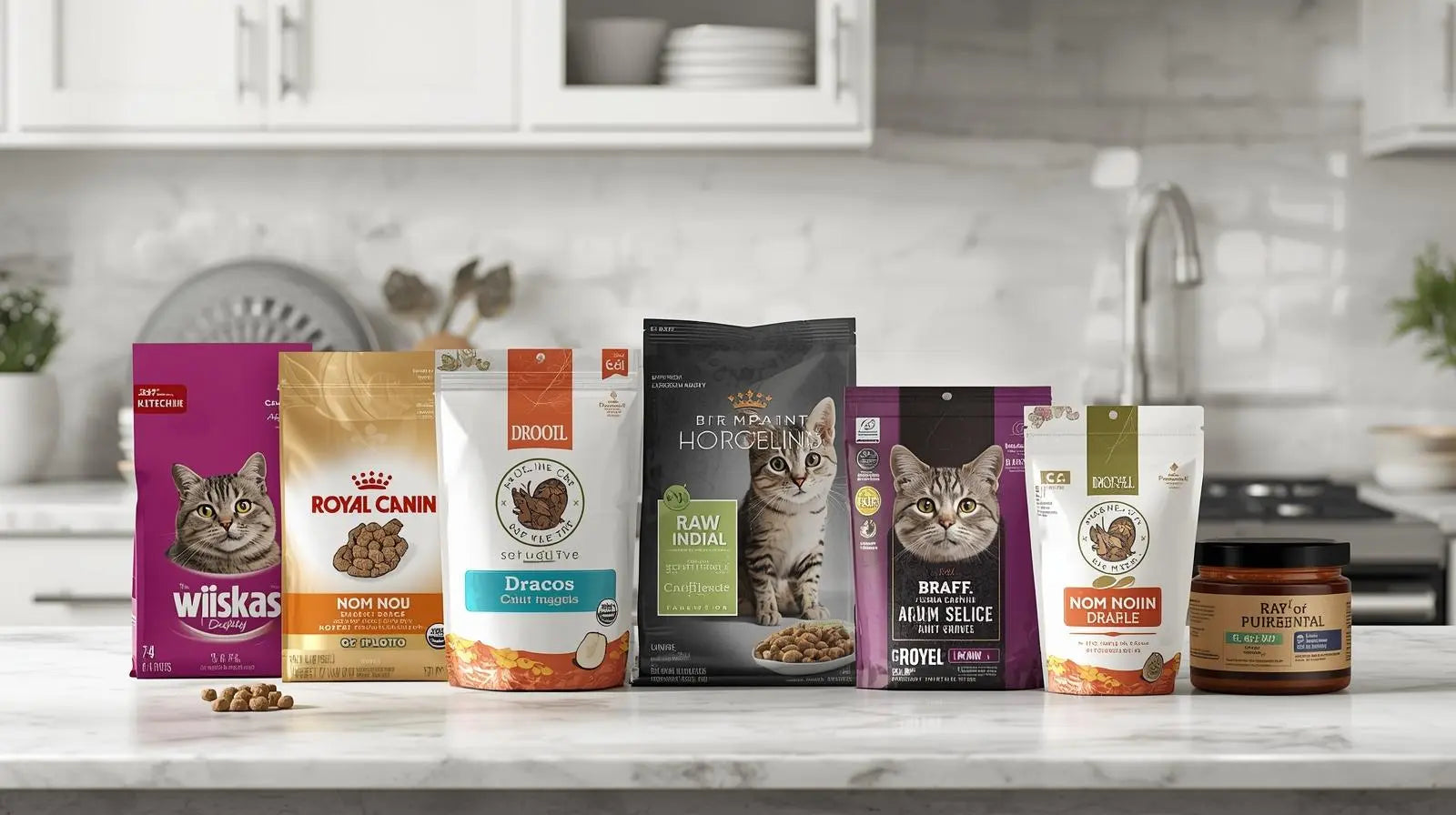
This guide gives Indian Bengal parents exactly what they need: a vet-reviewed feeding chart in grams and rupees, a novel-protein rotation plan, a 4-week transition protocol, and an honest comparison of every diet type. Built for the breed's hybrid biology, for India, for 2026, by the team at BARF India.

Introduction: Why Feeding a Bengal Cat in India Demands a Different Approach

Feeding a Bengal cat in India is a uniquely demanding challenge. The Bengal is a hybrid breed - its lineage traces back to a cross between the Asian Leopard Cat and a domestic shorthair. By F4–F5 generations, Bengals are fully domestic. However, the wild ancestry shows up in the gut, the metabolism, and the prey drive.

Bengals carry a higher incidence of food allergies, inflammatory bowel disease (IBD), and cardiomyopathy than most breeds. The standard "any premium kibble works" approach genuinely fails this breed. Indian Bengal owners also contend with apartment living, high humidity, and limited access to novel proteins in local pet shops.

Feeding a Bengal Cat in India

How Bengal Biology Shapes What Your Cat Should Eat

Cats are obligate carnivores. The Bengal is an obligate carnivore with wild-cat genetics two generations back - protein needs are higher, prey-drive is hardwired, and the gut is shorter and more sensitive than average. Understanding this biology is essential when feeding a Bengal cat in India.

The Hybrid Origin: Why Wild Ancestry Changes Everything

The Bengal's wild ancestor ate small, whole, fresh prey - that is the diet template Bengal biology is closest to. Consequently, Bengals show higher protein demand, lower carbohydrate tolerance, and a strong taste preference for novel proteins like rabbit, quail, duck, and fish over everyday chicken.

Furthermore, Bengals are among the most active domestic cats. Adult metabolic rate runs 25–40% higher than a sedentary cat. Importantly, owners often misread vocal demands as hunger and overfeed. Re-weigh your Bengal monthly and adjust portions accordingly.

Feeding a Bengal Cat in India

The Sensitive Gut and Why Kibble Falls Short for Bengals

Bengals are over-represented in clinical reports of IBD, food intolerances, and chronic loose stool. The breed';s GI tract is shorter and less tolerant of grain fillers and heat- denatured proteins. Consequently, many Indian owners spend years cycling through kibble brands looking for one their cat can tolerate.

 The structural answer is usually fresh, named, single- or limited-protein meals - not another kibble formulation. Transitioning to BARF India's raw cat food is the most impactful change Indian Bengal parents can make for gut health.

Food Allergies, HCM and the Genetic Pre-Loads

Chicken, soy, corn, and gluten are the most common feline food allergens, and Bengals develop sensitivities to them at higher rates than most breeds. Clinical signs include chronic itching, ear infections, vomiting, and intermittent diarrhoea. The intervention is a novel-protein elimination diet - starting with rabbit, quail, or duck - for 6–8 weeks.

Beyond the gut, Bengals carry elevated rates of hypertrophic cardiomyopathy (HCM) and Bengal Progressive Retinal Atrophy (PRA-b). Diet does not prevent these conditions, but bioavailable taurine and anti-inflammatory omega-3 from fresh food actively support cardiac and retinal health across the lifespan.

VETERINARY NOTE: Bengals need taurine, arachidonic acid and pre-formed vitamin A from animal sources. Protein rotation across novel sources prevents sensitisation - this is feline immunology, not opinion.

Purple label for Cooked Cat Food - Grain Free Chicken & Tuna Recipe (1.75kg | 7x250g) by www.barfindia.com. Features cat graphic, feeding guidelines, ingredients, safety info, and maker details. All-natural, preservative-free, family-owned brand.
An orange label for Cooked Cat Food – Grain-Free Buffalo & Chicken Recipe (1.75kg | 7x250g) from www.barfindia.com lists ingredients, feeding instructions, and safety info. A gray-striped cartoon cat stretches at the bottom left. Made in India.
Blue label for Cooked Cat Food - Grain-free Mackerel & Pork Recipe (1.75 kg, 7x250g) by www.barfindia.com. High protein, with ingredients and feeding instructions. Gray striped cat illustration; yellow safety info box on right.
Cooked Cat Food - Grain free Rabbit & Quail Recipe (1.75kg, 7x250g) label features ingredients, feeding and storage instructions, allergy warnings, manufacturer info (www.barfindia.com), and a gray tabby cat illustration on a pink background.
Yellow label for Sampler Pack - Gently Cooked Cat Food by www.barfindia.com, highlighting all-natural, preservative-free boneless chicken. Includes a cartoon cat, feeding guide, ingredients, storage tips, manufacturer info, and 250g net weight.
An infographic for www.barfindia.com’s Sampler Pack - Gently Cooked Cat Food shows five steps—Protein, Prep Produce, Cold Combine, Pack & Freeze, Test/Ship/Enjoy—with brief descriptions and illustrated icons for each.
Purple label for Cooked Cat Food - Grain Free Chicken & Tuna Recipe (1.75kg | 7x250g) by www.barfindia.com. Features cat graphic, feeding guidelines, ingredients, safety info, and maker details. All-natural, preservative-free, family-owned brand.
An orange label for Cooked Cat Food – Grain-Free Buffalo & Chicken Recipe (1.75kg | 7x250g) from www.barfindia.com lists ingredients, feeding instructions, and safety info. A gray-striped cartoon cat stretches at the bottom left. Made in India.
Blue label for Cooked Cat Food - Grain-free Mackerel & Pork Recipe (1.75 kg, 7x250g) by www.barfindia.com. High protein, with ingredients and feeding instructions. Gray striped cat illustration; yellow safety info box on right.
Cooked Cat Food - Grain free Rabbit & Quail Recipe (1.75kg, 7x250g) label features ingredients, feeding and storage instructions, allergy warnings, manufacturer info (www.barfindia.com), and a gray tabby cat illustration on a pink background.
Yellow label for Sampler Pack - Gently Cooked Cat Food by www.barfindia.com, highlighting all-natural, preservative-free boneless chicken. Includes a cartoon cat, feeding guide, ingredients, storage tips, manufacturer info, and 250g net weight.
An infographic for www.barfindia.com’s Sampler Pack - Gently Cooked Cat Food shows five steps—Protein, Prep Produce, Cold Combine, Pack & Freeze, Test/Ship/Enjoy—with brief descriptions and illustrated icons for each.

Cooked Cat Food - The Tasting Box.

Rs. 320.00
An orange label for Cooked Cat Food – Grain-Free Buffalo & Chicken Recipe (1.75kg | 7x250g) from www.barfindia.com lists ingredients, feeding instructions, and safety info. A gray-striped cartoon cat stretches at the bottom left. Made in India.
An infographic shows 5 safe steps for prepping Cooked Cat Food – Grain-Free Buffalo & Chicken Recipe (1.75kg | 7x250g) by www.barfindia.com: steam/thaw protein, wash/steam produce, cold combine, pack/freeze, test/ship/enjoy!.
Infographic displays daily portions for adult cats (2.7–7.2 kg) in grams/day for Cooked Cat Food – Grain-Free Buffalo & Chicken Recipe (1.75kg | 7x250g) by www.barfindia.com, with a cartoon cat and tips to adjust food for activity and treats.
Infographic for Cooked Cat Food – Grain-Free Buffalo & Chicken Recipe (1.75kg) from www.barfindia.com: Holistic vet-crafted, high-protein, 87% chicken, liver, eggs, mussels & oysters with veggies and healthy fats. Small batch made.
An orange label for Cooked Cat Food – Grain-Free Buffalo & Chicken Recipe (1.75kg | 7x250g) from www.barfindia.com lists ingredients, feeding instructions, and safety info. A gray-striped cartoon cat stretches at the bottom left. Made in India.
An infographic shows 5 safe steps for prepping Cooked Cat Food – Grain-Free Buffalo & Chicken Recipe (1.75kg | 7x250g) by www.barfindia.com: steam/thaw protein, wash/steam produce, cold combine, pack/freeze, test/ship/enjoy!.
Infographic displays daily portions for adult cats (2.7–7.2 kg) in grams/day for Cooked Cat Food – Grain-Free Buffalo & Chicken Recipe (1.75kg | 7x250g) by www.barfindia.com, with a cartoon cat and tips to adjust food for activity and treats.
Infographic for Cooked Cat Food – Grain-Free Buffalo & Chicken Recipe (1.75kg) from www.barfindia.com: Holistic vet-crafted, high-protein, 87% chicken, liver, eggs, mussels & oysters with veggies and healthy fats. Small batch made.

Premium Buffalo & Chicken Cat Food

Rs. 630.00
Purple label for Cooked Cat Food - Grain Free Chicken & Tuna Recipe (1.75kg | 7x250g) by www.barfindia.com. Features cat graphic, feeding guidelines, ingredients, safety info, and maker details. All-natural, preservative-free, family-owned brand.
Infographic for Cooked Cat Food - Grain Free Chicken & Tuna Recipe (1.75kg, 7x250g) by www.barfindia.com: Pie chart—87% meat & seafood, 9% fats/seeds/root veggies, 4% dark green veggies. Small batch, gently cooked, human-grade ingredients.
Purple label for Cooked Cat Food - Grain Free Chicken & Tuna Recipe (1.75kg | 7x250g) by www.barfindia.com. Features cat graphic, feeding guidelines, ingredients, safety info, and maker details. All-natural, preservative-free, family-owned brand.
Infographic for Cooked Cat Food - Grain Free Chicken & Tuna Recipe (1.75kg, 7x250g) by www.barfindia.com: Pie chart—87% meat & seafood, 9% fats/seeds/root veggies, 4% dark green veggies. Small batch, gently cooked, human-grade ingredients.

Cooked Cat Food: Premium Chicken & Tuna Cat Food

Rs. 590.00
A bright yellow
Infographic for Cooked Cat Food - Grain Free Chicken Recipe (1.75kg) by www.barfindia.com: 87% chicken, liver, eggs, mussels & oysters; 9% healthy fats, seeds & root veggies; 4% dark green veggies. Circular chart on yellow background.
Chart shows daily food portions (grams) for adult cats (2.7–7.2kg) for Cooked Cat Food - Grain Free Chicken Recipe by www.barfindia.com. Includes guidance, cartoon cat, and note to adjust for activity and treats. Pack: 1.75kg (7x250g).
Discover how www.barfindia.com's Cooked Cat Food - Grain Free Chicken Recipe (1.75kg, 7x250g) is made in five steps: select protein, prep produce, combine cold, pack & freeze, test & ship! Includes grain-free tips and vivid illustrations for each stage.
A plate with chicken breast, hearts, liver, mussels, shrimp, kidney, oysters, organic egg, and a creamy mix—each labeled as www.barfindia.com Cooked Cat Food - Grain Free Chicken Recipe ingredients.
A bright yellow
Infographic for Cooked Cat Food - Grain Free Chicken Recipe (1.75kg) by www.barfindia.com: 87% chicken, liver, eggs, mussels & oysters; 9% healthy fats, seeds & root veggies; 4% dark green veggies. Circular chart on yellow background.
Chart shows daily food portions (grams) for adult cats (2.7–7.2kg) for Cooked Cat Food - Grain Free Chicken Recipe by www.barfindia.com. Includes guidance, cartoon cat, and note to adjust for activity and treats. Pack: 1.75kg (7x250g).
Discover how www.barfindia.com's Cooked Cat Food - Grain Free Chicken Recipe (1.75kg, 7x250g) is made in five steps: select protein, prep produce, combine cold, pack & freeze, test & ship! Includes grain-free tips and vivid illustrations for each stage.
A plate with chicken breast, hearts, liver, mussels, shrimp, kidney, oysters, organic egg, and a creamy mix—each labeled as www.barfindia.com Cooked Cat Food - Grain Free Chicken Recipe ingredients.

Premium Chicken Cat Food

Rs. 475.00
Premium Mackerel & Pork Cat Food www.barfindia.com
Premium Mackerel & Pork Cat Food
Premium Mackerel & Pork Cat Food www.barfindia.com
Premium Mackerel & Pork Cat Food
Premium Mackerel & Pork Cat Food www.barfindia.com

Premium Mackerel & Pork Cat Food

Rs. 515.00
Cooked Cat Food - Grain free Rabbit & Quail Recipe (1.75kg, 7x250g) label features ingredients, feeding and storage instructions, allergy warnings, manufacturer info (www.barfindia.com), and a gray tabby cat illustration on a pink background.
Discover our Cooked Cat Food - Grain free Rabbit & Quail Recipe (1.75kg) by www.barfindia.com: 87% rabbit, quail, liver, eggs, mussels & oysters; small batch cooked for complete cat nutrition.
An infographic titled “Recommended Daily Portions: Adult Cat” displays daily amounts of Cooked Cat Food - Grain Free Rabbit & Quail Recipe (1.75kg, 7x250g) for cats from 2.7kg to 7.2kg, with tips on activity and supplement adjustments from www.barfindia.com.
A colorful infographic from www.barfindia.com shows the 5-step process of making Cooked Cat Food - Grain free Rabbit & Quail Recipe (1.75kg): protein cooking, prepping produce, cold combining, packing/freezing, then testing and delivery.
Premium Rabbit & Quail. www.barfindia.com
Cooked Cat Food - Grain free Rabbit & Quail Recipe (1.75kg, 7x250g) label features ingredients, feeding and storage instructions, allergy warnings, manufacturer info (www.barfindia.com), and a gray tabby cat illustration on a pink background.
Discover our Cooked Cat Food - Grain free Rabbit & Quail Recipe (1.75kg) by www.barfindia.com: 87% rabbit, quail, liver, eggs, mussels & oysters; small batch cooked for complete cat nutrition.
An infographic titled “Recommended Daily Portions: Adult Cat” displays daily amounts of Cooked Cat Food - Grain Free Rabbit & Quail Recipe (1.75kg, 7x250g) for cats from 2.7kg to 7.2kg, with tips on activity and supplement adjustments from www.barfindia.com.
A colorful infographic from www.barfindia.com shows the 5-step process of making Cooked Cat Food - Grain free Rabbit & Quail Recipe (1.75kg): protein cooking, prepping produce, cold combining, packing/freezing, then testing and delivery.
Premium Rabbit & Quail. www.barfindia.com

Premium Rabbit & Quail Cat Food

Rs. 680.00

Daily Feeding Chart: Feeding a Bengal Cat in India by Life Stage

Because feeding a Bengal cat in India involves a breed that burns 25–40% more calories per kg than a sedentary cat, standard portion guides underestimate daily needs. Use this vet-reviewed chart as your starting baseline, then adjust ±10% based on body-condition scoring.

Daily Feeding Chart: Feeding a Bengal Cat in India by Life Stage

To apply this chart, find your Bengal's life stage and take the mid-range grams value. Split across the recommended number of meals - three meals often suits Bengals better than two, as they eat fast and are calmer with smaller, frequent servings. Re- weigh monthly and adjust.

Bengal Cat Food Cost in India: ₹/Day and ₹/Month Comparison

The cost of feeding a Bengal cat in India varies widely by diet type. A typical 5 kg adult Bengal on premium kibble costs ₹160–₹260/day. On BARF India's vet-formulated fresh diet with novel-protein rotation, the same cat costs ₹70–₹130/day - roughly half the price, with superior nutritional outcomes.

Bengal Cat Food Cost in India

Furthermore, Bengals on commodity kibble develop IBD and food allergies at high rates. Chronic-allergy management can run ₹2,000–₹6,000/month in vet visits and prescription diets. Over a 14-year lifespan, switching to BARF India fresh cat food can save ₹6–₹10 lakh in combined food and vet costs.

Feeding a Bengal Cat in India

Best Food for Bengals in India: Raw vs Cooked vs Wet vs Kibble

Every Indian Bengal owner asks the same question: what should I actually feed? The honest answer, when feeding a Bengal cat in India, is heavily weighted toward raw or gently cooked. The gut, skin, and immune systems all respond best to intact, novel- protein fresh nutrition closest to the wild ancestor's diet.

Raw and Gently Cooked: The Highest-Impact Choice for Bengals

Raw feeding - BARF or prey-model - is the strongest clinical match for Bengal biology. It delivers 60–75% moisture, 50–65% crude protein, and less than 5% carbohydrates. For Bengals with sensitive stomachs, IBD diagnosis, food allergies, or dull coats, BARF India's raw cat food range is the front-line recommendation. Gently cooked is the ideal choice for Bengal owners new to fresh feeding, multi-pet households, or cats recovering from severe IBD. It retains 60–70% moisture and most nutritional value while being easier to introduce. Explore BARF India's gently cooked range as a practical starting point.

Premium Kibble, Wet Food, and Where They Fit

Premium kibble from Royal Canin or Hill's is not inherently bad - but for a Bengal specifically, it represents a limited ceiling. With 8–10% moisture and 30–40% carbohydrates, it chronically under-hydrates the cat and provides no novel-protein rotation. Use it as a 10–15% rotation component or travel back-up, never a daily staple.

Most Indian premium wet pouches are chicken or fish - exactly the proteins many Bengals are already sensitised to. If using wet food, rotate proteins actively and check ingredient labels for hidden allergens like gluten, corn, or soy. For a fully optimised Bengal diet, pair wet food with BARF India's multi-protein raw range.

Foods to Never Give Your Bengal Cat - Indian Kitchen Edition

Indian households often share food more freely with pets than Western homes. For Bengals - given the IBD predisposition and allergy load - certain common Indian kitchen items cause disproportionate harm. Knowing what to avoid is as important as knowing what to feed when feeding a Bengal cat in India.

Foods to Avoid for Bengal Cats

The Bengal Coat, Heart, Eyes and IBD: How Diet Shapes Every Health Outcome

Feeding a Bengal cat in India correctly produces visible results quickly. The Bengal's signature marbled or spotted coat - often with a metallic glitter sheen - is one of the clearest indicators of nutritional status. A poorly fed Bengal has a dull, rough, low-glitter coat. A well-fed Bengal looks like a small leopard.

Three nutrients carry most of the visual load: long-chain omega-3 fatty acids (EPA + DHA) from oily fish and pasture-raised animal fat; arachidonic acid, zinc, biotin and copper from raw organ meat; and high-inclusion whole-meat protein that supplies the amino acids the coat is literally built from.

BARF India customers switching their Bengals to fresh food typically report visible coat- shine improvement within 2–3 weeks, reduced shedding within 4–6 weeks, and intensified glitter by week 6–8. Explore our duck and quail fresh cat food, one of the best coat-support formulas in our range.

NATURE HAS ALREADY GIVEN THE RECIPE. WE HAVE ONLY IMPLEMENTED ITFeeding a Bengal Cat in India

IBD, Food Allergies and the Sensitive Stomach - The Defining Bengal Issue

Ask 100 Indian Bengal owners about their cat's biggest health challenge and more than half will mention vomiting, soft stool, chronic diarrhoea, itching, or ear infections. All of these typically trace to the gut. Bengals are over-represented in clinical reports of IBD and food sensitivities.

The clinical gold standard is an 8-week novel-protein elimination diet - feeding a single protein the cat has never eaten (rabbit, quail, duck, kangaroo) at high inclusion in a fresh formulation, then reintroducing previous proteins one at a time. BARF India's exotic-protein range is built explicitly for this protocol. Most Bengals show reduced symptoms within 3–4 weeks. Try our Feline Magic raw cat food as an IBD-friendly starting point.

Additionally, the moisture content of the diet matters substantially. A 60–75% moisture fresh diet is anti-inflammatory at the gut-mucosa level compared to dry kibble. A diet free of corn, soy, wheat, and artificial preservatives removes the most common IBD aggravators.

CLINICAL FRAMING: For a Bengal, diet is the highest-leverage modifiable variable in lifelong cardiac, gut, coat, and retinal health. Three of the four major breed predispositions have a meaningful dietary lever. Use it.

LEARN MORE ABOUT INDIA'S NO.1 FRESH CAT FOOD

Start Fresh
Feeding a Bengal Cat in India

4-Week Transition Protocol: Switching Your Bengal from Kibble to Fresh Food

Successfully feeding a Bengal cat in India on fresh food requires a structured transition. Bengals are food-curious but discerning - they inspect and audit new food before committing. A 4-week gradient works smoothly for most healthy adults. For Bengals with diagnosed IBD, extend to 6–8 weeks under veterinary supervision.

4-Week Transition Protocol: Switching Your Bengal from Kibble to Fresh Food

Start your Bengal's transition with our Raw Cat Food Sampler Pack (₹320) or the Gently Cooked Sampler Pack to introduce multiple proteins before committing to a full plan.

• Never withhold food to force acceptance - Bengals risk hepatic lipidosis if they fast more than 24–48 hours.
• Always run fresh water at all times alongside fresh food.
• For Bengals with known food allergies, start with a single novel protein and diversify only once symptoms are stable.
• Rotate proteins weekly from day one - this is the single most important Bengal- specific feeding rule.

Feeding a Bengal Cat in India
An infographic for Dog Treats Natural Omega 3 - Dehydrated Anchovies (100g) by www.barfindia.com, highlighting omega-3 benefits, zero preservatives, Indian sourcing, storage tips, contact info, plus fish and plant illustrations.
A wooden spoon filled with Dog Treats Natural Omega 3 - Dehydrated Anchovies (100 gms) by www.barfindia.com rests on a pile of similar treats.
Dog Treats Natural Omega 3 - Dehydrated Anchovies (100 gms) from www.barfindia.com: small silvery fish with visible eyes, closely arranged—ideal as natural omega-3 dog snacks.
A close-up of Dog Treats Natural Omega 3 - Dehydrated Anchovies (100 gms) by www.barfindia.com shows whole anchovies with eyes and fins, tightly packed—ideal natural, flavorful snacks for your dog.
An infographic for Dog Treats Natural Omega 3 - Dehydrated Anchovies (100g) by www.barfindia.com, highlighting omega-3 benefits, zero preservatives, Indian sourcing, storage tips, contact info, plus fish and plant illustrations.
A wooden spoon filled with Dog Treats Natural Omega 3 - Dehydrated Anchovies (100 gms) by www.barfindia.com rests on a pile of similar treats.
Dog Treats Natural Omega 3 - Dehydrated Anchovies (100 gms) from www.barfindia.com: small silvery fish with visible eyes, closely arranged—ideal as natural omega-3 dog snacks.
A close-up of Dog Treats Natural Omega 3 - Dehydrated Anchovies (100 gms) by www.barfindia.com shows whole anchovies with eyes and fins, tightly packed—ideal natural, flavorful snacks for your dog.

Dog Treats Natural Omega 3 - Dehydrated Anchovies - 100 gms.

Rs. 260.00
Dog Treats - Dehydrated Pork Hearts (60 gms) from www.barfindia.com are single-ingredient, all-natural pork heart treats with no additives or preservatives, packed in a white and pink resealable bag—perfect for your pet.
A white resealable bag with a pink label for www.barfindia.com Dog Treats - Dehydrated Pork Hearts (60 gms), displaying feeding guidelines, product benefits, convenience, and usage instructions.
Two pieces of dehydrated pork hearts from www.barfindia.com, dark brown and irregularly shaped, are displayed on a white background—ideal as single-ingredient dog treats. Product: Dog Treats - Dehydrated Pork Hearts - 60 gms.
Dog Treats - Dehydrated Pork Hearts (60 gms) from www.barfindia.com are single-ingredient, all-natural pork heart treats with no additives or preservatives, packed in a white and pink resealable bag—perfect for your pet.
A white resealable bag with a pink label for www.barfindia.com Dog Treats - Dehydrated Pork Hearts (60 gms), displaying feeding guidelines, product benefits, convenience, and usage instructions.
Two pieces of dehydrated pork hearts from www.barfindia.com, dark brown and irregularly shaped, are displayed on a white background—ideal as single-ingredient dog treats. Product: Dog Treats - Dehydrated Pork Hearts - 60 gms.

Dog Treats - Dehydrated Pork Hearts - 60 gms

Rs. 300.00
A white resealable pouch with a red label shows
A white resealable pouch from www.barfindia.com, with a red label showing feeding guidelines, product info, and serving instructions. Contains 60g dehydrated chicken hearts for dogs & cats, rich in taurine, made in India—best kept refrigerated.
A black bowl of Dehydrated Chicken Hearts - 60gms from www.barfindia.com is garnished with parsley and sits on a dark textured surface, surrounded by scattered herbs and spices.
A pile of small, dark, slightly yellowish Dehydrated Chicken Hearts - 60gms is spread on a white surface.
A white resealable pouch with a red label shows
A white resealable pouch from www.barfindia.com, with a red label showing feeding guidelines, product info, and serving instructions. Contains 60g dehydrated chicken hearts for dogs & cats, rich in taurine, made in India—best kept refrigerated.
A black bowl of Dehydrated Chicken Hearts - 60gms from www.barfindia.com is garnished with parsley and sits on a dark textured surface, surrounded by scattered herbs and spices.
A pile of small, dark, slightly yellowish Dehydrated Chicken Hearts - 60gms is spread on a white surface.

Dehydrated Chicken Hearts - 60gms

Rs. 250.00
A resealable pouch labeled
Dog Treats Buffalo Heart - 60gms by www.barfindia.com comes in a white resealable pouch with a red label showing feeding guidelines, product details, and care instructions. These natural Indian pet treats are healthy and convenient.
A hand holds a piece of Dog Treats Buffalo Heart - 60 gms by www.barfindia.com, with more natural buffalo heart treats in the background—ideal for your furry friend.
A hand holds a piece of Dog Treats Buffalo Heart - 60 gms by www.barfindia.com over a pile of similar air-dried treats—wholesome, natural snacks perfect for rewarding your dog.
Three pieces of Dog Treats Buffalo Heart - 60 gms from www.barfindia.com are arranged on a white background. Their rough, uneven texture and curled edges make them ideal natural treats for your dog.
A resealable pouch labeled
Dog Treats Buffalo Heart - 60gms by www.barfindia.com comes in a white resealable pouch with a red label showing feeding guidelines, product details, and care instructions. These natural Indian pet treats are healthy and convenient.
A hand holds a piece of Dog Treats Buffalo Heart - 60 gms by www.barfindia.com, with more natural buffalo heart treats in the background—ideal for your furry friend.
A hand holds a piece of Dog Treats Buffalo Heart - 60 gms by www.barfindia.com over a pile of similar air-dried treats—wholesome, natural snacks perfect for rewarding your dog.
Three pieces of Dog Treats Buffalo Heart - 60 gms from www.barfindia.com are arranged on a white background. Their rough, uneven texture and curled edges make them ideal natural treats for your dog.

Dog Treats Buffalo Heart - 60 gms

Rs. 250.00
The www.barfindia.com Dog Treats - Dehydrated Sardines 100 gms pack label shows sardines and leafy designs, lists health benefits, safe handling tips, contact info, and quality certifications.
A round wicker basket holds many dehydrated sardines (Dog Treats - Dehydrated Sardines - 100 gms pack) atop a dark surface.
The www.barfindia.com Dog Treats - Dehydrated Sardines 100 gms pack label shows sardines and leafy designs, lists health benefits, safe handling tips, contact info, and quality certifications.
A round wicker basket holds many dehydrated sardines (Dog Treats - Dehydrated Sardines - 100 gms pack) atop a dark surface.

Dog Treats - Dehydrated Sardines - 100 gms pack

Rs. 270.00
A pile of Dog Treats - Dehydrated Squids (pieces) - 60gms from www.barfindia.com on a white background, with a small colorful www.barfindia.com logo in the top right corner.

Dog Treats - Dehydrated Squids (pieces) - 60gms

Rs. 649.00

FAQ's: Feeding a Bengal Cat in India

How much should I feed my Bengal cat per day in India?

An adult Bengal (3.5–7 kg) needs 180–300 grams of fresh food per day, delivering 260–420 kcal, split across 2–3 meals. Kittens (4–12 weeks) need 80–130 g/day in 4–5 small meals; juveniles need 150–230 g/day in 3 meals; seniors need 160–260 g/day. Adjust ±10% based on body-condition feel of ribs and waist visibility.

What is the best food for a Bengal cat in India?

The best food for feeding a Bengal cat in India is a vet-formulated fresh diet - raw or gently cooked - at 60–75% moisture, with weekly novel-protein rotation (rabbit, quail, duck, fish, lamb). The breed's IBD and allergy predispositions respond specifically to this approach. BARF India's range delivers this at ₹70–₹130/day for a standard adult Bengal.

Are Bengal cats prone to food allergies?

Yes. Bengals are over-represented in clinical reports of food allergies and IBD compared to non-pedigree cats. Common allergens include chicken, soy, corn, gluten, and certain dairy proteins. Symptoms include itching, ear infections, vomiting, soft stool, and weight changes. The clinical gold-standard intervention is a novel-protein elimination diet for 6–8 weeks, then careful reintroduction.

Why does my Bengal have a sensitive stomach?

Bengals have a shorter, more sensitive GI tract than most domestic breeds - partly a legacy of their Asian Leopard Cat hybrid ancestry. They tolerate low-quality protein, grain fillers, and heat-denatured kibble proteins poorly. Many Indian Bengal owners cycle through kibble brands looking for one their cat can tolerate. The structural answer is fresh, named, limited-protein meals.

Can Bengal cats eat raw chicken?

Yes, Bengals can safely eat raw chicken when it is human-grade and hygienically sourced. However, Bengals fed exclusively chicken often sensitise to it over time. Rotate raw chicken with other proteins (turkey, fish, rabbit, quail, duck, lamb) weekly. If your Bengal already shows signs of chicken sensitivity, switch to a non-chicken novel- protein rotation under veterinary guidance.

How many times a day should I feed my Bengal cat?

Adult Bengals do well on 2–3 meals per day. Three meals is often better than two - Bengals eat fast and are calmer with smaller, more frequent servings. Kittens (4–12 weeks) need 4–5 small meals daily; juveniles (3–12 months) need 3 meals. Avoid free- feeding kibble; Bengals self-regulate poorly when grazing on dry food.

Are Bengal cats prone to IBD?

Yes. Bengals are reported with elevated rates of inflammatory bowel disease compared to non-pedigree cats. Symptoms include chronic vomiting, soft stool, intermittent diarrhoea, weight loss despite normal eating, and skin or ear inflammation. The clinical front-line intervention is dietary - a novel-protein fresh-food elimination diet for 6–8 weeks. Most Bengals show meaningful improvement within 3–4 weeks of switching.

How do I switch my Bengal from kibble to raw or fresh food?

Transition over 4 weeks for healthy adults: Days 1–7 at 75% old + 25% fresh (novel protein); Days 8–14 at 50/50 rotating to second novel protein; Days 15–21 at 25% old + 75% fresh with three protein types; Days 22–28 at 100% fresh with full 4–5 protein rotation. For Bengals with diagnosed IBD, transition over 6–8 weeks under veterinary supervision. Never withhold food to force acceptance.

Conclusion: Give Your Bengal the Diet Their Biology Demands

Your Bengal's diet is the single highest-leverage decision you will make as a parent - particularly given the breed's IBD, allergy, and cardiomyopathy predispositions. Feeding a Bengal cat in India correctly protects a 14–16 year lifespan from chronic gut, skin, and cardiac issues.

BARF India's Bengal-suitable range - gently cooked, raw, multi-protein rotation including rabbit, quail, and duck - is the lowest-risk way to start. Begin with a Sampler Pack at ₹320, explore the full cat food collection, or read our Persian Cat Feeding Guide India for comparison.

Thousands of Indian Bengal parents have already made the switch and seen the difference. The biology is clear, the results are measurable, and the cost is lower than premium kibble. There has never been a better time to feed your Bengal the way nature intended.