Raw for Maximum Nutrition
Made in our own Kitchens
Human grade products
19 April 2026
Raw Cat Food: The Natural Diet Your Cat Was Born to Eat
Everything you need to know - from the BARF diet and key nutrients, to transitioning tips and why BARF India is India's most trusted choice.

19 April 2026
Raw Cat Food: The Natural Diet Your Cat Was Born to Eat
Everything you need to know - from the BARF diet and key nutrients, to transitioning tips and why BARF India is India's most trusted choice.
Table of contents
• What Is Raw Cat Food? • Nutrition in Raw Cat Food• Key Benefits of Feeding Raw• 80-10-10 Ratio in Raw Cat Food• Is Raw Cat Food Safe?• Transition Your Cat to Raw Food• Why BARF India's Raw Cat Food• Common Myths - Debunked• FAQ'S : Raw Cat Food• ConclusionRaw Cat Food: The Complete Guide to Feeding Your Cat Naturally | BARF India
Raw cat food is the most natural, nutrient-rich diet for your feline. Explore what it
contains, its benefits, how to switch, and why BARF India stands out in India.
What Is Raw Cat Food? A Beginner's Introduction
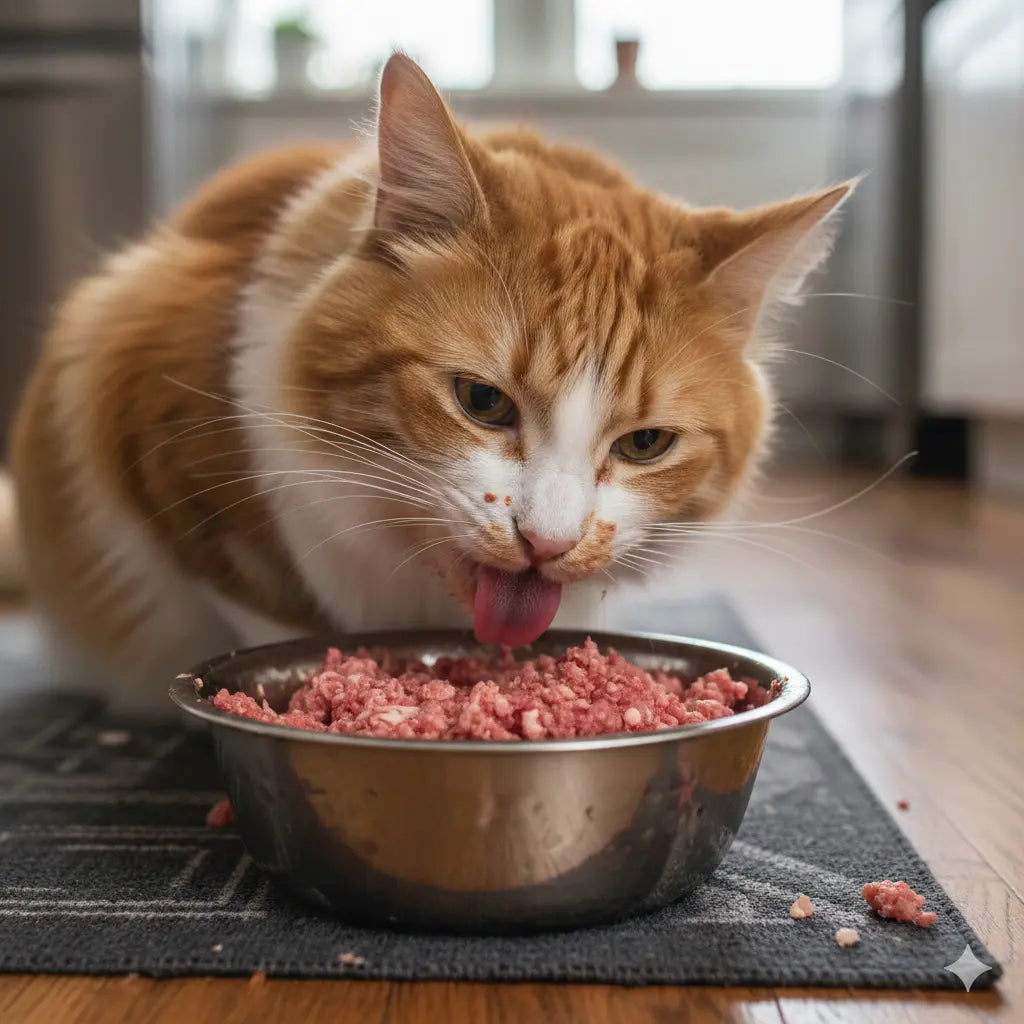
Raw cat food is exactly what its name suggests - uncooked, minimally processed food
designed to mirror what cats eat in the wild. Cats are obligate carnivores. Their bodies evolved
over thousands of years to thrive on raw meat, organs, and bones.
Unlike commercial kibble, raw cat food preserves the natural proteins, amino acids, and
moisture that cooking destroys. It skips the fillers, artificial flavours, and cheap grains that many
processed foods rely on.
BARF stands for Biologically Appropriate Raw Food. It is a feeding philosophy that prioritises species-specific nutrition - giving your cat the closest thing to what nature intended.
How Raw Cat Food Differs from Kibble and Wet Food
Kibble is cooked at high temperatures, which denatures proteins and reduces nutritional value.
Manufacturers then add synthetic vitamins back in. Wet food is closer to raw but still cooked,
and often contains thickeners and flavour enhancers.
In contrast, raw cat food retains its nutrients in their natural bioavailable form. Your cat's
digestive enzymes are designed to process raw protein - not processed grain-based meals.

Nutrition in Raw Cat Food: What Goes Inside?
A well-formulated raw cat food diet is built on three pillars - quality protein, raw bone, and organ meat. Each serves a specific biological purpose. Together, they deliver a complete nutritional profile without the need for synthetic supplements.
High-Quality Protein: The Core of Raw Cat Food
Protein is your cat's primary fuel. Cats use it for energy, immune function, muscle repair, and
nervous system health. As obligate carnivores, they need significantly more protein than dogs or
humans do.
Beyond basic energy, bioavailable protein from raw meat is digested far more efficiently. It
supports coat health, lean muscle mass, and a robust immune response. Variety in protein
sources - chicken, turkey, rabbit, lamb - ensures a complete amino acid profile.

The Role of Taurine in Raw Cat Food
Taurine is an essential amino acid that cats cannot produce on their own. It must come from diet. Taurine deficiency leads to serious conditions - dilated cardiomyopathy and vision loss among them. Raw meat is the richest natural source of taurine. Cooking destroys it, which is why processed cat food must artificially add it back.
Bone Content and Minerals in Raw Cat Food
Raw bone is not a filler - it is a nutritional powerhouse. It provides calcium, phosphorus, and trace minerals that support strong teeth, healthy gums, and efficient digestion. Poultry bones, being lightweight and easy to digest, are the ideal choice for cats. Additionally, chewing raw bone acts as a natural toothbrush, reducing tartar build-up without any chemical intervention.
Organs: The Superfood Within Raw Cat Food
Organ meat is extraordinarily nutrient-dense. Liver, kidney, and heart provide fat-soluble vitamins - A, D, E, and K - along with B vitamins, iron, and zinc. These nutrients are present in their most bioavailable form. A small percentage of organs can deliver an outsized nutritional benefit.

Key Benefits of Feeding Your Cat Raw Cat Food
The shift to raw cat food can bring visible, meaningful changes. Most pet parents notice improvements within weeks - from shinier coats to smaller, less odorous stools.
Better Digestion with Raw Cat Food
Cats' digestive systems are shorter and more acidic than those of humans. They are designed
for rapid processing of raw protein. When fed biologically appropriate food, digestion improves,
stools become firmer and smaller, and litter tray odour decreases significantly.
Furthermore, grain-free raw cat food eliminates a common irritant. Many cats suffer from chronic
loose stools or vomiting triggered by the grains and fillers in commercial food.

Improved Hydration Through Raw Cat Food
Cats evolved from desert animals. They do not have a strong instinct to drink water. In the wild,
they met most of their fluid needs from prey. Raw cat food contains 65-75% moisture, naturally
hydrating your cat with every meal. This helps prevent urinary tract issues and kidney stress.
Healthier Coat and Skin from Raw Cat Food
Omega-3 and omega-6 fatty acids in raw meat support skin barrier function and coat lustre. Pet parents who switch to raw cat food consistently report softer, glossier fur and less shedding. This is a direct result of better fat absorption from unprocessed food.
Dental Health Benefits of Raw Cat Food
Chewing raw bone and sinew acts as a mechanical cleaner. Unlike soft kibble, which sticks to teeth, raw food promotes natural tartar removal. Cats on a raw diet often maintain healthier gums well into their senior years.
Research note: A 2016 study published in the Journal of Feline Medicine and Surgery found significantly higher apparent nutrient digestibility in kittens fed raw diets compared to commercial alternatives.

Understanding the 80-10-10 Ratio in Raw Cat Food
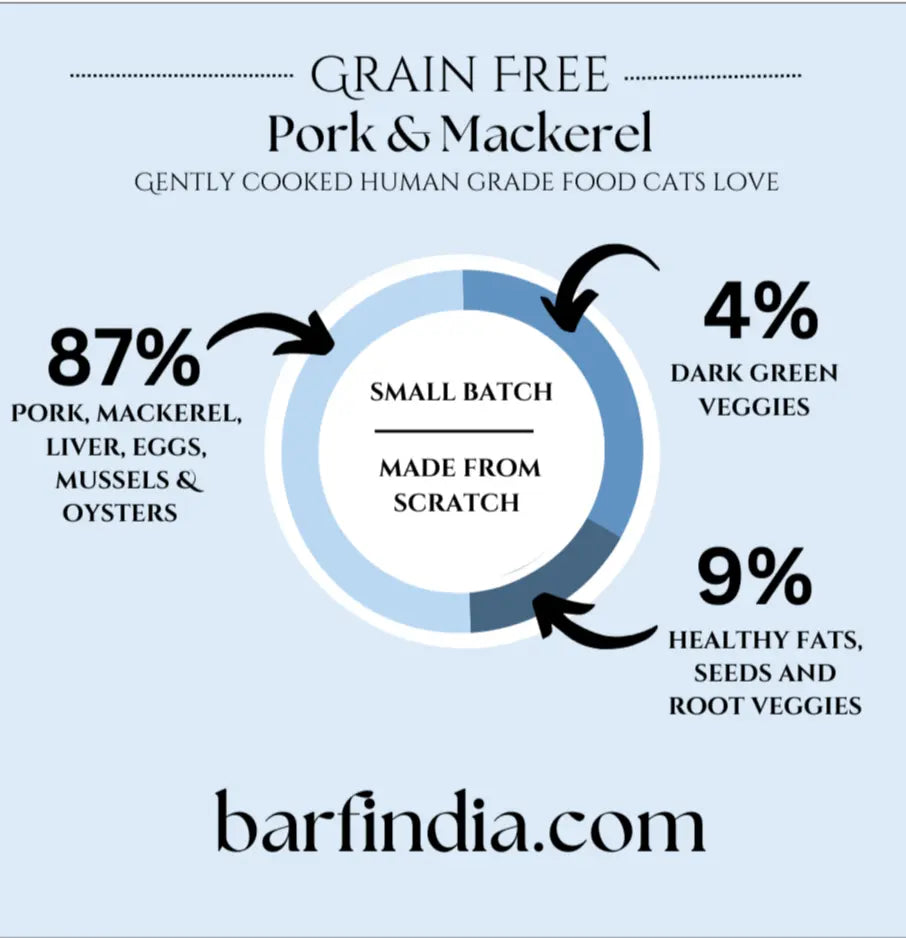
The 80-10-10 ratio is a widely used guideline for formulating raw cat food. It breaks down as 80% muscle meat, 10% raw bone, and 10% secreting organs - of which half should be liver.
Muscle meat (energy, protein) | Bone (calcium, minerals) | Organs (vitamins, taurine)
This ratio is a starting point, not a rigid rule. Most cats need slightly less bone and can benefit from additional organ content. A complete, commercially prepared raw cat food takes this further - formulated by nutritionists to meet all minimum requirements precisely.
Complete vs Complementary Raw Cat Food
Not all raw cat food products are equal. A complete raw meal meets all your cat's nutritional needs on its own. A complementary product is not designed to be the sole food source. Always check the label. If it does not say 'complete' it should not be fed in isolation.
Tip: If making raw food at home, consult a feline nutritionist. Home-prepared diets are frequently unbalanced - particularly in calcium, iodine, and vitamin D.
Is Raw Cat Food Safe? What Every Owner Should Know
Raw cat food is safe when sourced from reputable suppliers and handled with proper food
hygiene practices. Cats' digestive systems are naturally equipped for raw meat - shorter gut
transit time and higher stomach acidity limit bacterial survival.
That said, responsible handling matters. Always defrost raw cat food in the refrigerator, never at
room temperature. Remove uneaten food within 30 minutes. Wash bowls and surfaces after
each meal with hot water and soap.
Food Safety Standards in Raw Cat Food Production
Quality brands source from human-grade supply chains and conduct microbial testing. Certifications like RawSAFE accreditation indicate that a brand adheres to strict food safety protocols throughout production. When buying raw cat food, look for transparency in sourcing, testing, and ingredient labelling.

Which Cats Should Not Eat Raw Cat Food?
Cats with compromised immune systems, those undergoing chemotherapy, or cats with certain kidney conditions may require a modified diet. Always consult your vet before switching to raw cat food if your cat has a pre-existing health condition. For healthy cats of all ages - including kittens and seniors - a well-formulated raw diet is an excellent choice.
How to Transition Your Cat to Raw Cat Food
Switching to raw cat food is rarely instant. Cats are neophobic by nature - cautious of
unfamiliar foods. A gradual transition improves acceptance and reduces digestive upset.
To make the process smoother, choose one of three proven methods based on your cat's
personality and current diet.

Tips for Fussy Cats Switching to Raw Cat Food
Serve raw cat food at room temperature - cold food straight from the fridge is less aromatic and less appealing. Use flat plates or boards rather than deep bowls, so whiskers do not touch the sides. Feed in a quiet, safe space with 360-degree visibility. Patience is key. Some cats take two weeks to accept raw cat food. Do not give up after a single refusal. Persistence pays off - especially when you see the long-term health results.
Why BARF India's Raw Cat Food Stands Out
India's leading raw pet food brand, purpose-built for the nutritional needs of Indian cats - and the trust of Indian pet parents.

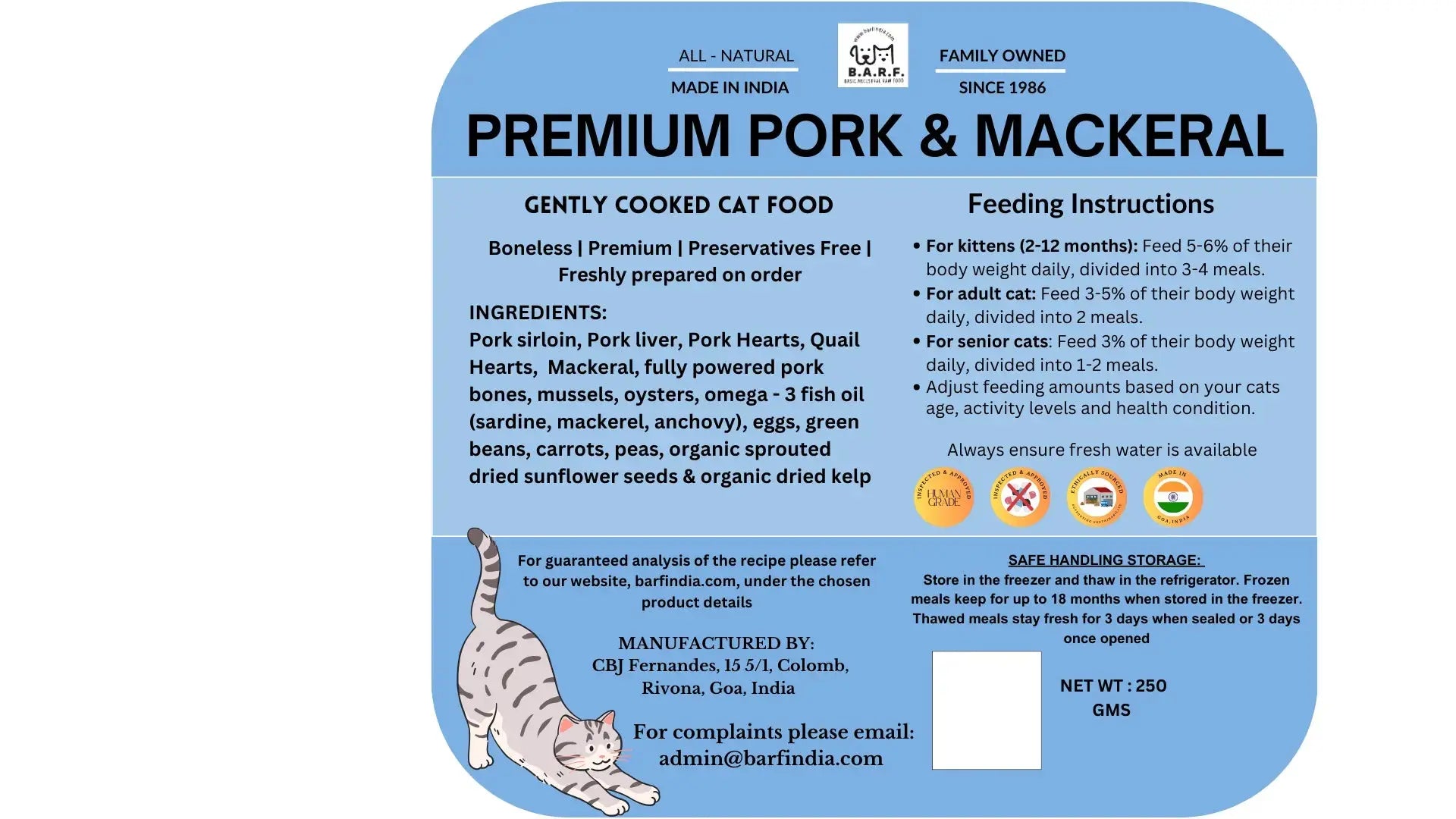
BARF India's raw cat food follows the BARF philosophy strictly - biologically appropriate, species-specific, and free from everything your cat doesn't need. It's not just food. It's a return to what cats were always meant to eat.
LEARN MORE ABOUT INDIA'S NO.1 FRESH CAT FOOD
Start Fresh
Common Myths About Raw Cat Food - Debunked
Despite growing awareness, several misconceptions continue to hold pet parents back from exploring raw cat food. Let's address them directly with facts.
Myth: Raw Cat Food Is Too Messy
Home-prepared raw food can be messy. But commercial raw cat food arrives pre-portioned and frozen. Serving it is as simple as defrost, scoop, and serve. There is no grinding, chopping, or complicated preparation involved.
Myth: Raw Cat Food Is Too Expensive
While initial costs may seem higher, consider the long-term picture. Cats on raw cat food often have fewer vet visits, healthier weight, and better organ function. The investment in nutrition often reduces health-related expenses significantly over time.
Myth: Fussy Cats Will Reject Raw Cat Food
Most cats become enthusiastic raw feeders with a gradual transition. The variety of protein sources in raw cat food actually keeps even the most discerning cats interested. Palatability is rarely the issue - the method of introduction is what makes the difference.
Myth: Raw Cat Food Is Dangerous Due to Bacteria
A cat's stomach pH is far more acidic than a human's, which neutralises most pathogens in raw meat efficiently. Reputable commercial raw cat food is also batch-tested for harmful bacteria. With proper handling and hygiene, the bacterial risk is minimal for both cat and owner.
The bottom line: Most objections to raw cat food dissolve when you buy from a trusted, tested brand and follow basic food safety practices.

FAQ'S : Raw Cat Food
Conclusion - Make the Switch to Raw Cat Food Today
Raw cat food is not a trend. It is a return to the biological truth of what cats need to thrive. Cats
evolved as hunters, not grain consumers. Feeding them accordingly - with species-
appropriate, unprocessed nutrition - supports every system in their body.
From improved digestion and hydration to healthier coats and stronger immunity, the benefits of
raw cat food are real, consistent, and well-documented. Whether your cat is a kitten, an adult, or
a senior, it is never too early or too late to make the switch.
BARF India makes it simple. With nutritionist-formulated, human-grade raw cat food delivered to
your doorstep, giving your cat the diet it deserves has never been more accessible in India.
Start your cat's raw feeding journey today - because every meal is an opportunity to nourish.
Raw Cat Food: The Complete Guide to Feeding Your Cat Naturally | BARF India
Raw cat food is the most natural, nutrient-rich diet for your feline. Explore what it
contains, its benefits, how to switch, and why BARF India stands out in India.
What Is Raw Cat Food? A Beginner's Introduction
Raw cat food is exactly what its name suggests - uncooked, minimally processed food
designed to mirror what cats eat in the wild. Cats are obligate carnivores. Their bodies evolved
over thousands of years to thrive on raw meat, organs, and bones.
Unlike commercial kibble, raw cat food preserves the natural proteins, amino acids, and
moisture that cooking destroys. It skips the fillers, artificial flavours, and cheap grains that many
processed foods rely on.
BARF stands for Biologically Appropriate Raw Food. It is a feeding philosophy that prioritises species-specific nutrition - giving your cat the closest thing to what nature intended.
How Raw Cat Food Differs from Kibble and Wet Food
Kibble is cooked at high temperatures, which denatures proteins and reduces nutritional value.
Manufacturers then add synthetic vitamins back in. Wet food is closer to raw but still cooked,
and often contains thickeners and flavour enhancers.
In contrast, raw cat food retains its nutrients in their natural bioavailable form. Your cat's
digestive enzymes are designed to process raw protein - not processed grain-based meals.
Nutrition in Raw Cat Food: What Goes Inside?
A well-formulated raw cat food diet is built on three pillars - quality protein, raw bone, and organ meat. Each serves a specific biological purpose. Together, they deliver a complete nutritional profile without the need for synthetic supplements.
High-Quality Protein: The Core of Raw Cat Food
Protein is your cat's primary fuel. Cats use it for energy, immune function, muscle repair, and
nervous system health. As obligate carnivores, they need significantly more protein than dogs or
humans do.
Beyond basic energy, bioavailable protein from raw meat is digested far more efficiently. It
supports coat health, lean muscle mass, and a robust immune response. Variety in protein
sources - chicken, turkey, rabbit, lamb - ensures a complete amino acid profile.
The Role of Taurine in Raw Cat Food
Taurine is an essential amino acid that cats cannot produce on their own. It must come from diet. Taurine deficiency leads to serious conditions - dilated cardiomyopathy and vision loss among them. Raw meat is the richest natural source of taurine. Cooking destroys it, which is why processed cat food must artificially add it back.
Bone Content and Minerals in Raw Cat Food
Raw bone is not a filler - it is a nutritional powerhouse. It provides calcium, phosphorus, and trace minerals that support strong teeth, healthy gums, and efficient digestion. Poultry bones, being lightweight and easy to digest, are the ideal choice for cats. Additionally, chewing raw bone acts as a natural toothbrush, reducing tartar build-up without any chemical intervention.
Organs: The Superfood Within Raw Cat Food
Organ meat is extraordinarily nutrient-dense. Liver, kidney, and heart provide fat-soluble vitamins - A, D, E, and K - along with B vitamins, iron, and zinc. These nutrients are present in their most bioavailable form. A small percentage of organs can deliver an outsized nutritional benefit.
Key Benefits of Feeding Your Cat Raw Cat Food
The shift to raw cat food can bring visible, meaningful changes. Most pet parents notice improvements within weeks - from shinier coats to smaller, less odorous stools.
Better Digestion with Raw Cat Food
Cats' digestive systems are shorter and more acidic than those of humans. They are designed
for rapid processing of raw protein. When fed biologically appropriate food, digestion improves,
stools become firmer and smaller, and litter tray odour decreases significantly.
Furthermore, grain-free raw cat food eliminates a common irritant. Many cats suffer from chronic
loose stools or vomiting triggered by the grains and fillers in commercial food.
Improved Hydration Through Raw Cat Food
Cats evolved from desert animals. They do not have a strong instinct to drink water. In the wild,
they met most of their fluid needs from prey. Raw cat food contains 65-75% moisture, naturally
hydrating your cat with every meal. This helps prevent urinary tract issues and kidney stress.
Healthier Coat and Skin from Raw Cat Food
Omega-3 and omega-6 fatty acids in raw meat support skin barrier function and coat lustre. Pet parents who switch to raw cat food consistently report softer, glossier fur and less shedding. This is a direct result of better fat absorption from unprocessed food.
Dental Health Benefits of Raw Cat Food
Chewing raw bone and sinew acts as a mechanical cleaner. Unlike soft kibble, which sticks to teeth, raw food promotes natural tartar removal. Cats on a raw diet often maintain healthier gums well into their senior years.
Research note: A 2016 study published in the Journal of Feline Medicine and Surgery found significantly higher apparent nutrient digestibility in kittens fed raw diets compared to commercial alternatives.
Understanding the 80-10-10 Ratio in Raw Cat Food
The 80-10-10 ratio is a widely used guideline for formulating raw cat food. It breaks down as 80% muscle meat, 10% raw bone, and 10% secreting organs - of which half should be liver.
Muscle meat (energy, protein) | Bone (calcium, minerals) | Organs (vitamins, taurine)
This ratio is a starting point, not a rigid rule. Most cats need slightly less bone and can benefit from additional organ content. A complete, commercially prepared raw cat food takes this further - formulated by nutritionists to meet all minimum requirements precisely.
Complete vs Complementary Raw Cat Food
Not all raw cat food products are equal. A complete raw meal meets all your cat's nutritional needs on its own. A complementary product is not designed to be the sole food source. Always check the label. If it does not say 'complete' it should not be fed in isolation.
Tip: If making raw food at home, consult a feline nutritionist. Home-prepared diets are frequently unbalanced - particularly in calcium, iodine, and vitamin D.
Is Raw Cat Food Safe? What Every Owner Should Know
Raw cat food is safe when sourced from reputable suppliers and handled with proper food
hygiene practices. Cats' digestive systems are naturally equipped for raw meat - shorter gut
transit time and higher stomach acidity limit bacterial survival.
That said, responsible handling matters. Always defrost raw cat food in the refrigerator, never at
room temperature. Remove uneaten food within 30 minutes. Wash bowls and surfaces after
each meal with hot water and soap.
Food Safety Standards in Raw Cat Food Production
Quality brands source from human-grade supply chains and conduct microbial testing. Certifications like RawSAFE accreditation indicate that a brand adheres to strict food safety protocols throughout production. When buying raw cat food, look for transparency in sourcing, testing, and ingredient labelling.
Which Cats Should Not Eat Raw Cat Food?
Cats with compromised immune systems, those undergoing chemotherapy, or cats with certain kidney conditions may require a modified diet. Always consult your vet before switching to raw cat food if your cat has a pre-existing health condition. For healthy cats of all ages - including kittens and seniors - a well-formulated raw diet is an excellent choice.
How to Transition Your Cat to Raw Cat Food
Switching to raw cat food is rarely instant. Cats are neophobic by nature - cautious of
unfamiliar foods. A gradual transition improves acceptance and reduces digestive upset.
To make the process smoother, choose one of three proven methods based on your cat's
personality and current diet.
Tips for Fussy Cats Switching to Raw Cat Food
Serve raw cat food at room temperature - cold food straight from the fridge is less aromatic and less appealing. Use flat plates or boards rather than deep bowls, so whiskers do not touch the sides. Feed in a quiet, safe space with 360-degree visibility. Patience is key. Some cats take two weeks to accept raw cat food. Do not give up after a single refusal. Persistence pays off - especially when you see the long-term health results.
Why BARF India's Raw Cat Food Stands Out
India's leading raw pet food brand, purpose-built for the nutritional needs of Indian cats - and the trust of Indian pet parents.
BARF India's raw cat food follows the BARF philosophy strictly - biologically appropriate, species-specific, and free from everything your cat doesn't need. It's not just food. It's a return to what cats were always meant to eat.
LEARN MORE ABOUT INDIA'S NO.1 FRESH CAT FOOD
Start FreshCommon Myths About Raw Cat Food - Debunked
Despite growing awareness, several misconceptions continue to hold pet parents back from exploring raw cat food. Let's address them directly with facts.
Myth: Raw Cat Food Is Too Messy
Home-prepared raw food can be messy. But commercial raw cat food arrives pre-portioned and frozen. Serving it is as simple as defrost, scoop, and serve. There is no grinding, chopping, or complicated preparation involved.
Myth: Raw Cat Food Is Too Expensive
While initial costs may seem higher, consider the long-term picture. Cats on raw cat food often have fewer vet visits, healthier weight, and better organ function. The investment in nutrition often reduces health-related expenses significantly over time.
Myth: Fussy Cats Will Reject Raw Cat Food
Most cats become enthusiastic raw feeders with a gradual transition. The variety of protein sources in raw cat food actually keeps even the most discerning cats interested. Palatability is rarely the issue - the method of introduction is what makes the difference.
Myth: Raw Cat Food Is Dangerous Due to Bacteria
A cat's stomach pH is far more acidic than a human's, which neutralises most pathogens in raw meat efficiently. Reputable commercial raw cat food is also batch-tested for harmful bacteria. With proper handling and hygiene, the bacterial risk is minimal for both cat and owner.
The bottom line: Most objections to raw cat food dissolve when you buy from a trusted, tested brand and follow basic food safety practices.
FAQ'S : Raw Cat Food
Conclusion - Make the Switch to Raw Cat Food Today
Raw cat food is not a trend. It is a return to the biological truth of what cats need to thrive. Cats
evolved as hunters, not grain consumers. Feeding them accordingly - with species-
appropriate, unprocessed nutrition - supports every system in their body.
From improved digestion and hydration to healthier coats and stronger immunity, the benefits of
raw cat food are real, consistent, and well-documented. Whether your cat is a kitten, an adult, or
a senior, it is never too early or too late to make the switch.
BARF India makes it simple. With nutritionist-formulated, human-grade raw cat food delivered to
your doorstep, giving your cat the diet it deserves has never been more accessible in India.
Start your cat's raw feeding journey today - because every meal is an opportunity to nourish.