Raw for Maximum Nutrition
Made in our own Kitchens
Human grade products
9 June 2026
Processed Pet Food vs Fresh Food: The Same Debate Humans Are Having
Processed pet food is under scrutiny - just like human junk food. Discover what the science says, why pet parents are switching, and how to make smarter feeding choices for your pet.

9 June 2026
Processed Pet Food vs Fresh Food: The Same Debate Humans Are Having
Processed pet food is under scrutiny - just like human junk food. Discover what the science says, why pet parents are switching, and how to make smarter feeding choices for your pet.
Table of contents
• Introduction• What Is Processed Pet Food?• Processed Foods Under the Microscope• Ingredient Labels• Nutritional Science• Is It Truly Better - or Just a Premium Trend?• Hidden Costs• How to Make the Right Choice for Your Pet• FAQ's• ConclusionIntroduction: The Pet Food Debate Nobody Warned You About
Processed pet food is the most convenient thing in your pantry - and also the most argued-
about. The same cultural war humans are fighting over ultra-processed snacks, refined sugars,
and fast food has quietly migrated to your pet's bowl. And yet, most pet parents never make the
connection.
Walk into any supermarket. One aisle is packed with highly packaged, shelf-stable kibble and
canned food. The other aisle - or the cold section - holds fresh or lightly cooked alternatives.
Sound familiar? That's exactly the layout of the human food aisle, too.
The debate isn't about convenience vs. inconvenience. It's about what chronic, daily exposure to ultra-processed ingredients does to a living body - whether that body has two legs or four.
Why This Debate Matters More Than You Think
Pet obesity rates in India and globally are rising. Chronic kidney disease, inflammatory bowel disease, and diabetes in pets have increased alongside the adoption of processed pet food. Whether that correlation is causal is contested - but the conversation is happening.

What Is Processed Pet Food, Really?
Processed Pet Food: A Definition That Goes Beyond the Bag
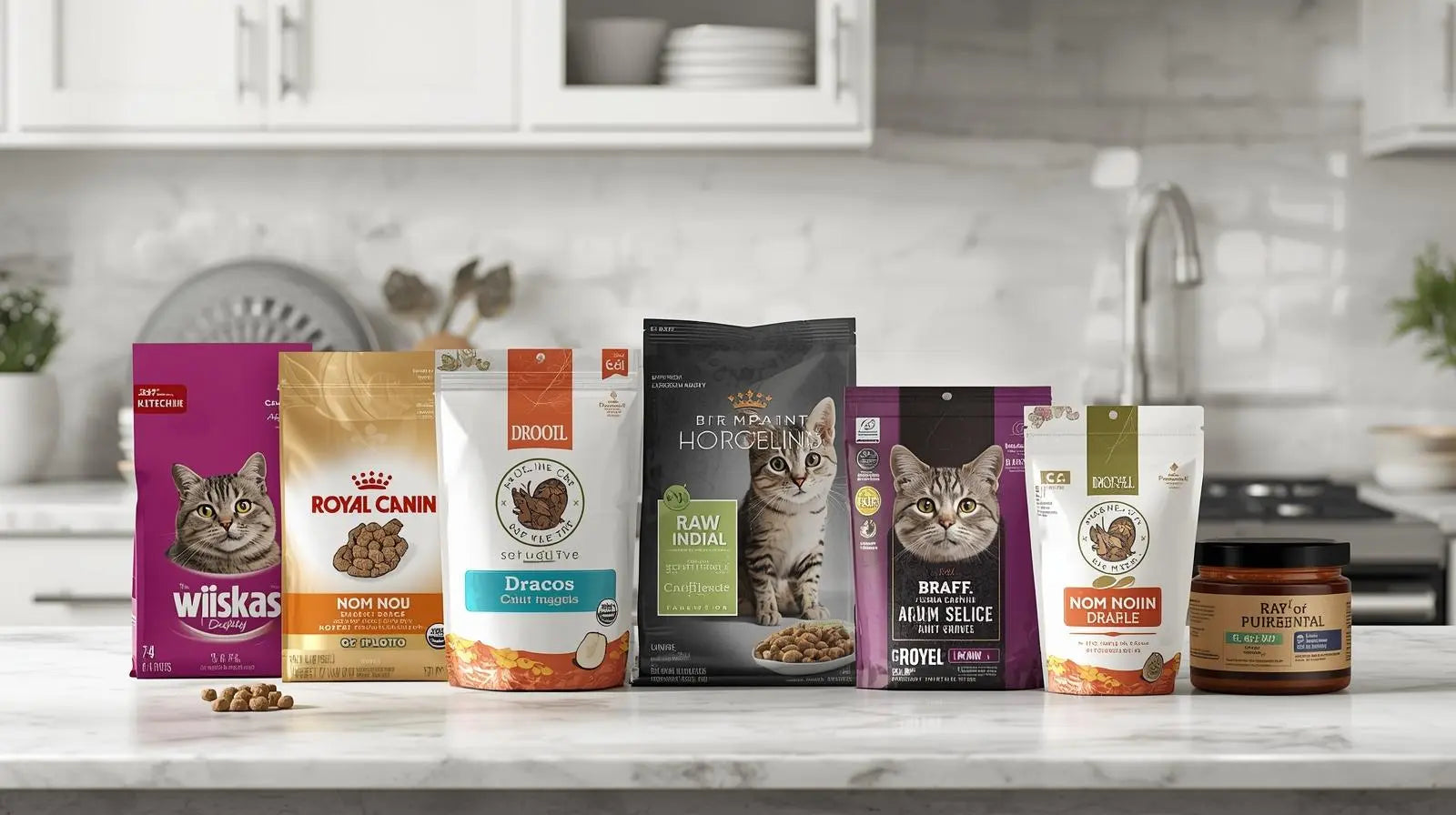
Processed pet food covers a wide spectrum. Kibble is extruded - cooked under high heat and
pressure, shaping ground ingredients into pellets. Canned food is wet-processed and pressure-
cooked. Semi-moist food uses humectants to prevent drying.
All three categories are shelf-stable, calorie-dense, and engineered to be palatable. They are
also, in technical terms, ultra-processed - meaning natural food matrices are broken down,
then reconstituted with additives, binders, and flavour enhancers.
What's Actually Inside Most Commercial Processed Pet Food?
Here's what the label rarely tells you clearly: "meat and bone meal" is rendered tissue - cooked at high temperatures, stripping moisture and nutrient integrity. Processed pet food often contains corn, wheat, or soy as primary carbohydrate sources. Dogs are not grain- intolerant by default - but cats, as obligate carnivores, have almost no evolutionary history with grains.
The Human Parallel: Ultra-Processed Foods Under the Microscope
The NOVA Classification and Why It Applies to Your Pet's Bowl
In 2009, researchers at the University of São Paulo developed the NOVA classification - a
system that groups foods by their degree of processing. Group 4 (ultra-processed) includes
packaged snacks, sugary cereals, and fast food for humans. Processed pet food would land
squarely in Group 4 under the same criteria.
Longitudinal human studies - including a large 2019 British Medical Journal cohort - found
that every 10% increase in ultra-processed food consumption was associated with a 12% higher
all-cause mortality risk. Veterinary nutrition researchers have begun asking the same questions
about pets.
The Palatability Engineering Problem
This is the uncomfortable truth: processed pet food is scientifically engineered to be irresistible. Fat is sprayed on kibble after extrusion. Flavour enhancers derived from rendered animal digest coat the pellets. Your pet isn't choosing kibble over fresh chicken because it tastes better - it's because the kibble is manufactured to trigger dopamine-level preference.

LEARN MORE ABOUT INDIA'S NO.1 FRESH CAT FOOD
Start FreshIngredient Labels: Can You Trust What's on the Bag?
The regulation of processed pet food labels in India falls under the Prevention of Food Adulteration Act and loosely under BIS standards - but enforcement is inconsistent. In the US, AAFCO sets nutritional guidelines, not ingredient quality standards. A product can be "AAFCO- compliant" and still be largely grain-filler.
The "By-Product" Trap in Processed Pet Food
"Poultry by-product meal" sounds acceptable. It legally includes beaks, feet, undeveloped eggs,
and intestines - anything but feathers. That is not inherently dangerous, but it represents a
very different nutrient profile than named muscle meat. Processed pet food brands exploit
vague nomenclature deliberately.
The 30% moisture difference between kibble and fresh food also distorts ingredient ranking. A
"chicken" kibble may contain more grain than chicken on a dry matter basis - yet "chicken"
appears first because it was weighed before processing removed its 70% water content.
Nutritional Science: What Research Actually Says
The science on processed pet food is genuinely mixed - and that's important to say clearly. Complete and balanced commercial diets have extended average pet lifespans significantly over the last 50 years. The formulation of essential amino acids, vitamins, and minerals in modern kibble is not arbitrary.
Where the Research Gaps Are
What studies rarely examine: the bioavailability of nutrients after high-heat extrusion. A vitamin
C supplement added back post-processing is not equivalent to vitamin C present in whole food.
The processed pet food industry adds vitamins back after cooking - a step that mirrors
human breakfast cereal manufacturing almost exactly.
Meanwhile, raw and fresh feeding studies are small-scale, often industry-funded on both sides,
and lack long-term mortality data. The honest scientific position is: we know chronic ultra-
processing is bad for humans, and we are still learning what it means for pets.

Fresh Pet Food: Is It Truly Better - or Just a Premium Trend?
Fresh pet food has a real problem: it is premium-priced in a country where the average household pet budget is modest. Brands like NomNom, The Farmer's Dog (US), and Indian players like Dogsee Chew and Heads Up For Tails are pushing lightly cooked, refrigerated diets - but at three to five times the cost of standard processed pet food.
Processed Pet Food's Legitimate Advantages
Shelf stability matters in India's climate. Power outages, travel, and storage constraints make kibble genuinely practical. A complete-and-balanced processed pet food is also less susceptible to preparation errors that can cause nutritional deficiencies in home-cooked diets. Calcium-to-phosphorus ratios, taurine levels for cats, and zinc requirements are easy to miss in unguided fresh feeding.
Fresh feeding done incorrectly is worse than quality processed food done consistently. The enemy is not kibble - it's misinformation combined with low-quality ingredients on either side of the debate.
The Hidden Costs Nobody Talks About
The upfront cost of processed pet food looks low. But veterinary bills for chronic conditions - kidney disease, pancreatitis, obesity-related joint disease - accumulate quietly. The Indian pet insurance market is nascent, meaning most families absorb these costs directly.
Chronic Disease and the Long-Term Cost of Processed Pet Food
This mirrors the human healthcare economics argument almost precisely: cheap processed
food is inexpensive to buy and expensive to treat. A 2021 PLOS ONE study found that dogs fed
fresh or raw diets showed significantly lower inflammatory biomarkers than kibble-fed controls
- though sample sizes remain limited.
Equally important is environmental cost.
The production of meat-heavy processed pet food -
especially premium grain-free formulas - carries a significant carbon footprint. Some estimates
suggest pets account for 25–30% of the environmental impact of meat production in developed
nations.
How to Make the Right Choice for Your Pet
There is no single answer - and anyone telling you otherwise is selling something. Choosing between fresh and processed pet food depends on your pet's age, breed, health history, your budget, storage capacity, and willingness to invest time in food prep or research.

A Practical Framework for Evaluating Processed Pet Food
Apply these filters before purchasing:
1. Named protein first: "Chicken" or "lamb" - not "poultry by-product meal"
2. No artificial preservatives: Avoid BHA, BHT, ethoxyquin
3. Species-appropriate carbs: Sweet potato or legumes over corn or wheat (especially for
cats)
4. AAFCO or BIS statement: "Complete and balanced" for life stage
5. Batch recall history: Check the brand's regulatory history before loyalty
FAQ'S - 8 Most Asked Questions About Processed Pet Food
Conclusion: Where This Debate Actually Lands
Processed pet food is not the enemy - thoughtless, low-quality processed pet food is. The
same argument applies to human diets. The parallel is not coincidental. It reflects a shared
industrial food system that prioritises shelf life, margin, and palatability over long-term biological
health.
The take-away is not "never buy kibble." It's "understand what you are buying, and why." Read
labels. Understand dry matter analysis. Supplement where possible. Transition gradually if you
choose to go fresh. And consult a veterinary nutritionist - not a pet food brand's customer
service line - for guidance on your specific animal.
The humans having this debate figured out one thing: awareness is the first intervention. The
same is now true for how we feed our pets.
Introduction: The Processed Pet Food vs Fresh Food Debate Nobody Warned You About
Processed pet food is the most convenient thing in your pantry - and also the most argued-
about. The same cultural war humans are fighting over ultra-processed snacks, refined sugars,
and fast food has quietly migrated to your pet's bowl. And yet, most pet parents never make the
connection.
Walk into any supermarket. One aisle is packed with highly packaged, shelf-stable kibble and
canned food. The other aisle - or the cold section - holds fresh or lightly cooked alternatives.
Sound familiar? That's exactly the layout of the human food aisle, too.
The debate isn't about convenience vs. inconvenience. It's about what chronic, daily exposure to ultra-processed ingredients does to a living body - whether that body has two legs or four.
Why This Debate Matters More Than You Think
Pet obesity rates in India and globally are rising. Chronic kidney disease, inflammatory bowel disease, and diabetes in pets have increased alongside the adoption of processed pet food. Whether that correlation is causal is contested - but the conversation is happening.
What Is Processed Pet Food, Really?
Processed Pet Food: A Definition That Goes Beyond the Bag
Processed pet food covers a wide spectrum. Kibble is extruded - cooked under high heat and
pressure, shaping ground ingredients into pellets. Canned food is wet-processed and pressure-
cooked. Semi-moist food uses humectants to prevent drying.
All three categories are shelf-stable, calorie-dense, and engineered to be palatable. They are
also, in technical terms, ultra-processed - meaning natural food matrices are broken down,
then reconstituted with additives, binders, and flavour enhancers.
What's Actually Inside Most Commercial Processed Pet Food?
Here's what the label rarely tells you clearly: "meat and bone meal" is rendered tissue - cooked at high temperatures, stripping moisture and nutrient integrity. Processed pet food often contains corn, wheat, or soy as primary carbohydrate sources. Dogs are not grain- intolerant by default - but cats, as obligate carnivores, have almost no evolutionary history with grains.
The Human Parallel: Ultra-Processed Foods Under the Microscope
The NOVA Classification and Why It Applies to Your Pet's Bowl
In 2009, researchers at the University of São Paulo developed the NOVA classification - a
system that groups foods by their degree of processing. Group 4 (ultra-processed) includes
packaged snacks, sugary cereals, and fast food for humans. Processed pet food would land
squarely in Group 4 under the same criteria.
Longitudinal human studies - including a large 2019 British Medical Journal cohort - found
that every 10% increase in ultra-processed food consumption was associated with a 12% higher
all-cause mortality risk. Veterinary nutrition researchers have begun asking the same questions
about pets.
The Palatability Engineering Problem
This is the uncomfortable truth: processed pet food is scientifically engineered to be irresistible. Fat is sprayed on kibble after extrusion. Flavour enhancers derived from rendered animal digest coat the pellets. Your pet isn't choosing kibble over fresh chicken because it tastes better - it's because the kibble is manufactured to trigger dopamine-level preference.
LEARN MORE ABOUT INDIA'S NO.1 FRESH CAT FOOD
Start FreshIngredient Labels: Can You Trust What's on the Bag?
The regulation of processed pet food labels in India falls under the Prevention of Food Adulteration Act and loosely under BIS standards - but enforcement is inconsistent. In the US, AAFCO sets nutritional guidelines, not ingredient quality standards. A product can be "AAFCO- compliant" and still be largely grain-filler.
The "By-Product" Trap in Processed Pet Food
"Poultry by-product meal" sounds acceptable. It legally includes beaks, feet, undeveloped eggs,
and intestines - anything but feathers. That is not inherently dangerous, but it represents a
very different nutrient profile than named muscle meat. Processed pet food brands exploit
vague nomenclature deliberately.
The 30% moisture difference between kibble and fresh food also distorts ingredient ranking. A
"chicken" kibble may contain more grain than chicken on a dry matter basis - yet "chicken"
appears first because it was weighed before processing removed its 70% water content.
Nutritional Science: What Research Actually Says about Processed Pet Food vs Fresh Food
The science on processed pet food is genuinely mixed - and that's important to say clearly. Complete and balanced commercial diets have extended average pet lifespans significantly over the last 50 years. The formulation of essential amino acids, vitamins, and minerals in modern kibble is not arbitrary.
Where the Research Gaps Are
What studies rarely examine: the bioavailability of nutrients after high-heat extrusion. A vitamin
C supplement added back post-processing is not equivalent to vitamin C present in whole food.
The processed pet food industry adds vitamins back after cooking - a step that mirrors
human breakfast cereal manufacturing almost exactly.
Meanwhile, raw and fresh feeding studies are small-scale, often industry-funded on both sides,
and lack long-term mortality data. The honest scientific position is: we know chronic ultra-
processing is bad for humans, and we are still learning what it means for pets.
Fresh Pet Food: Is It Truly Better - or Just a Premium Trend?
Fresh pet food has a real problem: it is premium-priced in a country where the average household pet budget is modest. Brands like NomNom, The Farmer's Dog (US), and Indian players like Dogsee Chew and Heads Up For Tails are pushing lightly cooked, refrigerated diets - but at three to five times the cost of standard processed pet food.
Processed Pet Food's Legitimate Advantages
Shelf stability matters in India's climate. Power outages, travel, and storage constraints make kibble genuinely practical. A complete-and-balanced processed pet food is also less susceptible to preparation errors that can cause nutritional deficiencies in home-cooked diets. Calcium-to-phosphorus ratios, taurine levels for cats, and zinc requirements are easy to miss in unguided fresh feeding.
Fresh feeding done incorrectly is worse than quality processed food done consistently. The enemy is not kibble - it's misinformation combined with low-quality ingredients on either side of the debate.
The Hidden Costs Nobody Talks About
The upfront cost of processed pet food looks low. But veterinary bills for chronic conditions - kidney disease, pancreatitis, obesity-related joint disease - accumulate quietly. The Indian pet insurance market is nascent, meaning most families absorb these costs directly.
Chronic Disease and the Long-Term Cost of Processed Pet Food
This mirrors the human healthcare economics argument almost precisely: cheap processed
food is inexpensive to buy and expensive to treat. A 2021 PLOS ONE study found that dogs fed
fresh or raw diets showed significantly lower inflammatory biomarkers than kibble-fed controls
- though sample sizes remain limited.
Equally important is environmental cost.
The production of meat-heavy processed pet food -
especially premium grain-free formulas - carries a significant carbon footprint. Some estimates
suggest pets account for 25–30% of the environmental impact of meat production in developed
nations.
How to Make the Right Choice for Your Pet
There is no single answer - and anyone telling you otherwise is selling something. Choosing between fresh and processed pet food depends on your pet's age, breed, health history, your budget, storage capacity, and willingness to invest time in food prep or research.
A Practical Framework for Evaluating Processed Pet Food
Apply these filters before purchasing:
1. Named protein first: "Chicken" or "lamb" - not "poultry by-product meal"
2. No artificial preservatives: Avoid BHA, BHT, ethoxyquin
3. Species-appropriate carbs: Sweet potato or legumes over corn or wheat (especially for
cats)
4. AAFCO or BIS statement: "Complete and balanced" for life stage
5. Batch recall history: Check the brand's regulatory history before loyalty
FAQ'S - 8 Most Asked Questions About Processed Pet Food
Conclusion: Where This Processed Pet Food vs Fresh Food Debate Actually Lands
Processed pet food is not the enemy - thoughtless, low-quality processed pet food is. The
same argument applies to human diets. The parallel is not coincidental. It reflects a shared
industrial food system that prioritises shelf life, margin, and palatability over long-term biological
health.
The take-away is not "never buy kibble." It's "understand what you are buying, and why." Read
labels. Understand dry matter analysis. Supplement where possible. Transition gradually if you
choose to go fresh. And consult a veterinary nutritionist - not a pet food brand's customer
service line - for guidance on your specific animal.
The humans having this debate figured out one thing: awareness is the first intervention. The
same is now true for how we feed our pets.