Raw for Maximum Nutrition
Made in our own Kitchens
Human grade products
9 June 2026
Evolutionary Diet of Cats: What Wild Felines Teach Us About Nutrition
Discover the evolutionary diet of cats and how wild felines reveal what domestic cats truly need to thrive. Learn the science behind obligate carnivore nutrition, raw food, and species-appropriate feeding.

9 June 2026
Evolutionary Diet of Cats: What Wild Felines Teach Us About Nutrition
Discover the evolutionary diet of cats and how wild felines reveal what domestic cats truly need to thrive. Learn the science behind obligate carnivore nutrition, raw food, and species-appropriate feeding.
Table of contents
• The Evolutionary Diet of Cats• The Macronutrient Truth• Essential Nutrients That Cannot Come From Plants• Transitioning Your Cat• Senior Cats, Kittens, and Special Dietary Needs• FAQ's• ConclusionThe evolutionary diet of cats is not a trend. It is a 10-million-year-old biological instruction set. Every domestic cat alive today carries the same metabolic wiring as its wild ancestors. Cats evolved as solitary ambush predators. Their prey - small rodents, birds, lizards - dictated everything: high protein, moderate fat, almost zero carbohydrates.
The Biology Behind the Evolutionary Diet of Cats
Evolutionary Diet of Cats: Obligate Carnivore Status Explained
Cats are obligate carnivores. This is not a preference - it is a physiological classification. Their bodies
cannot synthesize certain essential nutrients from plant sources.
Taurine, arachidonic acid, vitamin A (retinol), and vitamin D3 must come from animal tissue. Without
them, cats develop heart disease, blindness, and immune failure.
Dogs can convert beta-carotene to vitamin A. Cats cannot. This single metabolic difference explains why
a plant-heavy diet is actively dangerous for felines.
Evolutionary Diet of Cats: How Their Digestive System Differs
A cat's digestive tract is short - roughly three times its body length. A dog's is six. This shorter gut is
optimised for rapid digestion of dense animal protein, not slow fermentation of plant fibre.
Cats also lack the enzyme amylase in their saliva. Humans and dogs use amylase to begin breaking down
starches in the mouth. Cats skip this step entirely - because in their evolutionary diet, starch was
essentially absent.
Their liver enzymes run at a permanently elevated rate, processing protein continuously. This means
cats cannot down-regulate protein catabolism, even when protein intake drops. They will consume their
own muscle mass before switching fuels.

What Wild Cats Actually Eat: The Macronutrient Truth
Studies of wild felid prey - including African wildcats, the direct ancestor of domestic cats -
consistently show the same macronutrient profile: roughly 50–60% protein, 30–40% fat, and under 5%
carbohydrate on a dry-matter basis.
This ratio is not an accident. It is the output of millions of years of co-evolution between predator
metabolism and prey availability.
Most commercial dry cat foods flip this ratio. Many contain 30–50% carbohydrate, sourced from corn,
wheat, or potato. The evolutionary diet of cats contains essentially none of these.
Evolutionary Diet of Cats: Moisture - The Silent Nutrient
Wild prey is approximately 70–75% water. A mouse is, nutritionally speaking, a protein-and-fat capsule
wrapped in water.
Cats evolved to obtain nearly all hydration from food. Their thirst drive is weak compared to dogs and
humans.
This is why cats fed dry kibble chronically under-drink - and why kidney disease is the leading
cause of death in domestic cats.
Moisture content is not a luxury feature. In the evolutionary diet of cats, it is foundational. Any feeding
plan that ignores moisture is ignoring half the equation.
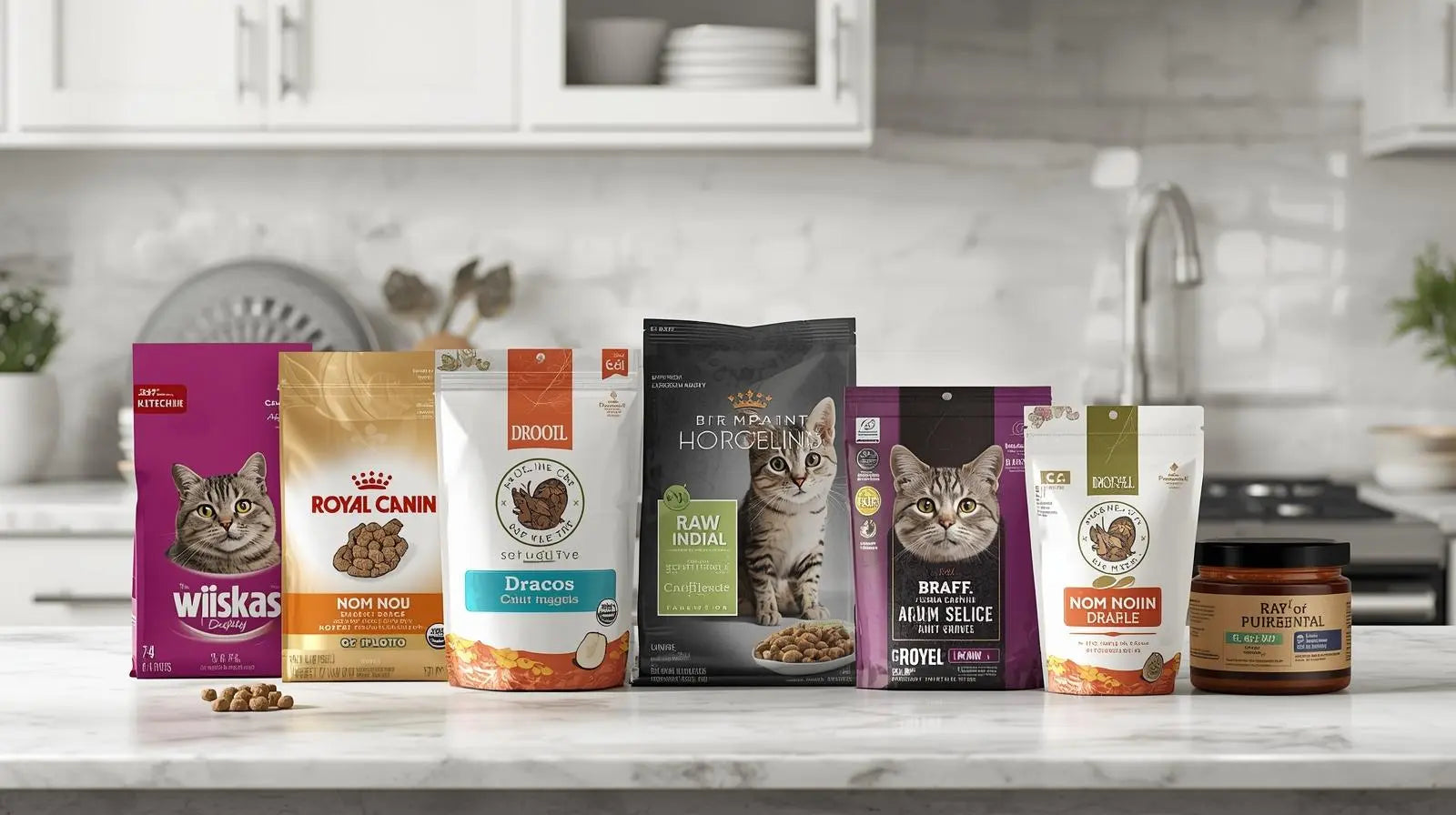
Evolutionary Diet of Cats: The Problem With Commercial Kibble
Kibble was not invented for cats. It was invented for convenience and shelf stability. The extrusion
process that creates dry food requires starch as a binder - a macronutrient that plays no role in the
evolutionary diet of cats.
High-heat processing also destroys heat-sensitive amino acids, including taurine. Manufacturers add
synthetic taurine back in. This is metabolic patch-work, not nutrition.
Furthermore, the moisture content of kibble sits at 7–10%. Feed a cat exclusively on this, and you are
running their kidneys at a permanent deficit. Transition away slowly, but transition.

Evolutionary Diet of Cats: Carbohydrates and the Diabetes Connection
Feline diabetes has increased dramatically in the past 30 years. This timeline maps directly onto the rise
of high-carbohydrate dry food as the dietary default.
Cats lack the hepatic glucokinase enzyme that humans and dogs use to regulate blood glucose after a
high-carb meal.
Their bodies are simply not built to process repeated glucose spikes.
The evolutionary diet of cats contains so few carbohydrates that the relevant enzyme never needed to
evolve. Feeding carbohydrate-dense food is, metabolically, an experiment the cat never signed up for.
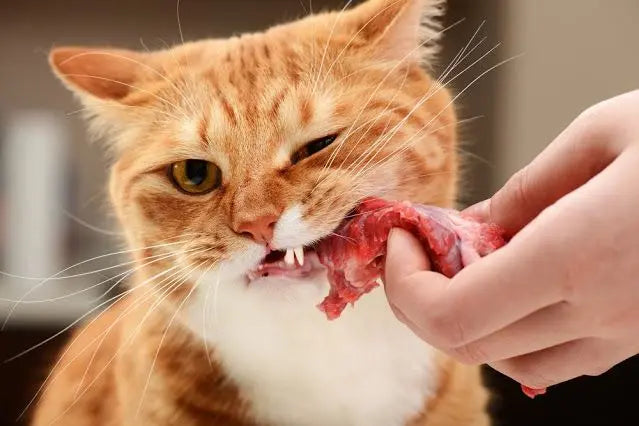
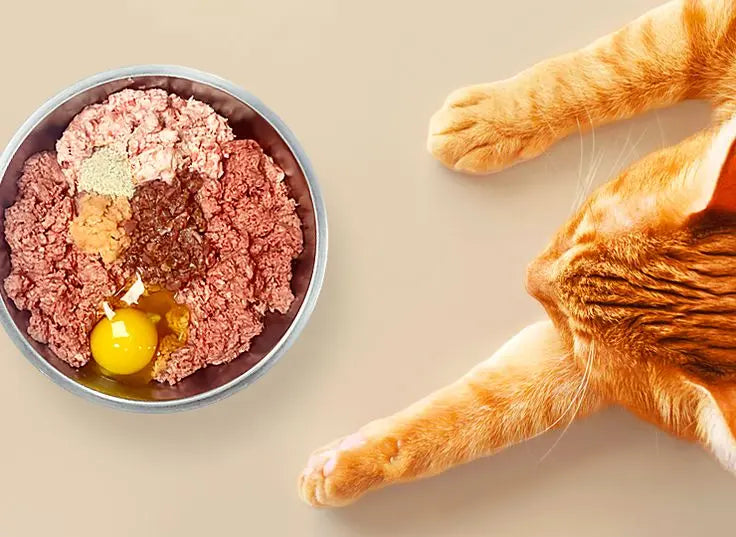
Evolutionary Diet of Cats: Raw Food Feeding - What the Evidence Shows
Raw feeding attempts to replicate the macronutrient and moisture profile of wild prey. When done
correctly, it is the closest practical approximation of the evolutionary diet of cats.
Clinical observations from veterinary practices that support raw feeding report improved coat condition,
reduced dental disease, smaller and less odorous stools, and more stable body weight.
These are not
anecdotal vanities - they are markers of metabolic efficiency.
The risks are real: bacterial contamination, nutritional imbalance, and bone hazards.
These risks are
manageable with proper sourcing and formulation. They are not an argument against raw feeding -
they are an argument for doing it correctly.
Evolutionary Diet of Cats: Freeze-Dried and Dehydrated Options
For owners who cannot manage raw feeding logistics, freeze-dried and dehydrated foods offer a
compromise. They preserve much of the nutritional profile of raw food while eliminating most bacterial
risk.
Look for products where meat is the first ingredient, carbohydrate content is under 10%, and taurine is
listed. The evolutionary diet of cats demands animal-first formulations - in every format.
Essential Nutrients That Cannot Come From Plants
Taurine is the most well-known. Deficiency causes dilated cardiomyopathy and retinal degeneration -
both irreversible if caught late. All animal-sourced proteins contain taurine. No plant source does.
Arachidonic acid (AA) is an omega-6 fatty acid essential for inflammation regulation, reproduction, and
skin health.
Cats cannot convert linoleic acid to AA the way humans can. It must come directly from
animal fat.
Niacin is synthesised from tryptophan in most mammals. In cats, this pathway is almost entirely absent.
They need preformed niacin from meat. The evolutionary diet of cats has always delivered it this way.
What About Supplements?
Supplements can correct deficiencies in home-prepared diets, but they cannot substitute for a species-
appropriate food base. A taurine supplement added to a high-carb kibble does not make that kibble
appropriate.
Omega-3 fatty acids (EPA/DHA from fish oil) are genuinely useful additions, especially for cats on
processed diets. Cats cannot efficiently convert ALA from flaxseed to EPA/DHA. Animal-sourced omega-
3 only.
Probiotics may support gut health in cats transitioning from kibble to raw. The microbiome shifts
significantly during dietary change - a quality feline probiotic can ease the process.

LEARN MORE ABOUT INDIA'S NO.1 FRESH CAT FOOD
Start FreshTransitioning Your Cat to a Species-Appropriate Diet
Most cats raised on dry kibble will resist dietary change. This is not stubbornness - it is food imprinting.
Cats learn what is safe to eat in kittenhood, and novel foods trigger suspicion.
Transition gradually.
Introduce the new food alongside the existing diet. Increase the proportion over
two to four weeks. Warm the new food slightly to enhance aroma - smell drives feline appetite more
than taste.
If your cat refuses entirely, try topping the new food with a small amount of their favourite kibble or a
sprinkle of nutritional yeast. The goal is to mimic the evolutionary diet of cats without triggering a
hunger strike.
Feeding Frequency and Portion Control
Wild cats eat multiple small meals daily - the size of a mouse, roughly 30–35 calories, consumed 8–10
times per day. Free-feeding dry food mimics this frequency but not the quality.
For domestic cats, two to three measured meals per day is a practical compromise. Scheduled feeding
also allows you to monitor intake - an early warning system for illness.
Obesity is an epidemic in domestic cats. It is almost entirely a consequence of calorie-dense,
carbohydrate-heavy kibble combined with sedentary indoor life. The evolutionary diet of cats was built
on caloric scarcity and physical effort.
 NATURE HAS ALREADY GIVEN THE RECIPE. WE HAVE ONLY IMPLEMENTED IT
Senior Cats, Kittens, and Special Dietary Needs
Kittens have higher protein and caloric demands than adults. Growth requires dense animal nutrition. A
kitten fed low-protein food will develop slower, with compromised muscle mass and immune function.
Senior cats often experience reduced kidney function.
The outdated advice was to restrict protein in
senior cats. Current veterinary consensus disagrees: healthy senior cats need maintained or increased
protein, not less, to prevent muscle wasting.
Cats with confirmed kidney disease require managed phosphorus intake - but this means selecting low-
phosphorus animal proteins, not eliminating protein. The evolutionary diet of cats adapts; it does not
abandon its core principle.
Cats With Medical Conditions
Feline hyperthyroidism, inflammatory bowel disease (IBD), and urinary tract disease all respond to
dietary management. In each case, moving closer to the evolutionary diet of cats - higher moisture,
higher protein, lower carbohydrate - is the starting point.
IBD in particular shows significant improvement with novel protein or raw feeding in many clinical cases.
The chronic intestinal inflammation common in domestic cats may partly reflect the immune system's
response to biologically inappropriate ingredients.
Work with a veterinarian who is informed about feline nutritional science - not all are. Seek out a
board-certified veterinary nutritionist if you are managing a complex case.

Frequently Asked Questions
Conclusion: The Evolutionary Diet of Cats Is Not a Preference - It Is a Requirement
The evolutionary diet of cats is not a lifestyle choice you make for your pet. It is the biological reality
your pet was born with. Millions of years of predatory evolution produced a metabolic system with no
appetite for grain, no enzyme for starch, and no tolerance for chronic dehydration.
Domestic life has changed where cats sleep. It has not changed what they need to eat. Every degree to
which your cat's diet diverges from its evolutionary blueprint is a degree of metabolic stress
accumulated over years.
The good news: correction is possible at any stage. Switch to higher moisture. Prioritise animal protein.
Eliminate unnecessary carbohydrate. These are not complex interventions - they are returns to the
default.
Your cat cannot advocate for itself. It cannot read a label or reject a formula it knows will eventually
damage its kidneys. That responsibility sits with you - and understanding the evolutionary diet of cats
is where it begins.
The evolutionary diet of cats is not a trend. It is a 10-million-year-old biological instruction set. Every domestic cat alive today carries the same metabolic wiring as its wild ancestors. Cats evolved as solitary ambush predators. Their prey - small rodents, birds, lizards - dictated everything: high protein, moderate fat, almost zero carbohydrates.
The Biology Behind the Evolutionary Diet of Cats
Evolutionary Diet of Cats: Obligate Carnivore Status Explained
Cats are obligate carnivores. This is not a preference - it is a physiological classification. Their bodies
cannot synthesize certain essential nutrients from plant sources.
Taurine, arachidonic acid, vitamin A (retinol), and vitamin D3 must come from animal tissue. Without
them, cats develop heart disease, blindness, and immune failure.
Dogs can convert beta-carotene to vitamin A. Cats cannot. This single metabolic difference explains why
a plant-heavy diet is actively dangerous for felines.
Evolutionary Diet of Cats: How Their Digestive System Differs
A cat's digestive tract is short - roughly three times its body length. A dog's is six. This shorter gut is
optimised for rapid digestion of dense animal protein, not slow fermentation of plant fibre.
Cats also lack the enzyme amylase in their saliva. Humans and dogs use amylase to begin breaking down
starches in the mouth. Cats skip this step entirely - because in their evolutionary diet, starch was
essentially absent.
Their liver enzymes run at a permanently elevated rate, processing protein continuously. This means
cats cannot down-regulate protein catabolism, even when protein intake drops. They will consume their
own muscle mass before switching fuels.
What Wild Cats Actually Eat: The Macronutrient Truth
Studies of wild felid prey - including African wildcats, the direct ancestor of domestic cats -
consistently show the same macronutrient profile: roughly 50–60% protein, 30–40% fat, and under 5%
carbohydrate on a dry-matter basis.
This ratio is not an accident. It is the output of millions of years of co-evolution between predator
metabolism and prey availability.
Most commercial dry cat foods flip this ratio. Many contain 30–50% carbohydrate, sourced from corn,
wheat, or potato. The evolutionary diet of cats contains essentially none of these.
Evolutionary Diet of Cats: Moisture - The Silent Nutrient
Wild prey is approximately 70–75% water. A mouse is, nutritionally speaking, a protein-and-fat capsule
wrapped in water.
Cats evolved to obtain nearly all hydration from food. Their thirst drive is weak compared to dogs and
humans.
This is why cats fed dry kibble chronically under-drink - and why kidney disease is the leading
cause of death in domestic cats.
Moisture content is not a luxury feature. In the evolutionary diet of cats, it is foundational. Any feeding
plan that ignores moisture is ignoring half the equation.
Evolutionary Diet of Cats: The Problem With Commercial Kibble
Kibble was not invented for cats. It was invented for convenience and shelf stability. The extrusion
process that creates dry food requires starch as a binder - a macronutrient that plays no role in the
evolutionary diet of cats.
High-heat processing also destroys heat-sensitive amino acids, including taurine. Manufacturers add
synthetic taurine back in. This is metabolic patch-work, not nutrition.
Furthermore, the moisture content of kibble sits at 7–10%. Feed a cat exclusively on this, and you are
running their kidneys at a permanent deficit. Transition away slowly, but transition.
Evolutionary Diet of Cats: Carbohydrates and the Diabetes Connection
Feline diabetes has increased dramatically in the past 30 years. This timeline maps directly onto the rise
of high-carbohydrate dry food as the dietary default.
Cats lack the hepatic glucokinase enzyme that humans and dogs use to regulate blood glucose after a
high-carb meal.
Their bodies are simply not built to process repeated glucose spikes.
The evolutionary diet of cats contains so few carbohydrates that the relevant enzyme never needed to
evolve. Feeding carbohydrate-dense food is, metabolically, an experiment the cat never signed up for.
Evolutionary Diet of Cats: Raw Food Feeding - What the Evidence Shows
Raw feeding attempts to replicate the macronutrient and moisture profile of wild prey. When done
correctly, it is the closest practical approximation of the evolutionary diet of cats.
Clinical observations from veterinary practices that support raw feeding report improved coat condition,
reduced dental disease, smaller and less odorous stools, and more stable body weight.
These are not
anecdotal vanities - they are markers of metabolic efficiency.
The risks are real: bacterial contamination, nutritional imbalance, and bone hazards.
These risks are
manageable with proper sourcing and formulation. They are not an argument against raw feeding -
they are an argument for doing it correctly.
Evolutionary Diet of Cats: Freeze-Dried and Dehydrated Options
For owners who cannot manage raw feeding logistics, freeze-dried and dehydrated foods offer a
compromise. They preserve much of the nutritional profile of raw food while eliminating most bacterial
risk.
Look for products where meat is the first ingredient, carbohydrate content is under 10%, and taurine is
listed. The evolutionary diet of cats demands animal-first formulations - in every format.
Essential Nutrients That Cannot Come From Plants
Taurine is the most well-known. Deficiency causes dilated cardiomyopathy and retinal degeneration -
both irreversible if caught late. All animal-sourced proteins contain taurine. No plant source does.
Arachidonic acid (AA) is an omega-6 fatty acid essential for inflammation regulation, reproduction, and
skin health.
Cats cannot convert linoleic acid to AA the way humans can. It must come directly from
animal fat.
Niacin is synthesised from tryptophan in most mammals. In cats, this pathway is almost entirely absent.
They need preformed niacin from meat. The evolutionary diet of cats has always delivered it this way.
What About Supplements?
Supplements can correct deficiencies in home-prepared diets, but they cannot substitute for a species-
appropriate food base. A taurine supplement added to a high-carb kibble does not make that kibble
appropriate.
Omega-3 fatty acids (EPA/DHA from fish oil) are genuinely useful additions, especially for cats on
processed diets. Cats cannot efficiently convert ALA from flaxseed to EPA/DHA. Animal-sourced omega-
3 only.
Probiotics may support gut health in cats transitioning from kibble to raw. The microbiome shifts
significantly during dietary change - a quality feline probiotic can ease the process.
LEARN MORE ABOUT INDIA'S NO.1 FRESH CAT FOOD
Start FreshTransitioning Your Cat to a Species-Appropriate Diet
Most cats raised on dry kibble will resist dietary change. This is not stubbornness - it is food imprinting.
Cats learn what is safe to eat in kittenhood, and novel foods trigger suspicion.
Transition gradually.
Introduce the new food alongside the existing diet. Increase the proportion over
two to four weeks. Warm the new food slightly to enhance aroma - smell drives feline appetite more
than taste.
If your cat refuses entirely, try topping the new food with a small amount of their favourite kibble or a
sprinkle of nutritional yeast. The goal is to mimic the evolutionary diet of cats without triggering a
hunger strike.
Feeding Frequency and Portion Control
Wild cats eat multiple small meals daily - the size of a mouse, roughly 30–35 calories, consumed 8–10
times per day. Free-feeding dry food mimics this frequency but not the quality.
For domestic cats, two to three measured meals per day is a practical compromise. Scheduled feeding
also allows you to monitor intake - an early warning system for illness.
Obesity is an epidemic in domestic cats. It is almost entirely a consequence of calorie-dense,
carbohydrate-heavy kibble combined with sedentary indoor life. The evolutionary diet of cats was built
on caloric scarcity and physical effort.
NATURE HAS ALREADY GIVEN THE RECIPE. WE HAVE ONLY IMPLEMENTED ITSenior Cats, Kittens, and Special Dietary Needs
Kittens have higher protein and caloric demands than adults. Growth requires dense animal nutrition. A
kitten fed low-protein food will develop slower, with compromised muscle mass and immune function.
Senior cats often experience reduced kidney function.
The outdated advice was to restrict protein in
senior cats. Current veterinary consensus disagrees: healthy senior cats need maintained or increased
protein, not less, to prevent muscle wasting.
Cats with confirmed kidney disease require managed phosphorus intake - but this means selecting low-
phosphorus animal proteins, not eliminating protein. The evolutionary diet of cats adapts; it does not
abandon its core principle.
Cats With Medical Conditions
Feline hyperthyroidism, inflammatory bowel disease (IBD), and urinary tract disease all respond to
dietary management. In each case, moving closer to the evolutionary diet of cats - higher moisture,
higher protein, lower carbohydrate - is the starting point.
IBD in particular shows significant improvement with novel protein or raw feeding in many clinical cases.
The chronic intestinal inflammation common in domestic cats may partly reflect the immune system's
response to biologically inappropriate ingredients.
Work with a veterinarian who is informed about feline nutritional science - not all are. Seek out a
board-certified veterinary nutritionist if you are managing a complex case.
Frequently Asked Questions
Conclusion: The Evolutionary Diet of Cats Is Not a Preference - It Is a Requirement
The evolutionary diet of cats is not a lifestyle choice you make for your pet. It is the biological reality
your pet was born with. Millions of years of predatory evolution produced a metabolic system with no
appetite for grain, no enzyme for starch, and no tolerance for chronic dehydration.
Domestic life has changed where cats sleep. It has not changed what they need to eat. Every degree to
which your cat's diet diverges from its evolutionary blueprint is a degree of metabolic stress
accumulated over years.
The good news: correction is possible at any stage. Switch to higher moisture. Prioritise animal protein.
Eliminate unnecessary carbohydrate. These are not complex interventions - they are returns to the
default.
Your cat cannot advocate for itself. It cannot read a label or reject a formula it knows will eventually
damage its kidneys. That responsibility sits with you - and understanding the evolutionary diet of cats
is where it begins.