Raw for Maximum Nutrition
Made in our own Kitchens
Human grade products
9 June 2026
Cats Naturally Need Moisture-Rich Diets: The Complete Science-Backed Guide
Discover why cats naturally need moisture-rich diets to thrive. Learn about feline hydration science, health risks of dry food, and the best wet food choices for your cat.

9 June 2026
Cats Naturally Need Moisture-Rich Diets: The Complete Science-Backed Guide
Discover why cats naturally need moisture-rich diets to thrive. Learn about feline hydration science, health risks of dry food, and the best wet food choices for your cat.
Table of contents
• The Desert Ancestry of the Domestic Cat• What "Moisture-Rich" Actually Means in Feline Nutrition• The Hidden Dangers of Chronic Low-Level Dehydration• Dry Food vs. Wet Food: A Direct Comparison• Life-Stage Considerations: Kittens, Adults, and Seniors• Reading Labels: How to Choose the Right Wet Food• FAQ's• ConclusionTable of contents
• The Desert Ancestry of the Domestic Cat• What "Moisture-Rich" Actually Means in Feline Nutrition• The Hidden Dangers of Chronic Low-Level Dehydration• Dry Food vs. Wet Food: A Direct Comparison• Life-Stage Considerations: Kittens, Adults, and Seniors• Reading Labels: How to Choose the Right Food• FAQ's• ConclusionThe Desert Ancestry of the Domestic Cat and why Cats Naturally Need Moisture-Rich Diets
Cats Naturally Need Moisture-Rich Diets Because of Evolutionary Biology
Cats naturally need moisture-rich diets, and the reason starts thousands of years ago. The
domestic cat (Felis catus) descends directly from Felis silvestris lybica - the African wildcat.
This ancestor lived in arid, semi-desert environments where standing water was scarce and
unreliable.
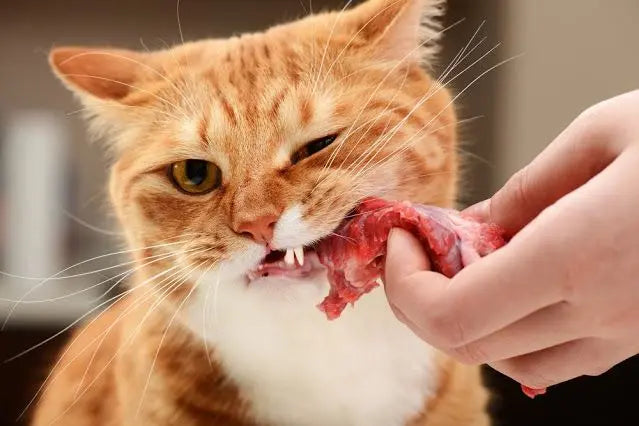
Over millennia, wildcats adapted by extracting the majority of their hydration from their prey. A
freshly caught mouse, bird, or lizard contains approximately 65–75% water by weight. This built-
in moisture delivery system meant wildcats rarely needed to seek out a water source separately.
How Cats Naturally Need Moisture-Rich Diets Shaped Their Thirst Drive
Here is the critical problem for modern pet cats: evolution blunted their thirst sensation. Unlike dogs or humans, cats do not experience strong thirst signals until they are already meaningfully dehydrated. Research shows cats on dry-food-only diets drink water voluntarily but still consume 50% less total daily moisture than cats eating wet food.
Key Insight: A low thirst drive was an advantage in the wild - prey provided water automatically. In a home fed dry kibble, that same blunted thirst drive becomes a serious health liability.

What "Moisture-Rich" Actually Means in Feline Nutrition
Cats Naturally Need Moisture-Rich Diets: Defining the Hydration Threshold
The term "moisture-rich" has a precise nutritional meaning. Wet cat food typically contains
70–80% moisture content. Dry kibble sits at just 6–10% moisture. The difference is not trivial -
it is the difference between a diet that supports feline kidney function and one that places it
under constant, low-grade strain.
Veterinary nutritionists generally recommend cats consume 3.5–4.5 ounces of water per 5
pounds of body weight per day. A 10-pound cat eating only dry kibble and drinking from a bowl
rarely meets this threshold naturally.
Why Cats Naturally Need Moisture-Rich Diets: The Protein-Water Connection
Cats are obligate carnivores. Their metabolism is built to process animal protein at a much
higher rate than dogs or humans. Protein metabolism generates metabolic waste - specifically
nitrogenous compounds - that the kidneys must flush out. Adequate hydration is not optional
for this process; it is the mechanism that makes it work.
Without sufficient moisture, waste products concentrate in the urinary tract. This sets the stage
for crystal formation, urinary blockages, and early-onset kidney disease - three of the most
common serious health issues in domestic cats.
How Cats Process Water Differently Than Other Mammals
Cat kidneys are extraordinarily efficient at concentrating urine. This was another desert survival
adaptation - it allowed wildcats to conserve water when prey was scarce. Cats can produce
urine that is nearly twice as concentrated as dog urine.
However, efficiency has a cost. Highly concentrated urine raises the risk of mineral
crystallization in the urinary tract. Struvite and calcium oxalate crystals form more readily when
urine is consistently concentrated. The straightforward fix is dilution through adequate dietary
moisture intake.
Cats Naturally Need Moisture-Rich Diets to Protect Kidney Function
The feline kidney begins losing nephrons - the functional filtering units - from roughly age seven onward. Unlike many other organs, kidney tissue does not regenerate. Chronic dehydration accelerates nephron loss. Studies in veterinary nephrology consistently show that cats on moisture-rich diets develop chronic kidney disease (CKD) at lower rates and later in life than cats on dry-only diets.
Transition Tip: If your cat currently eats only dry food, transitioning to wet food gradually over 2–3 weeks reduces digestive upset. Mix increasing ratios of wet to dry over that period.

The Hidden Dangers of Chronic Low-Level Dehydration
Signs Your Cat May Be Chronically Under-Hydrated
Chronic dehydration in cats is often invisible to owners until a veterinary crisis occurs. The
warning signs are subtle. Cats naturally need moisture-rich diets - when they don't get them,
the symptoms accumulate slowly.
Watch for these indicators:
• Reduced or unusually dark-colored urine
• Dry, tacky gums (test: press gum, color should return in under 2 seconds)
• Skin turgor loss - skin pulled gently at the scruff takes more than 1–2 seconds to flatten
• Lethargy, reduced play drive, or increased sleeping
• Constipation or consistently hard stools
Why Cats Naturally Need Moisture-Rich Diets to Prevent Urinary Disease
Feline Lower Urinary Tract Disease (FLUTD) is an umbrella term covering cystitis, urethral
plugs, bladder stones, and infections. It is one of the top five reasons cats visit veterinary
emergency rooms. Diet-induced dehydration is a primary risk factor in every category within
FLUTD.
Male cats face the highest risk. Their urethras are narrower than females, meaning urethral
blockages - which can become fatal within 24–72 hours - occur almost exclusively in males.
Adequate dietary moisture directly reduces the mineral concentration that leads to obstruction.
LEARN MORE ABOUT INDIA'S NO.1 FRESH CAT FOOD
Start FreshDry Food vs. Wet Food: A Direct Comparison
Cats Naturally Need Moisture-Rich Diets: The Caloric Density Factor
Dry food has a higher caloric density per gram than wet food. This is frequently cited as an
advantage - it seems economical. But the caloric density comes at a cost: low moisture
content forces cats to compensate by drinking more water, which they are evolutionarily poorly
equipped to do voluntarily.
Furthermore, many dry kibbles are high in carbohydrates - sometimes 30–50% of caloric
content. Cats have minimal amylase activity in saliva and a liver that does not efficiently
regulate blood glucose through carbohydrate metabolism. High-carb dry diets are increasingly
linked to feline obesity and type-2 diabetes.
Dry Food vs. Wet Food: Key Metrics
 NATURE HAS ALREADY GIVEN THE RECIPE. WE HAVE ONLY IMPLEMENTED IT
Cats Naturally Need Moisture-Rich Diets: Raw and Fresh Food Alternatives
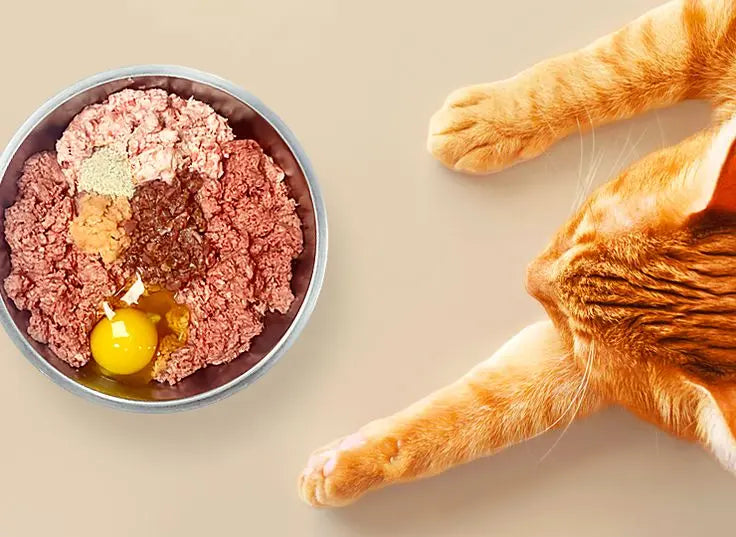
Raw food diets and lightly cooked fresh food also deliver moisture comparable to wet canned
food, typically 65–75% water content. They also tend to be lower in carbohydrates and higher in
bioavailable animal protein. However, raw diets require careful handling to minimize bacterial
contamination risk - Salmonella and Listeria pose real hazards to cats with compromised
immune systems and to human household members.
If considering a raw diet, consult a board-certified veterinary nutritionist to ensure complete and
balanced nutrition. Unbalanced raw diets can cause severe calcium-phosphorus imbalances,
leading to metabolic bone disease in younger cats.
Practical Ways to Add Moisture to Your Cat's Diet
Transitioning From Dry to Wet Food Successfully
Cats naturally need moisture-rich diets, but many cats raised on dry kibble resist wet food
initially. The transition requires patience and strategy. Start by placing a small amount of wet
food alongside the regular dry food - not mixed in, as many cats reject the entire bowl if
textures combine unexpectedly.
Over two weeks, gradually shift the ratio toward wet food. Most cats accept the change fully by
weeks three or four. Warming wet food slightly to just below body temperature (around 38°C /
100°F) releases aromas that increase palatability dramatically for reluctant cats.

How Cats Naturally Need Moisture-Rich Diets Informs Water Bowl Strategy
Hydration is not only about food. Water bowl placement, type, and freshness all impact
voluntary water intake. Cats instinctively avoid water sources near their food bowl - in the wild,
prey carcasses contaminate nearby water. Place water bowls in two or three separate locations
away from the food station.
• Use wide, shallow bowls - cats dislike whisker fatigue from deep narrow containers
• Replace water daily; cats detect stale water and reduce intake accordingly
• Consider a running water fountain - moving water attracts cats more reliably than still
bowls
• Add a small amount of low-sodium chicken or fish broth to water to encourage drinking
• Glass or ceramic bowls are preferable to plastic - plastic harbors biofilm that cats can
taste
Life-Stage Considerations: Kittens, Adults, and Seniors
Kittens have a higher metabolic rate and faster cell turnover than adult cats. They are
particularly vulnerable to dehydration because their kidneys are not yet fully mature. Cats
naturally need moisture-rich diets at every life stage, but the need is especially acute in the first
year.
Kitten-specific wet food formulas are calorie-dense and moisture-rich simultaneously, meeting
the dual demands of rapid growth and hydration. Kittens fed adequate wet food from weaning
also tend to be more accepting of varied food textures as adults.
Cats Naturally Need Moisture-Rich Diets Even More As They Age
Senior cats - generally defined as age ten and above - face an accumulation of hydration-
related risks. Kidney function naturally declines with age. Cognitive changes can cause seniors
to forget to drink or become less motivated to seek water. Arthritis may make reaching a bowl
physically uncomfortable.
For senior cats, a purely wet food diet is not just preferable - many veterinary internists
consider it medically necessary. Cats with diagnosed CKD are almost universally placed on wet
food by their veterinarians, because the reduction in kidney workload is measurable and
clinically significant.
Reading Labels: How to Choose the Right Wet Food
What to Look for on a Wet Cat Food Label
Cats naturally need moisture-rich diets, but not all wet foods are equal. Label literacy matters.
The first ingredient should be a named animal protein - chicken, turkey, salmon, beef - not a
generic "meat by-product" or plant protein like corn gluten.
Look for foods labeled "complete and balanced" by AAFCO (Association of American Feed
Control Officials) standards for the relevant life stage. This designation means the food meets
minimum nutritional requirements. Avoid foods where the first three ingredients include corn,
wheat, or soy - these are carbohydrate fillers that undermine feline metabolic efficiency.

Cats Naturally Need Moisture-Rich Diets: Understanding Guaranteed Analysis
The guaranteed analysis panel on wet food shows minimum protein, minimum fat, maximum
fiber, and maximum moisture. For wet food, the moisture figure should read 75% or higher for
canned formats. Pouches and trays vary from 70–80%.
To compare wet and dry food on a true nutritional level, calculate the dry matter basis (DMB) for
each. Remove moisture from the equation to see what you are actually paying for per unit of
nutrient. Most premium wet foods compare favorably to premium dry foods on a DMB basis -
the price gap is smaller than it appears.
Quick Label Check: Protein (first ingredient = named animal meat) + Moisture (75%+) + No corn/wheat/soy in top 3 = a solid starting point.
Frequently Asked Questions
Conclusion: Cats Naturally Need Moisture-Rich Diets - Act On It
Cats naturally need moisture-rich diets - this is not a trend, a preference, or a marketing angle.
It is a biological fact rooted in 10,000 years of evolutionary adaptation. The domestic cat's
blunted thirst drive, highly concentrated kidneys, obligate carnivore metabolism, and
susceptibility to urinary and renal disease all point in the same direction: moisture in food is not
supplementary; it is primary.
The shift from dry kibble to wet food - or a mixed feeding strategy - is one of the highest-
impact dietary changes an owner can make. The evidence connecting wet food to reduced
urinary disease, lower CKD rates, healthier weight, and better long-term kidney function is
substantial and consistent across veterinary literature.
Start the transition today. Your cat cannot tell you they are thirsty. The food you choose speaks
for both of you.