Raw for Maximum Nutrition

Made in our own Kitchens

Human grade products

Raw for Maximum Nutrition

Made in our own kitchens

Human grade products

15 March 2026

The BARF Diet: A Complete Raw Feeding Guide for Pet Parents in India

Everything you need to know to start feeding your dog the way nature intended - with an India- first lens.

BARF Diet

15 March 2026

The BARF Diet: A Complete Raw Feeding Guide for Pet Parents in India

Everything you need to know to start feeding your dog the way nature intended - with an India- first lens.

BARF Diet

The BARF Diet (Biologically Appropriate Raw Food) is a natural feeding approach designed to mimic what dogs would eat in the wild. It focuses on raw meat, bones, organs, and fresh ingredients to provide balanced nutrition. Many pet owners choose the BARF diet to support better digestion, healthier skin, and improved overall vitality in their dogs.

The BARF Diet

If you have recently found yourself down a rabbit hole of raw feeding videos and dog nutrition blogs, you are not alone. Across India, a growing number of pet parents are stepping away from processed kibble and asking a simple but powerful question: what did dogs actually evolve to eat?

The answer, according to many holistic veterinarians and canine nutritionists, is something called the BARF diet. Short for Biologically Appropriate Raw Food (sometimes also called Bones and Raw Food), the BARF approach centres on feeding dogs unprocessed, species- appropriate ingredients - think raw muscle meat, edible bones, organ meats, and a small portion of plant matter.

This guide is written specifically for Indian pet parents. While there is plenty of raw feeding advice online, very little of it addresses the realities of sourcing ingredients at an Indian butcher (khatik), navigating our climate, dealing with local breeds like the Indian Pariah Dog (Indie), or handling raw meat safely in a country where refrigeration habits vary. We will cover all of that here, along with the science, the practicalities, and honest answers to the questions Indian dog owners actually ask.

What Exactly Is the BARF Diet?

The BARF diet was popularised in the 1990s by Australian veterinarian Dr Ian Billinghurst. His central argument was straightforward: domesticated dogs share roughly 99.9% of their DNA with wolves, and wolves did not evolve eating extruded wheat pellets cooked at 200°C. They ate whole prey - and their digestive systems are optimised for exactly that.

A BARF diet tries to replicate this ancestral way of eating in a practical, home-kitchen-friendly format. It typically consists of:
• Raw muscle meat (the bulk of the diet)
• Raw edible bones (for calcium, phosphorus, and dental health)
• Raw organ meats / offal (some of the most nutrient-dense foods on the planet)
• Optional superfoods and seeds (for targeted nutritional support)
• A small amount of blended vegetables and fruit (for fibre, antioxidants, and phytonutrients)

What sets BARF apart from simply giving your dog leftover meat scraps is intention and ratio. A well-formulated BARF diet is carefully balanced to deliver all essential macronutrients, vitamins, and minerals in proportions that support long-term health.

BARF vs PMR: What Is the Difference?
You may also come across the term PMR, which stands for Prey Model Raw. While both approaches use raw, unprocessed ingredients, they differ in philosophy:

Feature

BARF

PMR (Prey Model Raw)

Plant matter included?

Yes (10-20%)

No (animal only)

Supplements used?

Sometimes

Rarely

Beginner-friendly?

Yes

More Advanced

For most Indian pet parents starting out, BARF is the more forgiving and nutritionally flexible choice.

BARF Diet

The Indian Context - Why This Guide Is Different

Most BARF guides are written for pet owners in the UK, USA, or Australia, where high-quality pre-made raw food is widely available, cold chains are reliable, and the dominant pet population is a Labrador or Golden Retriever. India is a different story, and that is not a disadvantage - it is actually an opportunity.

The Indian Pariah Dog Advantage
India is home to one of the world’s most genetically diverse and naturally resilient dog breeds: the Indian Pariah Dog (also called the Indie, INDog, or Desi Kuttha). These dogs evolved over thousands of years eating what people discarded - raw meat scraps, bones, entrails, and small prey. Their digestive systems are exceptionally well-adapted to a raw, varied diet. If you have an Indie or a mixed-breed dog with Pariah ancestry, you are starting with an animal that is arguably better suited to raw feeding than any Western pedigree breed.

Sourcing in India Is Actually Easier
In most Indian cities and towns, fresh raw meat is far more accessible than in the West. Local butchers (khatiks) slaughter fresh daily. Mutton, chicken, goat offal, buffalo meat, and fresh fish are available in most markets at prices that are often lower per kilogram than branded dog food. The infrastructure for BARF feeding - fresh, whole-animal sourcing - is right at your neighbourhood market.

Climate Considerations
India’s heat is a genuine challenge for raw feeding. In cities like Chennai, Nagpur, or Delhi in summer, raw meat left in a bowl for more than 20 minutes can become a bacterial hazard. This makes safe handling protocols - which we cover in detail in Section 5 - absolutely non- negotiable in the Indian context.

Vegetarian Households
A significant number of Indian households are vegetarian or have family members who are deeply uncomfortable handling raw meat. This is a real social and logistical challenge. We address practical workarounds in the sections below, including using gloves, dedicated cutting boards, and how to store and thaw meat safely without disrupting the household.

Two raw free-range duck legs with herbs, garlic, oil, and spices beside a www.barfindia.com Raw Dog Food - Duck Recipe - 4kgs pack, all arranged on a dark surface.
A single 500g sausage-shaped roll (17 cm x 6 cm) is shown on marble. Each Raw Dog Food - Duck Recipe - 4kgs box from www.barfindia.com contains 8 rolls of this single-protein formula.
An informational flyer from www.barfindia.com highlights their Raw Dog Food - Duck Recipe (4kgs), featuring ethical, sustainable ingredients like free-range duck and transparent production, to educate consumers on making informed pet nutrition choices.
Raw Dog Food - Duck Recipe (4kgs) by www.barfindia.com shown as fresh duck pieces on a wooden board with rosemary, emphasizing the quality of this single-protein raw dog food, isolated on a white background.
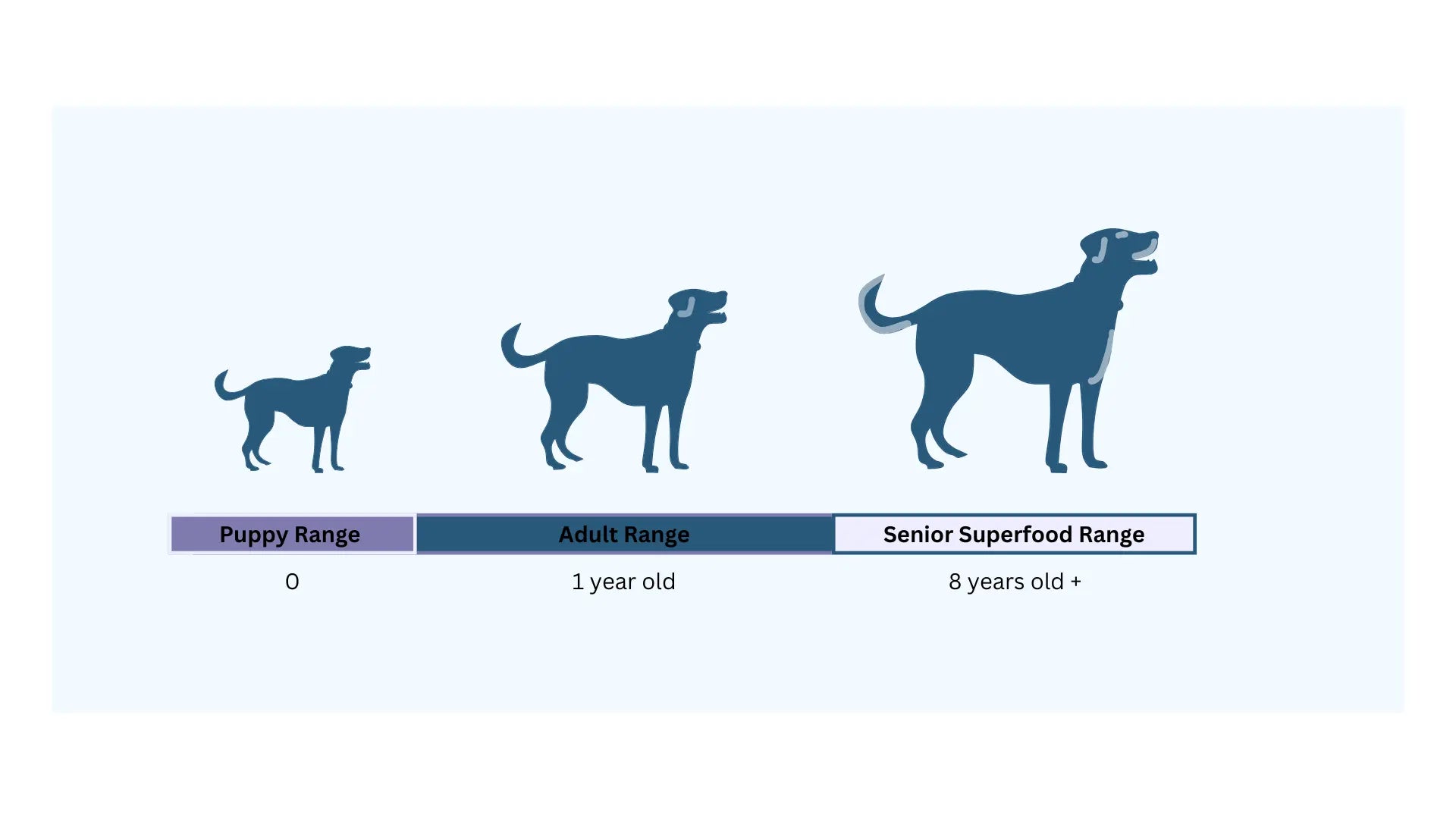
Silhouettes of three dogs, growing in size left to right, labeled as Puppy (0 yrs), Adult (1 yr), and Senior (8+ yrs) on green—highlighting Raw Dog Food - Duck Recipe - 4kgs by www.barfindia.com, a single-protein formula.
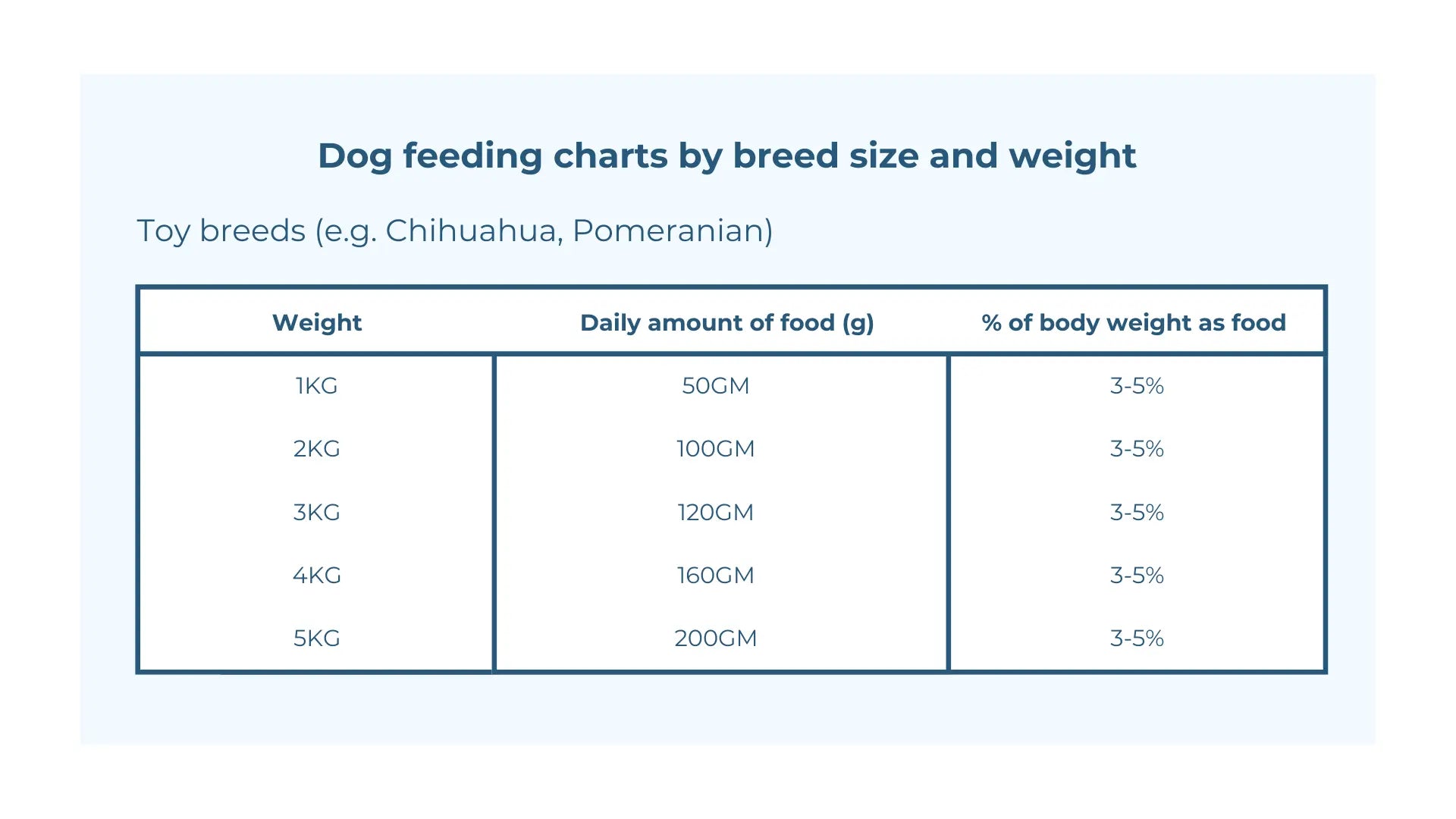
A dog feeding chart for Raw Dog Food - Duck Recipe - 4kgs (www.barfindia.com) suggests: 1kg—50g, 2kg—100g, 3kg—120g, 4kg—160g, 5kg—200g daily for toy breeds.
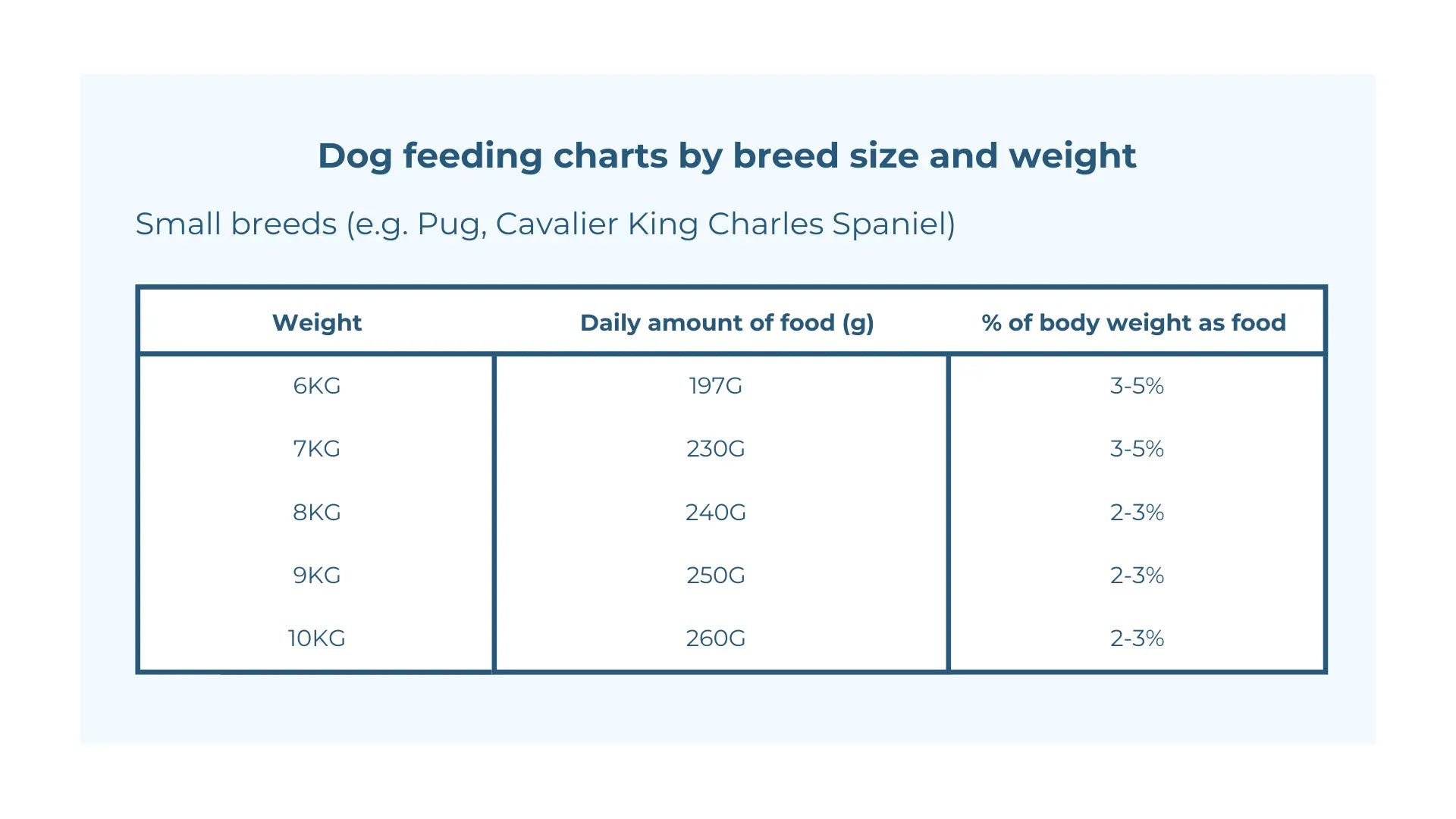
A chart titled Dog feeding charts by breed size and weight shows daily amounts for small breeds (6-10kg) fed Raw Dog Food - Duck Recipe - 4kgs by www.barfindia.com: 197-260g daily (2-5% of body weight). B.A.R.F. logo is present.
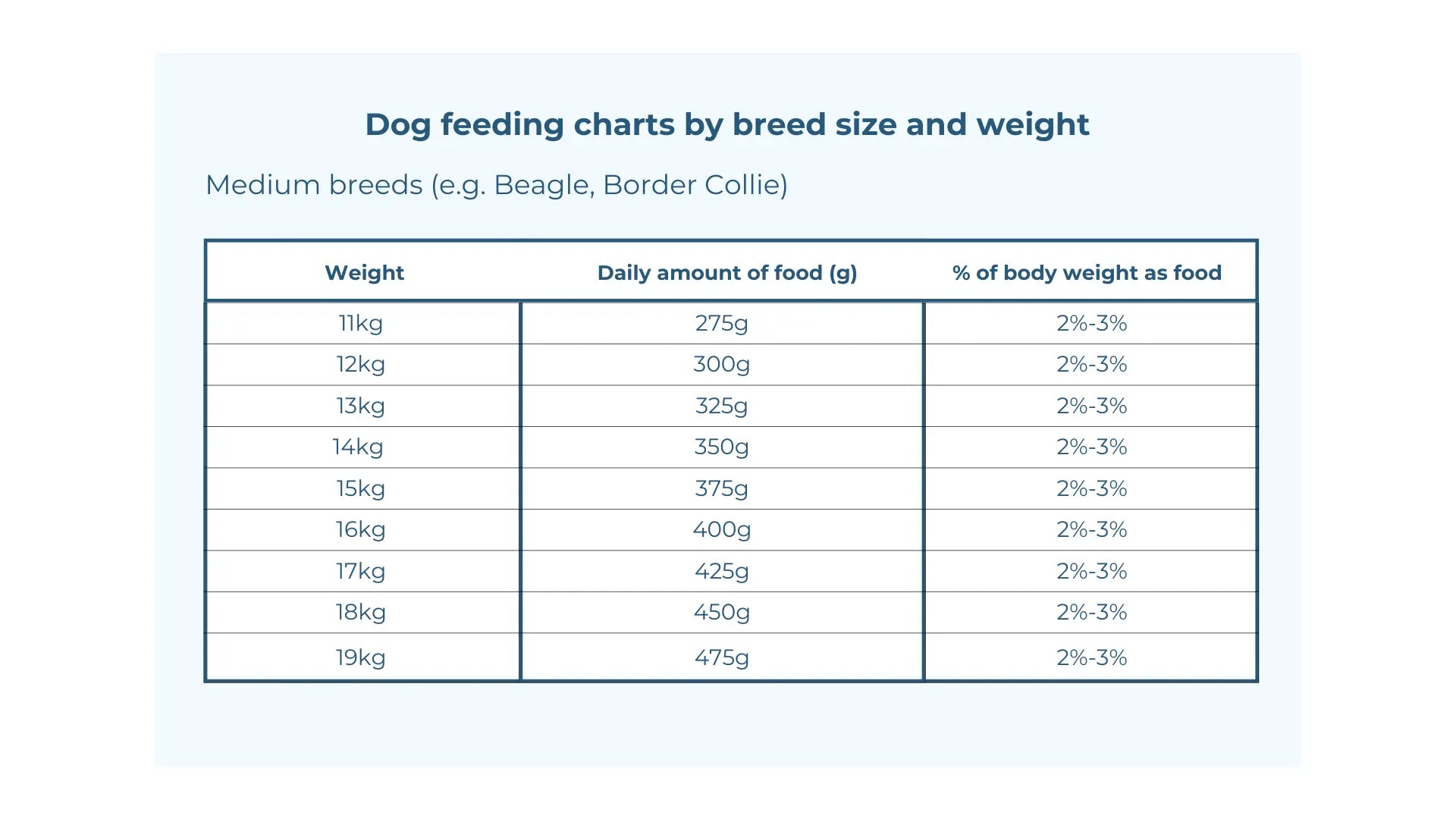
A chart lists daily Raw Dog Food - Duck Recipe - 4kgs by www.barfindia.com for medium breeds: 275g–475g per day (2%–3% of body weight), using a single-protein, free-range duck formula.
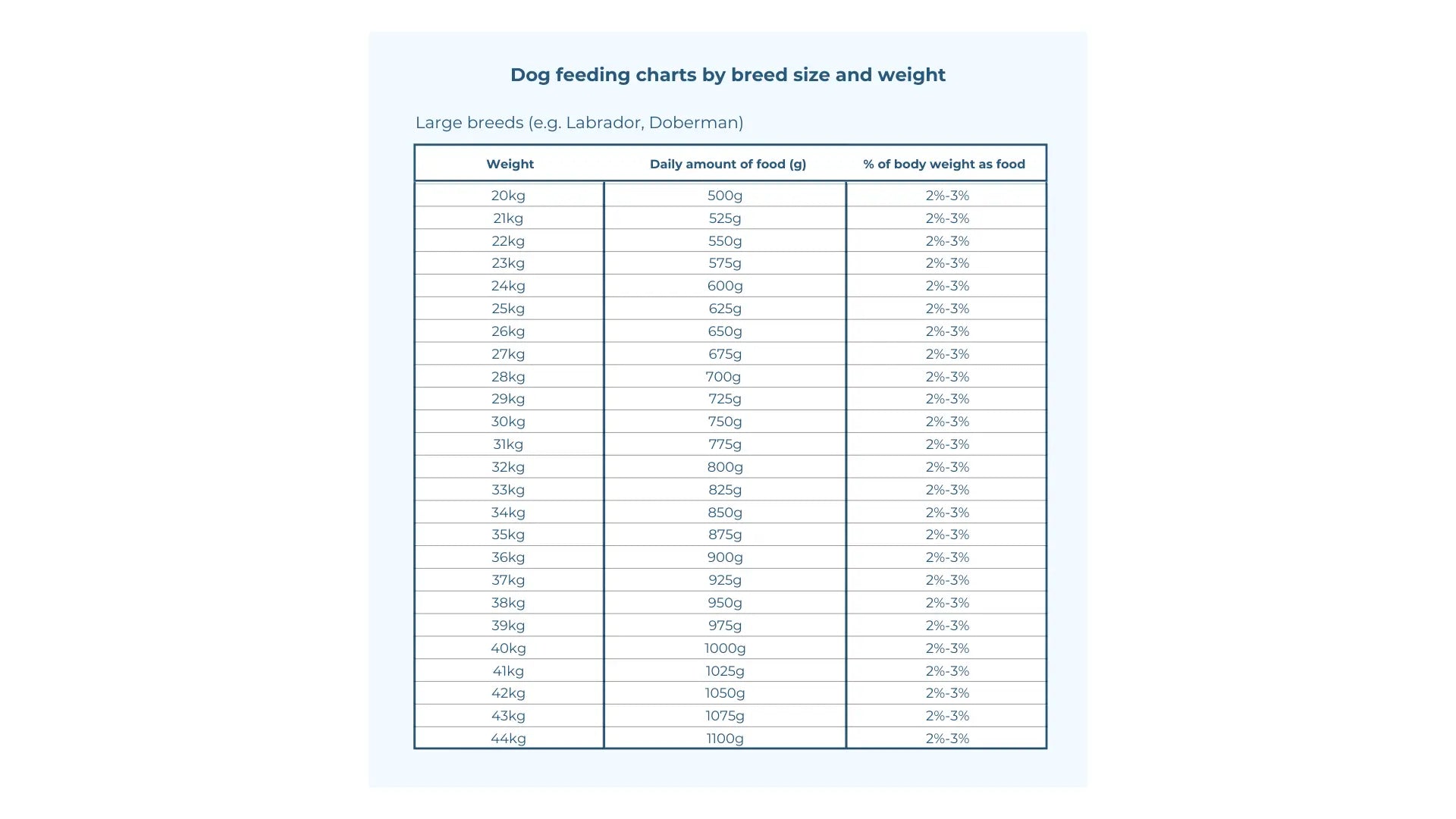
Large breed feeding chart for www.barfindia.com's Raw Dog Food - Duck Recipe (4kg) shows daily grams and 2–3% body weight portions for dogs 20–44kg. Single-protein, free-range duck. Chart features a green background.
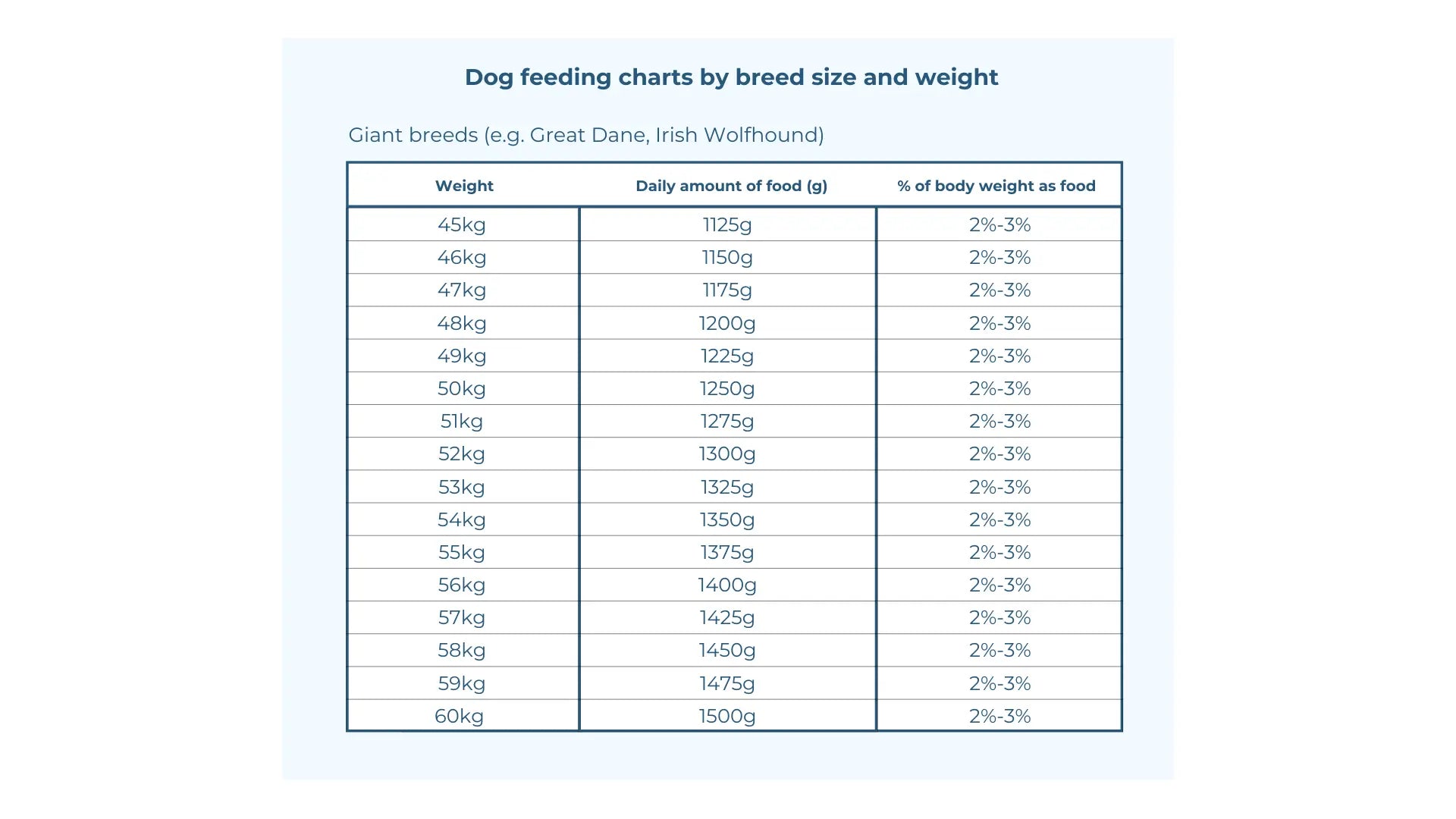
A chart from www.barfindia.com for Raw Dog Food - Duck Recipe - 4kgs shows daily portions for giant dog breeds (45kg–60kg), with recommended raw food amounts of 1125g–1500g, based on 2%–3% of body weight.
Two raw free-range duck legs with herbs, garlic, oil, and spices beside a www.barfindia.com Raw Dog Food - Duck Recipe - 4kgs pack, all arranged on a dark surface.
A single 500g sausage-shaped roll (17 cm x 6 cm) is shown on marble. Each Raw Dog Food - Duck Recipe - 4kgs box from www.barfindia.com contains 8 rolls of this single-protein formula.
An informational flyer from www.barfindia.com highlights their Raw Dog Food - Duck Recipe (4kgs), featuring ethical, sustainable ingredients like free-range duck and transparent production, to educate consumers on making informed pet nutrition choices.
Raw Dog Food - Duck Recipe (4kgs) by www.barfindia.com shown as fresh duck pieces on a wooden board with rosemary, emphasizing the quality of this single-protein raw dog food, isolated on a white background.
Silhouettes of three dogs, growing in size left to right, labeled as Puppy (0 yrs), Adult (1 yr), and Senior (8+ yrs) on green—highlighting Raw Dog Food - Duck Recipe - 4kgs by www.barfindia.com, a single-protein formula.
A dog feeding chart for Raw Dog Food - Duck Recipe - 4kgs (www.barfindia.com) suggests: 1kg—50g, 2kg—100g, 3kg—120g, 4kg—160g, 5kg—200g daily for toy breeds.
A chart titled Dog feeding charts by breed size and weight shows daily amounts for small breeds (6-10kg) fed Raw Dog Food - Duck Recipe - 4kgs by www.barfindia.com: 197-260g daily (2-5% of body weight). B.A.R.F. logo is present.
A chart lists daily Raw Dog Food - Duck Recipe - 4kgs by www.barfindia.com for medium breeds: 275g–475g per day (2%–3% of body weight), using a single-protein, free-range duck formula.
Large breed feeding chart for www.barfindia.com's Raw Dog Food - Duck Recipe (4kg) shows daily grams and 2–3% body weight portions for dogs 20–44kg. Single-protein, free-range duck. Chart features a green background.
A chart from www.barfindia.com for Raw Dog Food - Duck Recipe - 4kgs shows daily portions for giant dog breeds (45kg–60kg), with recommended raw food amounts of 1125g–1500g, based on 2%–3% of body weight.

Raw Dog Food - Duck Recipe - 4kgs

Rs. 2,400.00
A metal grinder with ground meat, onions, garlic, herbs, and a www.barfindia.com Raw Dog Food – Whole Quail Recipe for Dogs Nutrient-Rich 4kgs pack is displayed on a rustic table with burlap in the background.
A 500g sausage-shaped roll of Raw Dog Food – Whole Quail Recipe for Dogs (17cm x 6cm) is shown. Each 4kg pack from www.barfindia.com contains 8 rolls. The B.A.R.F. logo appears in the corner.
Informational poster from www.barfindia.com highlights their ethical production, focus on animal wellness, and grain-free Raw Dog Food – Whole Quail Recipe for Dogs (nutrient-rich 4kgs pack), with strict safety and nutritional quality checks.
A person gently holds a small, speckled brown quail—ideal for your pet's diet. Try www.barfindia.com’s Raw Dog Food – Whole Quail Recipe for Dogs, a nutrient-rich 4kg pack.
Www.barfindia.com’s Raw Dog Food – Whole Quail Recipe for Dogs (4kgs) features nutrient-rich, whole quails—ideal for grain-free, balanced meals. Fresh herbs and quail eggs add wholesome inspiration for your pet’s diet.
A chart of daily Raw Dog Food – Whole Quail Recipe (www.barfindia.com) for toy breeds: 1kg—50g, 2kg—100g, 3kg—120g, 4kg—160g, 5kg—200g (3–5% of body weight). Ideal grain-free option for Chihuahuas and Pomeranians.
A chart displays daily food amounts for small breeds like Pug and Cavalier King Charles Spaniel, ideal for those choosing www.barfindia.com’s Raw Dog Food – Whole Quail Recipe, nutrient-rich in a 4kg pack. Grain-free or raw options included.
The www.barfindia.com Raw Dog Food – Whole Quail Recipe for Dogs (4kg) offers a grain-free diet; for medium breeds, feed 2–3% of body weight daily—e.g., 275g at 11kg to 475g at 19kg—for balanced nutrition.
Large breed dog feeding chart (20–44kg) with daily raw food amounts (500–1100g), 2%–3% of body weight, featuring a grain-free Raw Dog Food – Whole Quail Recipe for Dogs, by www.barfindia.com, in a table on a peach background.
A tan chart from www.barfindia.com shows daily Raw Dog Food – Whole Quail Recipe (4kg pack) amounts for giant breeds (45–60kg): feed 1125g–1500g, or 2%–3% of body weight. Ideal for grain-free and quail recipe diets.
Three blue dog silhouettes show life stages: puppy (0 years), adult (1 year), and senior (8+ years). Below, a bar highlights Raw Dog Food – Whole Quail Recipe for Dogs by www.barfindia.com, a nutrient-rich 4kgs grain-free pack.
A metal grinder with ground meat, onions, garlic, herbs, and a www.barfindia.com Raw Dog Food – Whole Quail Recipe for Dogs Nutrient-Rich 4kgs pack is displayed on a rustic table with burlap in the background.
A 500g sausage-shaped roll of Raw Dog Food – Whole Quail Recipe for Dogs (17cm x 6cm) is shown. Each 4kg pack from www.barfindia.com contains 8 rolls. The B.A.R.F. logo appears in the corner.
Informational poster from www.barfindia.com highlights their ethical production, focus on animal wellness, and grain-free Raw Dog Food – Whole Quail Recipe for Dogs (nutrient-rich 4kgs pack), with strict safety and nutritional quality checks.
A person gently holds a small, speckled brown quail—ideal for your pet's diet. Try www.barfindia.com’s Raw Dog Food – Whole Quail Recipe for Dogs, a nutrient-rich 4kg pack.
Www.barfindia.com’s Raw Dog Food – Whole Quail Recipe for Dogs (4kgs) features nutrient-rich, whole quails—ideal for grain-free, balanced meals. Fresh herbs and quail eggs add wholesome inspiration for your pet’s diet.
A chart of daily Raw Dog Food – Whole Quail Recipe (www.barfindia.com) for toy breeds: 1kg—50g, 2kg—100g, 3kg—120g, 4kg—160g, 5kg—200g (3–5% of body weight). Ideal grain-free option for Chihuahuas and Pomeranians.
A chart displays daily food amounts for small breeds like Pug and Cavalier King Charles Spaniel, ideal for those choosing www.barfindia.com’s Raw Dog Food – Whole Quail Recipe, nutrient-rich in a 4kg pack. Grain-free or raw options included.
The www.barfindia.com Raw Dog Food – Whole Quail Recipe for Dogs (4kg) offers a grain-free diet; for medium breeds, feed 2–3% of body weight daily—e.g., 275g at 11kg to 475g at 19kg—for balanced nutrition.
Large breed dog feeding chart (20–44kg) with daily raw food amounts (500–1100g), 2%–3% of body weight, featuring a grain-free Raw Dog Food – Whole Quail Recipe for Dogs, by www.barfindia.com, in a table on a peach background.
A tan chart from www.barfindia.com shows daily Raw Dog Food – Whole Quail Recipe (4kg pack) amounts for giant breeds (45–60kg): feed 1125g–1500g, or 2%–3% of body weight. Ideal for grain-free and quail recipe diets.
Three blue dog silhouettes show life stages: puppy (0 years), adult (1 year), and senior (8+ years). Below, a bar highlights Raw Dog Food – Whole Quail Recipe for Dogs by www.barfindia.com, a nutrient-rich 4kgs grain-free pack.

Raw Dog Food – Whole Quail Recipe for Dogs, Nutrient-Rich 4kgs Pack

Rs. 2,800.00
A flat lay of raw meats, vegetables, and herbs surrounds a www.barfindia.com “Raw Dog Food – Lean & Hypoallergenic Pork Recipe, 4kgs Pack” on a dark wooden surface, emphasizing wholesome ingredients for your pet’s diet.
Each 4 kg box of Raw Dog Food – Lean & Hypoallergenic Pork Recipe from www.barfindia.com contains 8 rolls (500g each), each roll measuring 17 cm x 6 cm. B.A.R.F logo appears in the top right corner.
An informational poster for www.barfindia.com showcases their Raw Dog Food – Lean & Hypoallergenic Pork Recipe (4kgs), emphasizing natural ingredients, ethical sourcing, safe production, and featuring a circular logo with a dog and cat at the top.
Www.barfindia.com’s Raw Dog Food – Lean & Hypoallergenic Pork Recipe (4kgs pack) is ideal for toy breeds like Chihuahuas and Pomeranians; daily portions: 1kg—50g, 2kg—100g, 3kg—120g, 4kg—160g, 5kg—200g (3–5% body weight).
A feeding chart for small dogs using Raw Dog Food – Lean & Hypoallergenic Pork Recipe (barfindia.com) suggests daily: 6kg—197g, 7kg—230g, 8kg—240g, 9kg—250g, 10kg—260g; feed 2–3.5% of body weight per day.
Table for daily feeding of medium breeds with Raw Dog Food – Lean & Hypoallergenic Pork Recipe (www.barfindia.com): 11kg dog needs 275g, 19kg needs 475g daily (2%-3% body weight); e.g., Beagle, Border Collie.
A chart for www.barfindia.com's Raw Dog Food – Lean & Hypoallergenic Pork Recipe, 4kg pack, shows large breeds (20–45kg) need 500–1100g daily (2%–2.5% of body weight) as per the dog feeding chart by breed size and weight.
Dog feeding chart for giant breeds (45–60kg) with daily raw food amounts (1125–1500g, 2%–3% body weight), featuring Raw Dog Food – Lean & Hypoallergenic Pork Recipe, 4kgs Pack by www.barfindia.com on a blue background.
Silhouettes of three dogs labeled Puppy (0), Adult (1 year), and Senior (8+ years) on blue with the www.barfindia.com logo, showcasing our Lean & Hypoallergenic Pork Recipe raw dog food, 4kgs pack.
A flat lay of raw meats, vegetables, and herbs surrounds a www.barfindia.com “Raw Dog Food – Lean & Hypoallergenic Pork Recipe, 4kgs Pack” on a dark wooden surface, emphasizing wholesome ingredients for your pet’s diet.
Each 4 kg box of Raw Dog Food – Lean & Hypoallergenic Pork Recipe from www.barfindia.com contains 8 rolls (500g each), each roll measuring 17 cm x 6 cm. B.A.R.F logo appears in the top right corner.
An informational poster for www.barfindia.com showcases their Raw Dog Food – Lean & Hypoallergenic Pork Recipe (4kgs), emphasizing natural ingredients, ethical sourcing, safe production, and featuring a circular logo with a dog and cat at the top.
Www.barfindia.com’s Raw Dog Food – Lean & Hypoallergenic Pork Recipe (4kgs pack) is ideal for toy breeds like Chihuahuas and Pomeranians; daily portions: 1kg—50g, 2kg—100g, 3kg—120g, 4kg—160g, 5kg—200g (3–5% body weight).
A feeding chart for small dogs using Raw Dog Food – Lean & Hypoallergenic Pork Recipe (barfindia.com) suggests daily: 6kg—197g, 7kg—230g, 8kg—240g, 9kg—250g, 10kg—260g; feed 2–3.5% of body weight per day.
Table for daily feeding of medium breeds with Raw Dog Food – Lean & Hypoallergenic Pork Recipe (www.barfindia.com): 11kg dog needs 275g, 19kg needs 475g daily (2%-3% body weight); e.g., Beagle, Border Collie.
A chart for www.barfindia.com's Raw Dog Food – Lean & Hypoallergenic Pork Recipe, 4kg pack, shows large breeds (20–45kg) need 500–1100g daily (2%–2.5% of body weight) as per the dog feeding chart by breed size and weight.
Dog feeding chart for giant breeds (45–60kg) with daily raw food amounts (1125–1500g, 2%–3% body weight), featuring Raw Dog Food – Lean & Hypoallergenic Pork Recipe, 4kgs Pack by www.barfindia.com on a blue background.
Silhouettes of three dogs labeled Puppy (0), Adult (1 year), and Senior (8+ years) on blue with the www.barfindia.com logo, showcasing our Lean & Hypoallergenic Pork Recipe raw dog food, 4kgs pack.

Raw Dog Food – Lean & Hypoallergenic Pork Recipe, 4kgs Pack

Rs. 2,350.00
Two raw, pasture-raised buffalo meat steaks with bones lie on brown paper beside rosemary, peppercorns, a cleaver, and a www.barfindia.com Raw Dog Food - Buffalo Recipe 4 kgs pack—ideal for premium canine nutrition.
Www.barfindia.com Raw Dog Food - Buffalo Recipe 4 kgs includes 8 rolls (each 17 x 6 cm, 500 g) made from pasture-raised buffalo. Total box weight: 4 kg.
Rows of red sausage-shaped packages of Raw Dog Food - Buffalo Recipe 4 kgs from www.barfindia.com are neatly stacked on a metal table in a food processing area with white tiled walls.
An informational flyer for www.barfindia.com highlights their ethical food philosophy, raw dog food manufacturing, and focus on safe, nutritious meals like the Raw Dog Food - Buffalo Recipe 4 kgs made from pasture-raised buffalo. The logo appears at the top.
A chart titled
A chart from www.barfindia.com shows daily food amounts for small dogs (6–10kg). For their Raw Dog Food - Buffalo Recipe 4kgs, the recommended serving is 197g–260g per day, or 2.3%–5% of body weight.
A chart shows daily raw dog food amounts for medium breeds (11–19kg) like Beagle, using Raw Dog Food - Buffalo Recipe 4kgs from www.barfindia.com. Made with pasture-raised buffalo; feed 2%-3% of the dog's body weight per day.
A blue and white chart from www.barfindia.com shows daily feeding amounts (g and % body weight) for large dogs (20–44kg) on the Raw Dog Food - Buffalo Recipe 4 kgs, perfect for pasture-raised buffalo diets.
A chart showing daily food portions for giant dog breeds (45–60kg), with recommended servings of Raw Dog Food - Buffalo Recipe 4 kgs from www.barfindia.com, ranging from 1125g to 1500g daily (2%-3% of body weight).
Three dog silhouettes in various sizes on a purple background showcase www.barfindia.com's Raw Dog Food - Buffalo Recipe 4 kgs, highlighting nutrition options for puppies, adults, and seniors.
Two raw, pasture-raised buffalo meat steaks with bones lie on brown paper beside rosemary, peppercorns, a cleaver, and a www.barfindia.com Raw Dog Food - Buffalo Recipe 4 kgs pack—ideal for premium canine nutrition.
Www.barfindia.com Raw Dog Food - Buffalo Recipe 4 kgs includes 8 rolls (each 17 x 6 cm, 500 g) made from pasture-raised buffalo. Total box weight: 4 kg.
Rows of red sausage-shaped packages of Raw Dog Food - Buffalo Recipe 4 kgs from www.barfindia.com are neatly stacked on a metal table in a food processing area with white tiled walls.
An informational flyer for www.barfindia.com highlights their ethical food philosophy, raw dog food manufacturing, and focus on safe, nutritious meals like the Raw Dog Food - Buffalo Recipe 4 kgs made from pasture-raised buffalo. The logo appears at the top.
A chart titled
A chart from www.barfindia.com shows daily food amounts for small dogs (6–10kg). For their Raw Dog Food - Buffalo Recipe 4kgs, the recommended serving is 197g–260g per day, or 2.3%–5% of body weight.
A chart shows daily raw dog food amounts for medium breeds (11–19kg) like Beagle, using Raw Dog Food - Buffalo Recipe 4kgs from www.barfindia.com. Made with pasture-raised buffalo; feed 2%-3% of the dog's body weight per day.
A blue and white chart from www.barfindia.com shows daily feeding amounts (g and % body weight) for large dogs (20–44kg) on the Raw Dog Food - Buffalo Recipe 4 kgs, perfect for pasture-raised buffalo diets.
A chart showing daily food portions for giant dog breeds (45–60kg), with recommended servings of Raw Dog Food - Buffalo Recipe 4 kgs from www.barfindia.com, ranging from 1125g to 1500g daily (2%-3% of body weight).
Three dog silhouettes in various sizes on a purple background showcase www.barfindia.com's Raw Dog Food - Buffalo Recipe 4 kgs, highlighting nutrition options for puppies, adults, and seniors.

Raw Dog Food - Buffalo Recipe 4 kgs

Rs. 2,400.00
The Raw Dog Food – Starter Box for Beginners and Puppies (4kgs) from www.barfindia.com features a balanced mix of raw meats, poultry, herbs, and veggies—perfect for introducing your dog to varied BARF diet proteins.
A 500g, 17x6cm roll of Raw Dog Food – Starter Box for Beginners and Puppies from www.barfindia.com sits on marble. Each 4kg pack includes 8 rolls—perfect for balanced meals or rotating proteins.
A flyer for www.barfindia.com features their Raw Dog Food – Starter Box for Beginners and Puppies (4kgs), emphasizing ethical, safe, balanced meals with varied proteins for natural pet nutrition. Logo and contact info are at the top.
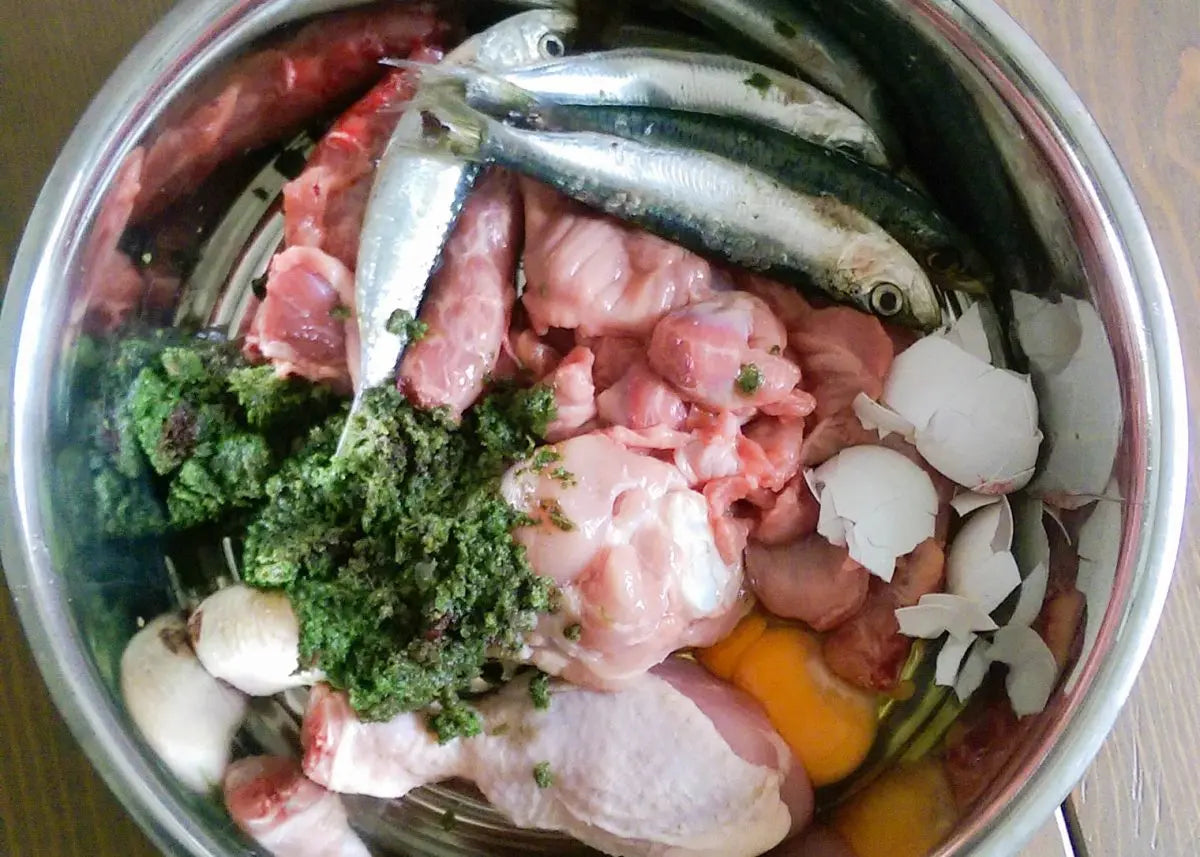
A bowl of www.barfindia.com Raw Dog Food – Starter Box for Beginners and Puppies (4kgs) with ground meat, green beans, and carrots is shown from above on a white background, highlighting a balanced meal.
The Raw Dog Food – Starter Box for Beginners and Puppies (4kgs) from www.barfindia.com features a balanced mix of raw meats, poultry, herbs, and veggies—perfect for introducing your dog to varied BARF diet proteins.
A 500g, 17x6cm roll of Raw Dog Food – Starter Box for Beginners and Puppies from www.barfindia.com sits on marble. Each 4kg pack includes 8 rolls—perfect for balanced meals or rotating proteins.
A flyer for www.barfindia.com features their Raw Dog Food – Starter Box for Beginners and Puppies (4kgs), emphasizing ethical, safe, balanced meals with varied proteins for natural pet nutrition. Logo and contact info are at the top.
A bowl of www.barfindia.com Raw Dog Food – Starter Box for Beginners and Puppies (4kgs) with ground meat, green beans, and carrots is shown from above on a white background, highlighting a balanced meal.

Raw Dog Food – Starter Box for Beginners and Puppies, 4kgs Pack

Rs. 320.00
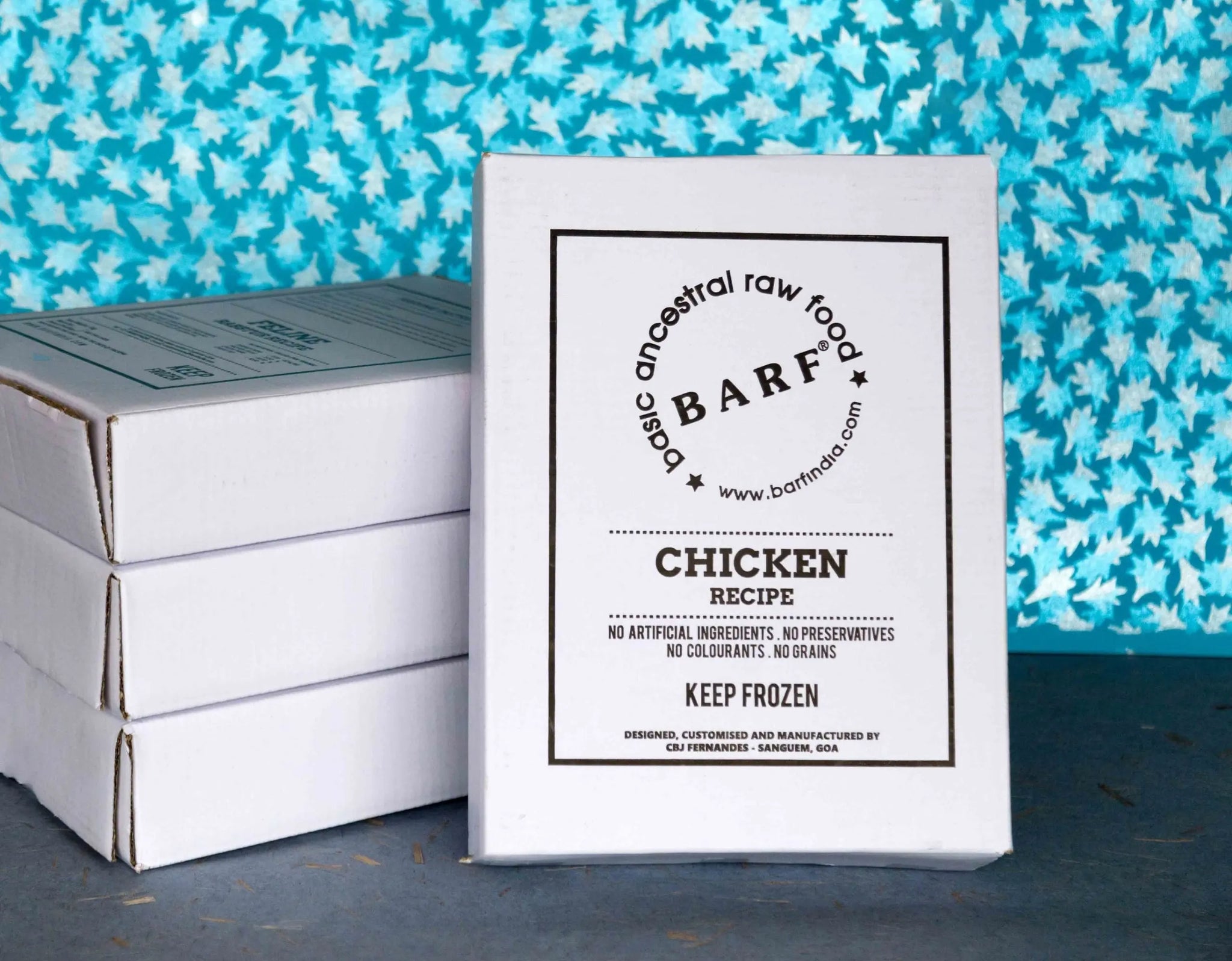
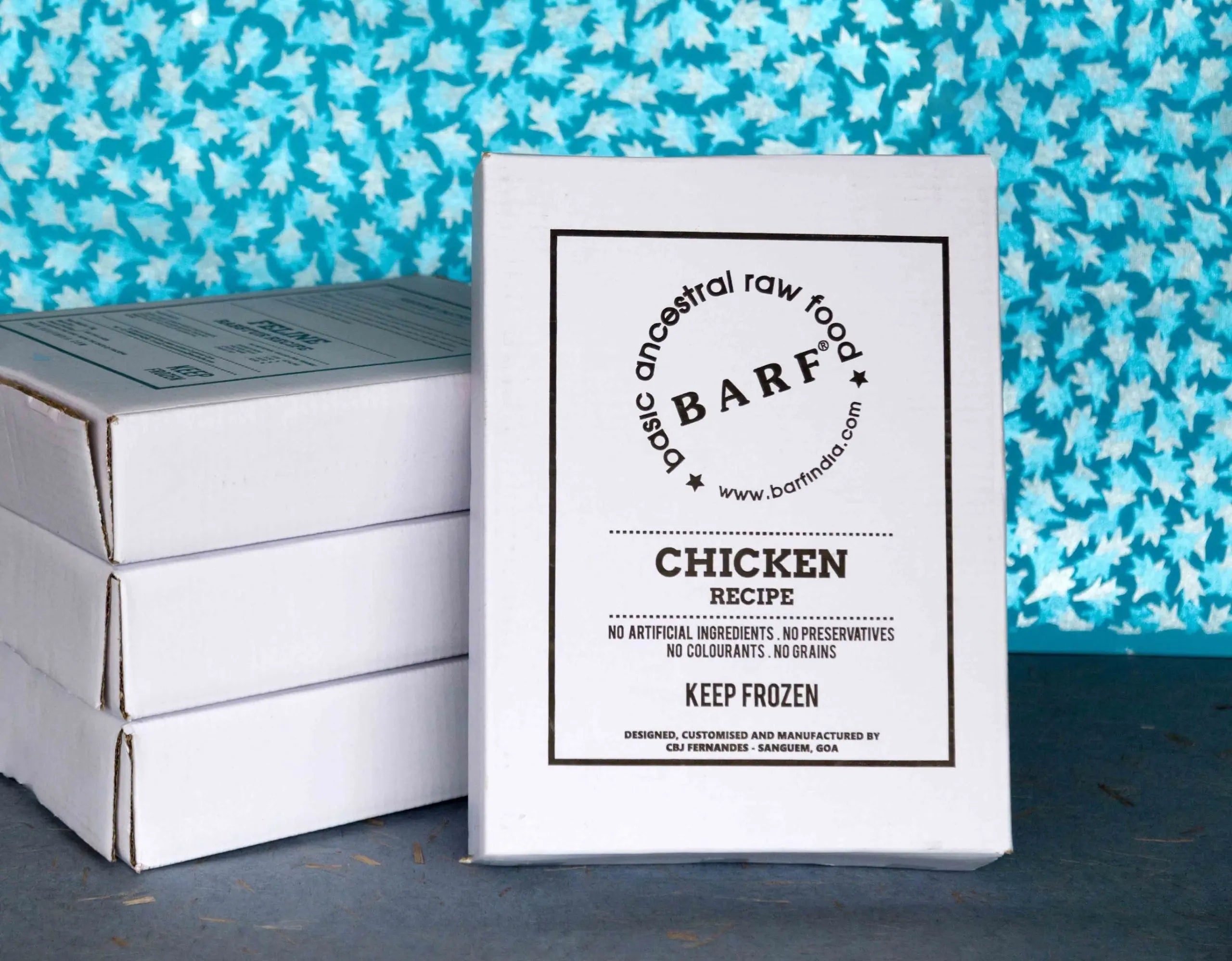
A 4kg pack of Raw Dog Food – Omega-3 Rich Fish Recipe for Dogs from www.barfindia.com stands upright before stacked boxes and a blue, leaf-patterned background, featuring details about its raw ingredients.
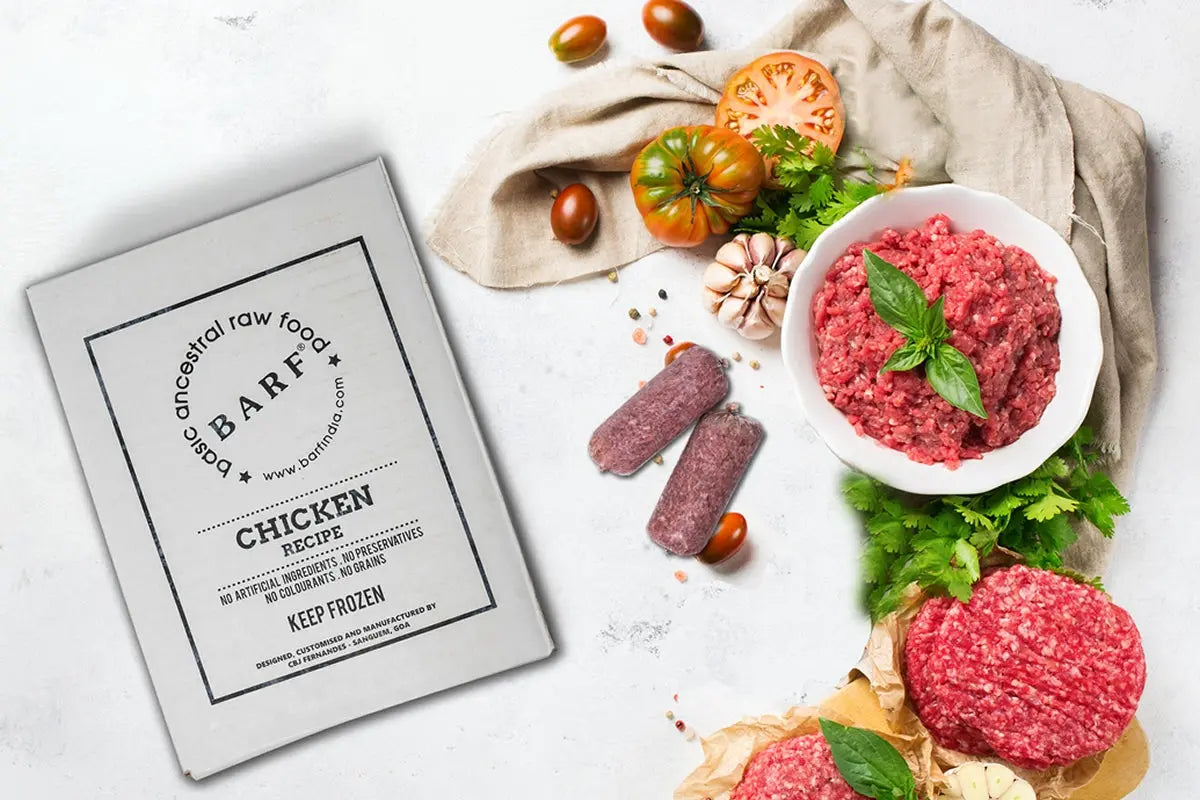
Two raw fish, lemon slices, rosemary, spices, oil, garlic, and a www.barfindia.com Raw Dog Food – Omega-3 Rich Fish Recipe for Dogs (4kgs) pack on wood. Frozen portions shown—perfect for dogs with allergies.
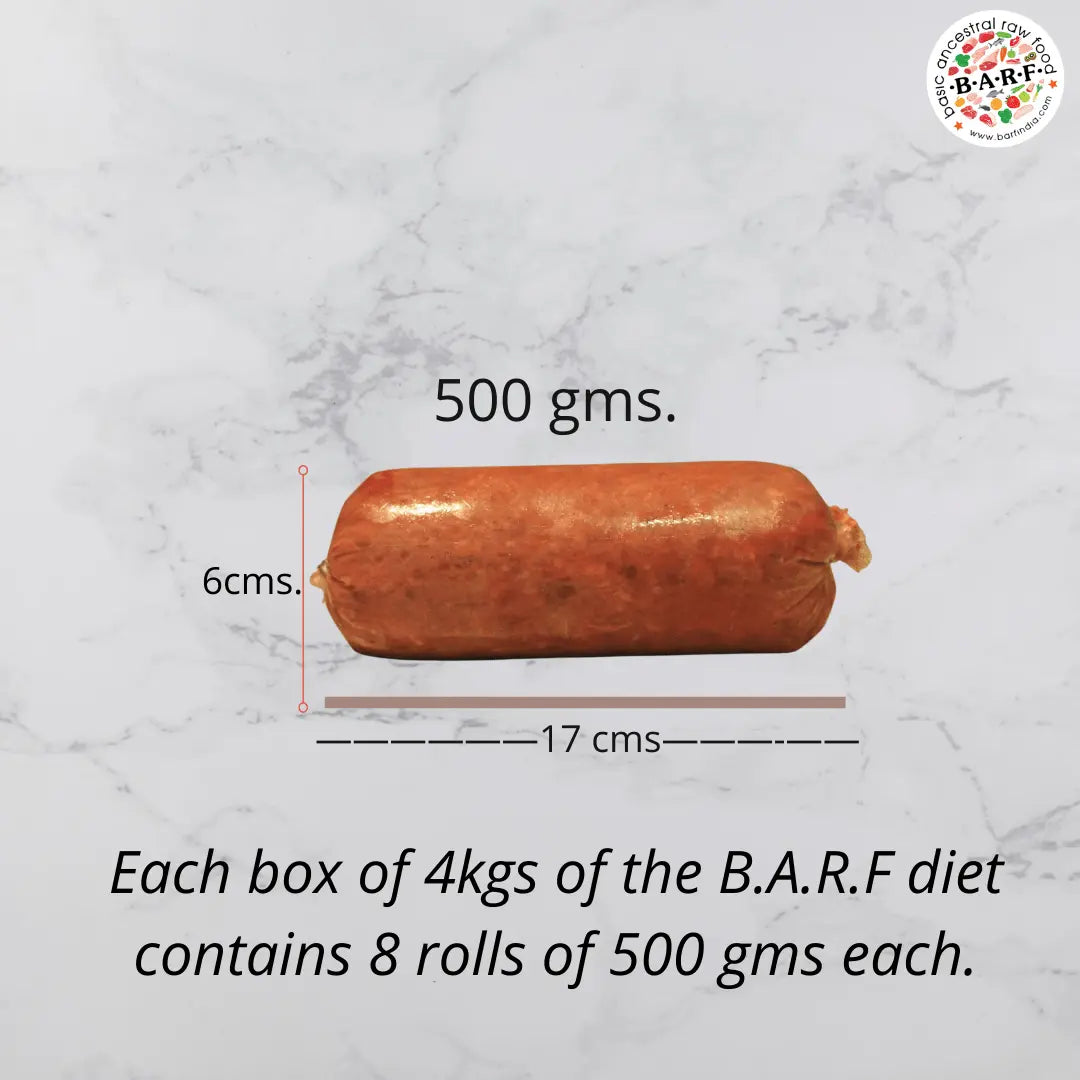
Raw Dog Food – Omega-3 Rich Fish Recipe for Dogs, 4kgs Pack from www.barfindia.com includes 8 x 500g sausage rolls (17 cm x 6 cm), ideal for dogs with allergies. The top right displays the B.A.R.F logo, emphasizing nutritious ingredients.
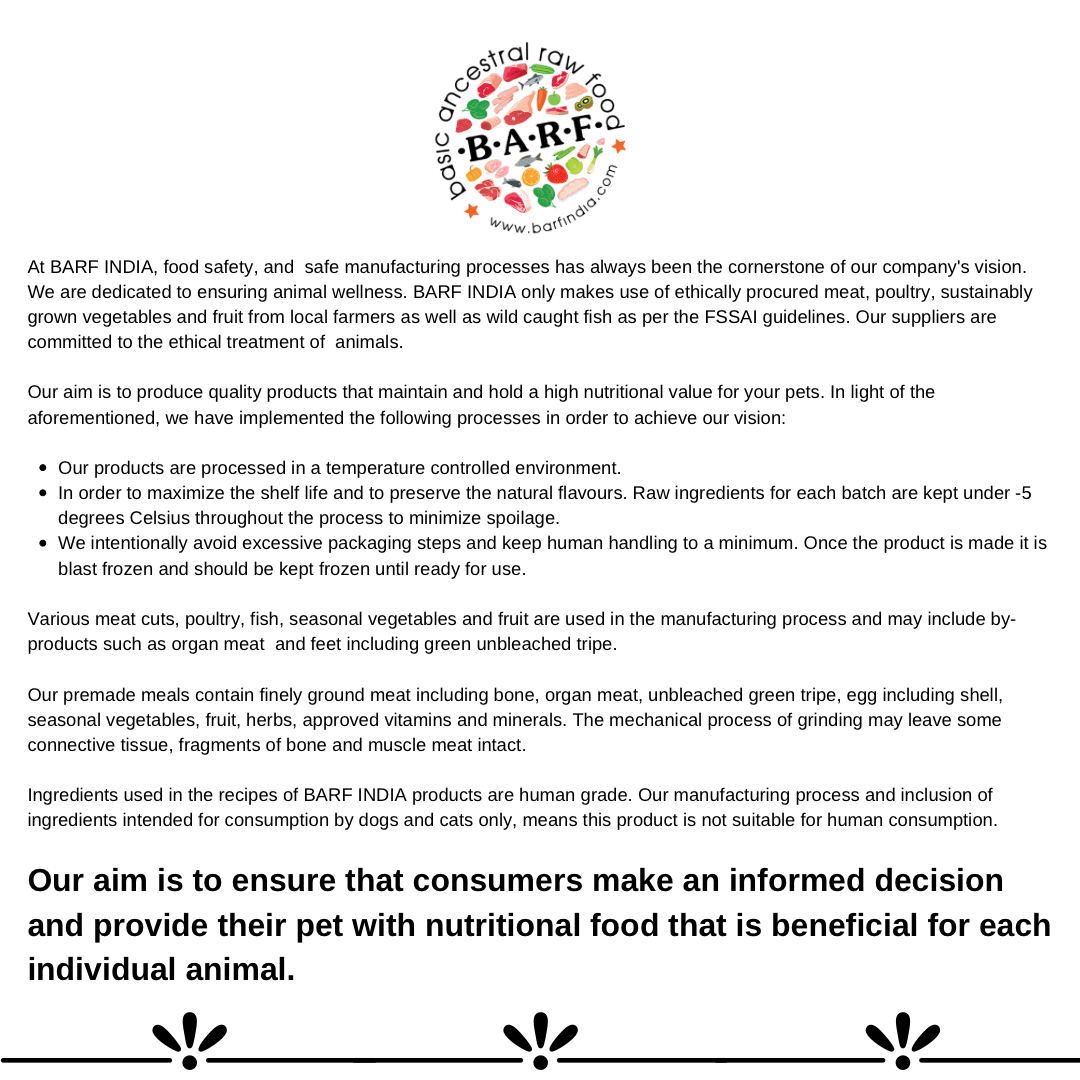
Www.barfindia.com info sheet highlights their ethical commitment to natural raw dog food, featuring the Raw Dog Food – Omega-3 Rich Fish Recipe for Dogs (4kgs), high-quality ingredients, and strict hygiene protocols.
Www.barfindia.com’s Raw Dog Food – Omega-3 Rich Fish Recipe (4kg pack) is ideal for toy breeds: feed 50g daily for 1kg, 100g for 2kg, and up to 120g for 3kg body weight—great dog food for allergies at 3–5% of body weight.
A chart shows daily raw dog food amounts and body weight percentages for small breeds (6kg–10kg): 197g–260g, 2.3%–3.5%. Suggested: Raw Dog Food – Omega-3 Rich Fish Recipe for Dogs, 4kgs Pack from www.barfindia.com; ideal for dogs with allergies.
A chart on yellow displays daily raw food portions for medium dogs (11–19kg)—275g to 475g (2%–3% body weight)—using Raw Dog Food – Omega-3 Rich Fish Recipe, 4kg pack by www.barfindia.com, ideal for balanced diets and allergies.
Www.barfindia.com’s Raw Dog Food – Omega-3 Rich Fish Recipe for Dogs (4kg pack): see feeding chart for large breeds (22–44 kg), with daily portions in grams and 2–3% body weight guidance—ideal for dogs with allergies.
Dog feeding chart for giant breeds (45-60kg) shows daily amounts (1125-1500g, 2%-3% body weight) with a yellow-table design, featuring Raw Dog Food – Omega-3 Rich Fish Recipe for Dogs, 4kg pack by www.barfindia.com. Includes raw food notes.
Three dog silhouettes show age-based food categories—Puppy (0 yrs), Adult (1 yr), Senior (8+). www.barfindia.com offers Raw Dog Food – Omega-3 Rich Fish Recipe for Dogs, 4kg pack, suitable for dogs with allergies.
A 4kg pack of Raw Dog Food – Omega-3 Rich Fish Recipe for Dogs from www.barfindia.com stands upright before stacked boxes and a blue, leaf-patterned background, featuring details about its raw ingredients.
Two raw fish, lemon slices, rosemary, spices, oil, garlic, and a www.barfindia.com Raw Dog Food – Omega-3 Rich Fish Recipe for Dogs (4kgs) pack on wood. Frozen portions shown—perfect for dogs with allergies.
Raw Dog Food – Omega-3 Rich Fish Recipe for Dogs, 4kgs Pack from www.barfindia.com includes 8 x 500g sausage rolls (17 cm x 6 cm), ideal for dogs with allergies. The top right displays the B.A.R.F logo, emphasizing nutritious ingredients.
Www.barfindia.com info sheet highlights their ethical commitment to natural raw dog food, featuring the Raw Dog Food – Omega-3 Rich Fish Recipe for Dogs (4kgs), high-quality ingredients, and strict hygiene protocols.
Www.barfindia.com’s Raw Dog Food – Omega-3 Rich Fish Recipe (4kg pack) is ideal for toy breeds: feed 50g daily for 1kg, 100g for 2kg, and up to 120g for 3kg body weight—great dog food for allergies at 3–5% of body weight.
A chart shows daily raw dog food amounts and body weight percentages for small breeds (6kg–10kg): 197g–260g, 2.3%–3.5%. Suggested: Raw Dog Food – Omega-3 Rich Fish Recipe for Dogs, 4kgs Pack from www.barfindia.com; ideal for dogs with allergies.
A chart on yellow displays daily raw food portions for medium dogs (11–19kg)—275g to 475g (2%–3% body weight)—using Raw Dog Food – Omega-3 Rich Fish Recipe, 4kg pack by www.barfindia.com, ideal for balanced diets and allergies.
Www.barfindia.com’s Raw Dog Food – Omega-3 Rich Fish Recipe for Dogs (4kg pack): see feeding chart for large breeds (22–44 kg), with daily portions in grams and 2–3% body weight guidance—ideal for dogs with allergies.
Dog feeding chart for giant breeds (45-60kg) shows daily amounts (1125-1500g, 2%-3% body weight) with a yellow-table design, featuring Raw Dog Food – Omega-3 Rich Fish Recipe for Dogs, 4kg pack by www.barfindia.com. Includes raw food notes.
Three dog silhouettes show age-based food categories—Puppy (0 yrs), Adult (1 yr), Senior (8+). www.barfindia.com offers Raw Dog Food – Omega-3 Rich Fish Recipe for Dogs, 4kg pack, suitable for dogs with allergies.

Raw Dog Food – Omega-3 Rich Fish Recipe for Dogs, 4kgs Pack

Rs. 1,357.00

The Building Blocks of a BARF Diet

A BARF meal is not just raw chicken thrown in a bowl. It is a considered assembly of ingredients, each playing a specific nutritional role. Here is how to think about it.

Muscle Meat: The Foundation (60–70%)
Muscle meat is the primary source of protein, essential amino acids, and healthy fats. In India, your most accessible and affordable options include:
• Chicken (breast, thigh, leg - boneless or with bone)
• Goat / mutton (widely available at khatiks)
• Buffalo meat (inexpensive, lean, and nutritious)
• Fish - especially rohu, catla, sardines, and mackerel (excellent omega-3 source)
• Eggs - whole raw eggs are a near-perfect protein source and ideal for beginners

Variety is key. Rotating proteins across the week ensures your dog receives a broad spectrum of amino acids, vitamins, and minerals.

Edible Bone: The Calcium Source (10–15%)
Raw bones serve two critical functions: they are a natural source of calcium and phosphorus (crucial for skeletal health), and they provide mechanical dental cleaning that no toothbrush or chew toy can fully replicate.

Safe raw bones for Indian dogs:
• Chicken necks (ideal for small breeds)
• Chicken wings and feet
• Goat ribs (for medium to large breeds)
• Small fish bones (sardines, mackerel)

Important: never feed cooked bones. Cooking makes bones brittle and prone to splintering, which can cause internal injury. Always feed raw.

Organ Meat / Offal: The Nutritional Powerhouse (10%)
Organ meat is arguably the most nutrient-dense food in any BARF diet. It is rich in fat-soluble vitamins (A, D, E, K), B vitamins including B12 and folate, iron, zinc, and copper - often in far higher concentrations than muscle meat.

In Indian markets, you can typically source:
• Liver (chicken or goat) - the single most important organ; no BARF diet is complete without it
 • Kidney (goat or buffalo)
• Heart (technically a muscle meat, but often sold with offal)
• Trachea and lungs
• Green tripe (unwashed stomach lining) - a probiotic powerhouse, ask your khatik for it

Note: limit liver to around 5% of the total diet. Too much liver over time can lead to vitamin A toxicity. A small amount fed 2–3 times per week is ideal.

BARF Diet

Plant Matter: Fibre, Antioxidants, and Phytonutrients (10–20%)
Dogs, unlike obligate carnivores such as cats, can digest and benefit from a moderate amount of plant matter. Vegetables and fruits add fibre, which supports gut motility and healthy stool formation, as well as antioxidants that support immune function.

Indian vegetables that work well in a BARF diet:
• Gajar (carrot) - rich in beta-carotene, great as a raw chew
• Lauki (bottle gourd) - hydrating and gentle on digestion
• Palak (spinach) - iron and folate source
• Beans (French beans, green beans) - good fibre source
• Kaddu (pumpkin) - excellent for digestive health
• Amla (Indian gooseberry) - extremely high in Vitamin C, a potent antioxidant

Vegetables should always be blended or lightly steamed before feeding. Dogs have limited ability to break down plant cell walls, so whole raw vegetables pass largely undigested.

Superfoods and Supplements (Optional but Beneficial)
Indian kitchens are already stocked with some of the most powerful canine superfoods on the planet:
• Haldi (turmeric) with a pinch of kali mirch (black pepper) - powerful anti-inflammatory combination
• Adrak (ginger) - supports digestion and reduces nausea
• Coconut oil - excellent source of medium-chain triglycerides (MCTs), supports skin and coat health
• Flaxseed (alsi) - plant-based omega-3 source
• Chia seeds - fibre and omega-3

Feeding Ratios and How Much to Feed

One of the most common questions from new raw feeders is: how much do I actually give? The good news is that the starting formula is straightforward.

The Core Ratio: 70-10-10-10
A well-balanced BARF diet for adult dogs follows roughly this ratio by weight:
• 70% muscle meat (including heart)
• 10% edible bone
• 10% organ meat (at least half should be liver)
• 10% vegetables, fruit, and other additions

Some practitioners use a 80-10-10 split (80% meat and bone combined, 10% secreting organ, 10% liver) as a starting point before adding plant matter. Both approaches are valid. The key is consistency and variety over time.

Daily Feeding Quantity by Body Weight
Adult dogs generally need between 2% and 3% of their ideal body weight in raw food per day. Active dogs, puppies, and underweight dogs need more; sedentary, older, or overweight dogs need less.

Dogs Weight

Daily Food (2%)

Daily Food (3%)

5 Kg

100 g

150 g

10 Kg

200 g

300 g

15 Kg

300 g

450 g

20 Kg

400 g

600 g

25 Kg

500 g

750 g

30 Kg

600 g

900 g

These are guidelines, not rules. Watch your dog’s body condition. If you can feel the ribs easily but not see them prominently, your dog is at a healthy weight. Adjust portions accordingly.

Puppies and Senior Dogs
Puppies between 8 weeks and 6 months require approximately 5–8% of their body weight daily to support rapid growth. Reduce gradually to adult portions as they approach maturity. Senior dogs (typically 7+ years for medium breeds, 5+ years for giant breeds) often benefit from slightly increased protein to counteract age-related muscle loss, though total calories may need to decrease if activity slows.

Quick Tip for Indian Pet Parents:
Start by purchasing a simple kitchen scale. Eyeballing raw portions is a common mistake for beginners. A Rs. 300 digital scale from any local hardware store is one of the most valuable BARF tools you can own.

Food Safety in the Indian Climate

Food safety is non-negotiable when feeding raw, and it becomes even more critical in India’s tropical climate. Here is a practical protocol designed for Indian households.

Storage
 Purchase meat fresh from your butcher on the same day you plan to use it, or in small batches for 2–3 days maximum. If you are buying in bulk, portion the meat into individual daily servings using freezer-safe zip-lock bags or containers, and freeze immediately. Thaw in the refrigerator, never on a counter in Indian summer heat.

Thawing
Always thaw raw meat in the refrigerator. In a country where power cuts can occur, have a backup plan: a cooler box with ice is sufficient for a few hours. Meat that has thawed and re- warmed significantly should be discarded rather than refrozen.

Serving
Serve food at room temperature or slightly below. Remove uneaten portions from the bowl within 15–20 minutes in warm weather (sooner in peak Indian summer). Do not leave raw food in the bowl for hours the way many kibble feeders do.

Hygiene Protocols
• Use a dedicated cutting board for raw meat, stored separately from food prep surfaces
• Wash hands thoroughly with soap before and after handling raw meat
• Wash your dog’s food bowl after every meal with hot soapy water
• If you are vegetarian or handle raw meat infrequently, use food-safe gloves
• Store raw meat away from human food in the refrigerator, ideally on a lower shelf in sealed containers

A Note on Bacteria
Healthy adult dogs have a highly acidic stomach environment (pH 1–2) that is designed to kill most pathogens found in raw meat, including Salmonella and E. coli. Their digestive transit time is also much faster than humans. This does not mean hygiene is optional - it means that when handled correctly, raw meat is safe for your dog and for your family. The risk to humans comes from cross-contamination during handling, not from the dog itself.

NATURE HAS ALREADY GIVEN THE RECIPE. WE HAVE ONLY IMPLEMENTED ITBARF Diet

Transitioning Your Dog to BARF

Switching from kibble to raw is one of the most common questions new raw feeders ask. Here is a step-by-step approach that minimises digestive upset.

The 10-Day Transition Method
A gradual transition over 7–14 days works best for most dogs, especially those who have eaten processed food their entire lives.

Days

Old Food

BARF

1-3

75%

25%

4-6

50%

50%

7-9

25%

75%

10+

0%

100%

Start with a Single Protein
Begin with one protein source only - chicken is the most popular starting point in India because it is lean, widely available, affordable, and rarely causes allergic reactions. Introduce only one new protein at a time, leaving at least 2–3 weeks between additions. This makes it easy to identify any intolerances.

What to Expect During Transition
Some digestive adjustment is completely normal. You may notice:
• Softer stools or occasional loose motions in the first 1–2 weeks (normal)
• A brief period of constipation if too much bone is introduced too quickly (reduce bone content temporarily)
• Increased thirst as the dog’s body adjusts to the higher moisture content of raw food
• Possible detox signs like mucousy stools or mild lethargy in the first few days

These are typically transient. If symptoms persist beyond 2 weeks or are severe, consult a veterinarian.

Dogs That May Need Extra Care
Some dogs benefit from a slower, more supervised transition:

• Dogs with a history of pancreatitis (start with lean proteins only, avoid fatty meats)
• Dogs on immunosuppressant medications (consult your vet first)
• Very young puppies under 8 weeks (they should still be with their mother)
• Dogs with pre-existing kidney disease (protein levels need veterinary guidance)

Benefits of Raw Feeding - What to Realistically Expect

Pet parents who switch to BARF often report changes within days or weeks. Here is an evidence-informed look at what you can realistically expect, and when.

Within 1–2 Weeks
• Smaller, firmer, less odorous stools - one of the most consistently reported changes
• Improved hydration (raw food is 60–70% moisture vs kibble’s 8–10%)
• Increased energy and enthusiasm at mealtimes

Within 1–3 Months
 • Noticeably shinier coat and reduced shedding
• Healthier skin with reduced itching, dryness, or hot spots
• Cleaner teeth and fresher breath as raw bones remove tartar naturally
• Better weight management - easier to maintain a lean, muscular physique

Over 6 Months and Beyond
• Improved gut microbiome diversity (supported by research on raw-fed dogs)
• Reduced allergy symptoms in dogs with food sensitivities
• Better joint health, particularly when anti-inflammatory superfoods like turmeric are included
• Potential improvement in behaviour and focus (anecdotally reported by many raw feeders)

A Note on Realistic Expectations
Not every dog responds identically. Some dogs with complex health histories or genetic predispositions may need additional veterinary support. BARF is a powerful nutritional tool, not a cure-all. The goal is to give your dog the best possible foundation for health — and that is absolutely worth doing.

LEARN MORE ABOUT INDIA'S NO.1 FRESH DOG FOOD

Start Fresh
Raw Dog Food

Common Mistakes to Avoid (and How to Fix Them)

Even well-intentioned raw feeders make mistakes. Here are the most common ones, especially relevant to the Indian context.

Mistake 1: Too Much Bone, Too Soon
Bone is essential, but too much causes hard, white, chalky stools and constipation. Start with no more than 10% bone content, and reduce further if constipation appears. Chicken necks and wings are gentler starting bones than large weight-bearing beef bones.

Mistake 2: Relying on a Single Protein
Chicken alone, every day, will eventually lead to nutritional gaps. Rotate proteins systematically. A simple 5-day rotation might be: chicken, goat, fish, egg and chicken, buffalo. More variety = better nutritional coverage.

Mistake 3: Skipping Organ Meat
Organ meat is not optional in a BARF diet - it is nutritionally critical. Liver in particular provides vitamin A, B12, iron, and copper in bioavailable forms that no plant source can match. Start small (just a teaspoon for a 10kg dog) and build up to avoid loose stools from the richness of organ meat.

Mistake 4: Not Adjusting for the Individual Dog
 Feeding guidelines are starting points, not fixed rules. A highly active 15kg working dog needs more than a sedentary 15kg lapdog. A dog with a history of pancreatitis needs less fat. Observe your individual dog’s body condition, stool quality, and energy levels and adjust accordingly.

Mistake 5: Ignoring Food Safety in Hot Weather
In Indian summers, raw meat left in a bowl for 30 minutes can develop bacterial levels that would concern even a seasoned raw feeder. Serve in small portions, remove uneaten food promptly, and never feed meat that has been sitting at room temperature for an extended period.

Mistake 6: Not Consulting a Vet
Ideally, loop in a veterinarian who is open to raw feeding, or at minimum inform your vet that you are transitioning. A baseline blood panel before starting and one at 3–6 months into raw feeding can help you objectively track whether the diet is working for your individual dog.

Raw Diet for dogs

FAQ'S : About The BARF Diet

Is raw feeding safe for Indian dogs, given our climate?

Yes, raw feeding is safe in India when basic food hygiene protocols are followed. The key difference from Western contexts is that India's heat demands stricter time-temperature management. Serve food at room temperature, remove uneaten portions within 15-20 minutes in warm weather, always thaw meat in the refrigerator rather than on the counter, and buy fresh from a reliable local butcher. Indian dogs, particularly Pariah-type breeds, have digestive systems historically adapted to raw meat.

Can I feed my dog mutton and buffalo meat instead of chicken?

Absolutely. Mutton (goat meat), buffalo, and country chicken are all excellent raw feeding proteins and are widely available across Indian cities and towns at local khatiks. Buffalo is particularly lean and nutritious. Mutton and goat organs (liver, kidney) are among the most nutrient-dense ingredients you can include. Rotate between proteins for the best nutritional coverage.

My vet is not supportive of raw feeding. What should I do?

This is a common situation in India, where many veterinarians have been trained primarily on commercial pet food protocols. You can ask your vet to keep an open mind and review the growing body of peer-reviewed research on raw feeding. Request periodic blood panels so results speak for themselves. If your vet remains firmly opposed without engaging with the evidence, seeking a second opinion from a holistic or integrative veterinarian is a reasonable step.

How much does BARF cost compared to premium kibble in India?

In most Indian cities, a well-formulated BARF diet costs between Rs. 80 to Rs. 150 per kg of food depending on the protein mix and location. For a 15kg dog eating 300-400g per day, this translates to roughly Rs. 25-60 per day. Quality premium kibble can cost between Rs. 30-80 per day for the same dog. BARF becomes more cost-effective when you source from local markets, use affordable proteins like buffalo and eggs, and buy in small weekly batches to minimise waste.

My household is vegetarian. How do I manage raw meat without upsetting family?

This is one of the most practical challenges for Indian raw feeders. A few strategies that work: use disposable gloves or dedicated food-safe gloves for meat handling; designate a separate cutting board and knife that stays in a specific drawer; store raw meat in opaque, sealed containers on a dedicated refrigerator shelf; and consider pre-portioning meat at the butcher shop so you handle it minimally at home. Some families also designate the outdoor area or a balcony for meat preparation.

Can I feed BARF to my puppy? From what age?

Yes, puppies can be started on raw food as early as weaning age (approximately 6-8 weeks). Many experienced breeders actually recommend weaning puppies directly onto raw food rather than introducing kibble and then switching later. For puppies, feed approximately 5-8% of body weight daily, use minced or finely ground meat with small, soft bones (like chicken necks), and introduce variety gradually. Consult a veterinarian who is familiar with raw feeding for puppies if you have any concerns.

Are there any ingredients I should never include in a BARF diet?

Yes. Several common human foods are toxic to dogs regardless of whether the diet is raw or cooked. These include onions and garlic in any form (causes haemolytic anaemia), grapes and raisins (can cause acute kidney failure), avocado (contains persin, toxic to dogs), macadamia nuts, xylitol (artificial sweetener found in some peanut butters), chocolate, and cooked bones of any kind. Never season or spice food intended for your dog.

How do I know if BARF is working for my dog?

The most reliable indicators are stool quality (smaller, firmer, less odorous stools indicate better digestion and nutrient absorption), coat condition (shinier, softer coat typically appears within 4- 8 weeks), energy levels, body condition (lean with visible waist tuck and palpable but not protruding ribs), and dental health (cleaner teeth over 2-3 months of raw bone feeding). For an objective measure, ask your vet for a blood panel at the 3-6 month mark. Improvements in kidney, liver, and complete blood count markers are often visible in long-term raw-fed dogs.

Conclusion: The Best Food Is the One Your Dog Was Born to Eat

The BARF diet is not a trend. It is a return to the most fundamental principle of animal nutrition: feed a species what it evolved to eat, and it will thrive.

For Indian pet parents, the timing has never been better. Fresh, high-quality raw ingredients are available at your local market. Indian kitchen staples like turmeric, ginger, and coconut oil are some of the most potent canine superfoods on the planet. And Indian dogs - especially Indie breeds with millennia of ancestral raw feeding in their DNA - are often exceptionally well-suited to this way of eating.

Yes, there is a learning curve. Yes, it requires more thought than pouring kibble from a bag. But the rewards - a leaner body, a shinier coat, a healthier gut, fresher breath, and a dog that greets mealtimes with unbridled enthusiasm - are visible, measurable, and deeply satisfying.

Start small. Start with chicken. Get a kitchen scale. Talk to a vet. Join an Indian raw feeding community online. And watch what happens when you give your dog the diet nature intended.

Ready to Begin?
Start with one raw chicken meal tomorrow. Replace just one serving. Watch your dog's reaction. That single moment of watching a dog eat real food for the first time is often all the motivation you will ever need.

The BARF Diet (Biologically Appropriate Raw Food) is a natural feeding approach designed to mimic what dogs would eat in the wild. It focuses on raw meat, bones, organs, and fresh ingredients to provide balanced nutrition. Many pet owners choose the BARF diet to support better digestion, healthier skin, and improved overall vitality in their dogs.

The BARF Diet

If you have recently found yourself down a rabbit hole of raw feeding videos and dog nutrition blogs, you are not alone. Across India, a growing number of pet parents are stepping away from processed kibble and asking a simple but powerful question: what did dogs actually evolve to eat?

The answer, according to many holistic veterinarians and canine nutritionists, is something called the BARF diet. Short for Biologically Appropriate Raw Food (sometimes also called Bones and Raw Food), the BARF approach centres on feeding dogs unprocessed, species- appropriate ingredients - think raw muscle meat, edible bones, organ meats, and a small portion of plant matter.

This guide is written specifically for Indian pet parents. While there is plenty of raw feeding advice online, very little of it addresses the realities of sourcing ingredients at an Indian butcher (khatik), navigating our climate, dealing with local breeds like the Indian Pariah Dog (Indie), or handling raw meat safely in a country where refrigeration habits vary. We will cover all of that here, along with the science, the practicalities, and honest answers to the questions Indian dog owners actually ask.

What Exactly Is the BARF Diet?

The BARF diet was popularised in the 1990s by Australian veterinarian Dr Ian Billinghurst. His central argument was straightforward: domesticated dogs share roughly 99.9% of their DNA with wolves, and wolves did not evolve eating extruded wheat pellets cooked at 200°C. They ate whole prey - and their digestive systems are optimised for exactly that.

A BARF diet tries to replicate this ancestral way of eating in a practical, home-kitchen-friendly format. It typically consists of:
• Raw muscle meat (the bulk of the diet)
• Raw edible bones (for calcium, phosphorus, and dental health)
• Raw organ meats / offal (some of the most nutrient-dense foods on the planet)
• Optional superfoods and seeds (for targeted nutritional support)
• A small amount of blended vegetables and fruit (for fibre, antioxidants, and phytonutrients)

What sets BARF apart from simply giving your dog leftover meat scraps is intention and ratio. A well-formulated BARF diet is carefully balanced to deliver all essential macronutrients, vitamins, and minerals in proportions that support long-term health.

BARF vs PMR: What Is the Difference?
You may also come across the term PMR, which stands for Prey Model Raw. While both approaches use raw, unprocessed ingredients, they differ in philosophy:

Feature

BARF

PMR (Prey Model Raw)

Plant matter included?

Yes (10-20%)

No (animal only)

Supplements used?

Sometimes

Rarely

Beginner-friendly?

Yes

More Advanced

For most Indian pet parents starting out, BARF is the more forgiving and nutritionally flexible choice.

BARF Diet

The Indian Context - Why This Guide Is Different

Most BARF guides are written for pet owners in the UK, USA, or Australia, where high-quality pre-made raw food is widely available, cold chains are reliable, and the dominant pet population is a Labrador or Golden Retriever. India is a different story, and that is not a disadvantage - it is actually an opportunity.

The Indian Pariah Dog Advantage
India is home to one of the world’s most genetically diverse and naturally resilient dog breeds: the Indian Pariah Dog (also called the Indie, INDog, or Desi Kuttha). These dogs evolved over thousands of years eating what people discarded - raw meat scraps, bones, entrails, and small prey. Their digestive systems are exceptionally well-adapted to a raw, varied diet. If you have an Indie or a mixed-breed dog with Pariah ancestry, you are starting with an animal that is arguably better suited to raw feeding than any Western pedigree breed.

Sourcing in India Is Actually Easier
In most Indian cities and towns, fresh raw meat is far more accessible than in the West. Local butchers (khatiks) slaughter fresh daily. Mutton, chicken, goat offal, buffalo meat, and fresh fish are available in most markets at prices that are often lower per kilogram than branded dog food. The infrastructure for BARF feeding - fresh, whole-animal sourcing - is right at your neighbourhood market.

Climate Considerations
India’s heat is a genuine challenge for raw feeding. In cities like Chennai, Nagpur, or Delhi in summer, raw meat left in a bowl for more than 20 minutes can become a bacterial hazard. This makes safe handling protocols - which we cover in detail in Section 5 - absolutely non- negotiable in the Indian context.

Vegetarian Households
A significant number of Indian households are vegetarian or have family members who are deeply uncomfortable handling raw meat. This is a real social and logistical challenge. We address practical workarounds in the sections below, including using gloves, dedicated cutting boards, and how to store and thaw meat safely without disrupting the household.

A vacuum-sealed pack of www.barfindia.com Cooked Dog Food – Gently Cooked Boneless Fish and White Rice Recipe with a white label featuring a cartoon fish on a light blue circle—ideal for puppies and senior dogs.
A package of www.barfindia.com Cooked Dog Food – Gently Cooked Boneless Fish and White Rice Recipe sits by a bowl of mixed veggies; nearby, two dogs eagerly watch as another bowl is served.
A split image shows salmon, white rice, peas, spinach, and carrots around a www.barfindia.com Cooked Dog Food – Gently Cooked Boneless Fish and White Rice Recipe pack; on the right, a woman serves it to a happy golden retriever in a bright kitchen.
A vacuum-sealed pack of www.barfindia.com Cooked Dog Food – Gently Cooked Boneless Fish and White Rice Recipe with a white label featuring a cartoon fish on a light blue circle—ideal for puppies and senior dogs.
A package of www.barfindia.com Cooked Dog Food – Gently Cooked Boneless Fish and White Rice Recipe sits by a bowl of mixed veggies; nearby, two dogs eagerly watch as another bowl is served.
A split image shows salmon, white rice, peas, spinach, and carrots around a www.barfindia.com Cooked Dog Food – Gently Cooked Boneless Fish and White Rice Recipe pack; on the right, a woman serves it to a happy golden retriever in a bright kitchen.

Cooked Dog Food – Gently Cooked Boneless Fish and White Rice Recipe

Rs. 1,450.00
A vacuum-sealed pack labeled Dog Food – Premium Cooked Buffalo Meat and White Rice from www.barfindia.com. The package features a red circular logo with a buffalo, vegetables, and ingredient details like buffalo meat, liver, carrot, yogurt, peas, and rice.
A vacuum-sealed bag of www.barfindia.com Dog Food – Premium Cooked Buffalo Meat and White Rice shows orange-brown food. The white label details ingredients, storage instructions, and serving suggestions. Labeled “Gently Cooked Real Food, Real Taste!”.
A bowl of www.barfindia.com's Dog Food – Premium Cooked Buffalo Meat and White Rice sits on a patterned cloth, featuring ground buffalo meat, white rice, green peas, diced carrots, and apple pieces.
A bowl of Dog Food – Premium Cooked Buffalo Meat and White Rice by www.barfindia.com served in a white dish with a blue rim.
Two vacuum-sealed packs of www.barfindia.com Dog Food – Premium Cooked Buffalo Meat and White Rice are shown. The front label features icons of buffalo and rice; the back lists ingredients, feeding instructions, and details in black text.
A vacuum-sealed pack labeled Dog Food – Premium Cooked Buffalo Meat and White Rice from www.barfindia.com. The package features a red circular logo with a buffalo, vegetables, and ingredient details like buffalo meat, liver, carrot, yogurt, peas, and rice.
A vacuum-sealed bag of www.barfindia.com Dog Food – Premium Cooked Buffalo Meat and White Rice shows orange-brown food. The white label details ingredients, storage instructions, and serving suggestions. Labeled “Gently Cooked Real Food, Real Taste!”.
A bowl of www.barfindia.com's Dog Food – Premium Cooked Buffalo Meat and White Rice sits on a patterned cloth, featuring ground buffalo meat, white rice, green peas, diced carrots, and apple pieces.
A bowl of Dog Food – Premium Cooked Buffalo Meat and White Rice by www.barfindia.com served in a white dish with a blue rim.
Two vacuum-sealed packs of www.barfindia.com Dog Food – Premium Cooked Buffalo Meat and White Rice are shown. The front label features icons of buffalo and rice; the back lists ingredients, feeding instructions, and details in black text.

Dog Food – Premium Cooked Buffalo Meat and White Rice.

Rs. 2,100.00
A vacuum-sealed pack of www.barfindia.com Gently Cooked Dog Food—Chicken, Vegetables & White Rice—for pets, with an orange label featuring a chicken and rice bowl. Ready to thaw and serve fresh dog food.
A bowl of Gently Cooked Dog Food – Chicken, Vegetables & White Rice by www.barfindia.com, featuring ground chicken, diced carrots, peas, and rice, photographed from above on a white background.
A vacuum-sealed pack of www.barfindia.com Gently Cooked Dog Food - Chicken, Vegetables & White Rice features a white label with product details and a visible reddish cooked dog food mixture, displayed on a light gray background.
Two vacuum-sealed packs of www.barfindia.com Gently Cooked Dog Food - Chicken, Vegetables & White Rice are shown. The front features a chicken silhouette; the back shows ingredients, benefits, and feeding instructions for this cooked dog food.
A vacuum-sealed pack of www.barfindia.com Gently Cooked Dog Food—Chicken, Vegetables & White Rice—for pets, with an orange label featuring a chicken and rice bowl. Ready to thaw and serve fresh dog food.
A bowl of Gently Cooked Dog Food – Chicken, Vegetables & White Rice by www.barfindia.com, featuring ground chicken, diced carrots, peas, and rice, photographed from above on a white background.
A vacuum-sealed pack of www.barfindia.com Gently Cooked Dog Food - Chicken, Vegetables & White Rice features a white label with product details and a visible reddish cooked dog food mixture, displayed on a light gray background.
Two vacuum-sealed packs of www.barfindia.com Gently Cooked Dog Food - Chicken, Vegetables & White Rice are shown. The front features a chicken silhouette; the back shows ingredients, benefits, and feeding instructions for this cooked dog food.

Gently Cooked Dog Food - Chicken, Vegetables & White Rice.

Rs. 1,155.00
A vacuum-sealed pack of Gently Cooked Dog Food – Boneless Pork and White Rice from www.barfindia.com, featuring a pink circle with a pig. Made with human-grade pork meat, pork liver, carrot, peas, apples, and French beans.
A transparent pouch labeled www.barfindia.com Gently Cooked Dog Food - Boneless Pork, and White Rice displays orange shredded food and includes ingredients, handling instructions, and feeding info for this human-grade dog food.
Two vacuum-sealed, human-grade www.barfindia.com Gently Cooked Dog Food packs are shown. The left displays a pink “Boneless Pork & White Rice” label, while the right lists ingredients, feeding instructions, and details in black and white.
Three images: A golden retriever watches Gently Cooked Dog Food - GRAIN FREE Boneless Pork and Vegetables from www.barfindia.com being served, showing diced meat, green beans, carrots, peas, and a close-up of the human-grade meal.
A vacuum-sealed pack of Gently Cooked Dog Food – Boneless Pork and White Rice from www.barfindia.com, featuring a pink circle with a pig. Made with human-grade pork meat, pork liver, carrot, peas, apples, and French beans.
A transparent pouch labeled www.barfindia.com Gently Cooked Dog Food - Boneless Pork, and White Rice displays orange shredded food and includes ingredients, handling instructions, and feeding info for this human-grade dog food.
Two vacuum-sealed, human-grade www.barfindia.com Gently Cooked Dog Food packs are shown. The left displays a pink “Boneless Pork & White Rice” label, while the right lists ingredients, feeding instructions, and details in black and white.
Three images: A golden retriever watches Gently Cooked Dog Food - GRAIN FREE Boneless Pork and Vegetables from www.barfindia.com being served, showing diced meat, green beans, carrots, peas, and a close-up of the human-grade meal.

Gently Cooked Dog Food - GRAIN FREE Boneless Pork, and Vegetables.

Rs. 1,850.00
A package of www.barfindia.com Gently Cooked Dog Food—grain free, boneless chicken & vegetables, with an orange label showing chicken and veggies, plus “just thaw & serve” instructions for easy feeding.
A large metal bowl filled with Gently Cooked Dog Food – GRAIN FREE, Boneless Chicken & Vegetables by www.barfindia.com, mixed with diced potatoes, carrots, peas, onions, and leafy greens is held over a tiled floor.
A vacuum-sealed pack of www.barfindia.com Gently Cooked Dog Food - GRAIN FREE, Boneless Chicken & Vegetables features a white label with ingredients, benefits, instructions, and highlights: Real Food, Real Taste!.
Two clear vacuum-sealed packs of www.barfindia.com’s Gently Cooked Dog Food—GRAIN FREE, Boneless Chicken & Vegetables—are shown. One highlights human-grade quality, the other shows feeding and ingredient info. Both display minced chicken and vegetables inside.
A package of www.barfindia.com Gently Cooked Dog Food—grain free, boneless chicken & vegetables, with an orange label showing chicken and veggies, plus “just thaw & serve” instructions for easy feeding.
A large metal bowl filled with Gently Cooked Dog Food – GRAIN FREE, Boneless Chicken & Vegetables by www.barfindia.com, mixed with diced potatoes, carrots, peas, onions, and leafy greens is held over a tiled floor.
A vacuum-sealed pack of www.barfindia.com Gently Cooked Dog Food - GRAIN FREE, Boneless Chicken & Vegetables features a white label with ingredients, benefits, instructions, and highlights: Real Food, Real Taste!.
Two clear vacuum-sealed packs of www.barfindia.com’s Gently Cooked Dog Food—GRAIN FREE, Boneless Chicken & Vegetables—are shown. One highlights human-grade quality, the other shows feeding and ingredient info. Both display minced chicken and vegetables inside.

Gently Cooked Dog Food - GRAIN FREE, Boneless Chicken, & Vegetables.

Rs. 1,285.00
A vacuum-sealed pack of www.barfindia.com GRAIN FREE, Premium Buffalo Meat and Sweet Potato Cooked Dog Food, featuring icons and text highlighting buffalo meat and sweet potato as key ingredients.
A vacuum-sealed pack of www.barfindia.com GRAIN FREE, Premium Buffalo Meat and Sweet Potato - Cooked Dog Food with a white label featuring “Gently Cooked Real Food” and details on ingredients, feeding instructions, and serving tips.
Two vacuum-sealed packs of www.barfindia.com GRAIN FREE, Premium Buffalo Meat and Sweet Potato Dog Food are displayed. The front highlights buffalo & veggies with a dog icon; the back lists ingredients and feeding instructions in black and white.
A vacuum-sealed pack of www.barfindia.com GRAIN FREE, Premium Buffalo Meat and Sweet Potato Cooked Dog Food, featuring icons and text highlighting buffalo meat and sweet potato as key ingredients.
A vacuum-sealed pack of www.barfindia.com GRAIN FREE, Premium Buffalo Meat and Sweet Potato - Cooked Dog Food with a white label featuring “Gently Cooked Real Food” and details on ingredients, feeding instructions, and serving tips.
Two vacuum-sealed packs of www.barfindia.com GRAIN FREE, Premium Buffalo Meat and Sweet Potato Dog Food are displayed. The front highlights buffalo & veggies with a dog icon; the back lists ingredients and feeding instructions in black and white.

GRAIN FREE, Premium Buffalo Meat and Sweet Potato - Cooked Dog Food

Rs. 320.00

The Building Blocks of a BARF Diet

A BARF meal is not just raw chicken thrown in a bowl. It is a considered assembly of ingredients, each playing a specific nutritional role. Here is how to think about it.

Muscle Meat: The Foundation (60–70%)
Muscle meat is the primary source of protein, essential amino acids, and healthy fats. In India, your most accessible and affordable options include:
• Chicken (breast, thigh, leg - boneless or with bone)
• Goat / mutton (widely available at khatiks)
• Buffalo meat (inexpensive, lean, and nutritious)
• Fish - especially rohu, catla, sardines, and mackerel (excellent omega-3 source)
• Eggs - whole raw eggs are a near-perfect protein source and ideal for beginners

Variety is key. Rotating proteins across the week ensures your dog receives a broad spectrum of amino acids, vitamins, and minerals.

Edible Bone: The Calcium Source (10–15%)
Raw bones serve two critical functions: they are a natural source of calcium and phosphorus (crucial for skeletal health), and they provide mechanical dental cleaning that no toothbrush or chew toy can fully replicate.

Safe raw bones for Indian dogs:
• Chicken necks (ideal for small breeds)
• Chicken wings and feet
• Goat ribs (for medium to large breeds)
• Small fish bones (sardines, mackerel)

Important: never feed cooked bones. Cooking makes bones brittle and prone to splintering, which can cause internal injury. Always feed raw.

Organ Meat / Offal: The Nutritional Powerhouse (10%)
Organ meat is arguably the most nutrient-dense food in any BARF diet. It is rich in fat-soluble vitamins (A, D, E, K), B vitamins including B12 and folate, iron, zinc, and copper - often in far higher concentrations than muscle meat.

In Indian markets, you can typically source:
• Liver (chicken or goat) - the single most important organ; no BARF diet is complete without it
 • Kidney (goat or buffalo)
• Heart (technically a muscle meat, but often sold with offal)
• Trachea and lungs
• Green tripe (unwashed stomach lining) - a probiotic powerhouse, ask your khatik for it

Note: limit liver to around 5% of the total diet. Too much liver over time can lead to vitamin A toxicity. A small amount fed 2–3 times per week is ideal.

BARF Diet

Plant Matter: Fibre, Antioxidants, and Phytonutrients (10–20%)
Dogs, unlike obligate carnivores such as cats, can digest and benefit from a moderate amount of plant matter. Vegetables and fruits add fibre, which supports gut motility and healthy stool formation, as well as antioxidants that support immune function.

Indian vegetables that work well in a BARF diet:
• Gajar (carrot) - rich in beta-carotene, great as a raw chew
• Lauki (bottle gourd) - hydrating and gentle on digestion
• Palak (spinach) - iron and folate source
• Beans (French beans, green beans) - good fibre source
• Kaddu (pumpkin) - excellent for digestive health
• Amla (Indian gooseberry) - extremely high in Vitamin C, a potent antioxidant

Vegetables should always be blended or lightly steamed before feeding. Dogs have limited ability to break down plant cell walls, so whole raw vegetables pass largely undigested.

Superfoods and Supplements (Optional but Beneficial)
Indian kitchens are already stocked with some of the most powerful canine superfoods on the planet:
• Haldi (turmeric) with a pinch of kali mirch (black pepper) - powerful anti-inflammatory combination
• Adrak (ginger) - supports digestion and reduces nausea
• Coconut oil - excellent source of medium-chain triglycerides (MCTs), supports skin and coat health
• Flaxseed (alsi) - plant-based omega-3 source
• Chia seeds - fibre and omega-3

Feeding Ratios and How Much to Feed

One of the most common questions from new raw feeders is: how much do I actually give? The good news is that the starting formula is straightforward.

The Core Ratio: 70-10-10-10
A well-balanced BARF diet for adult dogs follows roughly this ratio by weight:
• 70% muscle meat (including heart)
• 10% edible bone
• 10% organ meat (at least half should be liver)
• 10% vegetables, fruit, and other additions

Some practitioners use a 80-10-10 split (80% meat and bone combined, 10% secreting organ, 10% liver) as a starting point before adding plant matter. Both approaches are valid. The key is consistency and variety over time.

Daily Feeding Quantity by Body Weight
Adult dogs generally need between 2% and 3% of their ideal body weight in raw food per day. Active dogs, puppies, and underweight dogs need more; sedentary, older, or overweight dogs need less.

Dogs Weight

Daily Food (2%)

Daily Food (3%)

5 Kg

100 g

150 g

10 Kg

200 g

300 g

15 Kg

300 g

450 g

20 Kg

400 g

600 g

25 Kg

500 g

750 g

30 Kg

600 g

900 g

These are guidelines, not rules. Watch your dog’s body condition. If you can feel the ribs easily but not see them prominently, your dog is at a healthy weight. Adjust portions accordingly.

Puppies and Senior Dogs
Puppies between 8 weeks and 6 months require approximately 5–8% of their body weight daily to support rapid growth. Reduce gradually to adult portions as they approach maturity. Senior dogs (typically 7+ years for medium breeds, 5+ years for giant breeds) often benefit from slightly increased protein to counteract age-related muscle loss, though total calories may need to decrease if activity slows.

Quick Tip for Indian Pet Parents:
Start by purchasing a simple kitchen scale. Eyeballing raw portions is a common mistake for beginners. A Rs. 300 digital scale from any local hardware store is one of the most valuable BARF tools you can own.

Food Safety in the Indian Climate

Food safety is non-negotiable when feeding raw, and it becomes even more critical in India’s tropical climate. Here is a practical protocol designed for Indian households.

Storage
 Purchase meat fresh from your butcher on the same day you plan to use it, or in small batches for 2–3 days maximum. If you are buying in bulk, portion the meat into individual daily servings using freezer-safe zip-lock bags or containers, and freeze immediately. Thaw in the refrigerator, never on a counter in Indian summer heat.

Thawing
Always thaw raw meat in the refrigerator. In a country where power cuts can occur, have a backup plan: a cooler box with ice is sufficient for a few hours. Meat that has thawed and re- warmed significantly should be discarded rather than refrozen.

Serving
Serve food at room temperature or slightly below. Remove uneaten portions from the bowl within 15–20 minutes in warm weather (sooner in peak Indian summer). Do not leave raw food in the bowl for hours the way many kibble feeders do.

Hygiene Protocols
• Use a dedicated cutting board for raw meat, stored separately from food prep surfaces
• Wash hands thoroughly with soap before and after handling raw meat
• Wash your dog’s food bowl after every meal with hot soapy water
• If you are vegetarian or handle raw meat infrequently, use food-safe gloves
• Store raw meat away from human food in the refrigerator, ideally on a lower shelf in sealed containers

A Note on Bacteria
Healthy adult dogs have a highly acidic stomach environment (pH 1–2) that is designed to kill most pathogens found in raw meat, including Salmonella and E. coli. Their digestive transit time is also much faster than humans. This does not mean hygiene is optional - it means that when handled correctly, raw meat is safe for your dog and for your family. The risk to humans comes from cross-contamination during handling, not from the dog itself.

NATURE HAS ALREADY GIVEN THE RECIPE. WE HAVE ONLY IMPLEMENTED ITBARF Diet

Transitioning Your Dog to BARF

Switching from kibble to raw is one of the most common questions new raw feeders ask. Here is a step-by-step approach that minimises digestive upset.

The 10-Day Transition Method
A gradual transition over 7–14 days works best for most dogs, especially those who have eaten processed food their entire lives.

Days

Old Food

BARF

1-3

75%

25%

4-6

50%

50%

7-9

25%

75%

10+

0%

100%

Start with a Single Protein
Begin with one protein source only - chicken is the most popular starting point in India because it is lean, widely available, affordable, and rarely causes allergic reactions. Introduce only one new protein at a time, leaving at least 2–3 weeks between additions. This makes it easy to identify any intolerances.

What to Expect During Transition
Some digestive adjustment is completely normal. You may notice:
• Softer stools or occasional loose motions in the first 1–2 weeks (normal)
• A brief period of constipation if too much bone is introduced too quickly (reduce bone content temporarily)
• Increased thirst as the dog’s body adjusts to the higher moisture content of raw food
• Possible detox signs like mucousy stools or mild lethargy in the first few days

These are typically transient. If symptoms persist beyond 2 weeks or are severe, consult a veterinarian.

Dogs That May Need Extra Care
Some dogs benefit from a slower, more supervised transition:

• Dogs with a history of pancreatitis (start with lean proteins only, avoid fatty meats)
• Dogs on immunosuppressant medications (consult your vet first)
• Very young puppies under 8 weeks (they should still be with their mother)
• Dogs with pre-existing kidney disease (protein levels need veterinary guidance)

Benefits of Raw Feeding - What to Realistically Expect

Pet parents who switch to BARF often report changes within days or weeks. Here is an evidence-informed look at what you can realistically expect, and when.

Within 1–2 Weeks
• Smaller, firmer, less odorous stools - one of the most consistently reported changes
• Improved hydration (raw food is 60–70% moisture vs kibble’s 8–10%)
• Increased energy and enthusiasm at mealtimes

Within 1–3 Months
 • Noticeably shinier coat and reduced shedding
• Healthier skin with reduced itching, dryness, or hot spots
• Cleaner teeth and fresher breath as raw bones remove tartar naturally
• Better weight management - easier to maintain a lean, muscular physique

Over 6 Months and Beyond
• Improved gut microbiome diversity (supported by research on raw-fed dogs)
• Reduced allergy symptoms in dogs with food sensitivities
• Better joint health, particularly when anti-inflammatory superfoods like turmeric are included
• Potential improvement in behaviour and focus (anecdotally reported by many raw feeders)

A Note on Realistic Expectations
Not every dog responds identically. Some dogs with complex health histories or genetic predispositions may need additional veterinary support. BARF is a powerful nutritional tool, not a cure-all. The goal is to give your dog the best possible foundation for health — and that is absolutely worth doing.

LEARN MORE ABOUT INDIA'S NO.1 FRESH DOG FOOD

Start Fresh
Raw Dog Food

Common Mistakes to Avoid (and How to Fix Them)

Even well-intentioned raw feeders make mistakes. Here are the most common ones, especially relevant to the Indian context.

Mistake 1: Too Much Bone, Too Soon
Bone is essential, but too much causes hard, white, chalky stools and constipation. Start with no more than 10% bone content, and reduce further if constipation appears. Chicken necks and wings are gentler starting bones than large weight-bearing beef bones.

Mistake 2: Relying on a Single Protein
Chicken alone, every day, will eventually lead to nutritional gaps. Rotate proteins systematically. A simple 5-day rotation might be: chicken, goat, fish, egg and chicken, buffalo. More variety = better nutritional coverage.

Mistake 3: Skipping Organ Meat
Organ meat is not optional in a BARF diet - it is nutritionally critical. Liver in particular provides vitamin A, B12, iron, and copper in bioavailable forms that no plant source can match. Start small (just a teaspoon for a 10kg dog) and build up to avoid loose stools from the richness of organ meat.

Mistake 4: Not Adjusting for the Individual Dog
 Feeding guidelines are starting points, not fixed rules. A highly active 15kg working dog needs more than a sedentary 15kg lapdog. A dog with a history of pancreatitis needs less fat. Observe your individual dog’s body condition, stool quality, and energy levels and adjust accordingly.

Mistake 5: Ignoring Food Safety in Hot Weather
In Indian summers, raw meat left in a bowl for 30 minutes can develop bacterial levels that would concern even a seasoned raw feeder. Serve in small portions, remove uneaten food promptly, and never feed meat that has been sitting at room temperature for an extended period.

Mistake 6: Not Consulting a Vet
Ideally, loop in a veterinarian who is open to raw feeding, or at minimum inform your vet that you are transitioning. A baseline blood panel before starting and one at 3–6 months into raw feeding can help you objectively track whether the diet is working for your individual dog.

Raw Diet for dogs

FAQ'S : About The BARF Diet

Is raw feeding safe for Indian dogs, given our climate?

Yes, raw feeding is safe in India when basic food hygiene protocols are followed. The key difference from Western contexts is that India's heat demands stricter time-temperature management. Serve food at room temperature, remove uneaten portions within 15-20 minutes in warm weather, always thaw meat in the refrigerator rather than on the counter, and buy fresh from a reliable local butcher. Indian dogs, particularly Pariah-type breeds, have digestive systems historically adapted to raw meat.

Can I feed my dog mutton and buffalo meat instead of chicken?

Absolutely. Mutton (goat meat), buffalo, and country chicken are all excellent raw feeding proteins and are widely available across Indian cities and towns at local khatiks. Buffalo is particularly lean and nutritious. Mutton and goat organs (liver, kidney) are among the most nutrient-dense ingredients you can include. Rotate between proteins for the best nutritional coverage.

My vet is not supportive of raw feeding. What should I do?

This is a common situation in India, where many veterinarians have been trained primarily on commercial pet food protocols. You can ask your vet to keep an open mind and review the growing body of peer-reviewed research on raw feeding. Request periodic blood panels so results speak for themselves. If your vet remains firmly opposed without engaging with the evidence, seeking a second opinion from a holistic or integrative veterinarian is a reasonable step.

How much does BARF cost compared to premium kibble in India?

In most Indian cities, a well-formulated BARF diet costs between Rs. 80 to Rs. 150 per kg of food depending on the protein mix and location. For a 15kg dog eating 300-400g per day, this translates to roughly Rs. 25-60 per day. Quality premium kibble can cost between Rs. 30-80 per day for the same dog. BARF becomes more cost-effective when you source from local markets, use affordable proteins like buffalo and eggs, and buy in small weekly batches to minimise waste.

My household is vegetarian. How do I manage raw meat without upsetting family?

This is one of the most practical challenges for Indian raw feeders. A few strategies that work: use disposable gloves or dedicated food-safe gloves for meat handling; designate a separate cutting board and knife that stays in a specific drawer; store raw meat in opaque, sealed containers on a dedicated refrigerator shelf; and consider pre-portioning meat at the butcher shop so you handle it minimally at home. Some families also designate the outdoor area or a balcony for meat preparation.

Can I feed BARF to my puppy? From what age?

Yes, puppies can be started on raw food as early as weaning age (approximately 6-8 weeks). Many experienced breeders actually recommend weaning puppies directly onto raw food rather than introducing kibble and then switching later. For puppies, feed approximately 5-8% of body weight daily, use minced or finely ground meat with small, soft bones (like chicken necks), and introduce variety gradually. Consult a veterinarian who is familiar with raw feeding for puppies if you have any concerns.

Are there any ingredients I should never include in a BARF diet?

Yes. Several common human foods are toxic to dogs regardless of whether the diet is raw or cooked. These include onions and garlic in any form (causes haemolytic anaemia), grapes and raisins (can cause acute kidney failure), avocado (contains persin, toxic to dogs), macadamia nuts, xylitol (artificial sweetener found in some peanut butters), chocolate, and cooked bones of any kind. Never season or spice food intended for your dog.

How do I know if BARF is working for my dog?

The most reliable indicators are stool quality (smaller, firmer, less odorous stools indicate better digestion and nutrient absorption), coat condition (shinier, softer coat typically appears within 4- 8 weeks), energy levels, body condition (lean with visible waist tuck and palpable but not protruding ribs), and dental health (cleaner teeth over 2-3 months of raw bone feeding). For an objective measure, ask your vet for a blood panel at the 3-6 month mark. Improvements in kidney, liver, and complete blood count markers are often visible in long-term raw-fed dogs.

Conclusion: The Best Food Is the One Your Dog Was Born to Eat

The BARF diet is not a trend. It is a return to the most fundamental principle of animal nutrition: feed a species what it evolved to eat, and it will thrive.

For Indian pet parents, the timing has never been better. Fresh, high-quality raw ingredients are available at your local market. Indian kitchen staples like turmeric, ginger, and coconut oil are some of the most potent canine superfoods on the planet. And Indian dogs - especially Indie breeds with millennia of ancestral raw feeding in their DNA - are often exceptionally well-suited to this way of eating.

Yes, there is a learning curve. Yes, it requires more thought than pouring kibble from a bag. But the rewards - a leaner body, a shinier coat, a healthier gut, fresher breath, and a dog that greets mealtimes with unbridled enthusiasm - are visible, measurable, and deeply satisfying.

Start small. Start with chicken. Get a kitchen scale. Talk to a vet. Join an Indian raw feeding community online. And watch what happens when you give your dog the diet nature intended.

Ready to Begin?
Start with one raw chicken meal tomorrow. Replace just one serving. Watch your dog's reaction. That single moment of watching a dog eat real food for the first time is often all the motivation you will ever need.

What To Read Next?

raw fresh dog food

Raw Feeding? How to transition your dogs to RAW Food?

Jan 22, 2018
by
B.A.R.F. India Administrator
BARF India

Raw Dog Food for Dogs with Joint Pain

Oct 01, 2025
by
Nivedita Fernandes
Great Dane Dog Breed

Great Dane Dog Breed

Mar 10, 2026
by
Nivedita Fernandes